Maintaining a consistent water temperature is one of the most critical aspects of responsible fishkeeping. Fluctuations in temperature can stress fish, weaken immune systems, and even lead to disease or death. For tropical species—such as guppies, angelfish, and tetras—a stable environment between 75°F and 80°F (24°C–27°C) is essential. This makes selecting a reliable and adjustable aquarium heater not just a convenience, but a necessity. With so many models on the market, choosing the right one requires understanding wattage needs, safety features, adjustability, and long-term reliability.
Why Temperature Stability Matters in Aquariums
Fish are ectothermic, meaning their body temperature is regulated by their environment. Sudden changes—even as small as 2–3 degrees—can trigger shock responses. Inconsistent temperatures disrupt metabolic rates, feeding behaviors, and breeding cycles. Over time, chronic exposure to unstable conditions increases susceptibility to common diseases like ich and fin rot.
A well-regulated heater ensures thermal consistency, especially in rooms where ambient temperatures vary with seasons or daily cycles. It also supports biological filtration efficiency, as beneficial bacteria in the filter perform best within a narrow temperature range.
“Temperature swings are among the top preventable causes of fish mortality in home aquariums.” — Dr. Lisa Tran, Aquatic Veterinarian and Researcher at the National Aquarium Institute
Key Features of Reliable and Adjustable Heaters
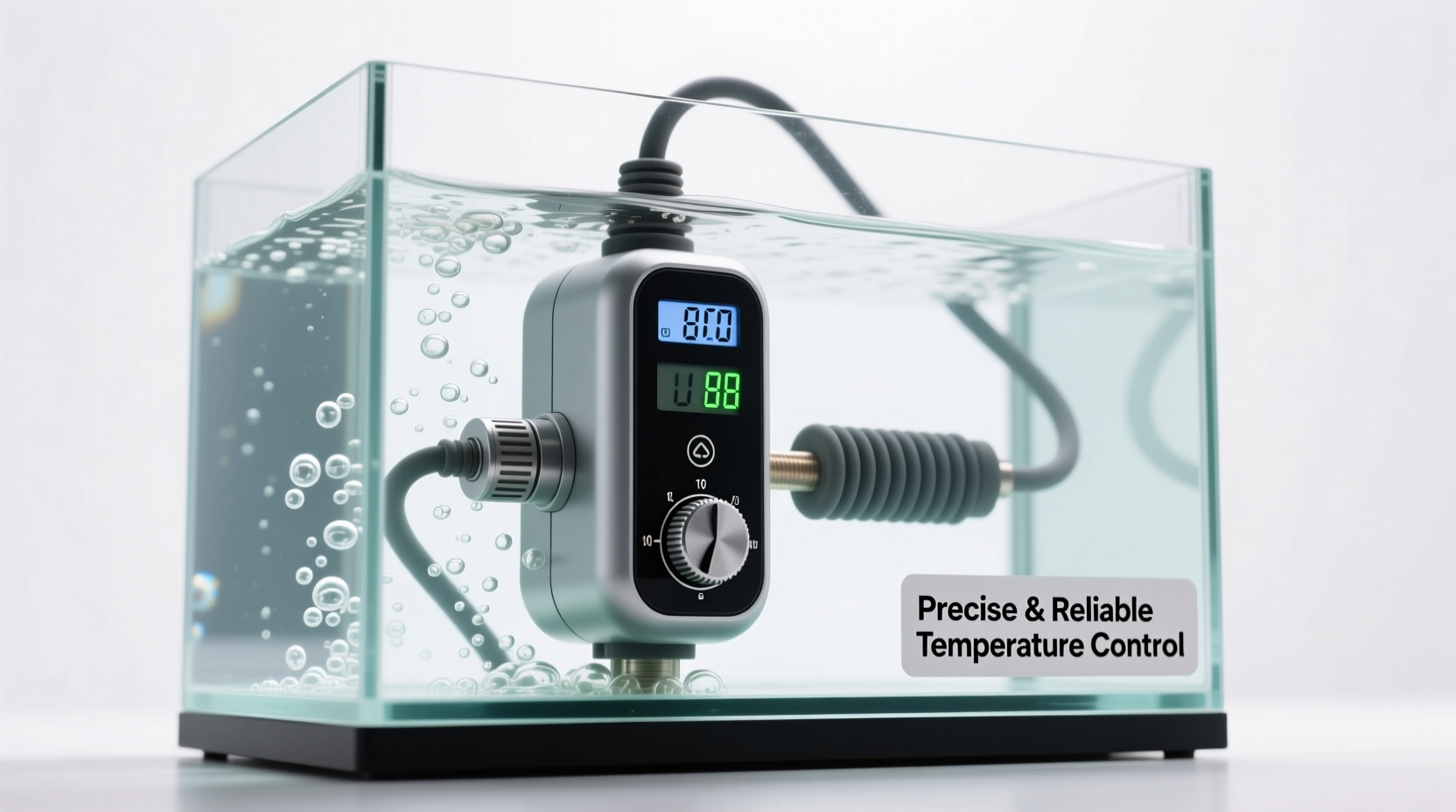
Not all aquarium heaters are created equal. When shopping, prioritize models that offer precision control, durability, and fail-safes. The following features separate high-performing units from basic ones:
- Digital temperature control: Allows precise setting (e.g., 78.5°F) rather than vague dial adjustments.
- Adjustable thermostat: Enables customization based on species-specific needs.
- Auto-shutoff protection: Turns off if exposed to air during maintenance or low water levels.
- Shatter-resistant construction: Typically made from high-quality glass or plastic with embedded heating elements.
- Submersible design: Fully immerse the heater for even heat distribution and better accuracy.
- LED indicators: Show when the heater is active, helping monitor function at a glance.
Choosing the Right Wattage and Type
The appropriate heater wattage depends on your tank size and how much warmer you need the water than room temperature. As a general rule:
| Tank Size (Gallons) | Recommended Heater Wattage | Notes |
|---|---|---|
| 5–10 | 50W | Suitable for small desktop tanks |
| 20–30 | 100W | Ideal for standard tropical setups |
| 40–55 | 150–200W | Consider dual heaters for even heating |
| 75+ | 300W or multiple heaters | Larger tanks benefit from redundancy |
If your home is particularly cool or you keep sensitive species like discus (which prefer 82°F–86°F), consider upgrading to a higher wattage or using two lower-wattage heaters spaced apart. This provides redundancy—if one fails, the other maintains baseline warmth—and promotes uniform heat distribution.
Types of Adjustable Aquarium Heaters
- Submersible heaters: Most popular type. Fully submersible with adjustable thermostats. Can be positioned vertically or horizontally.
- Hang-on-back (HOB) heaters: Less common now. Clip to the rim and partially sit above water. More prone to overheating if water level drops.
- In-line heaters: Installed in external filter lines. Excellent for sump systems but require plumbing modifications.
- Smart heaters: Wi-Fi enabled with app monitoring. Allow remote temperature tracking and alerts (e.g., Fluval Smart Heater).
Step-by-Step Guide to Installing and Calibrating Your Heater
Proper installation ensures both safety and performance. Follow these steps carefully:
- Choose location: Place near water flow (e.g., filter output) for even heat dispersion. Avoid direct contact with decorations or substrate.
- Wait before powering on: Submerge the heater for at least 15 minutes before plugging in to prevent thermal shock to the glass.
- Set desired temperature: Use a separate calibrated thermometer to verify accuracy. Many built-in dials are imprecise.
- Monitor over 24 hours: Check every few hours to ensure the temperature stabilizes without overshooting.
- Adjust gradually: If correction is needed, change settings by no more than 1°F per day to avoid stressing fish.
“Always cross-check your heater’s reading with an independent digital thermometer. Factory calibrations can be off by several degrees.” — Mark Reynolds, Senior Aquarist at Great Lakes Aquarium
Top Recommended Models for Precision and Reliability
Based on long-term user feedback, expert testing, and durability benchmarks, the following heaters consistently rank highest for stability and adjustability:
- Eheim Jäger Adjustable Aquarium Heater: Known for exceptional accuracy (+/- 0.5°F), shatter-resistant glass, and wide wattage options. Ideal for reef and planted tanks.
- Fluval M Series Smart Heater: Offers Bluetooth connectivity, real-time monitoring via app, and automatic shut-off. Best for tech-savvy aquarists.
- Aqueon Pro Adjustable Heater: Budget-friendly yet reliable. Includes suction cups and clear markings. Suitable for beginner to intermediate setups.
- Hydor ETH External Thermometer-Controlled Heater: Unique external design reduces risk of breakage and allows easy access for adjustments.
Mini Case Study: Preventing Winter Temperature Drops
James, a hobbyist in Minnesota, kept a 30-gallon community tank in a room that dropped to 62°F at night during winter. His original 75W heater struggled to maintain 78°F, causing his neon tetras to become lethargic. After upgrading to a 100W Eheim Jäger and adding a second 50W backup heater, he achieved consistent 77.5°F readings. Within a week, fish activity returned to normal, and algae growth stabilized due to balanced metabolism.
This example illustrates how proper wattage selection and redundancy can resolve real-world challenges—especially in colder climates.
Essential Maintenance Checklist
To ensure your adjustable heater remains effective and safe, follow this monthly checklist:
- ✔ Visually inspect for cracks, cloudiness, or mineral buildup.
- ✔ Clean gently with a soft cloth and vinegar solution if lime deposits form.
- ✔ Confirm LED indicator lights respond correctly to temperature changes.
- ✔ Test calibration against a trusted thermometer.
- ✔ Ensure suction cups or mounts are secure and undamaged.
- ✔ Replace heaters older than 3 years, even if functional—aging units lose accuracy.
FAQ
Can I use one heater for multiple tanks?
No. Each aquarium requires its own dedicated heater. Sharing equipment across tanks risks temperature instability and electrical hazards.
How do I know if my heater is failing?
Signs include constant cycling on/off, inability to reach set temperature, visible damage, or erratic behavior. A sudden spike or drop in water temperature often indicates malfunction.
Should I leave the heater on all year?
Yes, unless you’re housing coldwater species like goldfish in unheated environments. Tropical tanks require year-round heating, even in summer, as indoor AC can lower ambient temps unexpectedly.
Conclusion: Prioritize Stability for Healthier Fish
Selecting a reliable and adjustable aquarium heater is not about luxury—it's about creating a sustainable, stress-free habitat for aquatic life. From precise digital controls to redundant heating systems, modern technology offers tools that make temperature management easier and safer than ever. By investing in quality equipment, calibrating carefully, and maintaining vigilance, you protect your fish from one of the most common—and preventable—threats in aquarium keeping.
🚀 Take action today: Audit your current setup, verify your thermometer readings, and upgrade to a dependable adjustable heater if needed. Your fish depend on consistency—make it a priority.








