
For decades, kibble has dominated the dog food market—convenient, shelf-stable, and widely recommended by veterinarians. But in recent years, a growing number of pet owners have turned to raw diets, inspired by the belief that dogs thrive on food closer to what their ancestors ate in the wild. This shift has sparked intense debate: Is feeding raw meat, bones, and organs a revolutionary step toward optimal canine health—or an unnecessarily risky trend with hidden dangers?
The answer isn't simple. Both raw diets and high-quality kibble have strengths and limitations. The choice depends on your dog’s health, lifestyle, budget, and your ability to manage food safety. To help you make an informed decision, we’ll examine nutritional science, veterinary insights, practical challenges, and real-life experiences.
Nutritional Foundations: What Dogs Actually Need
Dogs are omnivores with carnivore-leaning biology. They require high levels of animal-based protein, certain fats like omega-3s, and minimal carbohydrates. Their digestive systems can process some plant matter, but their primary energy source is protein and fat—not grains or fillers.
High-quality kibble is formulated to meet AAFCO (Association of American Feed Control Officials) standards, ensuring balanced nutrition through carefully measured vitamins, minerals, and macronutrients. Premium brands use named meat sources (e.g., “chicken meal” instead of “meat by-products”), limit starches, and avoid artificial preservatives.
Raw diets, typically based on the BARF model (Biologically Appropriate Raw Food), include muscle meat, organ meats (like liver and kidney), raw bones, eggs, and small amounts of fruits and vegetables. Proponents argue this mimics ancestral eating patterns and avoids the high-heat processing that can degrade nutrients in kibble.
“Dogs don’t need carbohydrates to survive, but they do need essential amino acids and fatty acids—many of which are best preserved in uncooked forms.” — Dr. Karen Becker, Integrative Veterinarian
Benefits of Raw Diets: Beyond the Hype
Anecdotal reports from raw feeders often highlight dramatic improvements: shinier coats, cleaner teeth, smaller stools, increased energy, and fewer skin allergies. While not all claims are backed by large-scale studies, there is emerging evidence supporting several benefits:
- Dental Health: Chewing raw meaty bones may reduce plaque buildup more effectively than kibble.
- Digestive Efficiency: Raw food produces less waste because it’s highly digestible and lacks indigestible fillers.
- Allergy Management: Eliminating processed ingredients and common allergens (like corn, soy, and wheat) can alleviate chronic skin and gastrointestinal issues.
- Muscle Development: High-protein raw diets support lean muscle mass, especially in active or working dogs.
However, these benefits depend heavily on diet formulation. A poorly balanced raw diet—lacking calcium, too high in liver, or missing key micronutrients—can lead to serious health problems over time.
Kibble Advantages: Science, Safety, and Simplicity
Despite the raw food movement, high-quality kibble remains the most researched and regulated form of dog nutrition. Its advantages are practical and significant:
- Consistency: Every batch is tested for nutrient levels, reducing variability in daily intake.
- Convenience: No thawing, measuring organs, or handling raw meat—ideal for busy owners.
- Long Shelf Life: No refrigeration needed; suitable for travel and storage.
- Veterinary Support: Most vets recommend commercial diets due to predictable outcomes and lower risk of contamination.
Modern premium kibbles use advanced extrusion techniques that preserve nutrients better than older methods. Many now include probiotics, glucosamine, and DHA for brain development—all added post-cooking to maintain efficacy.
Critics argue that kibble contains too many carbohydrates and undergoes excessive processing. While true for low-cost brands, top-tier kibbles often contain 70%+ animal ingredients and minimal starch. The key is reading labels and avoiding marketing traps like “grain-free” (which doesn’t equal healthy).
Risks of Raw Feeding: Pathogens and Nutritional Gaps
One of the most serious concerns about raw diets is bacterial contamination. Studies by the FDA and CDC have found that raw pet foods frequently carry Salmonella, Listeria, and E. coli. These pathogens pose risks not only to dogs but also to humans—especially children, elderly individuals, and immunocompromised family members.
A 2022 study published in the Journal of the American Veterinary Medical Association analyzed over 200 raw dog food samples. Nearly 50% tested positive for at least one harmful bacterium. Even frozen products aren’t safe—freezing slows but doesn’t eliminate pathogens.
Beyond microbiology, nutritional imbalances are common in homemade raw diets. A University of Edinburgh analysis found that 60% of owner-prepared raw meals lacked adequate calcium-to-phosphorus ratios—critical for bone development in puppies. Others were deficient in vitamin D, iodine, or zinc.
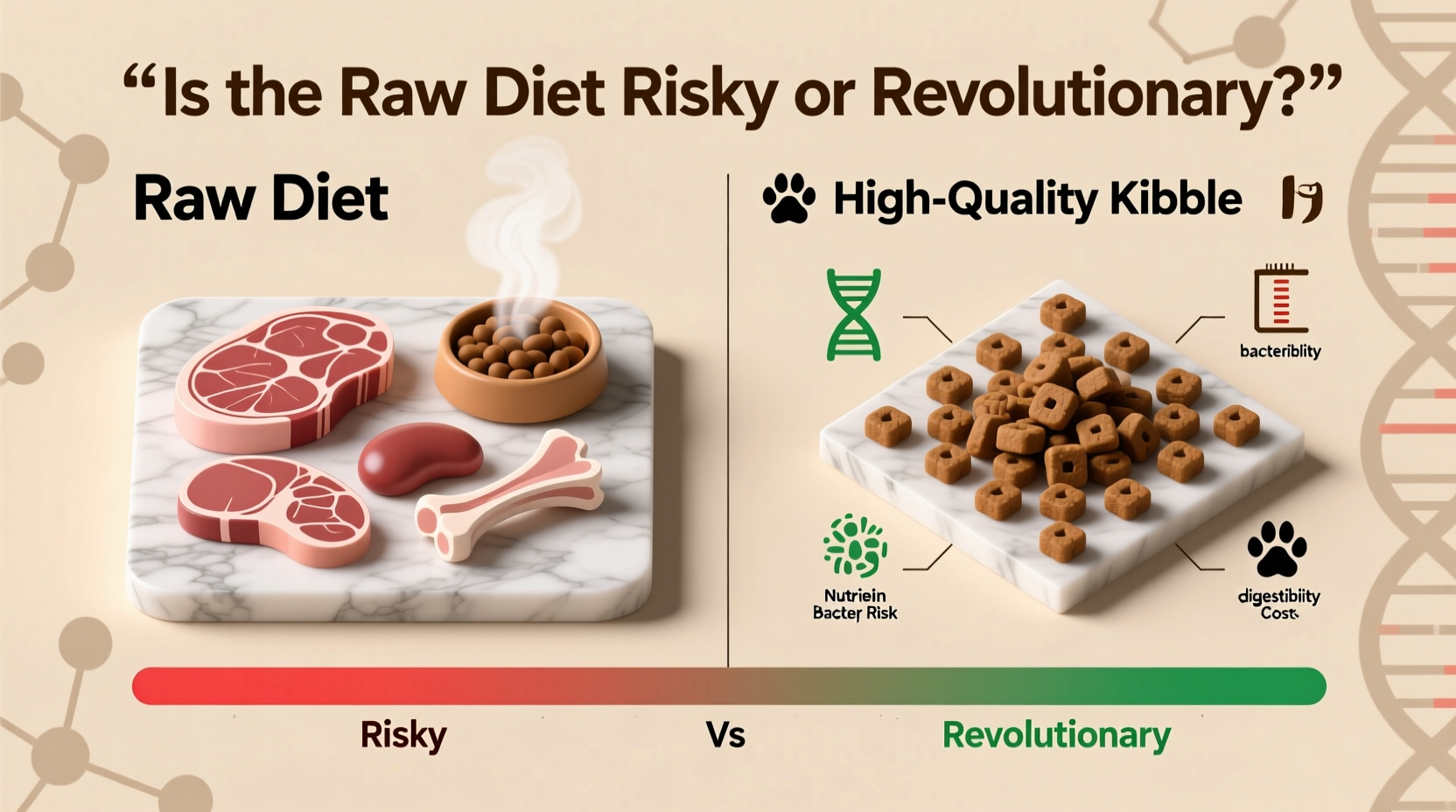
| Risk Factor | Raw Diet | High-Quality Kibble |
|---|---|---|
| Bacterial Contamination | High (requires strict hygiene) | Very Low (heat-treated) |
| Nutritional Balance | Variable (depends on formulation) | Consistently Balanced (AAFCO compliant) |
| Dental Benefits | Moderate to High (with raw bones) | Low to Moderate (some dental formulas) |
| Cost per Day (Medium Dog) | $3–$6 | $1.50–$3 |
| Convenience | Low (storage, prep, cleanup) | High (ready to serve) |
“We’ve seen cases of rickets in puppies fed raw diets lacking proper supplementation. Just because it’s ‘natural’ doesn’t mean it’s safe or complete.” — Dr. Jennifer Poger, Board-Certified Veterinary Nutritionist
Real-World Example: A Working Dog’s Transformation
Sarah Thompson, a search-and-rescue handler in Colorado, switched her German Shepherd, Rex, from premium kibble to a commercial raw diet after he developed chronic ear infections and lethargy. Despite clean bloodwork, Rex showed signs of low-grade inflammation.
After consulting a veterinary nutritionist, Sarah transitioned him to a pre-made, frozen raw brand with balanced calcium and limited ingredients. Within eight weeks, his coat became thicker, his breath improved, and his energy returned. Stool volume decreased by nearly 60%, making field work easier.
But the change wasn’t without challenges. She had to invest in extra freezer space, sanitize feeding areas after every meal, and educate her kids about handwashing. When Rex once chewed a weight-bearing bone and fractured a tooth, she stopped offering hard marrow bones altogether.
“It’s not a magic fix,” Sarah says. “It helped his specific issues, but it demands responsibility. I wouldn’t recommend DIY raw feeding to anyone without professional guidance.”
How to Choose: A Practical Checklist
Whether you lean toward raw or kibble, the goal is long-term health. Use this checklist to evaluate your options:
- ✅ Consult your veterinarian or a board-certified veterinary nutritionist before switching diets.
- ✅ Assess your household’s risk factors (infants, elderly, immune-compromised members).
- ✅ Determine your capacity for food prep, storage, and hygiene management.
- ✅ Research brands thoroughly—look for third-party testing, recall history, and ingredient transparency.
- ✅ Start any transition slowly over 7–10 days to avoid digestive upset.
- ✅ Monitor your dog’s stool quality, coat condition, energy level, and weight monthly.
- ✅ Schedule biannual bloodwork to catch nutrient deficiencies early.
Step-by-Step Guide to Transitioning Safely
If you decide to try raw food, follow this timeline to minimize risks:
- Week 1: Research & Planning
Select a reputable commercial raw brand or formulate a recipe with a vet nutritionist. Purchase airtight containers and designate cleaning tools for raw prep only. - Day 1–3: Introduce 25% Raw + 75% Current Food
Mix thawed raw food with kibble or current diet. Observe for vomiting, diarrhea, or refusal. - Day 4–6: 50% Raw + 50% Old Diet
Continue monitoring digestion. Ensure raw portions are fully thawed but not left at room temperature over 2 hours. - Day 7–9: 75% Raw + 25% Old Food
Watch stool consistency. Small, firm stools are normal; loose or bloody stools require pause. - Day 10+: Full Raw Diet
Feed appropriate portion (2–3% of body weight daily). Rotate proteins weekly to broaden nutrient intake. - Month 2: Vet Check-In
Discuss any changes and consider baseline bloodwork to assess organ function and nutrient levels.
Frequently Asked Questions
Can I combine raw and kibble?
Yes, many owners feed raw in the evening and kibble in the morning. Some believe the different digestion rates cause issues, but no clinical evidence supports this for healthy dogs. If your dog tolerates it, combination feeding can offer flexibility and cost savings.
Are raw bones safe?
Only certain raw bones are safe—and never cooked ones. Cooked bones can splinter and cause intestinal perforation. Soft, meaty bones like chicken necks or turkey wings are generally safer for chewing. Always supervise and remove pieces smaller than the dog’s mouth to prevent choking.
Does raw food make dogs aggressive?
No scientific evidence links raw feeding to aggression. However, some dogs become possessive over high-value food like raw meat. Practice good resource management and train polite mealtime behavior early.
Conclusion: Informed Choice Over Ideology
The debate between raw dog food and high-quality kibble isn’t about declaring one superior across the board—it’s about matching nutrition to individual needs, lifestyles, and medical conditions. Raw diets can be transformative for dogs with sensitivities or performance demands, but they come with real responsibilities and risks. High-quality kibble offers reliability, safety, and accessibility, especially for average households.
What matters most is intentionality. Whether you choose raw, kibble, or a hybrid approach, commit to learning, observing, and adapting based on your dog’s health—not trends or testimonials alone.
🚀 Ready to take the next step? Talk to your vet, review ingredient labels critically, and start a feeding journal. Your dog’s vitality begins with informed choices—start today.








