
Destructive chewing is one of the most common behavioral issues dog owners face. Shoes disappear, furniture legs get gnawed, and baseboards become chew toys overnight. While some might assume their dog is acting out of spite or poor training, the real culprit is often boredom. Dogs are intelligent animals with a natural need for both physical and mental stimulation. When that need goes unmet, destructive behaviors like chewing fill the void. Enter puzzle toys—designed not just to entertain, but to engage a dog’s mind in meaningful ways. But do they actually reduce destructive chewing? The answer, supported by veterinary behaviorists and thousands of real-world cases, is a resounding yes—when used correctly.
Why Boredom Leads to Destructive Chewing
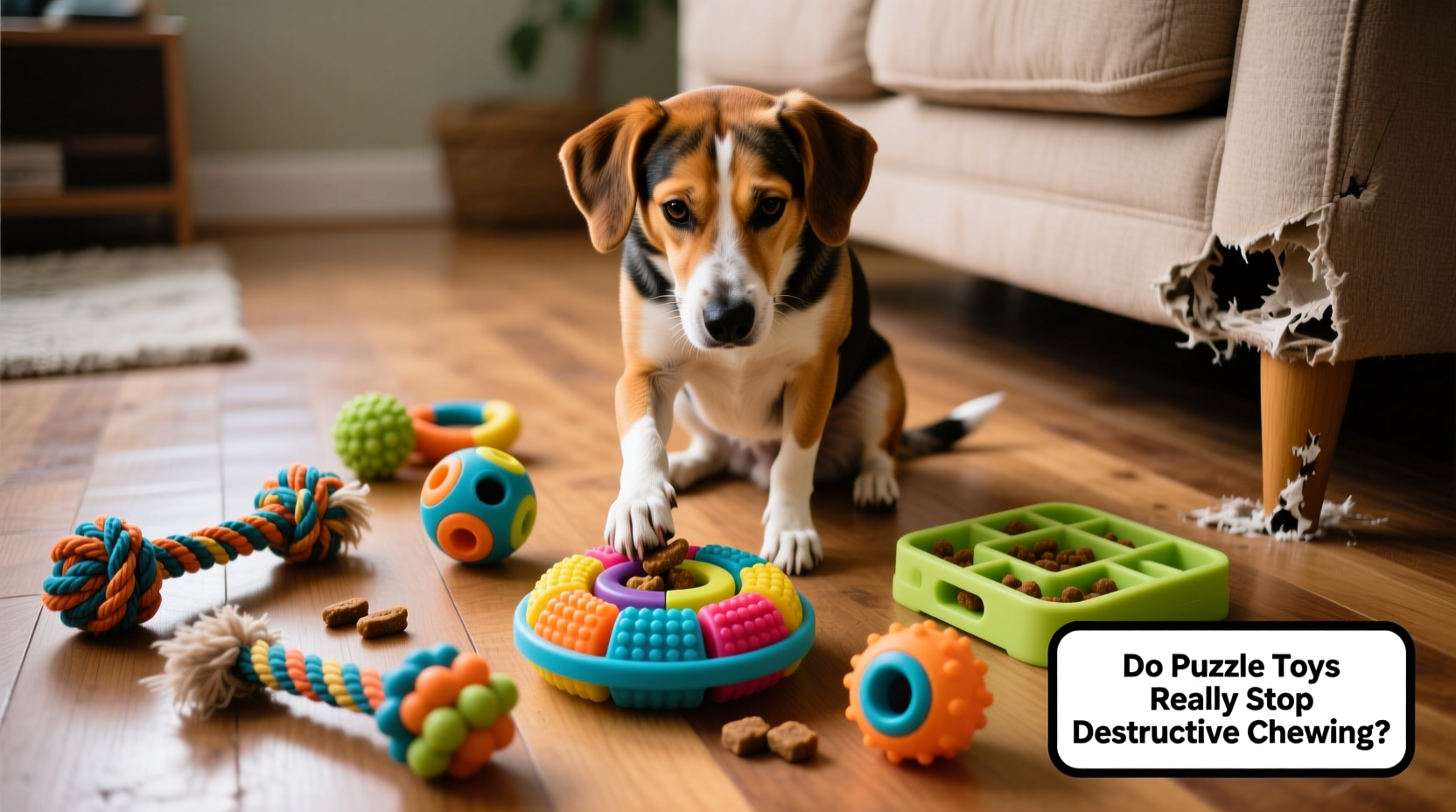
Dogs don’t chew destructively because they’re “bad.” They chew because they’re under-stimulated. In the wild, canines spend hours hunting, exploring, and problem-solving. Domesticated dogs may have food delivered in a bowl and walks scheduled twice a day, but their brains still crave challenges. Without outlets for this instinctual drive, energy turns inward—manifesting as digging, barking, or chewing household items.
Chewing itself isn't the problem—it's a natural behavior. Puppies chew to relieve teething pain; adult dogs chew to clean teeth, relieve stress, and explore textures. The issue arises when inappropriate objects become targets. A sock, remote control, or chair leg doesn’t satisfy a dog’s mental needs—it only provides temporary sensory feedback. Puzzle toys, on the other hand, redirect that chewing impulse toward productive engagement.
“Mental fatigue is just as important as physical fatigue. A tired brain leads to a calm dog.” — Dr. Karen Overall, Veterinary Behaviorist
How Puzzle Toys Work: More Than Just a Treat Dispenser
Puzzle toys aren’t merely containers for kibble. They are cognitive tools designed to simulate foraging, problem-solving, and strategic thinking. From simple sliding lids to multi-step mazes, these toys force dogs to use memory, coordination, and persistence. This process activates regions of the brain associated with focus and reward, effectively replacing idle time with purposeful activity.
The mechanism behind their effectiveness lies in delayed gratification. Instead of gulping down a meal in seconds, a dog must nudge, flip, roll, or slide parts of the toy to access food. This slows eating, improves digestion, and creates a sense of accomplishment. Over time, dogs begin to associate effort with reward—shifting their motivation from impulsive chewing to structured play.
Tip: Rotate puzzle toys weekly to prevent habituation. Dogs can lose interest if the challenge becomes predictable.Types of Puzzle Toys and Their Effectiveness
Not all puzzle toys are created equal. Some are better suited for beginners, while others challenge even the smartest breeds. Choosing the right type depends on your dog’s skill level, chewing intensity, and attention span.
| Type | Best For | Effectiveness Against Chewing | Examples |
|---|---|---|---|
| Rolling Food Balls | Beginners, high-energy dogs | Moderate – encourages chasing and nudging | Kong Wobbler, Outward Hound Fun Feeder |
| Slide-and-Lift Puzzles | Dogs learning cause-and-effect | High – requires manipulation and focus | Nina Ottosson Dog Tornado, Trixie Activity Flip Board |
| Hide-and-Seek Mats | Scent-driven dogs, seniors | High – taps into natural foraging instincts | Furry Frets Snuffle Mat, Pawaboo Grass Mat |
| Multi-Step Logic Puzzles | Advanced problem-solvers (e.g., Border Collies) | Very High – prolonged engagement | Nina Ottosson Advanced Interactive Puzzle |
| Durable Chew-Puzzle Hybrids | Destructive chewers needing redirection | Very High – combines chewing with mental work | Kong Classic, West Paw Qwizl |
Toys made from durable rubber or thick nylon serve dual purposes: they withstand aggressive chewing while offering treat-holding compartments. These are particularly effective for dogs who destroy plush toys in seconds. The key is matching the toy’s difficulty to your dog’s ability. Too easy, and they’ll lose interest. Too hard, and frustration sets in—potentially worsening anxiety and chewing.
A Real-Life Example: Max, the Labrador Who Ate Everything
Max, a three-year-old Labrador Retriever, had chewed through two sofas, three pairs of shoes, and a coffee table leg in six months. His owner, Sarah, worked full-time and assumed Max was simply “misbehaving.” After consulting a canine behaviorist, she learned Max wasn’t defiant—he was bored. Left alone for eight hours with only a tennis ball, he had no mental outlet.
The solution? A structured enrichment plan centered around puzzle toys. Each morning, Sarah filled a Kong with frozen peanut butter and banana. During lunch breaks, she used a snuffle mat to hide kibble in the backyard. Evenings included a rotating set of Nina Ottosson puzzles. Within three weeks, Max’s chewing dropped by over 80%. He no longer targeted furniture because his days were filled with rewarding challenges.
“It wasn’t about stopping the chewing,” Sarah said. “It was about giving him something better to do.”
Step-by-Step Guide: Introducing Puzzle Toys to Reduce Chewing
Introducing puzzle toys effectively requires patience and consistency. Follow this timeline to ensure success:
- Week 1: Start Simple – Use an easy toy like a treat ball or low-difficulty puzzle. Let your dog succeed quickly to build confidence.
- Week 2: Increase Challenge Slightly – Swap in a medium-level puzzle. Monitor for signs of frustration (e.g., pawing aggressively, walking away).
- Week 3: Combine with Daily Routine – Replace one regular meal with a puzzle toy. This reinforces the idea that food requires effort.
- Week 4: Rotate and Vary – Introduce new toys weekly. Use different types (snuffle mats, logic puzzles, chew hybrids) to maintain interest.
- Ongoing: Supervise and Adjust – Watch how your dog interacts with each toy. If they chew it apart, switch to a more durable version. If they ignore it, simplify or add higher-value treats.
Consistency is critical. Puzzle toys should be part of your dog’s daily mental workout—not just a weekend novelty.
Common Mistakes That Undermine Success
Even well-intentioned owners make errors that limit the effectiveness of puzzle toys. Avoid these pitfalls:
- Using low-value treats – Kibble alone may not motivate a bored dog. Try peanut butter, cheese, or freeze-dried liver.
- Leaving toys out 24/7 – Constant access reduces novelty and perceived value. Store toys between uses.
- Ignoring safety – Some dogs dismantle toys and swallow pieces. Always supervise initially and choose non-toxic, durable materials.
- Skipping progression – Dogs adapt quickly. Failing to increase difficulty leads to disengagement.
- Expecting instant results – Behavior change takes weeks. Track progress with notes or photos of chew damage over time.
Checklist: Maximizing Puzzle Toy Effectiveness
Use this checklist to ensure you’re getting the most out of your investment:
- ✅ Assess your dog’s current chewing triggers (e.g., alone time, post-walk energy)
- ✅ Choose 2–3 puzzle types based on skill and chewing intensity
- ✅ Start with easy versions to build confidence
- ✅ Use high-value, engaging treats or meals
- ✅ Limit play sessions to 15–30 minutes to maintain excitement
- ✅ Rotate toys weekly to prevent boredom
- ✅ Supervise initial use for safety and troubleshooting
- ✅ Track reduction in destructive behavior over 4–6 weeks
- ✅ Combine with physical exercise—mental + physical fatigue works best
- ✅ Replace worn or unsafe toys immediately
FAQ: Common Questions About Puzzle Toys and Chewing
Can puzzle toys completely eliminate destructive chewing?
While not a guaranteed cure-all, puzzle toys significantly reduce destructive chewing in most dogs—especially when combined with adequate exercise, training, and environmental management. Complete elimination depends on underlying causes; if anxiety or medical issues are present, additional support may be needed.
What if my dog ignores the puzzle toy?
Start easier. Your dog may not understand the concept yet. Demonstrate by hand-feeding a treat from the toy, or use strong-smelling rewards like chicken or cheese. You can also partially load the toy so treats fall out easily at first.
Are puzzle toys safe for aggressive chewers?
Yes—but only if made from indestructible materials. Look for toys labeled “heavy-duty” or “escape-proof.” Avoid soft plastics or glued components. Always supervise until you’re certain the toy can’t be broken apart.
Conclusion: Redirecting Instincts, Not Suppressing Them
Puzzle toys don’t just distract bored dogs—they fulfill a deep-seated need for mental engagement. Destructive chewing isn’t defiance; it’s a symptom of unmet cognitive demands. By offering structured challenges, puzzle toys provide a healthier outlet than punishment or confinement ever could. The result isn’t just less damage to your home—it’s a happier, more balanced dog.
The key is intentionality. Throwing a toy into a crate and hoping for the best won’t work. But a thoughtful approach—matching difficulty to ability, using motivating rewards, and integrating puzzles into daily life—can transform a destructive chewer into a focused problem-solver. It’s not about stopping behavior; it’s about replacing it with something more satisfying.
🚀 Ready to reduce chewing and boost your dog’s brainpower? Pick one puzzle toy today, stuff it with a high-value treat, and watch your dog engage in a healthier way. Share your success story in the comments!








