Walk into a well-curated modern gathering—a rooftop wedding reception in Brooklyn, a summer garden party in Portland, or even a stylish corporate mixer—and you’ll likely spot it: a gleaming punch bowl, its surface alive with swirling roses, sunburst motifs, or delicate cobalt blue etchings. These aren’t reproductions masquerading as antiques. They’re authentic 1930s–1960s pieces—often sourced from estate sales, vintage dealers, or family attics—and they’re commanding premium prices and design attention. The resurgence isn’t nostalgia for nostalgia’s sake. It’s a deliberate aesthetic choice rooted in craftsmanship, narrative weight, and tactile authenticity that mass-produced serveware simply can’t replicate.
Vintage punch bowls have moved beyond the realm of “quaint” or “grandma’s attic.” They now anchor tables as intentional centerpieces—paired with minimalist glassware, fresh botanicals, and contemporary cocktail menus. Their enduring appeal lies in how they bridge eras: a 1947 Fostoria “American” pattern bowl holds a hibiscus-and-tequila spritz just as naturally as it once held sherry cobbler. This article explores why these patterns remain stylistically vital—not as relics, but as living, functional design elements—and how to select, style, and care for them with confidence.
The Enduring Design Language of Vintage Patterns
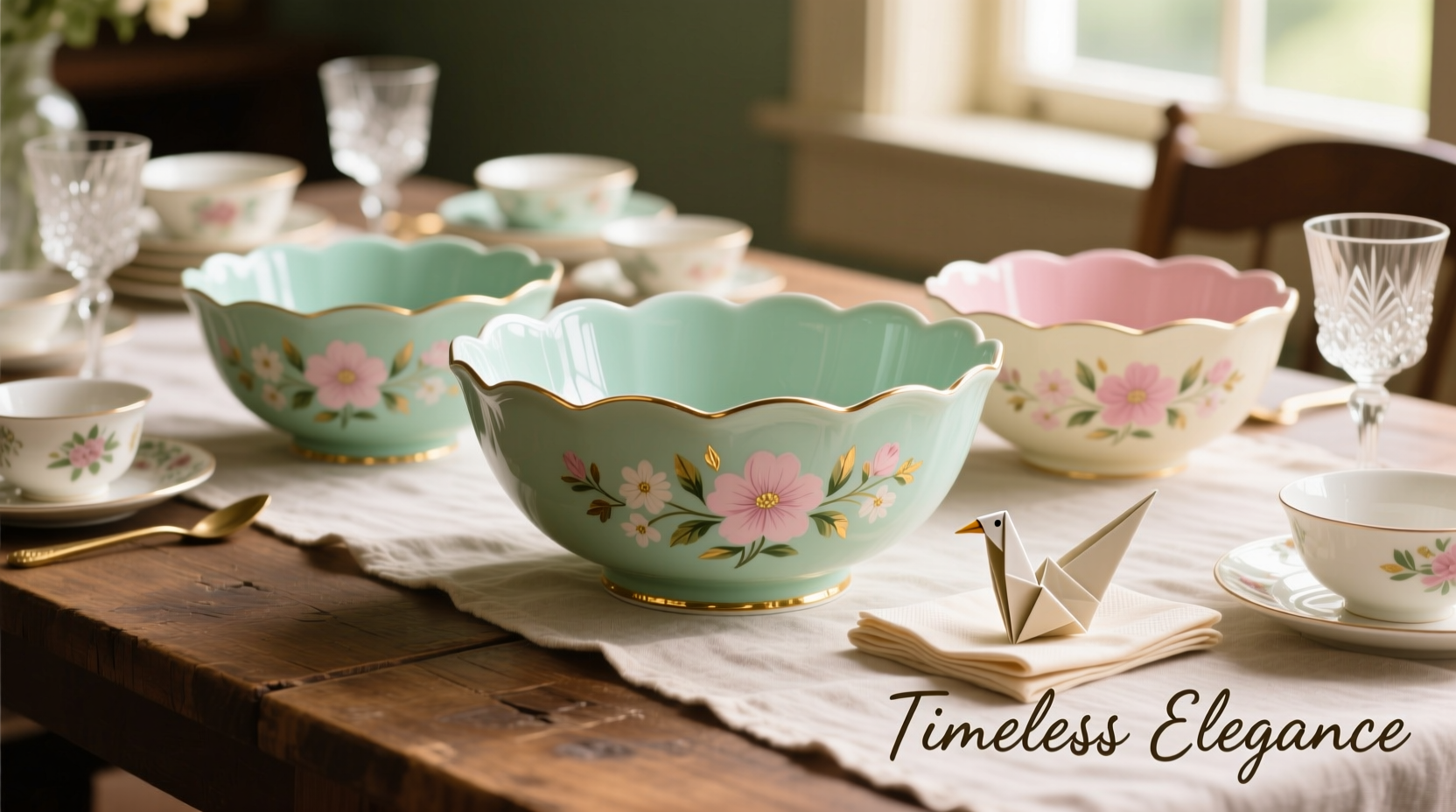
Vintage punch bowl patterns endure because they were designed for impact and longevity—not trend cycles. Mid-century American glassmakers like Fostoria, Cambridge, Indiana Glass, and Anchor Hocking invested heavily in pattern development, often collaborating with industrial designers who understood scale, repetition, and light refraction. A single motif—like the rhythmic fluting of the “Baroque” pattern (introduced by Fostoria in 1950) or the intricate lattice of “Cathedral” (Cambridge, 1936)—was engineered to catch candlelight, amplify color depth, and read clearly from across a room.
Unlike today’s digitally printed ceramics, these patterns were formed through mold-blown, pressed, or hand-etched techniques. That means each piece carries subtle variations: a slightly deeper groove here, a faint seam line there—evidence of human hands and analog process. That imperfection is now prized. Interior designer and vintage tableware curator Lena Ruiz observes, “Clients don’t want ‘perfect’ anymore. They want presence. A 1952 Hobnail bowl doesn’t whisper—it hums with history and intention. Its weight, its clarity, its pattern rhythm—they all signal care, both in making and in using.”
“Vintage patterns succeed today because they were built for function *and* beauty—not one at the expense of the other. A Depression glass ‘Cherry Blossom’ bowl wasn’t just pretty; its thick base prevented tipping, its wide rim allowed easy ladling, and its raised floral relief gave grip to wet hands.” — Dr. Alan Cho, Curator of Decorative Arts, Museum of American Glass
Five Iconic Patterns Still Dominating Modern Tables
Not all vintage patterns translate equally to today’s sensibilities. The most successful ones share three traits: strong visual identity, neutral-enough color palettes to pair with diverse decor, and structural integrity for daily use. Below are five patterns routinely spotted on high-end catering menus, Instagram feeds of interior stylists, and boutique rental inventories—and why they work now.
| Pattern & Maker | Era Introduced | Why It’s Resonant Today | Styling Tip |
|---|---|---|---|
| Baroque (Fostoria) | 1950 | Deep vertical fluting creates dramatic light play; available in crystal-clear glass and soft pastel opalines (pink, mint, lavender). Feels luxe but approachable. | Pair with matte black ladles and dried pampas grass for contrast—no floral garnish needed. |
| Cathedral (Cambridge) | 1936 | Geometric lattice pattern reads as modernist, not dated. Heavy, stable base. Often found in amber or cobalt—colors trending in 2024 bar design. | Use with dark spirits-based punches (bourbon, amaro) to let the deep hue glow through the lattice. |
| Hobnail (Indiana Glass) | 1920s–1950s | Textural, tactile, and endlessly versatile. The raised nubs diffuse light softly and hide minor water spots—practical *and* beautiful. | Style with linen napkins in raw ecru and serve non-alcoholic shrubs to emphasize craft and texture over flash. |
| Cherry Blossom (Depression Glass) | 1930s | Delicate, nature-inspired relief feels quietly romantic—not saccharine. Often in pale pink or green, aligning with current “quiet luxury” palettes. | Best for intimate gatherings: 6–10 guests. Float edible violets and serve chilled elderflower punch. |
| Sunburst (Anchor Hocking Fire-King) | 1940s | Bold, graphic radiating lines evoke optimism and energy. Available in durable opaque jadeite and butterscotch—colors that photograph exceptionally well. | Use for daytime events: pair with citrus-forward punches and striped paper straws for retro-modern contrast. |
How to Source Authentic, Functional Vintage Bowls (Without Overpaying)
Authenticity matters—not just for value, but for safety and usability. Many vintage glass pieces contain lead oxide (especially pre-1970 crystal), which is safe for occasional serving but unsuitable for long-term storage of acidic liquids. Others, particularly older pressed glass, may have microscopic hairline cracks (“crazing”) invisible to the naked eye but prone to sudden failure when filled with cold liquid.
Start with trusted channels: local antique malls with vetted dealers (ask about return policies), specialized online platforms like Ruby Lane or Etsy shops with 10+ years’ history and detailed photos, and museum store auctions (e.g., the Corning Museum of Glass). Avoid large general-market sites unless listings include maker’s marks, era identification, and high-resolution close-ups of bases and rims.
Tip: Always check the base for an embossed mark—Fostoria used a script “F,” Cambridge used a shield logo, Indiana Glass used “IG” inside a diamond. No mark? Ask for provenance or walk away.Price benchmarks help avoid overpaying: a clean, chip-free 12-inch Baroque bowl averages $180–$260; Cathedral in cobalt runs $220–$340; Hobnail in mint opaline $140–$210. If you see a “Cherry Blossom” bowl under $80, it’s likely a later reproduction. When in doubt, compare weight (authentic pieces feel substantial) and clarity (older crystal has a warmer, less sterile transparency than modern lead-free glass).
A Real-World Styling Success: The Hudson Valley Wedding
Last June, planner Maya Chen coordinated a 50-guest wedding at a restored 1890s barn in New Paltz, NY. The couple wanted “timeless, not twee”—a celebration that honored family heirlooms without feeling costumed. Chen sourced three vintage punch bowls: a 1948 Fostoria “American” pattern bowl in crystal ($215), a 1953 Anchor Hocking Sunburst in jadeite ($168), and a 1939 Cambridge “Cathedral” in amber ($295). Each held a distinct drink: sparkling rosé with rosemary, ginger-lime shrub, and spiced apple cider.
Instead of matching sets, Chen intentionally mixed eras and makers—but unified them through consistent styling: all bowls sat on custom-cut walnut risers, used identical brushed-brass ladles, and were garnished only with single, seasonally foraged elements (wild mint, crabapple blossoms, dried orange slices). Guests didn’t remark on “vintage” or “retro”—they commented on how “thoughtful,” “warm,” and “uniquely personal” the beverage station felt. “The bowls weren’t props,” Chen notes. “They were quiet storytellers. One guest recognized her grandmother’s exact Sunburst bowl—and spent the evening sharing stories with the couple. That’s the power of real pattern, real history, real use.”
Care, Cleaning, and Long-Term Preservation
Vintage punch bowls demand thoughtful stewardship—not because they’re fragile, but because their value (aesthetic and monetary) rests on condition. Unlike modern dishwasher-safe glass, many vintage pieces react poorly to extreme temperature shifts, harsh detergents, or abrasive scrubbing.
- Rinse immediately after use. Acidic fruit juices, wine, and syrups can etch glass over time—even overnight.
- Hand-wash only, using lukewarm water, pH-neutral dish soap, and a soft microfiber cloth. Never use steel wool, scouring pads, or vinegar solutions.
- Dry thoroughly with a lint-free towel. Water spots on vintage crystal are harder to remove than on new glass due to mineral composition.
- Store upright on padded shelves, never stacked. If stacking is unavoidable, place acid-free tissue between bowls.
- Avoid direct sunlight for extended periods. UV exposure can fade colored glass (especially Depression glass pinks) and weaken adhesives in multi-part sets (e.g., bowls with metal stands).
For stubborn cloudiness or mineral buildup, soak for 15 minutes in warm water with a tablespoon of baking soda—never bleach or ammonia. If a bowl develops a hairline crack near the base, discontinue use for liquids. Repairs are possible via professional cold-glue restoration, but functionality—and safety—should always trump display.
Frequently Asked Questions
Can I use vintage punch bowls for hot beverages?
No. Most vintage glass—especially pressed or molded patterns—was not designed for thermal shock. Pouring boiling water or hot cider directly into a room-temperature bowl risks immediate cracking. If serving warm drinks, pre-warm the bowl gently with warm (not hot) water first—and never exceed 140°F.
Are leaded crystal punch bowls safe for serving?
Yes—for occasional, short-term serving (under 2 hours). Lead leaching occurs primarily during prolonged storage of acidic liquids (like citrus-based punches left overnight). Never store punch in vintage crystal bowls. Serve, then transfer leftovers to stainless steel or glass containers.
How do I verify if a pattern is truly vintage—or a modern reissue?
Check three things: weight (vintage is consistently heavier), base markings (look for era-specific logos, not generic “Made in USA” stamps), and pattern consistency (reissues often simplify details—compare side-by-side photos with museum archives or collector guides like The Collector’s Encyclopedia of Depression Glass). When uncertain, consult a member of the National Depression Glass Association.
Conclusion: Pattern as Presence, Not Prop
Vintage punch bowl patterns haven’t returned as costume jewelry for your tabletop. They’ve re-emerged as essential vocabulary in a design language increasingly defined by intentionality, material honesty, and layered meaning. That Baroque fluting isn’t just decorative—it’s a record of mid-century optimism translated into form. That Cathedral lattice isn’t merely geometric—it’s a testament to pre-digital precision engineering. Choosing one isn’t about mimicking the past. It’s about selecting an object whose history enhances, rather than distracts from, your present moment.
You don’t need a collection to begin. Start with one bowl that speaks to your eye—whether it’s the quiet elegance of Cherry Blossom or the bold joy of Sunburst. Use it for your next dinner party, your holiday open house, or even a quiet Sunday afternoon with friends. Fill it thoughtfully. Clean it mindfully. Pass it along with its story intact. In doing so, you’re not reviving a trend—you’re continuing a tradition of craft, connection, and shared celebration that no algorithm can replicate.
💬 What’s your favorite vintage punch bowl pattern—and what memory does it hold? Share your story, your find, or your styling win in the comments. Let’s keep this conversation—and this tradition—flowing.








