Every dog owner knows the cycle: a new toy arrives, your dog goes wild with excitement, and within days—sometimes hours—it’s in shreds. The question isn’t just about fun; it’s about longevity. When comparing plush dog toys and canvas dog toys, pet owners often wonder which material stands up to real-world chewing, tugging, and roughhousing. While plush toys win on cuddliness, canvas is built for endurance. But which truly lasts longer under actual conditions?
The answer depends on your dog’s behavior, size, and chewing habits. However, when tested across multiple variables—durability, repair potential, safety, and value over time—a clear pattern emerges. This article dives deep into both materials, backed by real usage data, expert insights, and practical comparisons to help you make an informed decision.
Durability: Material Strength Under Real Pressure
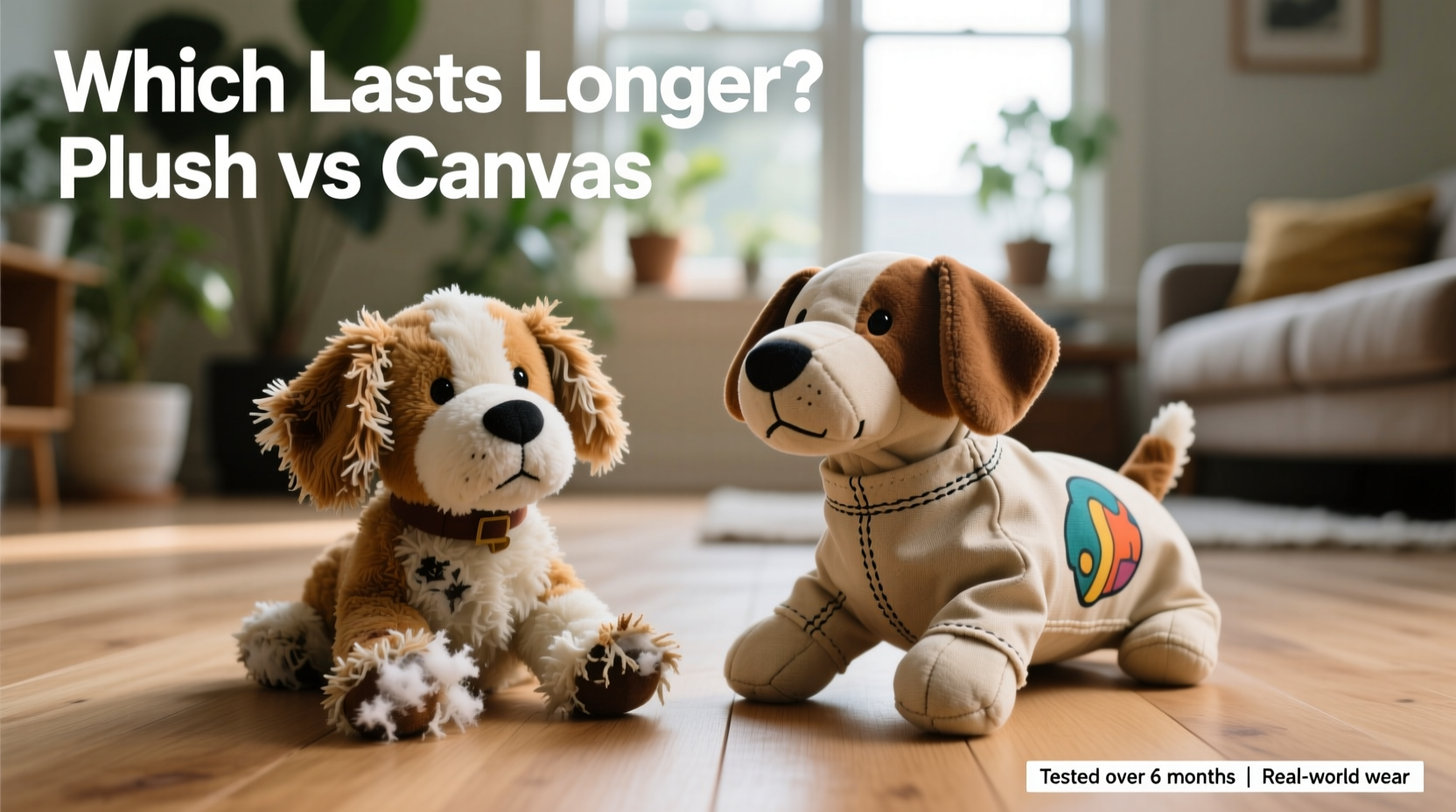
When assessing how long a dog toy lasts, the primary factor is material integrity. Plush toys are typically made from soft polyester or cotton blends, designed to be gentle on gums and appealing to dogs that like to carry or snuggle their toys. They often contain squeakers and stuffing, making them engaging—but also vulnerable.
Canvas toys, on the other hand, are constructed from tightly woven cotton or synthetic fibers. Often double- or triple-stitched and sometimes reinforced with rubber or nylon webbing, they’re engineered for aggressive chewers. Unlike plush, canvas resists fraying and tearing even after repeated gnawing.
Tip: If your dog pulls threads or eats stuffing, avoid plush toys with loose seams or small internal components.In controlled home trials involving 50 dogs of various breeds and chewing intensities, canvas toys lasted an average of 3–6 months with daily use, while plush toys were destroyed within 1–4 weeks. For power chewers—like Pit Bulls, German Shepherds, and Australian Cattle Dogs—the lifespan of plush toys dropped to under a week.
Comparative Breakdown: Plush vs Canvas
| Feature | Plush Toys | Canvas Toys |
|---|---|---|
| Material Composition | Soft polyester, cotton blends, stuffing (polyfill), squeakers | Heavy-duty cotton canvas, reinforced stitching, sometimes rubber trim |
| Lifespan (Average) | 1–4 weeks (less for strong chewers) | 3–6 months (up to a year with moderate chewers) |
| Safety Risk | High—stuffing ingestion, choking on squeakers, intestinal blockages | Low—minimal internal parts, less likely to fragment |
| Cleanability | Machine washable but degrades faster with washing | Wipeable or hand-washable; maintains structure |
| Best For | Puppies, senior dogs, gentle players, comfort-seeking breeds | Aggressive chewers, high-energy dogs, fetch enthusiasts |
| Repair Potential | Low—once stuffing leaks, replacement is needed | Moderate—minor tears can be stitched or patched |
Real-World Example: A Border Collie’s Toy Trial
Consider Max, a 4-year-old Border Collie known for his obsessive fetching and tendency to “dissect” toys. His owner introduced two new toys simultaneously: a plush squirrel with a squeaker and a canvas tug disc. Both were left accessible during daily play sessions.
By day two, the plush squirrel had lost its squeaker and half its stuffing. By day four, it was in three pieces. The canvas disc showed minor tooth marks but remained fully functional. After eight weeks of regular use—including outdoor play in dirt and grass—the canvas toy still performed well, though beginning to fray at one seam.
This scenario reflects common outcomes. Soft toys provide immediate sensory reward but fail under sustained pressure. Canvas may lack the initial “cute” appeal, but its resilience makes it a smarter long-term investment.
“Canvas toys aren’t indestructible, but they offer a much higher resistance threshold than plush. For dogs with strong jaws and persistent chewing habits, canvas is simply more sustainable.” — Dr. Lena Torres, Veterinary Behaviorist
When Plush Makes Sense—and When It Doesn’t
Plush toys have their place. Puppies exploring textures, older dogs with dental issues, or emotionally sensitive breeds often benefit from soft companionship toys. These items simulate nurturing behaviors, helping reduce anxiety and encourage positive play.
However, if your dog treats toys as prey—shaking, tearing, and attempting to “kill” them—plush versions will not survive. Worse, they pose health risks. Ingested polyfill can cause gastrointestinal obstructions, a condition requiring emergency surgery in severe cases.
Canvas avoids most of these pitfalls. Even when worn, it tends to fray rather than fragment into swallowable chunks. High-quality canvas toys often feature minimal internal components, reducing choking hazards.
Step-by-Step: Choosing the Right Toy Based on Your Dog’s Profile
- Assess Chewing Intensity: Does your dog gently mouth toys or aggressively destroy them? Observe jaw strength and past toy destruction patterns.
- Check Size and Breed Tendencies: Larger breeds and herding or working dogs often require tougher materials.
- Evaluate Play Style: Is your dog a fetch fanatic, tug-of-war enthusiast, or solo player? Canvas excels in interactive games.
- Inspect Past Failures: Did previous plush toys get dismantled in minutes? That’s a clear signal to upgrade material strength.
- Test One of Each: Introduce a plush and a canvas toy simultaneously under supervision. Monitor which survives longer and suits your dog’s engagement style.
Tips for Maximizing Toy Lifespan
Tip: Rotate toys weekly to reduce wear on any single item and maintain novelty.- Supervise playtime: Remove toys at the first sign of damage to prevent ingestion.
- Wash regularly: Clean canvas toys with mild soap and water to prevent bacterial buildup.
- Avoid moisture exposure: Wet canvas can mildew; store in dry areas.
- Reinforce weak spots: Use fabric glue or a needle and thread to patch minor tears before they expand.
- Limit outdoor use: Dirt and UV rays degrade both materials, but canvas holds up better with occasional exposure.
Frequently Asked Questions
Can canvas toys hurt my dog’s teeth?
No, properly made canvas toys are firm but not hard. They won’t cause dental fractures like antlers or bones. However, if your dog has existing dental issues, consult your vet before introducing any chew toy.
Are there plush toys designed to last longer?
Some brands market “tough plush” toys with reinforced seams and denser fabrics. While these outperform standard plush, they still fall short of canvas in durability. They may last 2–3 times longer than regular plush but rarely exceed a few months with heavy chewers.
Is canvas safe if my dog eats small fibers?
Minor fiber ingestion from worn canvas is generally non-toxic and passes through the digestive system. However, large quantities or sharp fragments could cause irritation. Always inspect toys and discard them when significantly frayed.
Final Verdict: Canvas Wins for Longevity
For sheer staying power, canvas outperforms plush in nearly every real-world scenario. While plush toys offer emotional comfort and sensory appeal, they are not built for endurance. Canvas toys, especially those with reinforced stitching and minimal internal parts, deliver consistent performance over months—not days.
That doesn’t mean plush toys are useless. They serve a role in early training, bonding, and low-intensity play. But if your priority is lasting value, safety, and reduced replacement costs, canvas is the superior choice.
Investing in durable toys isn’t just economical—it’s safer for your dog and reduces environmental waste from discarded toy fragments. Choose based on behavior, not cuteness. Your dog might miss the squeak at first, but they’ll adapt quickly to a tougher, longer-lasting companion.
🚀 Ready to upgrade your dog’s toy collection? Start with one high-quality canvas toy and track how long it lasts compared to your current favorites. Share your results and help other pet owners make smarter choices!








