
For years, the premium smartphone conversation has been dominated by one brand: Apple. The iPhone 15 Pro isn’t just a phone—it’s a statement of ecosystem loyalty, seamless integration, and polished design. But Google’s Pixel 8 Pro is making waves, promising AI-powered intelligence, superior camera software, and long-term software support that challenges Apple’s dominance. So, is the Pixel 8 Pro actually worth switching for, or is the iPhone 15 Pro still the only logical choice for power users?
This isn’t about fanboyism. It’s about value, longevity, usability, and whether the hype around the Pixel 8 Pro holds up in real-world conditions—or if Apple’s consistency continues to justify its premium.
Design and Build: Premium Materials, Different Philosophies
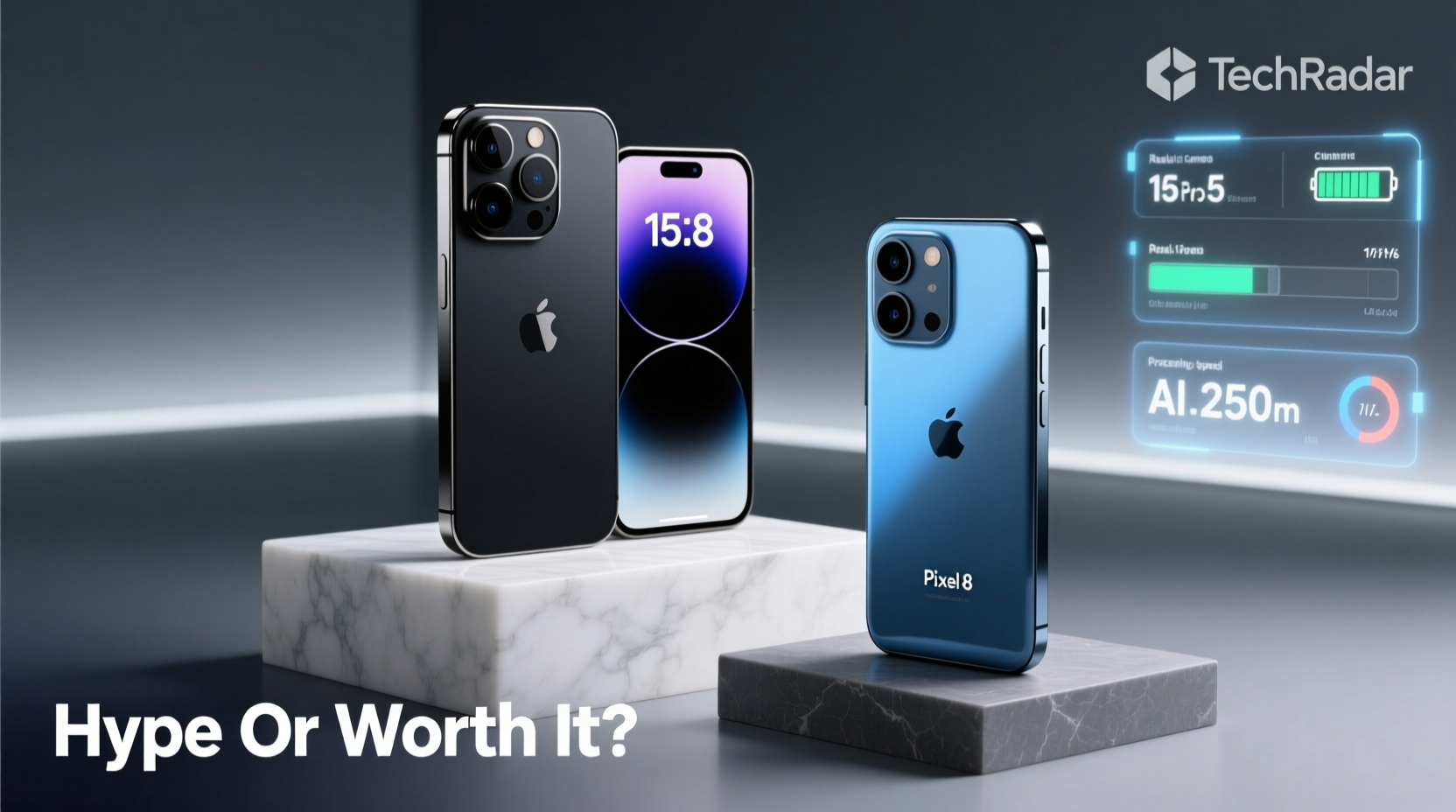
The iPhone 15 Pro marks Apple’s shift to titanium, reducing weight while maintaining rigidity. At 187 grams, it’s the lightest Pro model in years, and the curved edges make it more pocketable than its boxy predecessor. The action button replaces the mute switch, offering customizable shortcuts—a small but meaningful upgrade.
Meanwhile, the Pixel 8 Pro sticks with an aluminum frame and recycled stainless steel camera visor. It’s heavier at 211 grams and slightly bulkier, but Google’s matte finish resists fingerprints better than Apple’s polished back. Both are IP68-rated, so neither will flinch in rain or accidental spills.
The difference lies in philosophy: Apple prioritizes minimalism and refinement; Google leans into functionality and sustainability. If you value subtle elegance and material innovation, the iPhone wins. If you prefer a durable, eco-conscious build with bold design cues, the Pixel stands out.
Tip: Consider how the phone feels in daily use—weight distribution and grip matter more over time than specs on paper.Display and Performance: Brightness vs. Efficiency
Both phones feature 6.7-inch OLED displays with 120Hz refresh rates, but they differ in execution. The iPhone 15 Pro uses Apple’s ProMotion tech with adaptive refresh rates down to 1Hz, maximizing battery life. Its peak brightness hits 2000 nits, making it exceptionally readable outdoors.
The Pixel 8 Pro matches that with its \"Super Actua\" display, also reaching 2000+ nits and introducing a unique 24-hour display mode powered by a new low-power panel layer. This allows always-on features like calendar events or timer updates without draining the battery excessively—an edge over iOS, where the always-on display is more limited.
Under the hood, Apple’s A17 Pro chip remains unmatched in raw performance and efficiency. It handles gaming, video editing, and multitasking with ease. The Pixel 8 Pro uses Google’s Tensor G3, which lags in benchmarks but excels in AI tasks—like real-time call screening, audio eraser in videos, and generative photo editing. For most users, both feel fast, but the A17 Pro delivers consistent power; the Tensor G3 delivers smarter experiences.
“Hardware matters, but what users increasingly care about is what the hardware enables—especially intelligent assistance.” — Dr. Lena Torres, Mobile AI Researcher at MIT Media Lab
Camera Comparison: Computational Photography vs. Consistency
This is where the debate gets heated. The iPhone 15 Pro features a 48MP main sensor with excellent dynamic range, true 5x optical zoom via a tetraprism telephoto lens, and industry-leading video stabilization. It produces natural colors, reliable HDR, and cinematic 4K video that professionals trust.
The Pixel 8 Pro counters with a 50MP main sensor, 5x Super Res Zoom (digital), and Google’s legendary computational photography. Features like Magic Eraser, Best Take, and Audio Magic Eraser offer post-capture editing no other phone can match. Night Sight and Astrophotography modes remain best-in-class. However, zoom quality degrades faster than Apple’s optical solution beyond 5x.
In daylight, both deliver stunning results. In low light, the Pixel often pushes brighter, cleaner images—but sometimes at the cost of realism. The iPhone preserves shadows and contrast more naturally. For photographers who edit later, the iPhone’s ProRAW files offer more flexibility. For casual users who want perfect shots instantly, the Pixel’s AI enhancements win.
Camera Feature Comparison
| Feature | iPhone 15 Pro | Pixel 8 Pro |
|---|---|---|
| Main Sensor | 48MP, f/1.78 | 50MP, f/1.68 |
| Telephoto Zoom | 5x Optical (tetraprism) | 5x Digital (Super Res Zoom) |
| Video Recording | 4K Dolby Vision HDR | 4K HDR, front mic focus |
| AI Editing Tools | Limited (iOS 17 Photos) | Magic Eraser, Best Take, Audio Eraser |
| Low-Light Performance | Natural, balanced | Brighter, more processed |
Ecosystem and Software: Long-Term Value Matters
Here’s where loyalty plays a role. If you own a Mac, iPad, or Apple Watch, the iPhone 15 Pro integrates flawlessly. Handoff, Universal Clipboard, AirDrop, and FaceTime work intuitively. iMessage remains a social lock-in for many. Apple promises five years of OS updates—impressive, but Google now matches it.
The Pixel 8 Pro offers seven years of OS, security, and feature drops—the longest commitment in the Android world. That means updates through 2030, potentially outlasting iPhone support. Android 14 brings smoother customization, better privacy controls, and AI-driven features like Recorder summarization and Assistant voice typing.
But Android fragmentation outside Google’s ecosystem can be frustrating. Third-party apps don’t always optimize as well as on iOS. On the flip side, Pixel owners get exclusive features like Call Screen, Now Playing, and direct-to-cloud photo restoration—small perks that add up.
Tip: If you rely on iMessage, iCloud, or AirPods, switching to Android creates friction. Test double devices before leaving Apple’s ecosystem.Real-World Example: Sarah’s Switch from iPhone to Pixel
Sarah, a freelance photographer based in Portland, used iPhones exclusively for a decade. She upgraded to the iPhone 15 Pro but found herself frustrated by limited photo editing tools and lack of customization. After borrowing a friend’s Pixel 8 Pro, she was stunned by the Magic Eraser—removing photobombers in seconds—and the ability to summarize hours of interview recordings with one tap.
She switched. Yes, she missed iMessage group chats. Yes, her AirPods had minor latency. But the seven-year update promise, combined with AI tools that saved her hours per week, made the trade-off worthwhile. “I didn’t realize how much I was editing manually until the Pixel did it for me,” she said. “It’s not perfect, but it’s evolving faster than Apple.”
Should You Switch? A Practical Checklist
Before making the leap, ask yourself the following:
- ✅ Do you value AI-powered features like automatic transcription, photo cleanup, or proactive suggestions?
- ✅ Are you frustrated by Apple’s closed ecosystem or limited customization?
- ✅ Do you want seven years of guaranteed updates?
- ✅ Are you willing to lose iMessage and some accessory integrations?
- ✅ Do you prioritize camera versatility over absolute consistency?
If most answers are “yes,” the Pixel 8 Pro is a compelling alternative. If you’re deeply invested in Apple’s ecosystem and value reliability over novelty, staying with the iPhone 15 Pro makes sense.
Frequently Asked Questions
Is the Pixel 8 Pro better than the iPhone 15 Pro for photography?
It depends on your priorities. The iPhone offers more consistent, professional-grade results, especially in video and zoom. The Pixel shines in computational photography, offering AI-powered editing and superior low-light processing. For instant shareability and fun edits, the Pixel wins. For creative control and accuracy, the iPhone does.
Can the Pixel 8 Pro replace my iPhone smoothly?
Google’s Move to Android app helps transfer messages, photos, contacts, and accounts. However, iMessage threads will appear as green bubbles, and some services like Apple Music or Find My won’t carry over. Expect a short adjustment period, especially if you use AirPods or a MacBook.
Which phone will last longer?
Both are built to last. The iPhone 15 Pro benefits from Apple’s tight hardware-software integration and strong resale value. The Pixel 8 Pro has a longer official update cycle (7 years vs. 5), giving it a potential edge in future-proofing. Real-world durability is similar, though Apple’s titanium frame may resist drops slightly better.
Final Verdict: The Hype Is Real—But Context Is Everything
The Pixel 8 Pro isn’t just a good Android phone—it’s a statement that Google is serious about challenging Apple at the high end. Its AI features, seven-year update promise, and innovative display technology make it the most credible iPhone competitor in years. The hype is justified, especially for users who want smarter software and long-term support.
But the iPhone 15 Pro remains a masterpiece of integration, performance, and ecosystem cohesion. If you’re already in Apple’s world, there’s little incentive to leave unless you crave customization or cutting-edge AI.
The truth? The best phone isn’t the one with the highest specs—it’s the one that fits your life. If you’re curious, try both. Rent one. Use it for a week. See how the cameras perform in your lighting, how the ecosystem supports your workflow, and whether AI features save you time or just feel gimmicky.
🚀 Ready to decide? Don’t follow the hype—test the reality. Your next phone should empower you, not impress strangers.








