For artists, calligraphers, and stationery enthusiasts, choosing the right tool can make or break a creative session. The Picasso 717 has gained a cult following in recent years—especially among those exploring expressive writing and sketching. But how does its fountain pen variant stack up against the more traditional brush pen? With so much buzz around the 717, it’s worth asking: Is the hype justified, or are we better off sticking with the tools we already trust?
This isn’t just about preference—it’s about performance, control, durability, and cost. Whether you're journaling, illustrating, or practicing hand-lettering, understanding the strengths and limitations of each pen type helps you make smarter choices without wasting time or money.
Fountain Pen Fundamentals: What Makes the Picasso 717 Stand Out?
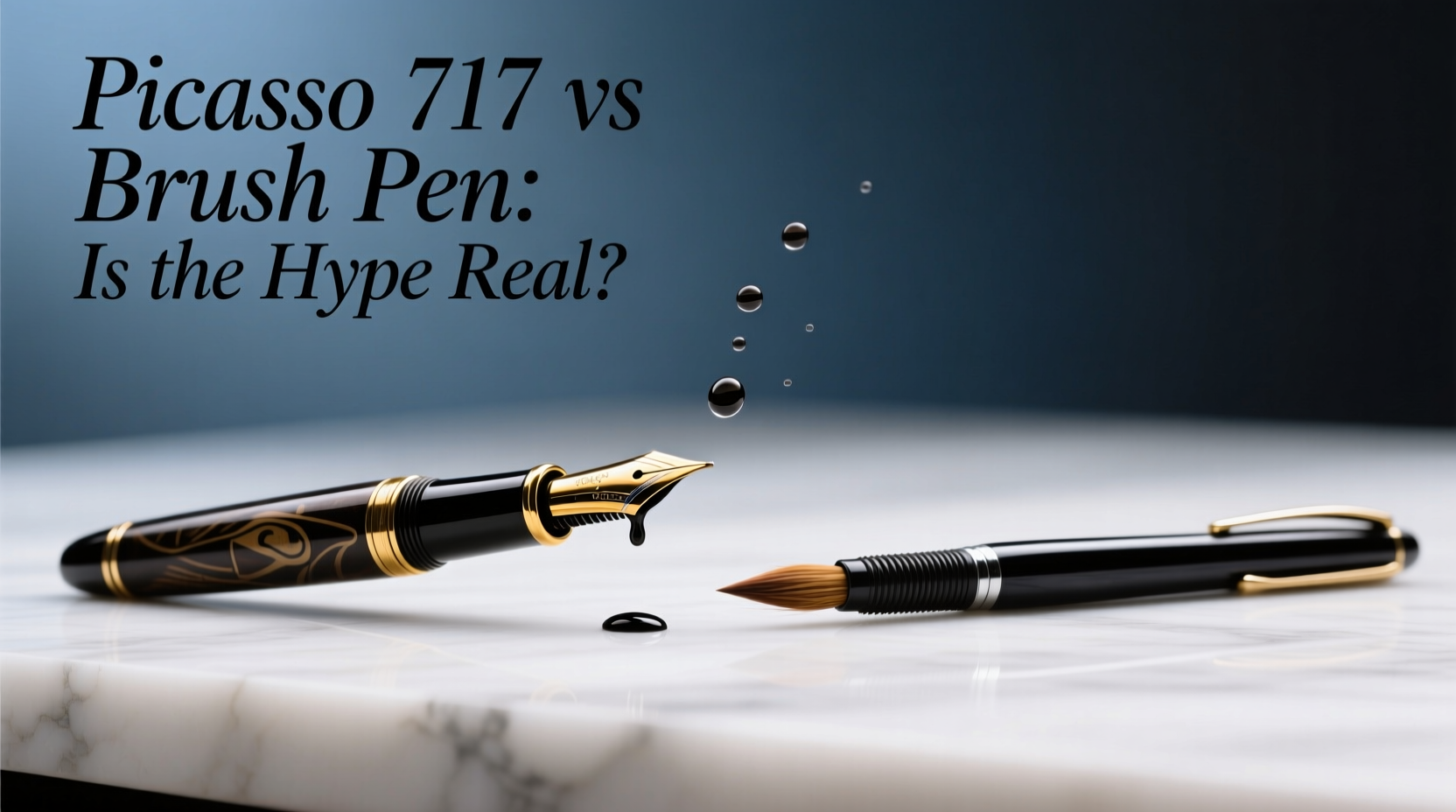
The Picasso 717 fountain pen features a stainless steel nib, ergonomic grip, and a sleek aluminum body that gives it a professional feel at an affordable price point. Unlike many budget fountain pens that skimp on ink flow or nib quality, the 717 delivers consistent line variation and smooth ink delivery when used with quality bottled inks.
Its fine-to-medium nib allows for subtle modulation—thicker downstrokes and thinner upstrokes—making it surprisingly versatile for both everyday writing and light artistic work. Refillable via standard international cartridges or converters, it promotes sustainability over disposable options.
Tip: Use water-based inks like J. Herbin or Diamine to prevent clogging and extend the life of your fountain pen.What sets the 717 apart from other entry-level fountain pens is its balance between weight and responsiveness. It doesn’t feel cheap, nor does it overwhelm the hand during extended use. For those transitioning from ballpoints or gel pens, this tactile feedback can be revelatory—offering a sense of connection between thought, hand, and page.
Brush Pens: The Expressive Alternative
On the flip side, brush pens have long been favorites among illustrators and lettering artists. They mimic the fluid dynamics of paintbrushes, allowing dynamic pressure sensitivity that produces dramatic thick-and-thin strokes. Brands like Tombow, Pentel, and Kuretake dominate this space, but the Picasso 717 brush pen version enters as a budget-conscious contender.
The brush tip is typically made of flexible synthetic bristles that compress under pressure, enabling everything from hairline details to bold fills. This makes them ideal for script styles, manga inking, and expressive sketching. However, they come with trade-offs: inconsistent ink saturation, tip fraying over time, and limited refillability (most are disposable).
While the Picasso 717 brush pen lacks the precision engineering of premium Japanese models, it performs admirably for casual use. Its reservoir holds enough ink for short sessions, and the tip retains shape better than expected at this price. Still, heavy users may find themselves replacing tips or entire units frequently.
“Fountain pens teach discipline; brush pens reward intuition.” — Lin Zhao, Calligraphy Instructor & Designer
Head-to-Head Comparison: Key Differences That Matter
| Feature | Picasso 717 Fountain Pen | Picasso 717 Brush Pen |
|---|---|---|
| Nib/Tech | Stainless steel nib, liquid ink flow | Synthetic brush tip, felt reservoir |
| Line Variation | Moderate (depends on pressure and ink) | High (responsive to pressure changes) |
| Durability | High (refillable, metal body) | Moderate (tip degrades with use) |
| Learning Curve | Moderate (requires steady hand) | Steep (pressure control needed) |
| Cost Over Time | Low (ink refills only) | Higher (replacement pens/tips) |
| Ideal For | Note-taking, journaling, copperplate | Illustration, brush lettering, comics |
This comparison reveals a fundamental divide: the fountain pen excels in consistency and longevity, while the brush pen wins in expressiveness and visual impact. Your choice depends less on which is “better” and more on what kind of output you want—and how much maintenance you’re willing to accept.
Real-World Example: A Student’s Transition from Gel to Fountain
Maya, a graphic design student, had always relied on rollerballs and brush pens for her sketchbook notes. When she picked up a Picasso 717 fountain pen on a friend’s recommendation, she was skeptical. After two weeks of frustration—ink blobs, skipped lines, smudging—she nearly gave up.
Then she adjusted her angle, switched to smoother paper, and started using De Atramentis Black Standard ink. Suddenly, the pen began to perform. Her handwriting improved, her note margins became cleaner, and she found herself slowing down just enough to absorb lecture content more deeply.
She still uses her brush pen for headers and illustrations, but now keeps the fountain pen open throughout class. “It’s not faster,” she says, “but it makes me think differently about how I write.”
When to Choose Which Tool: A Practical Decision Framework
Instead of treating these tools as rivals, consider integrating both into your workflow. Here’s a step-by-step guide to help you decide based on context:
- Evaluate your primary task: Are you taking notes, drafting ideas, or creating finished artwork?
- Assess your environment: Do you need portability, quick drying time, or resistance to smudging?
- Consider your skill level: If you're new to analog tools, start with the fountain pen for foundational control.
- Test paper compatibility: Fountain pens need smooth, bleed-resistant paper; brush pens require some tooth for grip.
- Budget for long-term use: Factor in replacement costs—brush pens add up over months.
Frequently Asked Questions
Can I use the same ink in both Picasso 717 models?
No. The fountain pen uses liquid bottled ink or cartridges. The brush pen is pre-filled and not refillable. Attempting to modify it may damage the reservoir or tip.
Which is better for beginners: fountain or brush?
The fountain pen offers more predictable results and teaches proper penmanship habits. The brush pen requires significant pressure control, making it harder for novices to achieve clean lines consistently.
Does the Picasso 717 fountain pen leak?
Not if maintained properly. Always cap the pen when idle, store it upright or horizontally, and avoid extreme temperature shifts. Leaks usually stem from overfilling or using low-quality inks that dry slowly.
Final Verdict: Hype vs. Reality
The Picasso 717 fountain pen earns its reputation—not because it’s flawless, but because it delivers exceptional value. For under $20, you get a durable, refillable writing instrument capable of refined expression. It won’t replace a Montblanc, but it outperforms most pens in its class.
The brush pen version, while functional, feels more like a compromise. It captures some of the flair of high-end brush markers but lacks their precision and lifespan. If you’re serious about brush lettering, investing in a Tombow Dual Brush or Pentel Fude Touch is wiser.
So yes—the fountain pen hype is real. But that doesn’t mean abandoning what works for you. The goal isn’t to chase trends, but to expand your toolkit intelligently. Try the Picasso 717 fountain pen if you’ve never used one. Keep your trusted gel pen handy. And remember: the best pen is the one that gets used—and used well.
💬 Have you tried both versions of the Picasso 717? Share your experience—what surprised you, what disappointed you, and what you’d recommend to others just starting out.








