A well-designed home bar reflects personal style, hospitality, and everyday joy—but for pet owners, it’s also a high-risk zone. Cats scale countertops with acrobatic ease; dogs investigate every scent, knock over bottles, and chew on anything within reach. Alcohol is toxic at minute doses: as little as one teaspoon of hard liquor can induce life-threatening ethanol poisoning in a 10-pound dog. Glass shards, dangling cords, essential oil diffusers, and even “harmless” cocktail garnishes like grapes or macadamia nuts pose serious, often underestimated dangers. This isn’t about sacrificing aesthetics or convenience—it’s about integrating safety into the design from the start. Drawing on veterinary toxicology guidelines, certified pet behaviorist recommendations, and real-world home renovations, this guide delivers actionable, tested solutions that protect pets without compromising your bar’s function or charm.
Why Standard Bar Setups Are Dangerous for Pets
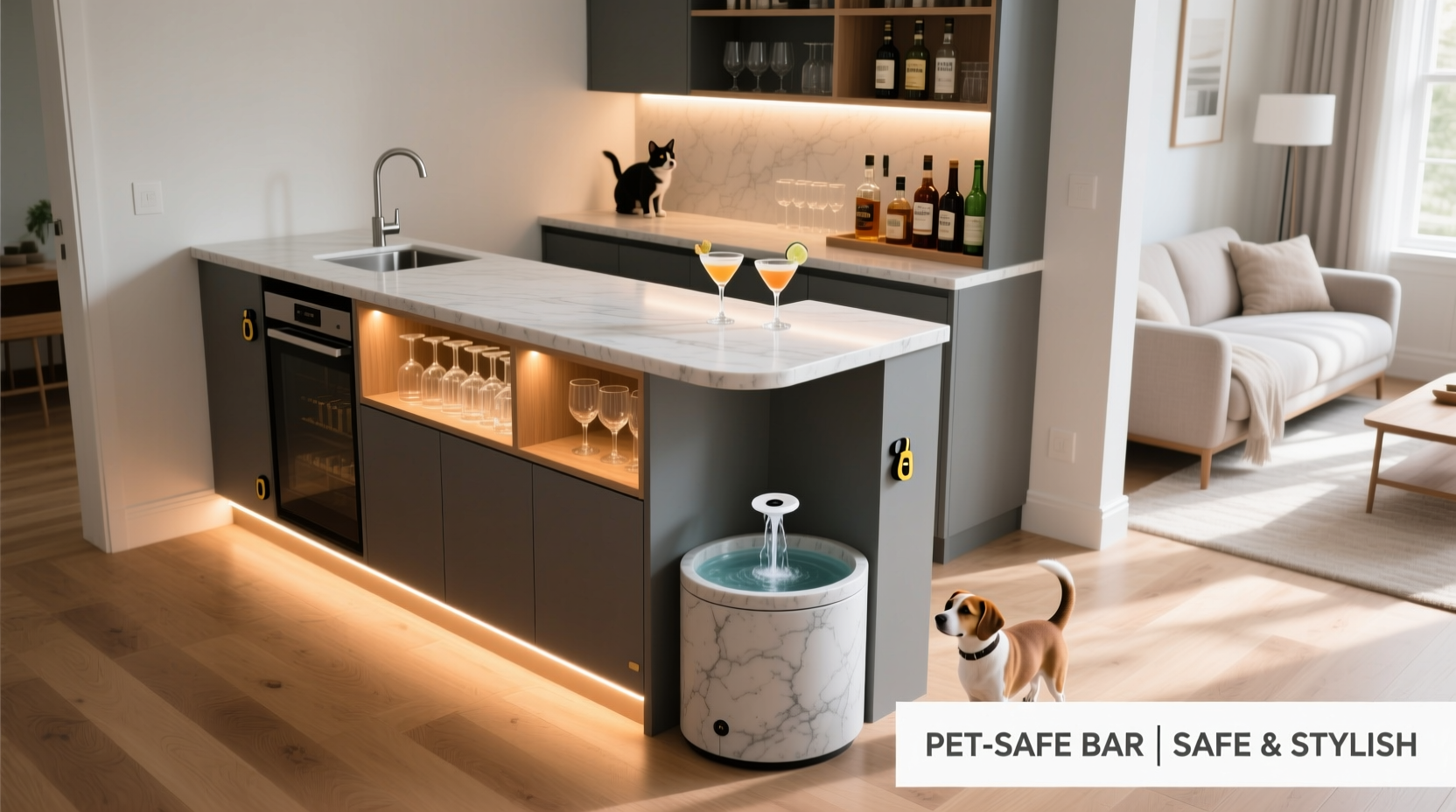
Most home bars follow conventional design logic: open shelving for display, low cabinets for easy access, countertop mixers and tools within arm’s reach. For pets, that layout is an invitation to hazard. Ethanol (found in beer, wine, and spirits) is rapidly absorbed through the gastrointestinal tract and skin. Symptoms of intoxication—including vomiting, disorientation, slowed breathing, hypothermia, and seizures—can appear within 30 minutes. Even spilled wine left unattended on a coaster poses risk: cats may lick it off surfaces, and dogs may lap pooled liquid before it evaporates. Beyond alcohol, common bar items compound danger:
- Glassware: Broken stemware creates sharp fragments easily stepped on or ingested.
- Cords and chargers: USB-powered cocktail shakers, LED bottle lights, and charging cables attract chewing—especially in teething puppies and exploratory kittens.
- Essential oils & citrus peels: Many bar garnishes (lemon, lime, orange rinds) and diffuser blends contain d-limonene and psoralens, which cause oral ulceration, liver damage, and photosensitivity in cats.
- Sugar-free syrups & gum: Xylitol triggers rapid insulin release in dogs, leading to hypoglycemia within 10–60 minutes—and potentially acute liver failure.
- Bottle openers & corkscrews: Small, metallic, and easily swallowed if dropped or left on counters.
Veterinary toxicologist Dr. Lena Torres, DVM, DACVIM, confirms: “We see 3–5 ethanol-related ER cases weekly during holiday seasons—and nearly half involve ‘just one sip’ left in a glass on a coffee table. Owners assume dilution or small volume makes it safe. It doesn’t. A 12-ounce beer contains enough ethanol to poison a 20-pound dog. Prevention must be structural—not situational.”
Five Pet-Safe Bar Design Principles (Backed by Behavior Science)
Effective pet safety begins not with restriction, but with thoughtful environmental design. These five principles are grounded in applied animal behavior research and home safety engineering:
- Vertical Separation: Elevate all high-risk items above 48 inches—the maximum vertical leap height for most adult cats and the typical standing reach of medium-to-large dogs.
- Barrier Integrity: Use latched, opaque enclosures instead of open shelves or glass-front cabinets. Clear visibility invites curiosity; opacity reduces motivation to investigate.
- Cord Management as Default: Never allow cords to dangle below counter height. Route them through internal channels or use recessed wall outlets.
- Surface Neutrality: Avoid textured, warm, or scented surfaces on bar tops—cats are drawn to warmth and residual food odors; dogs investigate sticky residues.
- Redundant Access Control: Layer security: childproof latches + motion-sensor lighting + strategic furniture placement (e.g., a narrow console behind the bar that blocks rear access).
Bar Layout Comparison: Risky vs. Pet-Safe
The difference between a hazardous and secure bar often lies in subtle spatial decisions. Below is a side-by-side comparison of two common setups—both occupying identical 6-foot wall space—highlighting functional trade-offs and safety outcomes.
| Feature | Risky Layout | Pet-Safe Layout |
|---|---|---|
| Storage Type | Open floating shelves with glass risers | Floor-to-ceiling built-in cabinetry with soft-close, latched doors and interior LED lighting |
| Countertop Items | Bottle openers, citrus reamers, cocktail picks, salt-rimmed glasses | Only non-toxic, non-sharp items: bamboo stirrers, stainless steel jiggers (stored upright in weighted base), silicone ice trays |
| Cord Placement | Charging cable for Bluetooth speaker draped over edge; USB mixer cord coiled on counter | All electronics hardwired via recessed outlet; USB ports mounted inside cabinet, accessed only when door is open |
| Garnish Strategy | Fresh lemons/limes in open ceramic bowl; mint sprigs in water glass | Pre-cut, sealed citrus wedges stored in fridge; dried edible flowers (rosemary, lavender) in latched spice drawer |
| Emergency Response | No spill containment; liquids soak into wood grain or drip onto floor | Integrated stainless steel trough with removable silicone liner; spills contained and wiped in under 15 seconds |
Step-by-Step: Converting Your Existing Bar in Under One Weekend
You don’t need to gut your kitchen or hire a contractor. Most pet-safe upgrades can be implemented in two focused days using off-the-shelf hardware and behavioral adjustments.
- Day 1 Morning — Audit & Remove: Empty the entire bar area. Discard or relocate all xylitol-containing products (sugar-free sodas, syrups), citrus fruits, essential oil diffusers, and decorative candles with lead wicks. Label each item “PET SAFE” or “RESTRICTED” using masking tape.
- Day 1 Afternoon — Secure Storage: Install magnetic cabinet latches on all upper cabinets. Replace glass-front doors with frosted acrylic inserts (cut to size at any hardware store). Line lower drawers with non-slip drawer liners to prevent bottles from sliding during pet nudges.
- Day 2 Morning — Cord Remediation: Purchase a recessed power outlet kit ($35–$60). Turn off circuit breaker. Cut drywall opening (template included), install box, and feed existing cords through. Mount USB/power strip inside cabinet, behind closed door.
- Day 2 Afternoon — Surface & Scent Reset: Wipe all countertops with unscented vinegar solution (1:1 water/vinegar) to eliminate food residue odors. Replace cloth coasters with weighted silicone ones that won’t slide. Store all garnishes in the refrigerator—not on the bar.
- Day 2 Evening — Behavioral Reinforcement: Place a cat tree or dog bed *adjacent* to—but not directly in front of—the bar. Reward calm, distant observation with treats. Never punish curiosity; redirect with appropriate toys placed nearby.
Real Example: The Portland Bungalow Bar Makeover
When Maya R., a graphic designer and owner of two rescue cats (Luna, age 4, and Pip, age 10 months), installed a reclaimed-wood bar in her 1920s bungalow, she prioritized vintage charm over safety. Within three weeks, Pip knocked over a full bottle of bourbon, shattered glass across the hardwood, and licked spilled liquid before Maya intervened. Luna scaled the open shelving and batted a lemon wedge into the HVAC vent. After consulting with a certified pet behavior consultant, Maya implemented four key changes: (1) She replaced floating shelves with custom walnut cabinets featuring push-to-open mechanisms and internal latches; (2) She relocated her ultrasonic diffuser to the bedroom and swapped citrus garnishes for freeze-dried blueberries (safe for cats in tiny amounts); (3) She installed a recessed outlet and routed all cords internally; (4) She added a 3-inch-wide “no-go” strip of double-sided tape along the front edge of the countertop—a texture both cats strongly avoid. Six months later, no incidents. “It’s not about making the bar boring,” Maya says. “It’s about designing for how my cats actually move and think—not how I wish they would.”
Pet-Safe Bar Essentials Checklist
Before hosting or daily use, verify these elements are in place:
- ✅ All alcohol bottles stored in latched, opaque cabinets (not open shelves or glass doors)
- ✅ No cords visible below 36 inches from floor level
- ✅ Countertop free of citrus peels, grapes, raisins, macadamia nuts, xylitol-sweetened items
- ✅ Glassware stored vertically in padded racks—not stacked horizontally where vibration causes slippage
- ✅ Spill tray or integrated trough installed and cleaned after each use
- ✅ Non-toxic cleaning supplies only (no bleach, ammonia, or tea tree oil near bar zone)
- ✅ Motion-activated nightlight installed *above* bar height to discourage nocturnal exploration
FAQ: Common Concerns Addressed
Can I still use a wine fridge if I have pets?
Yes—with precautions. Choose a front-venting model installed at least 18 inches off the floor (not built-in at base level). Ensure the door has a childproof latch and never leave it ajar. Keep the surrounding floor clear: spilled wine attracts licking, and condensation pools can become ethanol reservoirs.
Are “pet-safe” essential oil brands truly safe for bar use?
No brand is reliably safe for airborne diffusion around cats or dogs. Even oils labeled “non-toxic” (e.g., lavender, frankincense) contain volatile compounds that overwhelm pets’ olfactory and hepatic systems. If aroma matters, use food-grade extracts (vanilla, almond) in sealed, latched containers—and only add drops to drinks immediately before serving.
What’s the safest way to store cocktail tools?
Use a weighted, lidded stainless steel caddy mounted *inside* a cabinet—not on the countertop. Tools should sit upright in individual slots (no loose piles). Avoid wooden handles (chew targets) and rubber grips (often contain phthalates). Opt for seamless stainless steel or FDA-grade silicone.
Conclusion: Safety Is the First Ingredient
A pet-safe home bar isn’t a compromise—it’s a refinement. It reflects deeper intention: respect for your animals’ instincts, awareness of their physiological limits, and commitment to shared living spaces that work for everyone. You don’t need to hide your passion for craft cocktails or dismantle your aesthetic vision. You simply align design choices with biological reality. Every latched cabinet, every recessed cord, every citrus-free garnish is a quiet act of care—one that prevents emergency vet visits, reduces household stress, and lets joy return to the ritual of mixing a drink. Start with one upgrade this week: install those cabinet latches, clear the countertop of fruit bowls, or swap out that diffuser. Then notice what changes—not just in safety, but in peace of mind. Your pets won’t thank you with words, but they’ll show it in longer naps on the sofa, calmer evenings, and the quiet confidence of a home where curiosity is welcomed, not punished.
💬 Your experience matters. Have you redesigned your bar for pet safety? Share your smartest hack, biggest lesson, or favorite pet-safe product in the comments—we’ll feature top insights in next month’s community roundup.








