Bar carts are more than stylish furniture—they’re functional hubs where cocktails mingle with daily life. But when pets roam freely, that gleaming brass tray, glass decanter stand, or walnut shelf becomes a potential hazard zone. Residual cleaning agents—especially common in kitchen and surface cleaners—can linger invisibly on surfaces, transferring to paws, fur, and whiskers through contact or grooming. A curious cat licking spilled simple syrup off a stainless-steel ice bucket may also ingest trace amounts of quaternary ammonium compounds (“quats”) left behind by a disinfectant wipe. A dog nudging a low-slung oak cart might brush against a recently wiped surface coated in synthetic fragrances or ethanol-based sprays—both linked to gastrointestinal upset and dermal irritation in sensitive animals.
Veterinary toxicology data from the ASPCA Animal Poison Control Center shows a 27% year-over-year increase in household surface-cleaner-related pet exposures since 2021—with alcohol-based, phenol-containing, and pine-oil cleaners ranking among the top culprits for bar cart–adjacent incidents. Yet most bar cart care advice ignores this reality, prioritizing shine over safety. This article bridges that gap: not as a compromise between aesthetics and wellness, but as an integrated standard. You don’t need to sacrifice elegance, efficacy, or convenience to protect your pets. You need precision—knowing which ingredients to avoid, which tools eliminate residue, and how to verify cleanliness without chemical crutches.
Why Standard Bar Cart Cleaners Pose Hidden Risks
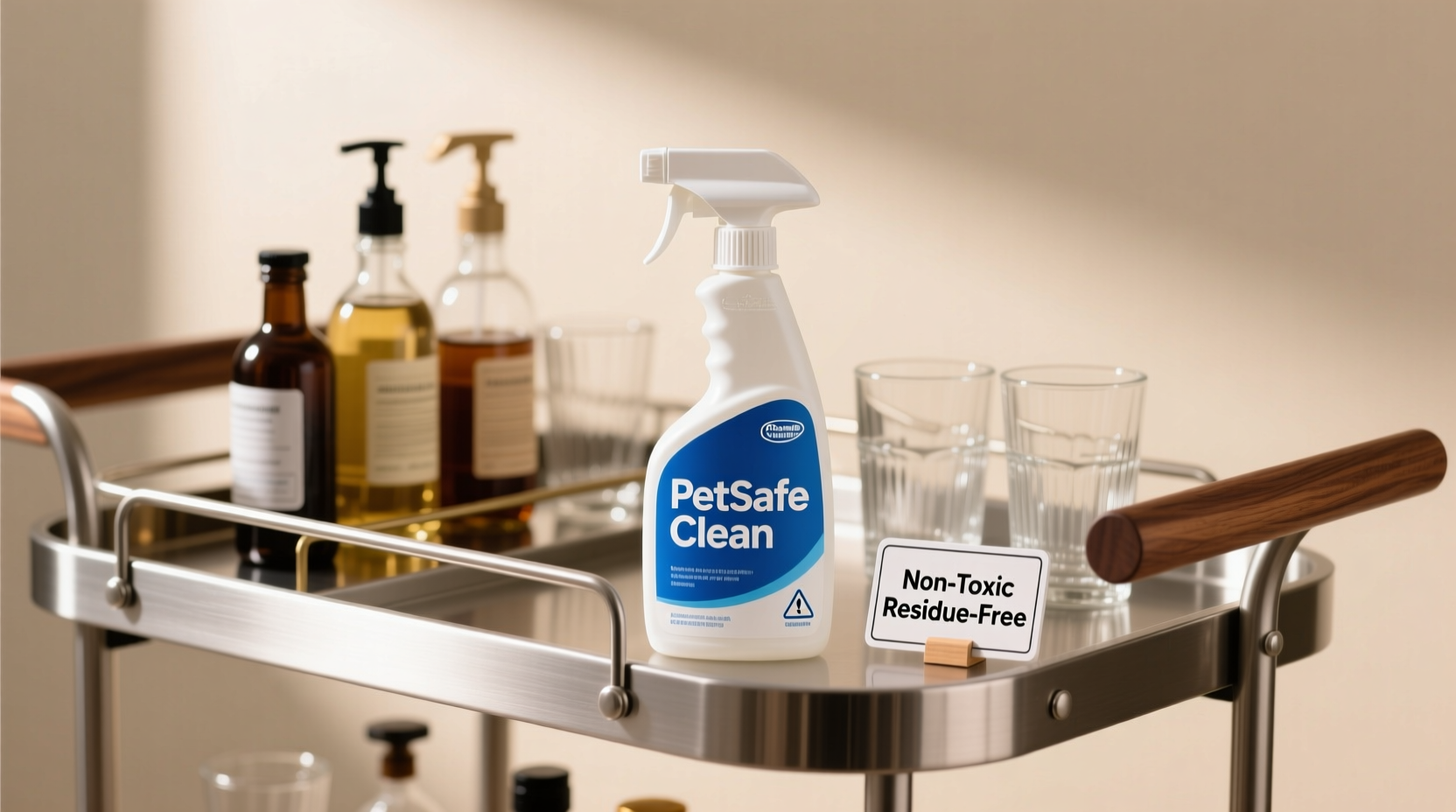
Most commercially marketed “bar-safe” or “glass-and-stainless” cleaners contain ingredients that are neither inert nor rapidly dissipating. Isopropyl alcohol (common in streak-free sprays) evaporates quickly—but leaves behind solvent residues that can irritate mucous membranes if licked repeatedly. Sodium lauryl sulfate (SLS), used for foaming action in many all-purpose cleaners, is a known skin sensitizer and oral irritant; even minute traces on a copper coaster can trigger drooling or vomiting in small dogs or kittens.
More insidious are non-volatile residues: quaternary ammonium compounds (e.g., benzalkonium chloride), widely used in “disinfecting” wipes and sprays, bind tightly to porous surfaces like unfinished wood or cork trays. They do not rinse away easily—and remain biologically active for days. When a pet lies beside the cart or rests its chin on the lower shelf, prolonged dermal exposure can lead to contact dermatitis or systemic absorption. Similarly, synthetic fragrances (often undisclosed under the term “parfum”) frequently contain phthalates and limonene—compounds associated with respiratory sensitization in cats, whose livers lack glucuronidation enzymes to metabolize them efficiently.
“Pets groom themselves constantly—and they explore their world orally. A surface that feels ‘dry’ to human touch may still hold bioavailable toxins at concentrations unsafe for repeated low-dose exposure.” — Dr. Lena Torres, DVM, Board-Certified Veterinary Toxicologist, ASPCA APCC
Pet-Safe Ingredient Guide: What to Keep—and What to Ban
Effective cleaning doesn’t require harsh chemistry. It requires intelligent formulation. Below is a vet-reviewed, residue-minimizing ingredient hierarchy for bar cart maintenance:
| Ingredient Class | Acceptable & Safe | Avoid Completely | Risk Rationale |
|---|---|---|---|
| Surfactants | Plant-derived glucosides (e.g., decyl glucoside), saponins (from soapberry) | Sodium lauryl sulfate (SLS), sodium laureth sulfate (SLES), alkylphenol ethoxylates | SLS/SLES cause oral ulceration and GI distress; alkylphenols are endocrine disruptors with persistent environmental toxicity |
| Alcohols | Food-grade ethanol (≤5% concentration), diluted grain alcohol (vodka) used *sparingly* and fully air-dried | Isopropyl alcohol (>30%), denatured alcohol, methanol-based solvents | Isopropyl is neurotoxic to cats; denatured alcohol contains bitterants (e.g., denatonium) that cause severe salivation and nausea |
| Fragrances | Steam-distilled essential oils *only* in verified non-toxic forms (e.g., lavender Lavandula angustifolia at ≤0.1% dilution), or fragrance-free | Pine oil, tea tree oil (melaleuca), citrus oils (d-limonene), synthetic musks | Tea tree oil is hepatotoxic to cats at doses as low as 10 µL; d-limonene causes tremors and ataxia in dogs |
| Disinfectants | 3% hydrogen peroxide (used once weekly, rinsed thoroughly), UV-C sanitizing wands (non-chemical, no residue) | Benzalkonium chloride, sodium hypochlorite (bleach), phenolic compounds (e.g., ortho-phenylphenol) | Phenolics cause fatal hepatic necrosis in cats; quats accumulate on surfaces and resist rinsing |
Step-by-Step: The 7-Minute Pet-Safe Bar Cart Protocol
This routine removes organic residue (sugar, citrus oils, tannins), eliminates microbial load without toxic carryover, and preserves finish integrity—all in under seven minutes. It assumes daily light wiping and weekly deep cleaning.
- Clear & Assess (60 sec): Remove all bottles, glasses, and accessories. Inspect for sticky spots (syrup, bitters residue), mineral deposits (from hard water), or tarnish (on brass/copper). Note any porous elements: cork coasters, unfinished wood shelves, or fabric-lined drawers.
- Dry Dust (90 sec): Use a microfiber cloth *dedicated only to dry dusting*. No sprays. Gently lift dust from crevices, under shelves, and around wheel axles. Avoid feather dusters—they aerosolize particles pets later inhale or groom off fur.
- Targeted Spot Treatment (120 sec): For sticky areas: dampen a corner of a clean microfiber cloth with 1 tsp food-grade ethanol + 2 tsp distilled water. Wipe *once*, then immediately follow with a second dry cloth. For tarnish on brass: mix ½ tsp baking soda + 1 tsp lemon juice (freshly squeezed) into paste; apply with cotton swab, rinse *within 30 seconds*, and buff dry. Never let acid sit on metal.
- Surface Rinse (90 sec): Lightly mist *only* the primary contact surfaces (tray, shelf top, handle) with distilled water using a fine-mist spray bottle. Immediately wipe with a fresh, highly absorbent microfiber cloth—no pooling, no waiting. Distilled water prevents mineral film buildup that traps residues.
- Final Buff & Verify (60 sec): Use a third, completely dry microfiber cloth to polish all metal and glass surfaces. Run your bare finger across each area—if it feels slick or smells faintly of anything beyond water or neutral fiber, repeat Step 4. True safety means zero detectable scent or texture change.
- Accessory Care (60 sec): Wash glassware in hot soapy water (using pet-safe dish soap—see checklist), rinse twice in distilled water, air-dry upside-down on a clean rack. Wipe wooden coasters with damp cloth only—never soak. Cork coasters: use dry brush only.
- Residue Check (30 sec): Press a piece of clear tape onto a cleaned surface, peel off, and stick to white paper. If residue transfers (cloudiness, stickiness, discoloration), re-clean that spot with distilled water only.
Real-World Case Study: The Maplewood Cart Incident
In Portland, Oregon, a client brought her mid-century maple bar cart to a certified pet wellness home organizer after her 3-year-old rescue cat, Miso, developed recurrent lip ulcerations and excessive paw licking. Initial suspicion pointed to food allergy—until the organizer observed Miso resting chin-down on the cart’s lower shelf every evening. Lab analysis of swab samples revealed persistent traces of benzalkonium chloride (from “disinfecting” wipes used weekly) and synthetic vanilla fragrance (from a scented glass cleaner). The cart’s unfinished maple veneer had absorbed both compounds deeply. After switching to the 7-minute protocol—replacing wipes with distilled-water-only microfiber cleaning and eliminating all scented products—Miso’s symptoms resolved within 11 days. Crucially, the organizer advised sealing the shelf’s underside with a food-safe, water-based acrylic sealant (approved for pet-contact surfaces), preventing future absorption. This case underscores a critical truth: residue risk isn’t just about what you *apply*—it’s about what your cart *holds*.
Pet-Safe Cleaning Checklist
- ✅ Use only microfiber cloths labeled “low-lint, no chemical treatment”—never paper towels or generic rags (may contain formaldehyde resins)
- ✅ Store all cleaning supplies *outside* the bar cart—never in drawers or cabinets beneath it where vapors concentrate
- ✅ Replace cloths after *every third use*—residue accumulates in fibers even after washing
- ✅ Test new products on a hidden area first: apply, wait 2 hours, then wipe with distilled water and check for lingering tackiness or odor
- ✅ Keep vinegar *out* of your bar cart routine—its acidity dulls brass, etches marble trays, and attracts ants (which then draw pets into secondary hazards)
- ✅ Choose dish soap with no added fragrances, dyes, or preservatives—look for USDA Certified Biobased or ECOCERT labels
FAQ: Addressing Common Concerns
Can I use vinegar or baking soda for deep cleaning my bar cart?
No—not routinely. While baking soda is safe for occasional gentle scrubbing on stainless steel or glass, its abrasiveness scratches soft metals like copper and aluminum. Vinegar’s acetic acid reacts with calcium carbonate deposits but also corrodes brass plating, dissolves patina on aged copper, and leaves acidic residue that attracts moisture and promotes mold in wood joints. Reserve vinegar for *non-bar-cart* uses (e.g., kettle descaling) and never mix it with hydrogen peroxide or bleach—it creates toxic chlorine gas.
My cart has a lacquered wood finish. Are plant-based cleaners safe?
Only if pH-neutral (6.5–7.5). Many “natural” cleaners are alkaline (pH 8–10) to boost cleaning power—this breaks down wood varnish over time, exposing porous grain that absorbs and retains residues. Use only cleaners explicitly labeled “safe for finished wood” and verified pH-neutral via third-party testing (not manufacturer claims).
How often should I deep-clean if I have multiple pets?
Twice weekly. Multi-pet households increase exposure frequency and diversity: a dog’s coarse coat picks up more particulate residue; a cat’s meticulous grooming amplifies oral dose. Add a 30-second distilled-water wipe-down after *every* use involving sticky liquids (simple syrup, grenadine, fruit juices)—these attract dust and create biofilm habitats for microbes that cleaners then struggle to penetrate without harsh agents.
Conclusion: Elevate Safety Without Sacrificing Sophistication
A well-curated bar cart reflects intention—not just in its contents, but in how it coexists with the living beings who share your home. Pet-safe cleaning isn’t about diluting standards; it’s about refining them. It means choosing a brass polish that brightens without leaching heavy metals, selecting a glass cleaner that clarifies without coating, and adopting a rhythm of care that honors both craftsmanship and companionship. Every microfiber cloth you dedicate, every distilled water refill you pour, every label you scrutinize—is a quiet act of stewardship. Your cart doesn’t need to be sterile to be safe. It needs to be thoughtful.
Start tonight: empty your current cleaner, rinse the bottle thoroughly, and fill it with distilled water and one drop of food-grade ethanol. Wipe down your cart using the 7-minute protocol—not as a chore, but as a ritual of care. Notice how the light catches the unstreaked glass. Feel the smooth, residue-free warmth of the wood. Watch your pet settle nearby, unbothered, unhurried, entirely at ease. That’s the real signature of a truly well-designed space.
💬 Your experience matters. Did a pet-safe swap transform your bar cart routine? Share your go-to solution, a cautionary note, or a finish-preserving tip in the comments—your insight could protect another pet and elevate someone’s entire home ritual.








