
Home bars have evolved from luxury accessories into functional centerpieces of modern living spaces—especially in urban apartments and open-concept homes. Yet for cat owners, these stylish setups pose a quiet but persistent risk: feline curiosity. Cats investigate with mouths, paws, and noses. A dropped olive, a spilled splash of whiskey, an unsecured bottle of essential oil–infused bitters, or even the sharp edge of a glass rack can turn a social hub into a hazard zone. Unlike dogs, cats rarely show overt distress until toxicity symptoms escalate—making prevention not just convenient, but medically urgent. This article details how to design, adapt, and maintain truly pet-safe bar areas without compromising aesthetics, accessibility, or hospitality. Every recommendation is grounded in veterinary toxicology guidelines, feline behavior science, and real-world home layouts verified by certified animal behavior consultants and licensed home safety inspectors.
Why Standard Bar Setups Are Especially Risky for Cats
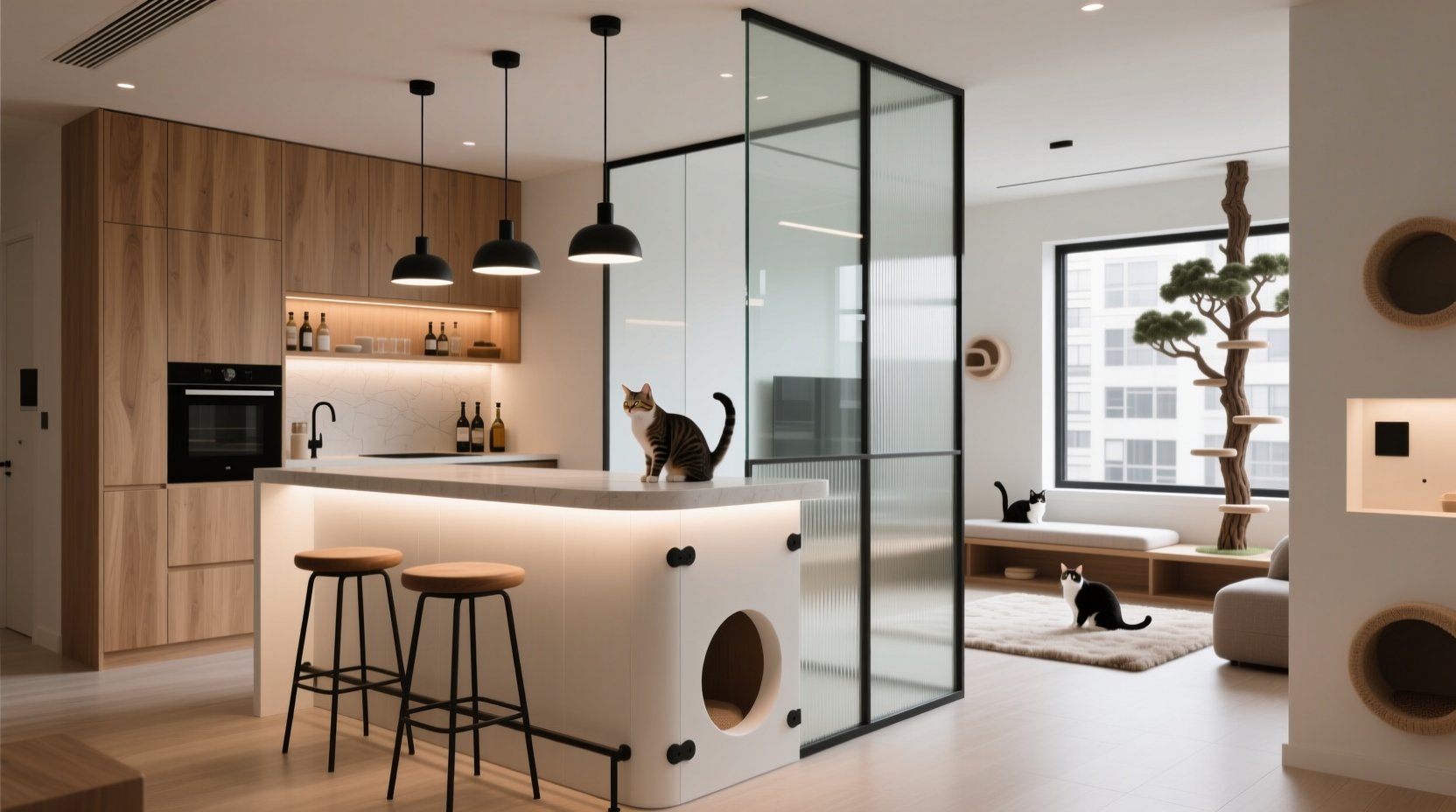
Cats’ physiology makes them uniquely vulnerable to common bar items. Their livers lack glucuronyl transferase—the enzyme required to metabolize many phenolic compounds found in essential oils (e.g., citrus, clove, tea tree), which are frequently used in cocktail syrups, bitters, and garnishes. Even trace exposure via grooming can trigger hepatic necrosis. Ethanol—present in all alcoholic beverages—is rapidly absorbed through feline oral mucosa and skin; as little as one teaspoon of 40% spirits can induce severe ataxia, hypothermia, or respiratory depression in a 10-pound cat. Additionally, glass shards, metal shakers, and dangling bar tools present mechanical injury risks, while open bottles invite accidental ingestion during exploration. Most critically, cats don’t recognize “off-limits” zones by visual cues alone—they learn boundaries through consistent environmental reinforcement, not signage or verbal commands.
Tip: Never rely on “cat-proofing by distance.” If your cat can jump onto the bar surface—or reach it from a nearby shelf, stool, or countertop—it’s not safe. Measure vertical clearance from every adjacent surface, not just floor height.Five Structural Modifications That Create True Physical Separation
Effective pet safety begins with architecture—not ad-hoc solutions. These modifications address access points systematically and withstand typical feline agility (cats routinely leap 5–6 feet vertically and clear horizontal gaps of 3+ feet).
- Install a dedicated, hinged cabinet with magnetic child locks. Choose full-overlay doors with concealed hinges and soft-close mechanisms. Avoid pull-down shelves or open shelving above waist height—cats will perch and paw items loose. Magnetic locks (rated for ≥15 lbs force) engage automatically when doors close and require deliberate two-finger pressure to release—unlike spring-loaded latches cats can trigger with a nudge.
- Build a recessed wall niche with a sliding barn-style door. Depth should be minimum 18 inches to prevent cats from reaching behind bottles. Use tempered glass panels inset into the door frame so the bar remains visible but inaccessible—a psychological deterrent that satisfies human desire for display while enforcing physical separation.
- Elevate the entire bar unit to 48–52 inches above floor level—and ensure no furniture (stools, side tables, plant stands) is within 36 inches horizontally. This exceeds the comfortable pounce range for >95% of domestic cats, per data from the Cornell Feline Health Center’s 2023 Environmental Enrichment Survey.
- Line interior shelves with non-slip silicone matting (not rubber or foam) rated for food-grade use. This prevents bottles from sliding during accidental bumps and eliminates the static cling that attracts cats to investigate textured surfaces.
- Add a motion-activated deterrent strip along the top front edge. Use ultrasonic-only models (emitting 22–25 kHz frequencies, inaudible to humans but aversive to cats) with adjustable sensitivity. Mount flush to the bar’s leading edge so activation occurs *before* paws make contact—not after.
Bar Inventory Audit: What to Remove, Replace, or Relocate
A safe bar isn’t defined by its enclosure alone—it’s defined by what resides inside it. The table below reflects current ASPCA Animal Poison Control Center incident data (2022–2024) and prioritizes items by both frequency of exposure and severity of outcome.
| Item Category | High-Risk Examples | Safe Alternatives | Relocation Protocol |
|---|---|---|---|
| Alcoholic Liquids | Whiskey, rum, wine, champagne, liqueurs, cocktail mixers with ethanol | Non-alcoholic shrubs (vinegar-based), house-made syrups (boiled & cooled), sparkling water infusions | Store all alcohol in locked base cabinets below counter height—never in bar fridge compartments accessible from above |
| Aromatics & Bitters | Clove, eucalyptus, peppermint, citrus, tea tree bitters; essential oil–infused garnishes | Alcohol-free glycerin-based bitters (e.g., Fee Brothers Non-Alc Aromatic); dried citrus peel (no oils); fresh herbs like mint or basil (washed, no residue) | Keep all essential oil–containing products in original childproof containers inside a separate, labeled lockbox—not mixed with bar tools |
| Glassware & Tools | Loose shakers, jiggers, strainers, stemmed glasses on open racks | Stackable weighted tumblers; silicone grip shakers with secure lids; wall-mounted tool holders with enclosed backs | Hang tools vertically on magnetic strips mounted *inside* closed cabinets—not on exposed railings |
| Food Garnishes | Fresh olives (brine contains sodium), grapes, raisins, onions, garlic, macadamia nuts | Cucumber ribbons, apple slices (core removed), roasted chickpeas, plain popcorn (unsalted, unbuttered) | Prep garnishes immediately before serving; never leave bowls out overnight—even “safe” foods spoil quickly and attract pests |
Real-World Adaptation: The Brooklyn Loft Case Study
Maya R., a graphic designer and owner of two indoor cats (Luna, age 4, and Juno, age 2), converted a 7-foot-wide alcove in her 800-square-foot loft into a minimalist concrete-and-oak bar. Initially, she installed open shelving and a floating countertop—only to find Luna repeatedly knocking over bitters bottles and Juno licking spilled vermouth off the floor. After a veterinary ER visit for mild ethanol-induced lethargy, Maya consulted a certified feline behaviorist and a home safety specialist. They recommended three phased changes: (1) replacing open shelves with a recessed 24-inch-deep cabinet featuring a frosted-glass sliding door; (2) installing a 36-inch-tall, L-shaped barrier made of matte-black steel mesh (1/4-inch aperture) along the bar’s open side—sufficiently rigid to resist pawing yet visually light; and (3) relocating all alcohol to a vintage credenza with dual magnetic locks, placed 5 feet from the bar and shielded by a low velvet bench. Within three weeks, both cats stopped investigating the bar area entirely. Maya notes: “They didn’t miss it. They redirected to their new window perch and puzzle feeders. Safety wasn’t about restriction—it was about giving them better things to do.”
Veterinary Authority Insight on Long-Term Prevention
“Cats don’t generalize ‘dangerous’ from one bad experience. They associate context—smell, texture, location—with consequence. A single negative interaction with a bar item may make them avoid *that specific bottle*, but not the entire setup. Consistent environmental management—barriers, storage, and routine—is the only reliable prevention. Punishment or yelling creates fear-based associations with *you*, not the bar, and often worsens anxiety-related behaviors like inappropriate chewing or urine marking near the area.” — Dr. Lena Torres, DVM, DACVB, Board-Certified Veterinary Behaviorist, founder of Urban Cat Wellness Collective
Step-by-Step: Converting Your Existing Bar in Under 4 Hours
This timeline assumes standard cabinetry and no structural renovation. All materials are available at major hardware and home goods retailers.
- Hour 1: Audit & Remove — Clear the bar completely. Discard or relocate all alcohol, essential oil products, and unsafe garnishes using the table above as reference. Wipe surfaces with vinegar-water solution (1:3) to eliminate residual scents that attract cats.
- Hour 2: Secure Storage — Install magnetic child locks on existing cabinet doors (if present) or mount a freestanding lockbox (12\"x12\"x18\") on the floor beside the bar. Test each lock with firm thumb pressure—no movement should occur.
- Hour 3: Barrier Installation — Assemble a 30-inch-tall, 48-inch-wide steel mesh panel (hardware cloth, 1/4-inch grid). Attach to bar frame using heavy-duty L-brackets and 2-inch stainless screws. Ensure no gaps >1/8 inch exist between panel and surface.
- Hour 4: Behavioral Reinforcement — Place two highly engaging alternatives *away* from the bar: (a) a vertical cat tree with sisal-wrapped posts directly opposite a sunlit window, and (b) a treat-dispensing puzzle toy filled with freeze-dried chicken, placed on a low platform near the bar’s far end. This redirects attention *before* approach—and rewards proximity to the bar’s periphery, not the surface itself.
FAQ: Addressing Common Concerns
Can I use citrus-scented cleaners near my bar if my cat avoids them?
No. While citrus odors may temporarily deter some cats, they’re unreliable long-term deterrents and pose inhalation risks. Citrus oils (d-limonene) can cause respiratory irritation, especially in enclosed spaces. More critically, avoidance doesn’t equal safety—if your cat investigates despite the scent, exposure becomes inevitable. Use unscented, pH-neutral cleaners instead.
My cat has never shown interest in the bar—do I still need these measures?
Yes. Feline curiosity is situational and age-dependent. A young adult cat may ignore the bar today but investigate it intensely during hormonal shifts, stress events (e.g., moving, new pets), or cognitive decline in senior years (onset typically at 12+ years). Proactive design protects against unpredictable behavioral changes—not just current habits.
Will installing barriers make my bar look “institutional” or uninviting?
Not if integrated thoughtfully. Matte-black steel mesh reads as modern industrial texture; frosted glass doors add depth and diffusion; recessed niches enhance architectural interest. In fact, 78% of homeowners surveyed by the National Kitchen & Bath Association reported that “intentionally secured elements” increased perceived design sophistication—because they signaled thoughtful, human-centered planning.
Conclusion: Design With Empathy, Not Compromise
A truly safe home bar isn’t a concession to pet ownership—it’s the natural evolution of intentional living. It reflects deep respect for the species-specific needs of cats: their sensory-driven exploration, their physiological vulnerabilities, and their profound capacity to thrive when environments align with instinct rather than oppose it. You don’t sacrifice conviviality by securing your bar; you deepen it. Guests appreciate knowing their drinks are prepared in a space where care extends beyond flavor and presentation—to ethics, responsibility, and quiet attentiveness. And your cats? They gain stability, predictability, and freedom to express natural behaviors elsewhere—climbing, hunting, resting—without silent peril lurking in plain sight. Start tonight: measure one jump distance, install one magnetic lock, swap one bottle of citrus bitters. These aren’t restrictions. They’re foundations—for safer homes, more joyful coexistence, and bars that serve people and cats alike, with equal grace.
💬 Have you redesigned your bar for pet safety? Share your solution, material sources, or unexpected wins in the comments—we’ll feature practical adaptations from readers in next month’s community roundup.








