Alcohol—whether in beverages, hand sanitizers, cleaning products, or cooking extracts—is a silent but serious threat to pets. Unlike humans, dogs and cats metabolize ethanol and isopropanol inefficiently, making even small exposures potentially life-threatening. A single tablespoon of hard liquor, a spilled shot glass, or an unattended bottle of rubbing alcohol can trigger vomiting, disorientation, respiratory depression, seizures, or coma in a 20-pound dog—and smaller pets face even greater risk. Yet most households store alcohol without considering how easily curious paws, noses, and tongues can breach what seems like “safe” spaces. This article outlines concrete, veterinarian-approved strategies—not theoretical warnings—to create genuinely pet-safe zones in homes where alcohol is present. It draws on clinical toxicology data from the ASPCA Animal Poison Control Center (APCC), peer-reviewed veterinary literature, and real-world incident patterns observed across over 12,000 reported pet alcohol exposures annually in the U.S.
Why Alcohol Is Especially Dangerous for Pets
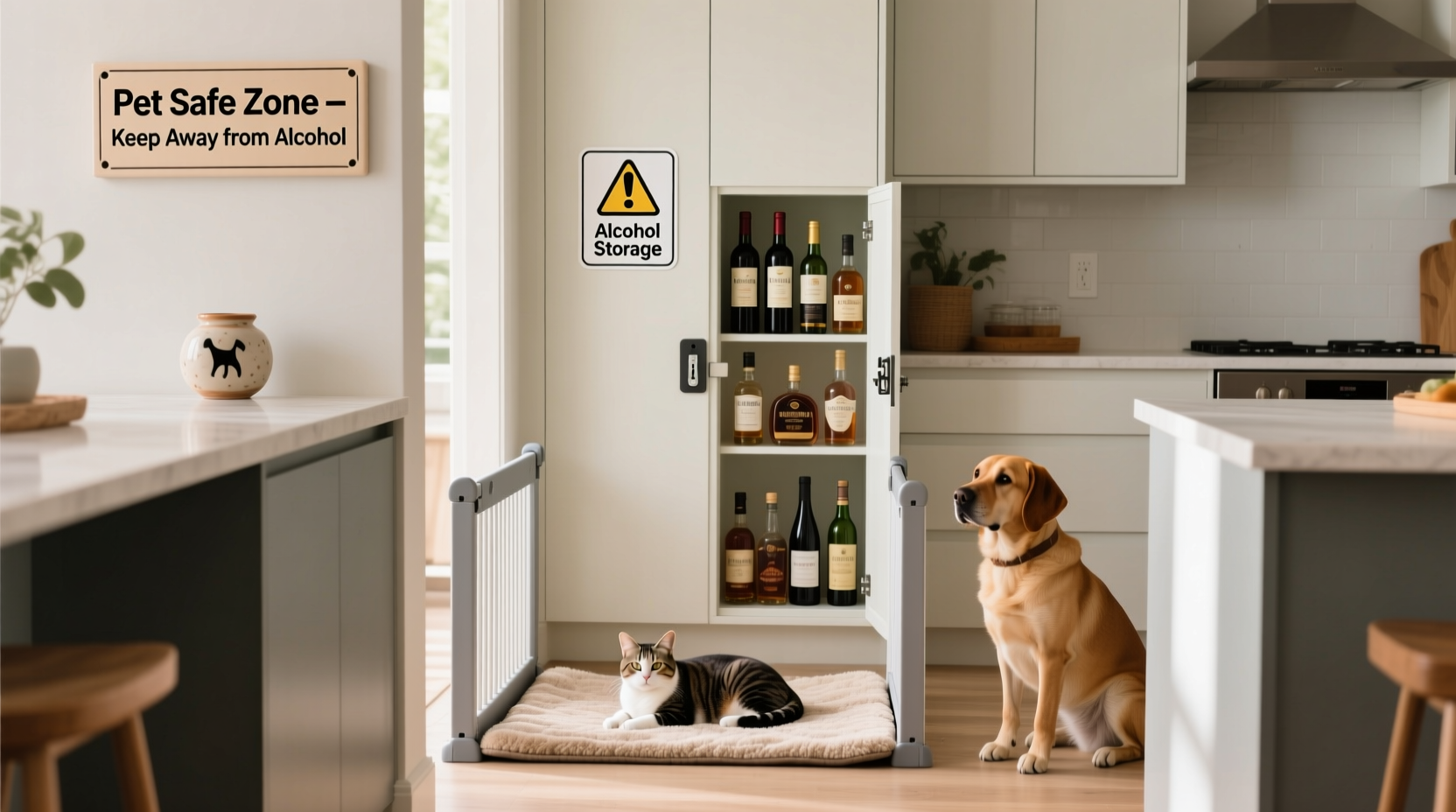
Animals lack the liver enzyme alcohol dehydrogenase in sufficient quantities to process ethanol efficiently. Dogs absorb ethanol rapidly through the gastrointestinal tract—peak blood levels occur within 30–60 minutes—and their smaller body mass means minimal exposure produces high serum concentrations. Isopropanol (found in rubbing alcohol, disinfectant sprays, and some flea treatments) is even more toxic: it’s twice as potent as ethanol by volume and causes severe metabolic acidosis and ketosis without significant intoxication signs—meaning a pet may appear only mildly lethargic before collapsing. Cats are uniquely vulnerable due to deficient glucuronidation pathways; they cannot detoxify many alcohol-based compounds, including ethyl alcohol in liquid medications and flavoring agents like vanilla extract.
“Ethanol toxicity in dogs often presents within 15–30 minutes of ingestion. Owners frequently mistake early signs—wobbliness, drooling, or excessive panting—for ‘playfulness’ or ‘excitement.’ By the time vomiting or collapse occurs, the animal may already require IV fluids and intensive monitoring.” — Dr. Lena Torres, DVM, DACVECC, Director of Critical Care at Midwest Veterinary Toxicology Institute
Pet-Safe Storage Zones: Beyond “Out of Reach”
“Out of reach” is not enough. Pets jump, climb, knock objects off shelves, chew through cardboard, and investigate closed cabinets with startling persistence. A truly pet-safe storage zone must satisfy three criteria: physical inaccessibility, sensory concealment (no scent leakage), and structural integrity (no accidental spills or breakage). Below is a comparative framework for evaluating common household locations:
| Location | Pet-Safe? (Yes/No) | Rationale & Risk Factors | Required Modifications |
|---|---|---|---|
| Top shelf of pantry (unlocked) | No | Cats routinely scale pantry shelves; dogs learn to open cabinet doors; ethanol vapors seep through porous lids | Add childproof cabinet locks + seal bottles in double-layered, odor-proof containers (e.g., glass mason jar inside airtight plastic bin) |
| Locked liquor cabinet (wood, standard latch) | Conditional | Most latches fail under persistent pawing or chewing; wood absorbs alcohol vapors, creating lingering scent trails | Replace latch with magnetic lock requiring >5 lbs force; line interior with activated charcoal pads to neutralize odors |
| High-mounted wall cabinet (≥6 ft, solid door, no ventilation holes) | Yes | Physically unreachable for all common pets; sealed construction prevents vapor escape | None—provided cabinet is anchored to wall studs and door closes fully |
| Basement utility closet (unlocked, floor-level) | No | Common site for spilled hand sanitizer, open bottles of isopropyl alcohol, or forgotten cocktail mixers; poor lighting encourages accidental knocks | Install motion-sensor LED lighting + rigid plastic shelving with anti-tip brackets; store only in opaque, leak-proof containers |
| Refrigerator crisper drawer (with dedicated lock) | Yes | Cool temperature slows ethanol volatilization; low scent dispersion; drawer depth prevents paw access | Use a refrigerator-specific lock that secures drawer independently (not just door); never store isopropanol here (freezing point issues) |
Hidden Alcohol Hazards You May Overlook
Most pet owners focus on bottles of whiskey or wine—but the greatest risks often lie in overlooked everyday items. The ASPCA APCC reports that 37% of alcohol-related pet poisonings involve non-beverage sources. These include:
- Hand sanitizers: Gel and spray formulations contain 60–95% ethanol or isopropanol. A lick from a recently applied hand or a tipped bottle on a countertop delivers concentrated exposure.
- Cooking extracts: Pure vanilla, almond, and peppermint extracts contain 35–40% alcohol—more than most wines. Small glass bottles are easily knocked over and attractive to curious noses.
- Mouthwashes and breath sprays: Many contain up to 27% ethanol; flavored varieties appeal to pets’ taste receptors.
- Medicated ear cleaners and topical antiseptics: Often contain isopropanol or ethanol as solvents; residue on fur after application can be ingested during grooming.
- Fermenting foods: Rising bread dough, discarded fruit scraps, or homemade kombucha left uncovered produce ethanol as yeast metabolizes sugars—posing inhalation and ingestion risks.
A Step-by-Step Home Audit for Alcohol Safety
Conduct this audit quarterly—or immediately after acquiring new alcohol-containing products. Each step takes under 90 seconds and addresses a distinct vulnerability layer:
- Inventory Sweep: Walk every room. Note all alcohol-containing items—even partially used ones. Categorize by type (beverage, sanitizer, extract, cleaner) and concentration.
- Vapor Check: Hold your nose 2 inches from each container. If you detect any scent (even faintly sweet or medicinal), it’s leaking volatile compounds. Replace lids, transfer to glass with rubber-gasket seals, or add charcoal pads nearby.
- Accessibility Test: For each storage spot, ask: Can my pet reach it *now*? Could they learn to open it in two weeks? Simulate their behavior—push, nudge, paw, and sniff at the location.
- Spill Simulation: Tip a small amount of water onto the surface where the item sits. Does it pool? Run toward baseboards? Soak into cabinetry? If yes, relocate—spills concentrate toxins in cracks and crevices where pets lick.
- Odor Trail Mapping: Follow your pet’s usual path from sleeping area to food/water stations. Are any alcohol storage sites along that route? Even 3 feet of scent drift can trigger investigation.
Real-World Scenario: The “Safe” Kitchen Counter Incident
In March 2023, a family in Portland kept their hand sanitizer on a high kitchen counter “because the cat couldn’t jump that high.” Their 3-year-old Maine Coon, however, learned to use an adjacent barstool as a launchpad—reaching the counter edge with a precise leap. One evening, she batted the bottle, cracking its plastic cap. While the owner was in another room, the cat licked the pooled gel from the counter surface. Within 12 minutes, she exhibited tremors, rapid breathing, and loss of balance. At the emergency clinic, her blood ethanol level was 220 mg/dL—well above the 80 mg/dL threshold for neurological impairment in cats. She received IV fluids and supportive care for 18 hours and recovered fully. Crucially, the family had *no idea* the cat could use the stool as a platform until the incident occurred. Post-event, they installed a magnetic cabinet lock on a wall-mounted cabinet 72 inches high and switched to alcohol-free sanitizer for household use. This case underscores why static “height-only” safety logic fails—and why dynamic behavioral assessment matters more than fixed measurements.
Emergency Response: What to Do *Immediately* After Suspected Ingestion
If you witness or suspect alcohol ingestion, act decisively—but avoid inducing vomiting unless directed by a veterinarian. Ethanol irritates the esophagus and stomach lining; vomiting can cause aspiration pneumonia or worsen dehydration. Follow this protocol:
- Remove access: Gently but firmly take the substance away. Do not chase or corner the pet.
- Identify the agent: Note product name, concentration (%), and estimated amount ingested. Take a photo of the label.
- Assess vital signs: Check gum color (should be pink), respiratory rate (normal: 15–30 breaths/min in dogs, 20–30 in cats), and responsiveness. Note any wobbliness, drooling, or vomiting.
- Contact professionals: Call your veterinarian *immediately*, or the ASPCA Animal Poison Control Center (888-426-4435, $65 consultation fee, 24/7). Have your pet’s weight and species ready.
- Do NOT administer home remedies: No milk, no hydrogen peroxide, no activated charcoal without professional guidance—these can delay treatment or cause harm.
FAQ
Can I use “pet-safe” alcohol-free hand sanitizer around my dog?
Yes—provided it contains no xylitol, tea tree oil, or phenol derivatives. Xylitol triggers rapid insulin release and hypoglycemia in dogs; tea tree oil causes central nervous system depression. Look for products with benzalkonium chloride or ethyl alcohol alternatives like sodium benzoate, and verify safety via the ASPCA’s Poison Control database.
What if my pet only licked a spilled drink off the floor?
Even small amounts matter. A 12-ounce beer contains ~14g of ethanol—enough to intoxicate a 10-pound dog. Wipe the area thoroughly with vinegar-water (1:1) to remove residual sugar and alcohol, then rinse with plain water. Monitor closely for 2 hours. If lethargy, vomiting, or incoordination develops, seek veterinary care immediately.
Are fermented pet treats (like kefir or bone broth) safe?
Commercially prepared fermented treats undergo strict ethanol control and typically contain <0.5% alcohol—generally safe. Homemade versions pose risk: uncontrolled fermentation can yield >2% ethanol. Discard any batch with strong alcoholic odor or visible bubbling beyond 48 hours.
Conclusion
Creating pet-safe areas for alcohol storage isn’t about perfection—it’s about intentionality, observation, and consistent adjustment. It means recognizing that your terrier’s new habit of standing on hind legs to sniff your bookshelf changes the risk profile of that half-empty bottle of bourbon. It means understanding that your kitten’s fascination with the crinkling sound of a hand sanitizer bottle isn’t “cute”—it’s investigative behavior preceding ingestion. Every locked cabinet, every charcoal pad, every vapor-tight seal is a deliberate act of stewardship. You don’t need to eliminate alcohol from your home to keep your pets safe—you need systems grounded in veterinary science and attuned to your pet’s unique behaviors. Start today: conduct the five-step audit, re-evaluate one storage location using the table above, and replace one overlooked hazard (like that vanilla extract on your spice rack). Your vigilance doesn’t just prevent emergencies—it builds a quieter, safer, more trusting coexistence. Because the best pet-safe space isn’t defined by height or locks alone—it’s defined by your awareness, your consistency, and your willingness to see the world through your pet’s curious, scent-driven, ever-reaching perspective.
💬 Have you adapted your alcohol storage after a close call—or discovered a clever pet-proofing hack? Share your experience in the comments below. Your insight could help another pet parent avoid a crisis.








