It starts subtly: your Labrador pauses mid-stride, nose twitching toward the kitchen island. Your terrier sniffs the edge of the coffee table like it’s a crime scene. Your beagle licks the baseboard near the dining chair—not out of habit, but because something *lingers*. That faint, sweet-chemical tang? It’s not your vanilla candle. It’s residual ethanol from “pet-safe” alcohol wipes—still volatile enough to attract, irritate, and potentially harm. What many pet owners don’t realize is that “pet-safe” on a label often means “less immediately toxic,” not “safe for repeated inhalation, dermal contact, or curious licking.” Meanwhile, truly ethanol-free surface cleaners—formulated without alcohol, quaternary ammonium compounds (quats), or synthetic fragrances—offer a quieter, safer, and more effective alternative. This isn’t about swapping one product for another. It’s about rethinking how cleaning intersects with canine biology, olfactory sensitivity, and household health.
The Olfactory Trap: Why Dogs Sniff (and Lick) Where You Wipe
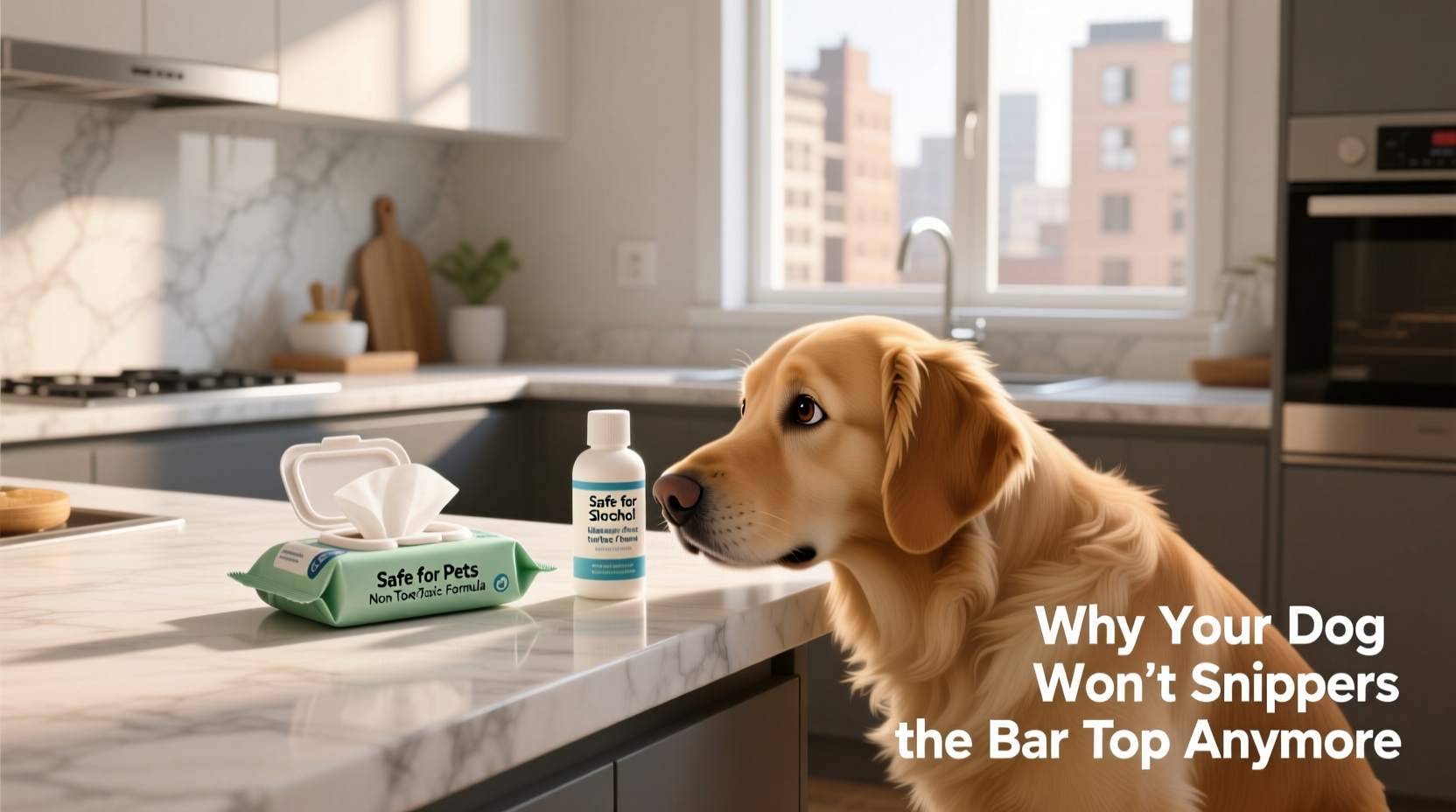
Dogs possess up to 300 million olfactory receptors—compared to our mere 6 million. Their sense of smell isn’t just sharper; it’s layered, contextual, and deeply tied to behavior. Ethanol, even at low concentrations (as low as 0.5% in some “pet-safe” wipes), emits a distinct, slightly sweet, solvent-like odor that registers strongly in a dog’s nasal epithelium. Crucially, ethanol breaks down into acetaldehyde—a compound dogs associate with fermentation, spoiled food, or even prey decomposition. To them, it doesn’t signal “clean”; it signals *opportunity*.
This explains why dogs return to wiped surfaces hours later—not because they’re misbehaving, but because their noses detect biochemical residue long after humans perceive “dryness.” And when they lick? They ingest not only residual ethanol but also preservatives like methylisothiazolinone (MIT), surfactants like sodium lauryl sulfate (SLS), and fragrance allergens—all common in alcohol-based wipes marketed as “gentle” or “for pets.” Veterinary toxicology data from the ASPCA Animal Poison Control Center shows a 27% year-over-year rise in reported cases of mild-to-moderate gastrointestinal upset linked to ingestion of alcohol wipe residues—especially in small-breed dogs and puppies under six months.
Tip: Never use alcohol-based wipes on surfaces your dog accesses regularly—including countertops, stair rails, door handles, and pet crate interiors—even if labeled “pet-safe.” Residue remains active for up to 90 minutes post-wipe.Decoding “Pet-Safe”: Marketing vs. Mammalian Physiology
The term “pet-safe” has no regulatory definition in the U.S. (FDA, EPA, or CPSC). It’s a marketing claim—not a safety certification. Most “pet-safe” alcohol wipes contain 5–30% ethanol or isopropanol, buffered with glycerin or aloe to reduce skin irritation *in humans*. But dogs’ skin pH (6.2–7.5) is higher than ours (4.5–5.5), making them more permeable to solvents. Their grooming behavior further amplifies exposure: licking paws after stepping on a freshly wiped floor delivers direct oral dosing.
In contrast, true ethanol-free surface cleaners rely on non-volatile, food-grade ingredients: citric acid (a natural chelator), sodium carbonate (washing soda), plant-derived surfactants like decyl glucoside, and essential oil blends *at concentrations validated for canine safety* (e.g., <0.1% lavender oil, known to be non-irritating at that level). These formulas leave no volatile organic compound (VOC) trail—no scent lure, no respiratory irritant, no taste incentive.
“Ethanol isn’t ‘safe’ just because it evaporates quickly. Its vapor phase is highly irritating to canine bronchioles, and its residue triggers licking behavior that leads to cumulative low-dose exposure. For households with dogs, ethanol-free isn’t a luxury—it’s a physiological necessity.” — Dr. Lena Torres, DVM, Board-Certified Veterinary Toxicologist, UC Davis School of Veterinary Medicine
Side-by-Side: What’s Really in Your Wipe vs. Your Cleaner?
The difference isn’t philosophical—it’s chemical. Below is a comparison of typical ingredient profiles and functional outcomes for two categories of products commonly used in homes with dogs.
| Component | “Pet-Safe” Alcohol Wipe | Certified Ethanol-Free Surface Cleaner |
|---|---|---|
| Primary Active Ingredient | 5–30% ethanol or isopropanol | 0% alcohol; citric acid + sodium carbonate blend |
| Preservative System | Methylisothiazolinone (MIT), diazolidinyl urea | Food-grade potassium sorbate; no MIT or formaldehyde donors |
| Surfactant | Sodium lauryl sulfate (SLS) or alkylbenzene sulfonates | Decyl glucoside (ECOCERT-certified, non-irritating) |
| Fragrance | Synthetic musk, limonene, linalool (common allergens) | 0.05–0.1% steam-distilled lavender or orange oil (IFRA-compliant for pets) |
| Drying Time & Residue | Fast evaporation—but leaves microscopic film attracting dust and microbes | No VOCs; dries to inert mineral salt residue, easily rinsed or wiped away |
A Real Household Shift: The Henderson Family Case Study
The Hendersons adopted a rescue border collie mix, Koda, who developed chronic lip-licking and intermittent vomiting within three weeks of moving into their newly renovated home. Their vet ruled out dietary causes and parasites. A home audit revealed they’d been using “veterinarian-recommended” alcohol wipes daily on all quartz countertops, stainless steel appliances, and hardwood floors—believing the “pet-safe” label guaranteed safety.
After switching to an ethanol-free cleaner (certified by the Pet Sustainability Coalition and third-party tested for canine dermal and oral exposure), they observed changes within 72 hours: Koda stopped investigating the kitchen island entirely. By Day 10, lip-licking ceased. At the two-week mark, his vet confirmed normalized gastric motility and reduced salivary enzyme markers associated with chemical irritation. Crucially, the family didn’t just swap products—they changed behavior: wiping surfaces only when visibly soiled, air-drying instead of towel-drying (to avoid lint residue), and storing all cleaners in locked cabinets—not because Koda was “getting into things,” but because his nose had trained him to seek out the ethanol signature.
Your 5-Step Transition Plan to Ethanol-Free Living
Moving away from alcohol-based cleaning doesn’t require perfection—just intentionality. Follow this clinically informed sequence to minimize disruption and maximize safety for your dog.
- Inventory & Isolate: Gather every wipe, spray, and multi-surface product in your home. Check labels for “ethanol,” “ethyl alcohol,” “isopropyl alcohol,” “SD alcohol,” or “alcohol denat.” Set these aside in a sealed container—do not discard yet.
- Spot-Test New Cleaners: Apply your chosen ethanol-free cleaner to a discreet area of each surface (e.g., underside of a cabinet shelf, back of a drawer handle). Wait 24 hours. Confirm no discoloration, hazing, or texture change—especially on natural stone, wood finishes, or acrylic.
- Reassign Zones: Designate high-dog-contact zones (feeding areas, sleeping spots, stair landings, crate interiors) as “ethanol-free only.” Use microfiber cloths dampened with diluted cleaner—never sprays directly onto surfaces where overspray may drift into air or settle on bedding.
- Reset Scent Cues: For 72 hours after switching, avoid using scented candles, plug-ins, or laundry boosters. Let your dog’s olfactory system recalibrate without competing stimuli. You’ll notice reduced sniffing behavior within 48 hours.
- Monitor & Document: Keep a simple log: date, product used, surface cleaned, and your dog’s behavior for 10 minutes afterward (e.g., “ignored counter,” “sniffed once, walked away,” “licked baseboard”). Patterns will emerge quickly—often revealing previously unnoticed sensitivities.
FAQ: Addressing Common Concerns Head-On
Won’t ethanol-free cleaners fail to kill germs effectively?
Yes—if you expect them to sterilize. No—if you understand real-world hygiene. Ethanol kills microbes on contact but offers zero residual protection and degrades rapidly on porous surfaces. Ethanol-free cleaners with citric acid and sodium carbonate disrupt biofilm formation and lower surface pH to levels inhospitable to bacteria like E. coli and Salmonella—without generating resistant strains. For routine home cleaning, mechanical removal (wiping) plus pH disruption is more sustainable and safer than relying on biocidal alcohol.
Can I dilute regular alcohol wipes to make them safer?
No. Dilution reduces concentration but does not eliminate ethanol’s volatility, olfactory lure, or metabolic burden on the liver. Even 1% ethanol solution retains enough vapor pressure to attract dogs and enough residue to cause gastric irritation upon ingestion. Dilution also compromises preservative efficacy, increasing risk of microbial growth *in the wipe itself*.
Are vinegar-based cleaners a good ethanol-free alternative?
Use caution. While vinegar (acetic acid) is ethanol-free, its low pH (<2.5) can etch natural stone, damage grout sealants, and irritate mucous membranes in dogs with preexisting respiratory conditions (e.g., brachycephalic breeds). It also leaves a strong residual odor many dogs find aversive—not neutral. Certified ethanol-free cleaners use buffered acid systems (e.g., citric acid + sodium citrate) to maintain efficacy without corrosiveness or sensory overwhelm.
The Quiet Shift: When Safety Becomes Invisible
You’ll know the transition worked not by what you see—but by what you no longer witness. No more frantic sniffing along baseboards. No more your dog pausing mid-yawn to investigate the edge of the bar top. No more the faint, sharp tang clinging to your morning coffee mug after you wiped it “just in case.” That silence—the absence of behavioral cues rooted in chemical attraction—is the most powerful indicator of success.
This isn’t about fear-mongering or perfectionism. It’s about aligning household practices with biological reality. Dogs don’t read labels. They smell molecules. They taste residues. They breathe vapors. When we choose ethanol-free surface cleaners—not as a compromise, but as a standard—we stop asking our dogs to adapt to our habits and start designing environments that honor their senses, their physiology, and their quiet, unwavering trust in the spaces we share.
💬 Have you made the switch to ethanol-free cleaning? Share your experience—what changed for your dog, which products worked best, or what surprised you most. Your story could help another pet parent make a healthier choice—starting with the bar top, and extending to every surface their nose touches.








