
Choosing a small pet is about more than cage size or diet—it’s about connection. For many people, especially those living in apartments or seeking low-space companions, rats and hamsters are popular choices. But when it comes to forming a genuine emotional bond, one clearly stands out. While both animals can be charming and entertaining, their capacity for attachment, responsiveness, and social engagement differ significantly. Understanding these differences helps ensure you pick not just a pet, but a companion who will recognize you, respond to your voice, and seek your presence.
Rats and hamsters belong to different branches of the rodent family. Rats (typically *Rattus norvegicus*, the fancy rat) are highly social, intelligent, and naturally inclined toward group living. Hamsters, particularly Syrians or dwarfs like Roborovskis, are solitary by nature and instinctively territorial. These biological distinctions shape how each species interacts with humans—and how deeply they can bond.
Social Behavior and Natural Instincts
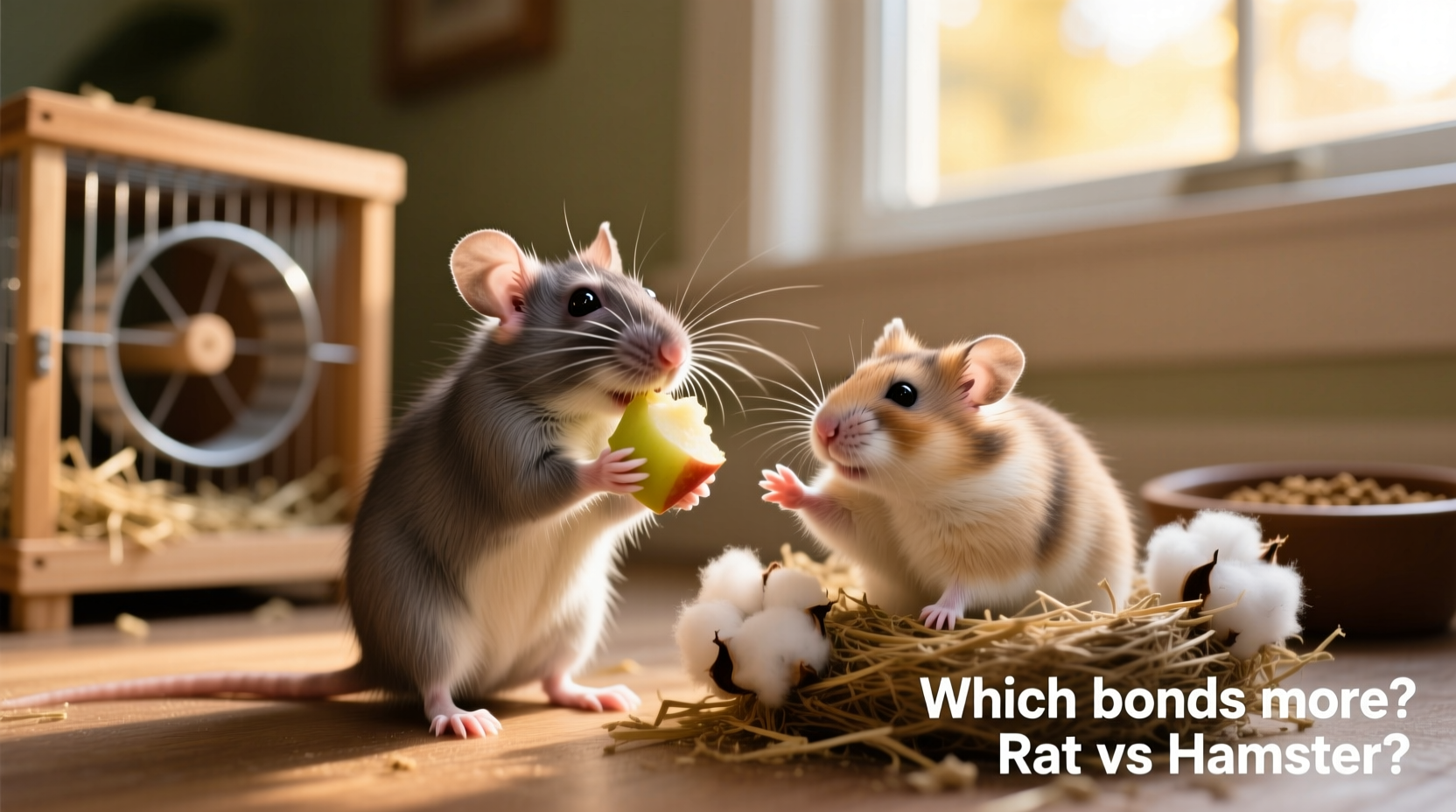
The foundation of any human-animal bond lies in the animal’s natural social structure. Rats evolved as pack animals. In the wild, they live in complex colonies with defined hierarchies, cooperative nesting, and vocal communication. This social wiring translates directly into domestic life. Pet rats thrive on interaction—not only with other rats but with their human caregivers. They notice routines, respond to names, and often follow their owners around the room, eager for attention.
Hamsters, on the other hand, are solitary creatures. In the wild, most species defend their burrows aggressively and avoid contact outside mating season. This instinct remains strong even in captivity. While a well-handled hamster may tolerate being held or fed from your hand, it rarely seeks out interaction. Many hamsters become stressed with frequent handling, especially if approached during daylight hours when they’re typically asleep.
“Rats form attachments similar to those seen in dogs—they learn to recognize individual voices, show excitement at familiar scents, and display separation anxiety when ignored.” — Dr. Laura Jenkins, Veterinary EthologistTip: Always handle hamsters gently and briefly, preferably during dusk or dawn when they’re naturally active.
Intelligence and Trainability
Bonding isn’t just about physical closeness; it’s also shaped by mental engagement. The smarter an animal is, the more capable it becomes of recognizing patterns, remembering individuals, and responding to emotional cues—all key components of bonding.
Rats consistently rank among the most intelligent rodents. Studies show they can solve mazes, use tools, and even exhibit metacognition—awareness of what they do or don’t know. This cognitive ability makes them highly trainable. With patience, rats can learn to come when called, perform tricks, and navigate obstacle courses. Each training session strengthens the relationship between owner and pet, building trust and mutual understanding.
Hamsters are intelligent within their ecological niche—excellent diggers, foragers, and navigators of tunnels—but their learning is largely instinct-driven. They can learn simple associations, such as expecting food when a cage door opens, but rarely generalize beyond that. Training a hamster to perform tricks is uncommon and often stressful for the animal. Their limited trainability reduces opportunities for interactive bonding.
Rat Training Milestones (Typical Timeline)
- Week 1: Hand-feeding and gentle handling to build trust.
- Week 2–3: Teaching recall using treats and consistent verbal cues.
- Week 4–5: Introducing simple commands like “spin” or “come.”
- Week 6+: Complex tasks like navigating tunnels or pressing buttons.
Affection and Physical Interaction
One of the clearest signs of bonding is voluntary physical contact. Does the animal seek touch? Does it relax in your presence? These behaviors reveal comfort and attachment.
Pet rats frequently groom their owners, nuzzle into hands, and fall asleep on laps. They emit ultrasonic chirps—inaudible to humans but detectable with equipment—when happy, a behavior known as \"rat laughter.\" When picked up, they often climb onto shoulders or hide in pockets, showing clear preference for proximity. Over time, rats distinguish between familiar and unfamiliar people, often ignoring strangers while eagerly approaching their primary caregiver.
Hamsters may allow petting once acclimated, but few initiate contact. Most remain alert and tense when handled, scanning for escape routes. Some may even bite if startled or overstimulated. Dwarf hamsters, though active, are so fast and skittish that sustained interaction is difficult. Syrian hamsters are generally calmer but still prefer solitude. Affection, in the hamster world, looks more like tolerance than enthusiasm.
| Behavior | Pet Rat | Hamster |
|---|---|---|
| Seeks out owner | Yes, regularly | Rarely |
| Responds to name | Frequently | Occasionally (if at all) |
| Enjoys being held | Often, for extended periods | For short durations, if trained |
| Shows excitement at owner's arrival | Visible jumping, bruxing (tooth grinding), purring | Limited reaction |
| Forms pair bond with another pet | Strongly (should be kept in pairs/groups) | No (solitary; may fight to death) |
Lifespan and Emotional Investment
Bonding deepens over time, making lifespan a crucial factor. Rats typically live 2–3 years with proper care. While short, this period allows for meaningful development of personality and relationship. Owners often describe their rats as having distinct quirks—some bold, others shy, some mischievous, others cuddly. Watching these traits emerge fosters deep emotional investment.
Hamsters live 1.5 to 2.5 years depending on species. However, because they mature quickly and remain instinct-driven, their personalities stabilize early and change little. There’s less opportunity to develop a dynamic relationship. Combined with their nocturnal habits and low desire for interaction, many owners report feeling more like caretakers than companions.
Tip: To strengthen your bond with a rat, spend 15–30 minutes daily in quiet interaction—hand-feeding, talking softly, or allowing free roam in a safe space.Mini Case Study: Sarah and Her Rat, Miso
Sarah adopted two female rats, Miso and Nori, from a rescue shelter. Within weeks, she noticed Miso would run to the front of the cage when she entered the room. After a month of consistent handling and training, Miso learned to jump into her hand on command. When Nori passed away unexpectedly, Miso became withdrawn for several days—sleeping more, eating less, avoiding interaction. Sarah spent extra time sitting near the cage, talking and offering favorite snacks. Gradually, Miso re-engaged, but now followed Sarah from room to room during supervised playtime. A year later, Miso still runs to greet her every morning and falls asleep curled in her hoodie pocket. Sarah describes the experience as “like having a tiny, furry best friend who remembers everything.”
This case illustrates not only the depth of emotional capacity in rats but also their ability to form lasting, responsive bonds—a level of connection rarely reported with hamsters.
Care Requirements That Influence Bonding
Daily care routines either support or hinder bonding. Animals that require high maintenance but offer little interaction may feel more like chores than companions. Conversely, involved care paired with positive reinforcement builds closeness.
- Rats need large cages, daily cleaning, social companionship, and mental stimulation. However, their care often includes interactive elements: training sessions, puzzle feeders, and out-of-cage playtime. These activities create regular touchpoints for bonding.
- Hamsters require secure enclosures, bedding changes, and fresh food, but their care is mostly observational. Because they’re nocturnal, owners often miss their active hours. Interaction is limited to brief handling, reducing opportunities to build familiarity.
“Bonding isn’t passive. It’s built through repeated, positive interactions. Rats invite those interactions; hamsters tolerate them.” — James Reed, Small Mammal Behavior Consultant
Checklist: Building a Strong Bond with Your Small Pet
- ✅ Spend at least 15 minutes daily in direct interaction (handling, feeding, playing).
- ✅ Use a consistent tone of voice and call your pet by name regularly.
- ✅ Offer high-value treats during calm, focused sessions.
- ✅ Allow safe, supervised exploration outside the cage.
- ✅ Respect sleep cycles—interact when your pet is naturally awake and alert.
- ✅ Avoid sudden movements or loud noises that cause fear.
- ✅ For rats: keep in same-sex pairs or groups to prevent loneliness.
- ❌ Never house hamsters together after weaning—this causes aggression.
Frequently Asked Questions
Can a hamster ever become truly affectionate?
Some hamsters grow comfortable with their owners and may sit calmly in a hand or accept treats. However, true affection—seeking contact, showing excitement, initiating interaction—is extremely rare. Any apparent affection is usually habituation, not emotional attachment.
Are rats messy or smelly compared to hamsters?
Rats can be messier due to their intelligence and activity level—they scatter bedding, hoard food, and explore relentlessly. However, they are clean animals and groom themselves frequently. With regular spot-cleaning and weekly full cleans, odor is minimal. Hamsters produce less waste but may hoard food until it spoils, causing localized smells.
Is it cruel to keep a single rat?
Yes, in most cases. Rats are profoundly social and suffer psychologically when isolated. Even with extensive human interaction, a lone rat often shows signs of depression, such as reduced activity and self-grooming. Keeping rats in compatible pairs or small groups is strongly recommended.
Conclusion: Choosing for Connection
If your goal is a pet that forms a visible, reciprocal bond—one that knows your voice, greets you with excitement, and seeks comfort in your presence—then the rat is the superior choice. Their intelligence, emotional depth, and social nature make them uniquely capable of companionship among small mammals. Hamsters, while undeniably cute and low-maintenance, remain fundamentally solitary and instinct-driven, limiting their potential for deep human attachment.
This doesn’t mean hamsters are bad pets. For someone seeking a quiet, independent animal that requires minimal handling, a hamster may be ideal. But for those who want interaction, personality, and a relationship that grows over time, rats offer something far richer.
💬 Have experience with rats or hamsters? Share your story in the comments below—your insights could help someone choose the perfect companion.








