
Bringing home a healthy puppy is one of life’s most joyful experiences. Their boundless energy, playful curiosity, and unconditional love make every moment worthwhile. But along with the excitement comes responsibility — especially financial. One of the most debated questions among new pet owners is whether to invest in pet insurance or simply save money in a dedicated account for future veterinary expenses. Both options have merit, but the right choice depends on your risk tolerance, financial habits, and long-term goals.
At first glance, skipping insurance premiums in favor of self-funding through a savings account seems like the smarter move — after all, you’re not “paying for nothing” if your dog stays healthy. But veterinary medicine has advanced dramatically in recent years, and treatments that were once rare are now common — and expensive. A single emergency surgery can cost thousands, potentially wiping out months or even years of disciplined saving.
This article breaks down the real-world implications of both strategies, compares their pros and cons, and provides actionable insights to help you decide what’s best for your puppy — and your wallet.
The Financial Reality of Pet Ownership
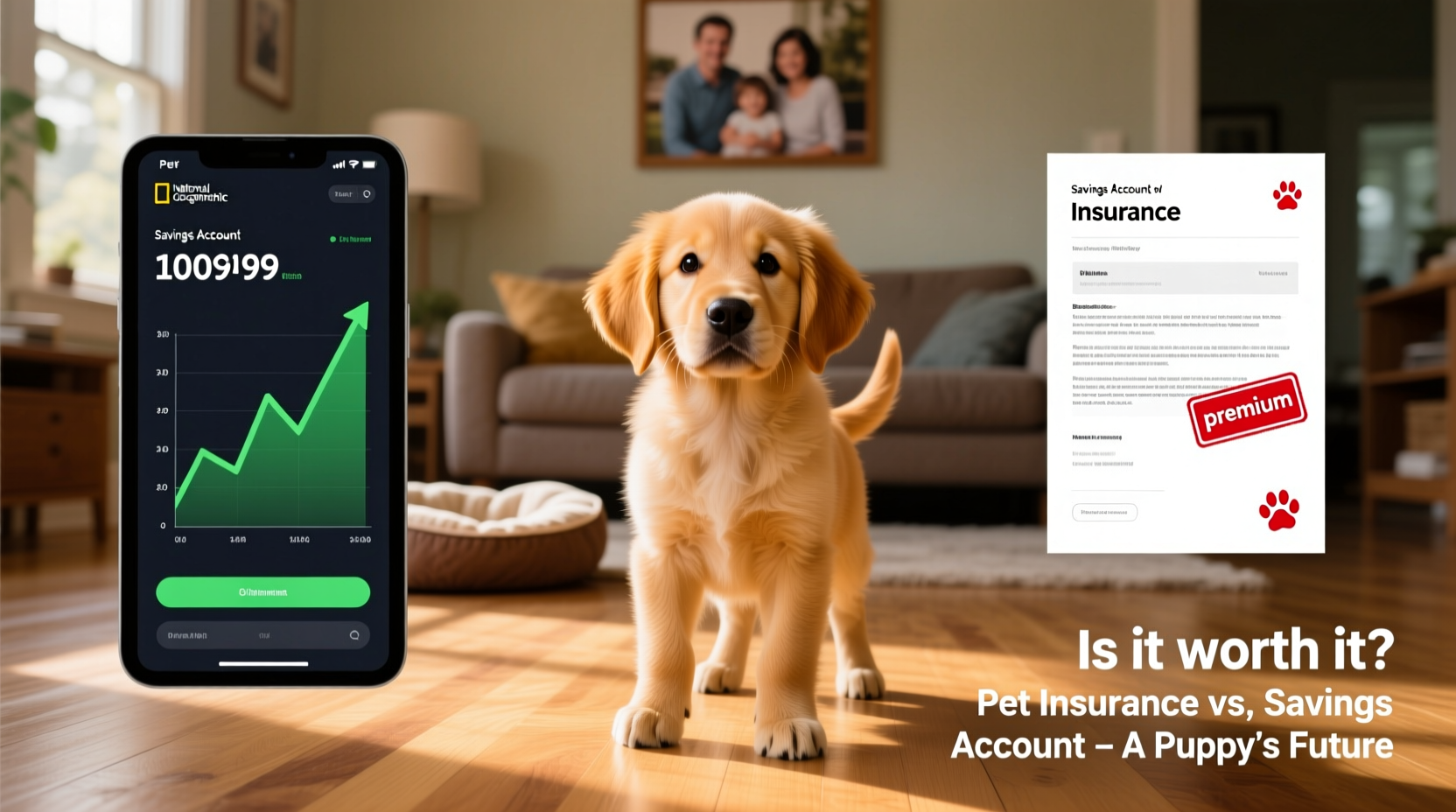
Many first-time puppy owners underestimate the lifetime cost of pet care. While food, toys, and grooming add up, the largest potential expense is always veterinary care. Routine wellness visits may cost $500–$700 per year for a healthy dog. But unexpected illnesses or injuries can change everything overnight.
Consider this: a ruptured cruciate ligament, common in active breeds, often requires TPLO surgery — a procedure that averages between $3,500 and $6,000. Cancer treatments like chemotherapy can exceed $10,000. Even intensive diagnostics for vomiting or lethargy can run $1,500–$3,000 when hospitalization is involved.
According to the North American Pet Health Insurance Association (NAPHIA), veterinary costs have risen by over 60% in the past decade. Meanwhile, only about 4% of U.S. pet owners carry insurance, despite growing awareness. This gap suggests many people still believe they can manage risk independently — but human behavior and financial reality don’t always align.
Tip: Start tracking your puppy’s monthly expenses early — including preventive care — to build an accurate picture of long-term costs.Pet Insurance: How It Works and What It Covers
Pet insurance operates differently than human health insurance. Most plans are reimbursement-based: you pay the vet upfront, submit a claim, and receive a portion of the cost back. Coverage varies widely, but typical policies include:
- Accidents (e.g., broken bones, poisoning)
- Illnesses (e.g., infections, cancer, allergies)
- Hereditary and congenital conditions (if not pre-existing)
- Emergency care and surgeries
- Some offer wellness riders for vaccinations, flea prevention, and dental cleanings
Monthly premiums depend on breed, location, age, and coverage level. For a young puppy, expect to pay $30–$60 per month for a comprehensive plan. Some insurers offer multi-pet discounts or lower rates for enrolling early.
Critically, timing matters. The younger and healthier your puppy is when you enroll, the more likely you are to avoid exclusions. Once a condition is diagnosed, it becomes pre-existing and permanently excluded from coverage. That’s why insuring a puppy before any symptoms arise is often the smartest move.
“Enrolling your puppy in insurance at 8–10 weeks old locks in lower premiums and ensures maximum coverage. Waiting even six months can mean missing protection for common genetic issues.” — Dr. Lisa Marano, DVM, Veterinary Financial Advisor
Savings Account Strategy: Discipline, Risk, and Realism
The alternative to insurance is setting aside money each month into a dedicated pet savings fund. In theory, this gives you full control: no claims process, no exclusions, and no wasted premiums. If your dog remains healthy, you keep every dollar.
But behavioral economics shows most people struggle with self-insurance. Emergency funds are often underfunded, raided for other needs, or simply not started at all. A 2023 Bankrate survey found that only 44% of Americans could cover a $1,000 emergency with savings — and veterinary bills frequently exceed that.
To match the protection of pet insurance, you’d need to save consistently. At $50/month, you’d accumulate $600 per year — enough for a moderate procedure, but far short of major surgery. To reach $5,000 in five years, you’d need to save $83/month without fail. Missed contributions, inflation, or unexpected life events can derail even the best intentions.
Moreover, savings accounts don’t cover peace of mind. When your puppy is in pain and the vet says surgery is needed immediately, knowing you have insurance can remove agonizing financial hesitation.
Direct Comparison: Insurance vs. Savings
| Factor | Pet Insurance | Savings Account |
|---|---|---|
| Monthly Cost | $30–$60 (premiums) | $0–$100 (self-determined) |
| Upfront Payment at Vet | Yes (reimbursed later) | Yes (from saved funds) |
| Coverage for Major Illnesses | Yes (after deductible) | Only if enough saved |
| Risk of Underfunding | Low (coverage capped by policy) | High (depends on discipline) |
| Flexibility in Use | No (only eligible expenses) | Yes (you control funds) |
| Peace of Mind | High (predictable coverage) | Variable (depends on balance) |
| Lifetime Value if Dog Stays Healthy | Premiums paid, no return | Full balance retained |
Hybrid Approach: Best of Both Worlds?
For many pet owners, the optimal strategy lies in the middle. A hybrid model combines a basic insurance plan with a supplemental savings fund — balancing cost, coverage, and control.
Here’s how it works:
- Choose a high-deductible insurance plan — Lower premiums ($20–$35/month) reduce ongoing costs while still protecting against catastrophic expenses.
- Set up a pet savings account — Aim to save $25–$50/month to cover routine care, deductibles, and minor incidents not worth claiming.
- Use insurance only for major claims — Reserve claims for surgeries, chronic illness, or emergencies over $1,000 to avoid premium increases or scrutiny.
- Reassess annually — As your dog ages, adjust coverage or savings based on health trends and financial capacity.
This approach minimizes premium waste while ensuring you’re not exposed to financial shock. It also builds a buffer for non-covered services like behavioral training or specialized diets.
Tip: Automate both your insurance payment and savings transfer on the same day each month to maintain consistency.Real-Life Example: Max the Labrador
Meet Sarah, a 32-year-old graphic designer who adopted Max, a yellow Labrador puppy, at 10 weeks old. She researched both options and decided to try self-insurance. She opened a high-yield savings account and committed to $60/month — matching the average insurance premium.
For two years, Max stayed healthy. Sarah felt confident in her choice. Then, at age 2, Max swallowed a toy part and developed an intestinal blockage. Emergency surgery cost $4,200. Sarah had saved $1,440 — less than half the bill. She drained her emergency fund and used a credit card for the rest, accruing interest.
Afterward, she enrolled Max in pet insurance. But because the surgery was now a pre-existing condition, any future gastrointestinal issues would be excluded. Had she insured Max at 12 weeks, the entire surgery would have been covered (after deductible), likely costing her less than $1,000 out-of-pocket — and preserving his insurability.
Sarah’s story isn’t unique. Many well-intentioned owners discover too late that saving alone isn’t enough when crisis strikes.
Action Plan: Making Your Decision
Choosing between pet insurance and a savings account isn’t just about math — it’s about understanding your own behavior and risk profile. Follow this step-by-step guide to make an informed decision:
- Evaluate your financial discipline — Do you consistently meet savings goals? Have you maintained emergency funds in the past?
- Research your puppy’s breed risks — Large breeds like German Shepherds or Golden Retrievers face higher odds of hip dysplasia or cancer. High-risk breeds benefit more from early insurance.
- Get insurance quotes — Obtain 3–4 quotes from top providers (e.g., Lemonade, Trupanion, Pets Best) for your zip code and breed.
- Calculate projected savings — Estimate how much you’d save monthly over 10 years. Include interest from a high-yield account (typically 3–4%).
- Compare worst-case scenarios — Ask: Can I afford a $6,000 surgery without insurance? Would I delay treatment due to cost?
- Decide and act quickly — If choosing insurance, enroll before your puppy’s first major checkup to avoid gaps.
Frequently Asked Questions
Can I switch pet insurance if I’m not satisfied?
Yes, you can change providers, but any conditions treated under the previous plan will be considered pre-existing and excluded by the new insurer. It’s better to choose carefully upfront.
Does pet insurance cover routine vaccinations?
Basic accident/illness plans do not. However, many companies offer optional wellness add-ons that cover vaccines, parasite prevention, and annual exams for an extra $10–$25/month.
What happens if I stop paying premiums?
Your coverage ends, and you lose all prior benefits. Re-enrolling later will treat any health changes as pre-existing. Continuous coverage is essential for long-term value.
Final Recommendation
For most puppy owners, especially those with medium- to large-breed dogs or limited emergency savings, pet insurance offers meaningful financial protection and peace of mind. While a savings account is ideal in theory, real-world constraints — inconsistent saving, unexpected costs, and emotional stress during emergencies — make insurance a more reliable safety net.
The sweet spot? Insure your puppy early with a solid accident-and-illness plan, then supplement with modest monthly savings. This dual strategy protects against worst-case scenarios while maintaining flexibility for everyday care.
You love your puppy unconditionally. Protecting them financially shouldn’t depend on chance.
🚀 Ready to protect your puppy’s future? Get three pet insurance quotes today — before your vet visit. Your future self (and your dog) will thank you.








