As dogs age, their healthcare needs evolve. Older dogs are more prone to chronic conditions like arthritis, kidney disease, diabetes, and cancer—each potentially requiring costly treatments. When faced with these realities, pet owners often ask: should I pay for pet insurance or simply save money in a dedicated account? The answer isn’t always straightforward. While a savings fund offers control and flexibility, pet insurance provides risk mitigation and immediate coverage. This article breaks down both options with data, expert insights, and real-world scenarios to help you decide what’s best for your senior dog and your budget.
Understanding the Financial Realities of Senior Dog Care
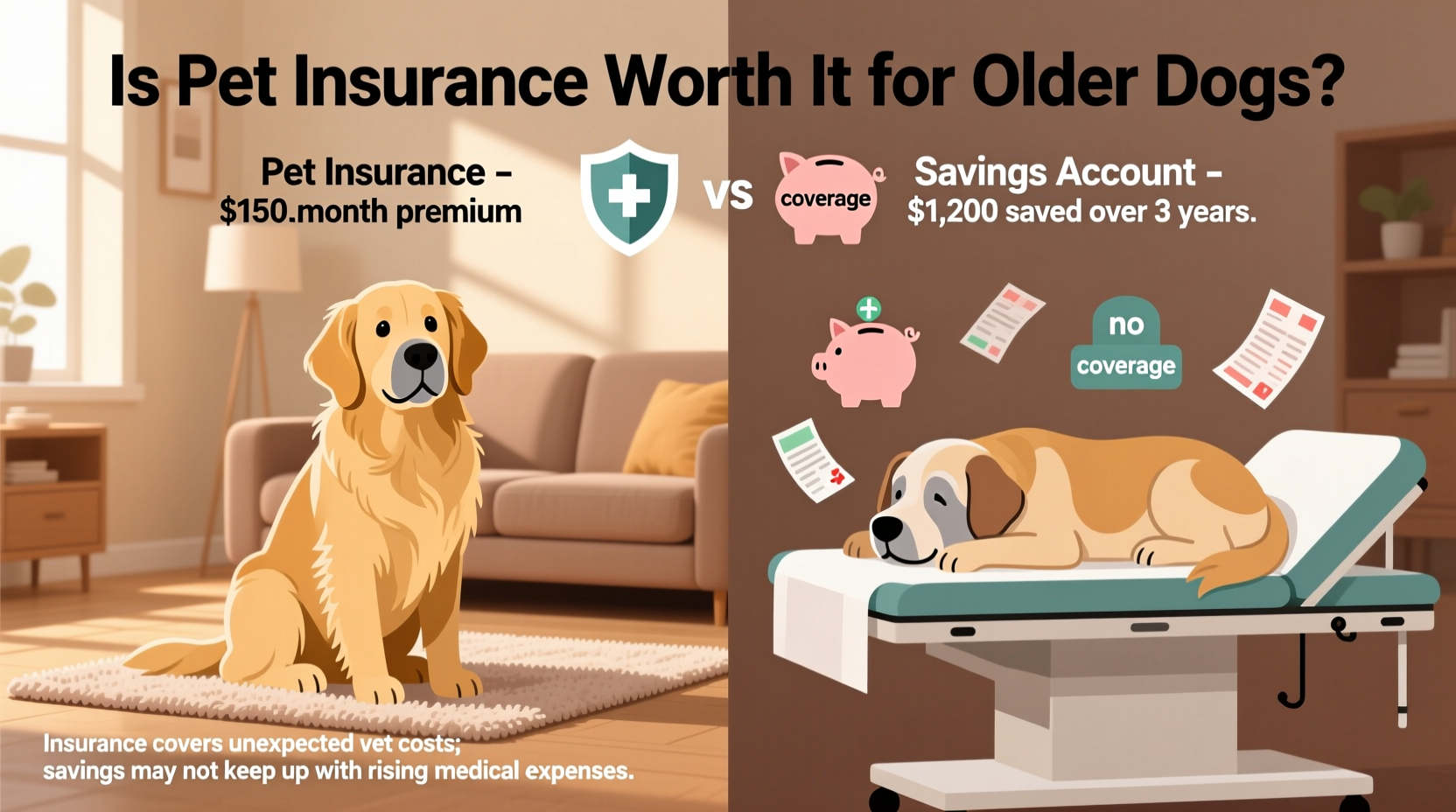
Dogs over the age of 7 enter their senior years, and by 10 or 11, many qualify as geriatric. During this time, routine vet visits increase from once a year to twice annually. Blood panels, urinalysis, X-rays, and specialized diagnostics become common. A single episode of illness—like pancreatitis or a torn cruciate ligament—can cost $3,000 or more. Chronic disease management, such as insulin therapy for diabetes, may run $100–$200 per month indefinitely.
According to the North American Pet Health Insurance Association (NAPHIA), the average annual cost of treating a senior dog with a major illness exceeds $4,500. Meanwhile, the American Veterinary Medical Association (AVMA) reports that veterinary care costs have risen nearly 6% annually over the past decade—outpacing inflation. These trends make long-term planning essential.
Tip: Start tracking your dog’s health expenses now—even if they’re healthy. This baseline helps project future costs and informs whether insurance or self-funding makes sense.Pet Insurance: How It Works for Older Dogs
Pet insurance operates differently than human health insurance. You pay monthly premiums and, when your dog receives care, you submit claims for reimbursement—typically 70% to 90% of eligible costs after meeting an annual deductible. Policies vary widely in coverage, exclusions, and pricing, especially for senior pets.
The biggest limitation with insuring older dogs is pre-existing conditions. Most insurers will not cover any illness diagnosed before the policy start date. That means if your 9-year-old Labrador already has hip dysplasia, treatment for it won’t be covered. However, new conditions—such as a heart murmur or Cushing’s disease—may still qualify.
Premiums also rise significantly with age. A dog insured at age 2 might pay $40/month. By age 10, that same plan could cost $100–$150/month, depending on breed, location, and coverage level. Despite higher costs, some owners find value in protection against catastrophic events.
“Insurance won’t cover everything, but for unexpected emergencies like bloat surgery or cancer treatment, it can prevent impossible financial choices.” — Dr. Karen Liu, DVM, Veterinary Financial Advisor
Savings Account: The Case for Self-Funding
A dedicated pet savings account shifts responsibility from an insurer to the owner. Instead of paying premiums, you deposit funds monthly into a high-yield savings account earmarked for veterinary expenses. Over time, this builds a buffer for predictable and unexpected costs.
This approach offers full control. There are no claim denials, no waiting periods, and no exclusions based on breed or medical history. You can use the money at any clinic, including specialists and emergency hospitals, without worrying about network restrictions.
Financial advisors often recommend saving $50–$100 per month for senior pets. At $75/month, you’d accumulate $900 annually—enough to cover many routine issues and contribute meaningfully to larger procedures. For example, a $5,000 cancer treatment becomes manageable with $2,700 saved over three years plus out-of-pocket contributions.
However, self-funding requires discipline. Many people struggle to maintain consistent savings, especially when other financial demands arise. In emergencies, emotional stress compounds financial strain, making it harder to access large sums quickly.
Comparing Both Options: A Practical Breakdown
| Factor | Pet Insurance | Savings Account |
|---|---|---|
| Upfront Cost | Monthly premiums ($80–$150 for seniors) | Self-determined deposits ($50–$100 recommended) |
| Coverage of Pre-Existing Conditions | No | Yes (you decide how to spend) |
| Flexibility in Care Choices | Limited by provider network and claim approvals | Full freedom to choose clinics and treatments |
| Protection Against Catastrophic Costs | High (if condition is covered) | Depends on savings balance |
| Long-Term Value if Dog Stays Healthy | Low (premiums paid with no return) | High (money remains yours) |
| Risk of Denial or Rate Hikes | Yes (after claims or renewal) | No |
The table highlights a core trade-off: insurance transfers risk but adds complexity and cost; savings retain control but require foresight and consistency. Neither option is universally better—it depends on your dog’s health history, your financial habits, and your tolerance for uncertainty.
Real-Life Example: Choosing Between Insurance and Savings
Consider Sarah, a 62-year-old retiree with Max, her 10-year-old Golden Retriever. Max has mild arthritis and takes a joint supplement, but otherwise seems healthy. Last year, he developed vomiting and lethargy. An ER visit revealed pancreatitis. Treatment—including hospitalization, IV fluids, and medication—cost $3,800.
Sarah had two choices:
- She could have paid $110/month for a comprehensive pet insurance plan since Max was 5. Over five years, she’d have paid $6,600 in premiums. If the policy covered pancreatitis (assuming it wasn’t pre-existing), she might have been reimbursed 80% of the bill—$3,040. Her net cost: $3,560.
- Alternatively, she saved nothing specifically for Max’s care. After the incident, she used credit cards and paid off the debt over 18 months with interest, totaling $4,600.
In hindsight, Sarah wishes she’d planned ahead. She now contributes $75/month to a pet savings account and researches insurers offering senior enrollment. Her experience shows that even one major event can justify proactive planning—whether through insurance or disciplined saving.
Action Plan: How to Decide What’s Right for Your Dog
Making the right choice requires evaluating your unique situation. Follow this step-by-step guide to assess your options objectively.
- Review your dog’s medical history. List all diagnoses, medications, and recurring issues. Any pre-existing condition reduces insurance value.
- Estimate potential future costs. Research average treatment prices for common senior dog conditions in your area (e.g., $2,500–$6,000 for TPLO surgery).
- Calculate your current and projected savings capacity. Can you realistically set aside $60–$100/month? If yes, self-funding becomes viable.
- Get insurance quotes for your dog. Use comparison tools from sites like PetInsurer, Coverwise, or NAPHIA members. Look at monthly cost, deductible, reimbursement rate, and annual limits.
- Simulate worst-case scenarios. Model outcomes for a $5,000 emergency under both models. Which gives you peace of mind?
- Make a decision—and commit. Delaying increases risk. Choose one path and stick with it for at least 12 months before reevaluating.
Frequently Asked Questions
Can I get pet insurance for my 10-year-old dog?
Yes, many insurers accept dogs up to age 12 or 14—but coverage is limited. Pre-existing conditions are excluded, premiums are higher, and some companies impose lower annual payout caps for seniors. Always read the fine print and compare multiple providers.
What happens if I can’t afford a large vet bill?
If uninsured and without savings, options include payment plans (offered by some clinics), third-party financing (like CareCredit or Scratch Pay), or fundraising platforms like GoFundMe. However, these are reactive solutions. Proactive planning avoids crisis-mode decisions.
Is pet insurance worth it if my dog is already sick?
Generally, no—if your dog has multiple diagnosed conditions, insurance will exclude those treatments. In such cases, a savings account is usually more practical. Insurance works best when purchased early, before health issues arise.
Expert Insight: When Insurance Makes Sense
Veterinary financial planners emphasize timing. “The sweet spot for pet insurance is between ages 1 and 6,” says Dr. Rebecca Adler, a certified veterinary financial counselor. “After that, the math shifts. For a healthy 9-year-old with no red flags, a high-deductible accident-only plan might still be worthwhile. But for a dog with lab results showing early kidney changes? Self-insuring via savings is often smarter.”
“For every client considering insurance at age 10, I ask: Are you buying peace of mind—or actual financial protection? Sometimes it’s psychological, not economic.” — Dr. Rebecca Adler, Certified Veterinary Financial Counselor
Final Recommendation: A Hybrid Approach May Be Best
Some owners adopt a hybrid strategy: they maintain a modest savings account while carrying a limited insurance policy. For example, a $50/month accident-only plan covers emergencies like poisoning or fractures, while saved funds handle chronic care like medication or physical therapy.
This balances affordability with protection. It acknowledges that while you can predict some aging-related needs, true emergencies remain unpredictable. The combination spreads risk without overcommitting to either extreme.
Conclusion
Deciding between pet insurance and a savings account for an older dog isn’t about finding a perfect solution—it’s about aligning your choice with reality. Insurance offers structured support but comes with rising costs and limitations. Savings demand discipline but deliver full autonomy and long-term value. There’s no one-size-fits-all answer.
Start by assessing your dog’s health, your financial habits, and your emotional readiness for unexpected bills. Then take action—open a savings account, request insurance quotes, or consult your vet about likely future needs. The goal isn’t to eliminate risk, but to reduce regret when tough moments arrive.
🚀 Ready to protect your senior dog’s future? Calculate your monthly target—whether for insurance or savings—and automate it today. Peace of mind starts with one deliberate step.








