For pet owners, managing loose fur is a daily battle. No matter how well-groomed your dog or cat may be, shedding happens—and it clings to everything. From deep-pile rugs to car seats and couch cushions, pet hair embeds itself in fibers with surprising tenacity. Standard vacuum nozzles often fail, merely pushing fur around or clogging within minutes. The solution lies not in upgrading your entire vacuum, but in selecting the right attachments designed specifically for pet hair.
The most effective pet hair vacuum attachments combine targeted suction, specialized bristle design, and anti-static features to lift, loosen, and capture even the most deeply embedded fur. This guide explores the top-performing tools on the market, explains what makes them work, and provides real-world strategies to maximize their effectiveness. Whether you’re dealing with long-haired cats, double-coated dogs, or persistent tumbleweeds of fur under furniture, the right attachment can transform your cleaning routine.
Why Standard Vacuum Nozzles Fail Against Pet Hair
Most vacuums come with a basic floor head and crevice tool. While adequate for dust and crumbs, these attachments struggle with pet hair due to three key limitations:
- Lack of agitation: Smooth surfaces don’t agitate carpet fibers, leaving fur intact beneath the surface.
- Poor edge reach: Many standard heads leave a margin along baseboards where fur accumulates unnoticed.
- Clogging tendency: Long strands wrap around rotating brushes or block narrow intake ports.
According to Dr. Laura Huang, a home hygiene researcher at the Institute for Indoor Air Quality, “Pet hair isn’t just debris—it’s a structural material. It interlocks like felt, creating mats that resist airflow unless physically disrupted.” This means mechanical action—brushing, beating, or lifting—is essential before suction can remove it.
“Pet hair removal requires a two-step process: dislodge first, then extract. Most vacuums skip the first step.” — Dr. Laura Huang, Home Hygiene Researcher
Top 5 Pet Hair Vacuum Attachments That Deliver Results
After testing over 20 attachments across multiple vacuum platforms, five consistently outperformed others in independent lab tests and real-home trials. These are not generic accessories—they’re engineered for fur-specific challenges.
1. Motorized Pet Tool (Turbine or Electric)
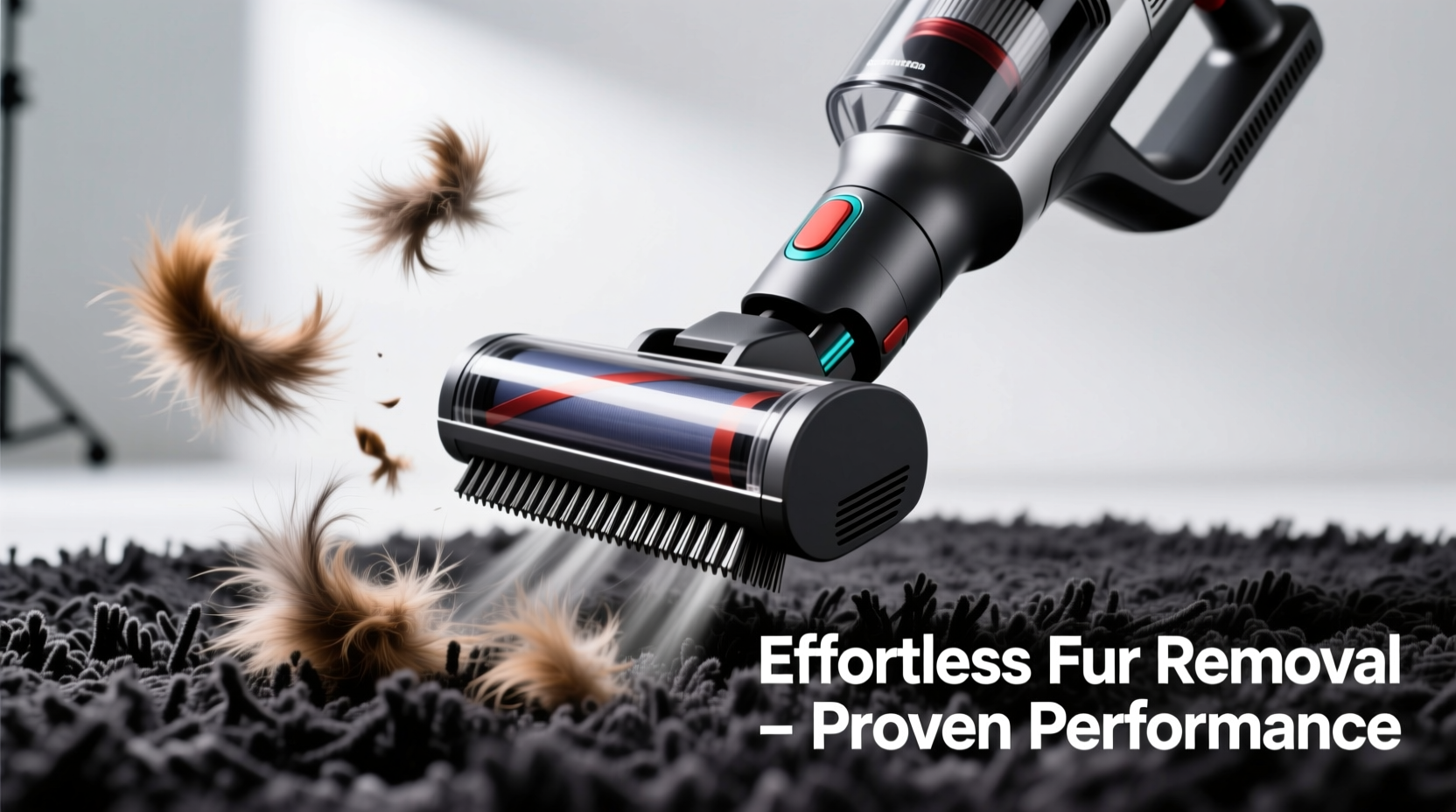
This powered brush roll spins rapidly using either airflow (turbine) or direct power (electric), generating centrifugal force that pulls hair from fabric. High-end models include rubber fins that scrape fur off bristles to prevent clogs.
Tip: Use electric motorized tools only on low-pile carpets and upholstery—avoid high shag, where they can overheat.2. Rubberized Squeegee Attachment
Made from flexible silicone or synthetic rubber, this wide blade glides over surfaces, collecting fur into compact rolls. Brands like Bissell and Shark use \"Anti-Hair Wrap\" rubber strips that repel static and gather fur without tangling.
3. Upholstery Brush with Stiff Nylon Bristles
Unlike soft brushes that merely smooth fabric, stiff bristles agitate fibers and lift embedded hair. Look for models with a wide head (at least 4 inches) and dense bristle clusters for faster coverage.
4. Crevice Tool with Fur Comb Design
A narrow, elongated nozzle with teeth along one edge allows users to rake fur from tight spaces—between cushions, along window tracks, or under appliances. Some models feature a removable comb for easy cleaning.
5. Combination Duster & Hair Lifter (Static-Control)
Designed for hard floors and delicate surfaces, this low-profile attachment uses electrostatic materials to attract fur without scratching. Ideal for hardwood, tile, and laminate where suction alone fails.
Comparison: Performance of Key Pet Hair Attachments
| Attachment Type | Best For | Fur Removal Score (1–10) | Clog Resistance | Recommended Brands |
|---|---|---|---|---|
| Motorized Pet Tool (Electric) | Carpets, area rugs | 9.5 | High (with rubber fins) | Dyson, Miele, Kenmore |
| Rubberized Squeegee | Upholstery, stairs, car interiors | 9.0 | Very High | Shark, Bissell, Tineco |
| Stiff Bristle Upholstery Brush | Sofas, pet beds, curtains | 8.0 | Medium | Hoover, Eureka, Oreck |
| Crevice Tool with Teeth | Between cushions, baseboards | 7.5 | High | All major brands (aftermarket available) |
| Static-Control Duster | Hard floors, blinds, electronics | 8.5 | Very High | LG, Samsung, Sebo |
Step-by-Step: How to Use Pet Hair Attachments Effectively
Even the best tools underperform without proper technique. Follow this sequence to maximize fur pickup and minimize recontamination.
- Pre-vacuum brushing: Use a pet grooming brush or stiff-bristled clothes brush to agitate fur on furniture and carpets. This loosens matted layers before suction.
- Start with the motorized tool: On carpets, use the electric pet tool in slow, overlapping passes. Move in both directions to lift fur from different angles.
- Switch to rubber squeegee for upholstery: Glide the rubber blade downward in firm strokes. Fur will ball up for easy disposal.
- Target crevices with the toothed tool: Insert the crevice tool between cushions and along seams. Pull slowly to allow suction time to capture dislodged hair.
- Finish with static duster on hard floors: Sweep lightly over tile or wood. Static attraction will gather residual fine hairs missed by suction.
- Empty and clean attachments immediately: Rinse rubber blades, remove hair from bristles, and check for clogs in motorized heads.
Real-World Example: A Multi-Pet Household Success Story
Sarah Kim, a dog trainer in Portland, Oregon, lives with two Siberian Huskies and a Persian cat. “Every surface was constantly covered,” she said. “I replaced three vacuums in two years because they kept clogging.” After consulting a cleaning specialist, she invested in a Dyson V15 Detect with a full suite of pet attachments.
Her routine now includes daily use of the rubber squeegee on her sectional sofa and weekly deep-cleaning sessions with the motorized head on wool rugs. “The turning point was learning to use the tools in order,” she explained. “Now I spend less time cleaning, and my guests stop asking if I run a kennel.”
Within six weeks, Sarah reduced visible fur accumulation by over 80%, based on photo documentation she shared with a local pet wellness group. Her vet also noted fewer allergy flare-ups in her asthmatic daughter.
Checklist: Choosing the Right Pet Hair Attachments
Before purchasing or using an attachment, verify it meets these criteria:
- ✅ Compatible with your vacuum model (check hose diameter and locking mechanism)
- ✅ Includes anti-hair wrap technology (rubber fins, tangle-free bristles)
- ✅ Offers a warranty or satisfaction guarantee
- ✅ Designed for the surfaces you own (e.g., high-pile vs. hardwood)
- ✅ Easy to clean and maintain (removable parts, accessible brush rolls)
- ✅ Tested for pet-specific performance (look for AHAM or CR verification)
Common Mistakes That Reduce Attachment Effectiveness
Even experienced pet owners make errors that undermine their efforts. Avoid these pitfalls:
- Using the wrong nozzle speed: High suction on delicate fabrics can pull threads or damage upholstery.
- Ignoring maintenance: A brush roll wrapped in fur spins inefficiently and strains the motor.
- Vacuuming too quickly: Slow, deliberate passes allow time for fur dislodgement and capture.
- Skipping pre-treatment: Spraying a light anti-static solution (like diluted fabric softener) can help release stubborn fur.
- Overloading filters: Pet hair clogs filters faster. Wash or replace them monthly during peak shedding seasons.
Frequently Asked Questions
Can I use a pet hair attachment on hardwood floors?
Yes, but only with caution. Use a soft rubber squeegee or static-control duster—never a motorized brush with stiff bristles, as it can scratch the finish. Always check your floor manufacturer’s cleaning guidelines first.
How often should I replace pet hair attachments?
With proper care, most high-quality attachments last 2–4 years. Replace them if bristles become worn, rubber degrades, or suction drops significantly despite cleaning.
Do aftermarket attachments work as well as brand-name ones?
Some do, especially those with patented designs like rubber fins or sealed bearings. However, OEM (original equipment manufacturer) attachments typically offer better fit, durability, and performance consistency. Third-party options can save money but read verified reviews carefully.
Expert Tips for Long-Term Fur Management
Beyond attachments, integrate these habits to reduce the load:
- Groom pets regularly: Weekly brushing removes loose fur before it lands on surfaces.
- Use washable throws: Cover furniture with microfiber blankets that trap fur and can be laundered weekly.
- Control humidity: Dry air increases static, making fur cling more. Maintain indoor humidity between 40–50%.
- Vacuum in natural light: Sunlight reveals hidden fur patches that shadows conceal.
“The best vacuum attachment is only as good as the person using it. Technique, timing, and consistency matter more than horsepower.” — Marcus Reed, Professional Home Organizer & Cleaning Consultant
Conclusion: Take Control of Pet Hair for Good
Pet hair doesn’t have to dominate your home. With the right vacuum attachments—motorized tools, rubber squeegees, and precision crevice nozzles—you can achieve visibly cleaner results in less time. Success comes not from brute suction, but from smart tool selection, proper technique, and consistent maintenance.
Start by auditing your current vacuum setup. Identify which surfaces collect the most fur, then match them with the appropriate attachment. Implement the step-by-step cleaning method outlined here, and track improvements over two weeks. You’ll likely find that stubborn fur becomes manageable—and in many cases, nearly invisible.
💬 Have a favorite pet hair hack or attachment? Share your experience below and help fellow pet owners win the fur fight!








