For millions of pet owners, leaving their dog or cat alone at home brings a quiet sense of guilt. The worry isn’t just about hunger or bathroom breaks—it’s about loneliness. Pets, especially dogs, are social creatures that thrive on interaction. When left alone for hours, they can develop anxiety, destructive behaviors, or vocalize distress. In recent years, technology has stepped in to bridge the gap between owner and pet with two primary tools: standard webcams and pet camera treat dispensers. But which one truly engages lonely animals more effectively?
The answer lies not just in video quality or connectivity, but in interactivity, behavioral reinforcement, and emotional connection. This article explores the psychological impact of each device, compares their functionality, and provides evidence-based insights into which option delivers real engagement for pets.
Understanding Pet Loneliness and Behavioral Needs
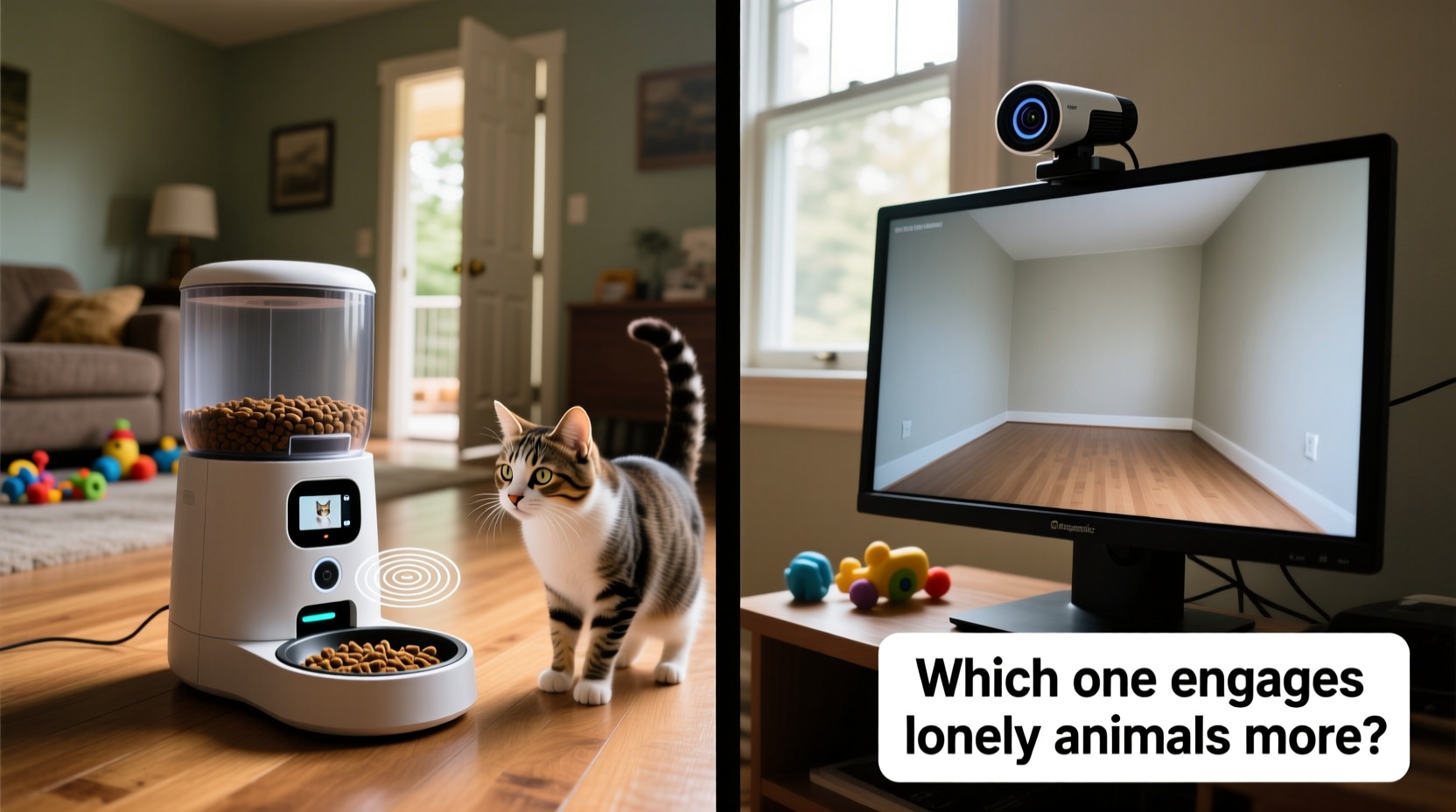
Pets experience separation anxiety differently than humans feel loneliness, but the effects can be equally disruptive. Dogs, in particular, are pack animals. Being isolated for long periods triggers stress responses—elevated heart rate, excessive barking, chewing furniture, or inappropriate elimination. Cats, while more independent, also form strong attachments and may exhibit signs of depression or over-grooming when left alone.
According to Dr. Nicholas Dodman, veterinary behaviorist and professor emeritus at Tufts University, “Animals don’t understand time the way we do. To a dog, eight hours without human contact feels like abandonment.” He adds that auditory and visual cues from their owners—even if remote—can significantly reduce cortisol levels, the hormone associated with stress.
“Even brief interactions via voice or treats can signal safety and continuity to a pet, making them feel less isolated.” — Dr. Sarah Bowman, Certified Animal Behavior Consultant
This is where technology enters the equation. Both standard webcams and pet camera treat dispensers allow owners to monitor their pets remotely, but only one offers two-way engagement. The key differentiator is whether the pet receives feedback beyond sight and sound.
How Standard Webcams Work—and Their Limitations
A standard webcam (or basic pet monitoring camera) enables live video streaming, often with night vision, motion detection, and two-way audio. You can watch your pet nap, pace, or stare longingly at the door. Some models integrate with smart home systems, sending alerts when movement is detected.
These cameras serve a critical function: surveillance. They help owners confirm their pet is safe, identify potential hazards, or catch early signs of illness. However, when it comes to emotional engagement, their utility diminishes quickly.
- They provide passive observation, not interaction.
- Voice calls through speakers may startle or confuse pets rather than comfort them.
- No tangible reward system reinforces positive behavior or redirects anxiety.
In a 2022 study published in *Applied Animal Behaviour Science*, researchers observed that dogs exposed to owner voices via speaker-only devices showed initial alertness but returned to baseline stress levels within minutes. Without a physical component—like a treat or toy—the novelty wore off fast.
Tip: If using a standard webcam, pair voice messages with predictable routines—like calling just before feeding—to build associative comfort.The Interactive Edge: Pet Camera Treat Dispensers
Treat-dispensing pet cameras combine all features of a standard webcam with one crucial upgrade: the ability to send real-time rewards. These devices detect motion, stream HD video, support two-way talk, and—most importantly—allow owners to release kibble or treats with a tap on their smartphone.
The psychological impact is significant. When a pet hears its owner's voice *and* receives a treat immediately after, it forms a conditioned response. The sound of the device activating becomes associated with positive outcomes. Over time, this reduces anxiety and increases attentiveness during check-ins.
Take the example of Max, a 4-year-old Border Collie in Portland, Oregon. His owner, Lisa, works 10-hour shifts and previously relied on a basic IP camera. She noticed Max would bark at the screen when she spoke but then walk away disinterested. After switching to a treat-dispensing model, she began sending a small treat every two hours with a cheerful “Good boy!” message. Within a week, Max began sitting near the camera between dispenses, ears perked, waiting for interaction.
Why Treats Matter in Remote Engagement
Treats aren't just snacks—they're communication tools. In animal training, food is one of the most effective reinforcers because it satisfies a primal need. When paired with voice and visual contact, treats transform a passive observation into an active social exchange.
Consider these behavioral benefits:
- Positive reinforcement: Encourages calm behavior instead of pacing or barking.
- Distraction from anxiety: Redirects focus from separation to anticipation of rewards.
- Cognitive stimulation: Activates problem-solving skills as pets learn the cause-effect relationship.
Some advanced models even include laser pointers or puzzle modes, further increasing mental engagement. For cats, who are often less responsive to voice alone, the sudden appearance of a treat or moving light can spark curiosity and play—key components in reducing boredom-related stress.
Comparative Analysis: Feature-by-Feature Breakdown
| Feature | Standard Webcam | Pet Camera Treat Dispenser |
|---|---|---|
| Live Video Streaming | Yes | Yes |
| Two-Way Audio | Yes (on most) | Yes |
| Motion & Sound Alerts | Yes | Yes |
| Treat Dispensing | No | Yes |
| Interactive Play Features | No | Laser, sounds, or timed games (select models) |
| Behavioral Impact | Low to moderate (initial interest fades) | High (reinforced engagement over time) |
| Cost Range | $30–$80 | $100–$200+ |
| Best For | Monitoring safety, checking in visually | Engaging anxious or high-energy pets |
The data shows a clear trend: while both devices offer visibility, only treat-dispensing cameras create meaningful interaction. The added cost reflects enhanced functionality designed specifically for behavioral enrichment—not just surveillance.
When a Standard Webcam Might Be Enough
Not every pet needs a treat-dispensing camera. For some animals, especially older, low-energy pets or those already comfortable being alone, a simple webcam suffices. Owners seeking only to verify safety—such as ensuring a recovering pet hasn’t fallen or that no intrusions occurred—may find full interactivity unnecessary.
Additionally, households with multiple pets must consider fairness. Automated treat dispensers may favor dominant animals, leading to resource guarding or frustration in shyer pets. In such cases, scheduled manual check-ins via a basic camera might be more practical.
Tip: Use treat dispensers strategically—limit to 2–3 times daily to avoid overfeeding and maintain novelty.Step-by-Step: Maximizing Engagement with a Treat-Dispensing Camera
To get the most out of your device, follow this proven sequence:
- Introduce the device gradually: Let your pet sniff and explore the camera without dispensing anything. Pair its presence with regular meals or affection.
- Trigger first treats manually: Sit nearby and press the treat button while saying a cue like “Surprise!” to associate sound with reward.
- Build distance slowly: Move to another room, then outside, while dispensing treats remotely. Observe your pet’s reaction via the app.
- Establish a routine: Deliver treats at consistent intervals (e.g., midday, afternoon) so your pet learns to expect interaction.
- Incorporate voice and play: Combine treat drops with verbal praise or activate laser toys to extend engagement.
- Monitor behavior trends: Use app logs to track when your pet is most active or anxious, adjusting timing accordingly.
Consistency is key. Pets thrive on predictability. A randomized treat drop may excite briefly, but a reliable schedule builds trust and reduces overall stress.
Checklist: Choosing the Right Device for Your Pet
Before purchasing, evaluate your pet’s temperament and needs:
- ✅ Does my pet show signs of separation anxiety (barking, destruction, pacing)? → Favor treat dispenser
- ✅ Is my pet food-motivated? → Strong indicator for treat-based engagement
- ✅ Do I want to actively interact, or just monitor? → Interaction = treat cam; monitoring = basic webcam
- ✅ Are there multiple pets? → Consider placement and access fairness
- ✅ Am I willing to manage portion control? → Treat cams require dietary awareness
- ✅ Is my Wi-Fi reliable? → Both types need stable connection, but treat cams depend on real-time commands
Real-World Example: From Anxiety to Anticipation
Maria in Austin adopted Luna, a rescue terrier mix, six months ago. Luna had mild separation anxiety, often whining within 20 minutes of Maria leaving. Initially, Maria installed a $50 Wi-Fi camera. She could see Luna lying by the door, unresponsive to her voice through the speaker.
After reading about interactive options, Maria invested in a mid-range treat-dispensing camera. She started by dispensing a treat five minutes after leaving, pairing it with a recorded message: “Luna, I’ll be back soon! Here’s a snack.”
Within three days, Luna began moving toward the camera after Maria exited. By day ten, she waited near the device, tail wagging, anticipating the treat. Barking decreased by 70%, according to audio logs. Two weeks later, Maria added a midday laser session. Luna now spends solo time playing instead of pining.
“It’s not just about the treat,” Maria said. “It’s that she knows I’m still part of her day. It gives her something to look forward to.”
Frequently Asked Questions
Can a treat dispenser replace human interaction?
No device can fully replace physical companionship. However, treat-dispensing cameras provide valuable interim engagement that reduces stress and prevents negative behaviors. They’re best used as supplements, not substitutes.
Are these devices safe for cats?
Yes, many cats respond well, especially if treats are small and the dispenser is placed securely. Some models include cat-friendly settings, like smaller portion sizes or feather toy attachments. Always supervise initial use to ensure the cat doesn’t paw excessively at the mechanism.
Do pets become dependent on treat drops?
Dependency is unlikely if usage is moderate. Using the dispenser 2–3 times daily as part of a broader routine—rather than constant dispensing—prevents obsession. Balance tech interaction with physical enrichment like puzzle feeders and scheduled playtime.
Conclusion: Engagement Beyond Observation
The choice between a pet camera treat dispenser and a standard webcam ultimately hinges on intent. If your goal is surveillance—confirming your pet is safe and accounted for—a basic webcam meets that need affordably. But if you aim to genuinely engage a lonely animal, reduce anxiety, and strengthen the emotional bond across distance, the treat-dispensing camera is unmatched.
Technology cannot replicate touch, scent, or shared presence. But through thoughtful design—combining sight, sound, and reward—it can simulate connection in a way that resonates with animals on a behavioral level. The treat isn’t just food; it’s a symbol of care, delivered across miles.
💬 Have you tried a pet camera with treat dispensing? Share your experience below—your story could help another pet parent make a more informed choice.








