Every holiday season, homes fill with festive décor—and increasingly, pet owners are adding a personal touch: customized ornaments featuring their dogs and cats. From engraved wooden tags to photo-adorned baubles, these keepsakes celebrate pets as family members. But while humans may feel joy placing a tiny portrait of Mr. Whiskers on the tree, the real question lingers: Do pets themselves derive any psychological benefit from these personalized ornaments?
The answer isn't straightforward. Pets don’t experience holidays or symbolism in the way people do, but that doesn’t mean their environment—including seasonal décor—has no effect on their well-being. Understanding whether personalized pet ornaments matter to animals requires exploring animal cognition, sensory perception, and emotional responses.
The Science of Pet Perception
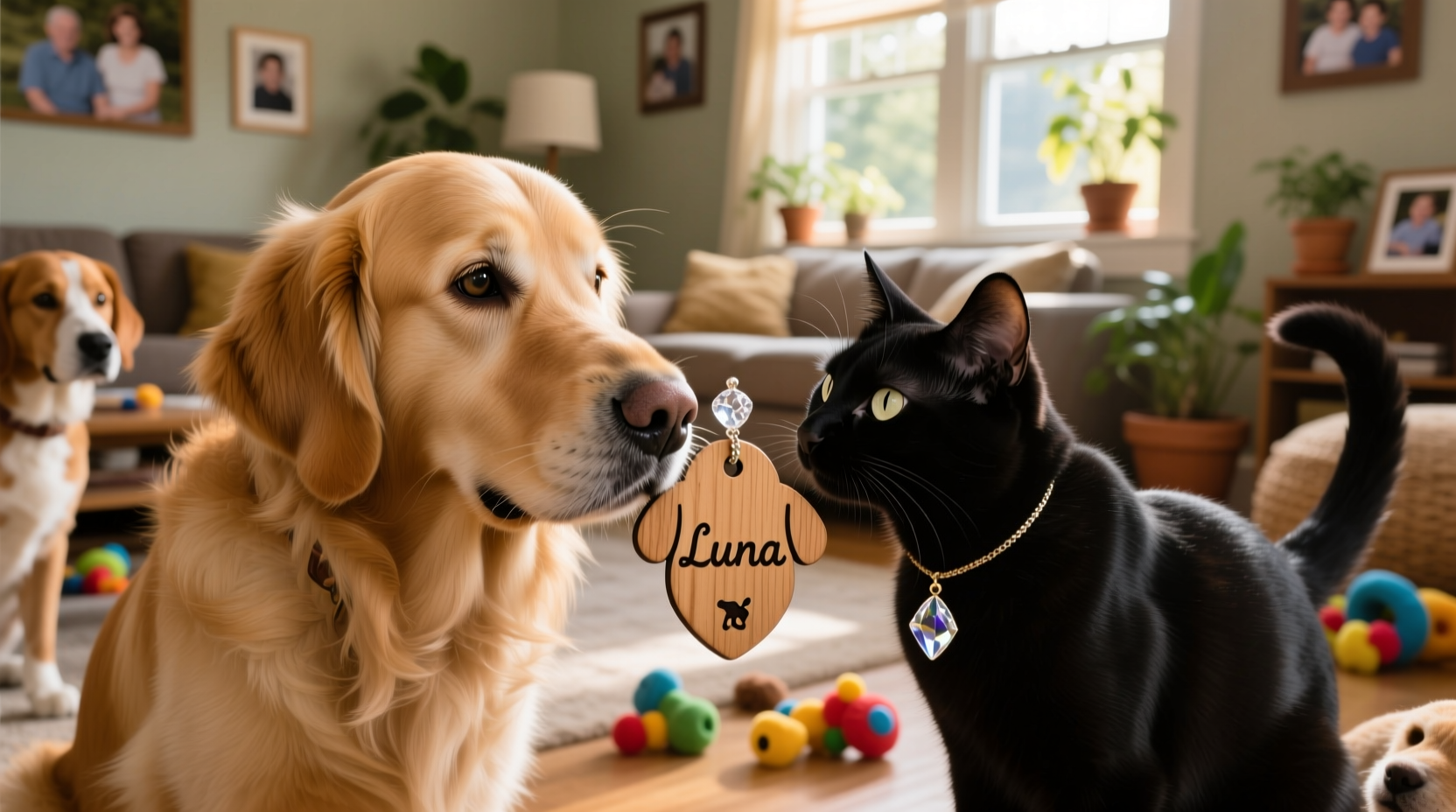
Dogs and cats perceive the world through senses vastly different from our own. Their reactions to objects like ornaments stem not from symbolic meaning but from sensory input—what they see, hear, smell, and how an object behaves in their environment.
Dogs, for instance, have dichromatic vision, meaning they distinguish primarily between blue and yellow hues. Red and green appear muted or grayish. A bright red Christmas ball might catch human eyes, but it’s unlikely to stand out to a dog. Cats, meanwhile, are more sensitive to movement and contrast than color. They detect flickers and shifts in light better than humans, making dangling or reflective objects potentially stimulating—or overstimulating.
Hearing also plays a role. Many ornaments jingle when touched. While soft chimes may go unnoticed, louder metallic sounds can startle pets, especially those with noise sensitivities. A bell-shaped ornament bearing your cat’s name might look adorable, but if it rings every time the furnace kicks on, it could contribute to low-level stress.
Smell is perhaps the most overlooked sense. Dogs rely heavily on olfaction—up to 300 million scent receptors compared to our 6 million. An ornament made of wood, fabric, or resin carries its own odor profile, which may be neutral, intriguing, or aversive depending on materials and finishes. Cats, too, are highly scent-oriented, using pheromones to mark territory and interpret safety. A new object introduced into their space—even one “for” them—can disrupt familiar scent cues.
“Animals live in a sensory world we barely comprehend. What we intend as affectionate decoration may register as environmental change—which, for some pets, equals risk.” — Dr. Lydia Chen, Veterinary Ethologist
Do Pets Recognize Themselves in Ornaments?
A key assumption behind personalized pet ornaments is that the animal might recognize their image or name and somehow take pride or comfort in it. However, self-recognition is rare in the animal kingdom.
The mirror test—a benchmark for self-awareness—shows that very few species pass it. Humans typically pass around age 18–24 months. Great apes, dolphins, and elephants occasionally do. Dogs and cats, despite their intelligence, consistently fail. When confronted with a mirror, most pets react socially—barking, hissing, or attempting play—rather than recognizing the reflection as themselves.
If a dog sees a photo of itself on an ornament, there's no evidence it understands that image represents “me.” Photos are two-dimensional; they lack scent, sound, and motion. To a dog, a picture of a dog is just another dog—one that doesn’t move or smell right. Cats are even less likely to engage with static images, often ignoring them entirely unless they depict fast-moving prey-like shapes.
Names are another matter. Dogs can learn to associate their names with attention, rewards, or commands. But hearing their name spoken is different from seeing it printed on glass. Visual text recognition is not part of canine or feline cognitive development. So while your Pomeranian may come when you say “Biscuit!”, he won’t connect that word scrawled on a hanging ball to himself.
Tip: Avoid placing personalized ornaments at pet eye level or within paw reach—curiosity can lead to chewing, breaking, and potential ingestion of small parts.Emotional Impact: Do Ornaments Affect Pet Well-Being?
Pets don’t appreciate ornaments symbolically, but they can be affected by them emotionally—indirectly. The primary influence comes not from the object itself, but from changes in routine, household energy, and environmental complexity during the holiday season.
Consider a typical December scenario: Lights twinkle, music plays, strangers visit, schedules shift. Add to that tinsel-covered trees and dangling decorations. For many pets, this period increases anxiety. The ASPCA reports a spike in stress-related behaviors—excessive grooming, hiding, vocalizing, or aggression—during festive months.
In this context, a personalized ornament isn’t inherently harmful—but how and where it’s placed matters. If it contributes to a cluttered, noisy, or unpredictable environment, it becomes part of a larger stress load. Conversely, if it’s part of a calm, consistent display that doesn’t alter the pet’s access to safe spaces, its impact is negligible.
Interestingly, some pets form positive associations with holiday periods—not because of ornaments, but because of increased attention. If a family gathers, plays gently, offers treats, or engages in favorite activities, the pet may link the season with comfort. In such cases, the ornament becomes part of a broader positive memory, though still not recognized as “about me.”
Case Study: Luna the Rescue Cat and the Holiday Routine
Luna, a 4-year-old domestic shorthair adopted from a shelter, began showing signs of stress each November—hiding under the bed, refusing food, and overgrooming. Her owners initially attributed it to cold weather, but patterns pointed to décor.
Each year, they decorated a floor-to-ceiling tree in the living room—the heart of Luna’s territory. Ornaments dangled within swatting distance, lights pulsed, and tinsel crinkled with every draft. One year, they added a custom ceramic ornament with Luna’s face painted on it.
Luna showed no interest in the ornament itself. But when the tree came down in January, her behavior normalized immediately. A veterinary behaviorist suggested environmental enrichment and controlled stimulation. The next year, they used a smaller, tabletop tree with lightweight, silent decorations placed high out of reach. They kept lighting steady (no flashing), avoided tinsel, and maintained Luna’s feeding and play schedule without interruption.
The result? No stress symptoms. The personalized ornament was displayed on a shelf above the tree—visible to humans, irrelevant to Luna. The takeaway: the ornament wasn’t the issue. It was the overall sensory disruption.
What Pets Actually Value: Security Over Symbolism
If pets don’t care about personalized ornaments, what do they value? Research in animal welfare emphasizes predictability, safety, and positive social interaction.
- Routine: Consistent feeding, walking, and sleeping times reduce anxiety.
- Scent continuity: Familiar smells signal safety. Sudden new odors (from wreaths, candles, or decor materials) can unsettle pets.
- Controlled stimulation: Novelty isn’t always enriching. Overstimulation leads to fatigue and stress.
- Positive reinforcement: Attention, treats, and play build emotional security far more effectively than visual symbols.
A personalized ornament has no intrinsic psychological benefit to a pet. But the act of creating or gifting one often reflects deeper human emotions—love, remembrance, inclusion. These feelings can translate into better care. For example, someone who commissions a paw-print ornament may become more attentive to their pet’s needs during the holidays, indirectly improving well-being.
| Aspect | Human Perspective | Pet Perspective |
|---|---|---|
| Personalized Ornament | Symbol of love and belonging | Neutral object or minor environmental change |
| Name on Decoration | Meaningful tribute | No recognition or association |
| Photo of Pet | Nostalgic keepsake | Does not recognize self in image |
| Jingle Sounds | Festive ambiance | Potential stressor if loud/unpredictable |
| Placement on Tree | Celebratory spotlight | Risk of curiosity-induced accidents |
How to Honor Your Pet Without Causing Stress
You can celebrate your pet during the holidays in ways that respect their psychology. Here’s a practical checklist to balance sentimentality with safety:
- Display ornaments out of reach—use higher branches or separate stands inaccessible to paws and noses.
- Avoid breakable or toxic materials—glass, metal hooks, and lead-based paints pose risks if chewed.
- Minimize noise—skip jingle bells or wind chimes attached to pet-themed décor.
- Maintain routines—keep feeding, walking, and bedtime schedules consistent regardless of festivities.
- Create a quiet zone—ensure your pet has a retreat space away from decorations and guests.
- Use pet-safe alternatives—consider felt, wood, or paper ornaments with non-toxic finishes.
- Focus on experiences—spend quality time playing, grooming, or training instead of relying on symbolic gestures.
FAQ
Can my dog or cat feel proud of a personalized ornament with their name?
No. Pride is a complex emotion requiring self-awareness and social evaluation—neither of which dogs or cats possess in the human sense. They may respond to your excitement when you place the ornament, but that’s due to your tone and body language, not understanding the object’s significance.
Are there any benefits to having pet-themed decorations?
Indirectly, yes—for humans. Displaying pet ornaments can strengthen emotional bonds and encourage mindful pet care. Just ensure the décor doesn’t compromise your pet’s physical safety or mental comfort.
My pet stares at the ornament. Does that mean they like it?
Staring is more likely due to movement, reflection, or texture than recognition. Cats, in particular, fixate on shiny or dangling objects as if they were prey. If your pet seems fixated, monitor for obsessive behaviors and consider relocating the item.
Conclusion: Celebrate Love, Not Expectation
Personalized pet ornaments are touching tributes—from us to us. They affirm the deep bond between humans and their animal companions. But projecting human emotions onto pets can lead to misconceptions about what they need or appreciate.
Rather than asking whether dogs and cats “appreciate” ornaments, a better question is: How can we honor them in ways that support their well-being? The answer lies not in décor, but in daily acts of kindness—consistent care, patient communication, and environments tailored to their natural behaviors.
This holiday season, hang the ornament if it brings you joy. Just make sure it hangs safely, quietly, and without disrupting the creature whose likeness it bears. True appreciation isn’t measured in glitter or engravings, but in peace, health, and trust.
💬 Have a tradition of including your pet in the holidays? Share your story and help others celebrate responsibly while keeping pets calm and happy.








