
It’s a common frustration: you search for a round-trip flight from New York to Miami and see a price of $320. Then, when you switch to booking just the outbound leg—the same flight, same date, same airline—it jumps to $290. That’s nearly as much as the full round-trip, even though you’re only flying one way. Why do airlines charge so much for one-way tickets? And why does it sometimes seem like you're being penalized for not returning?
The pricing structure behind air travel is complex, shaped by demand forecasting, competition, and revenue optimization strategies. One-way fares often defy logic, especially when they exceed half the cost of a round-trip ticket. Understanding this requires looking beyond surface-level assumptions and into the mechanics of airline pricing models.
How Airlines Price Flights: The Revenue Management System
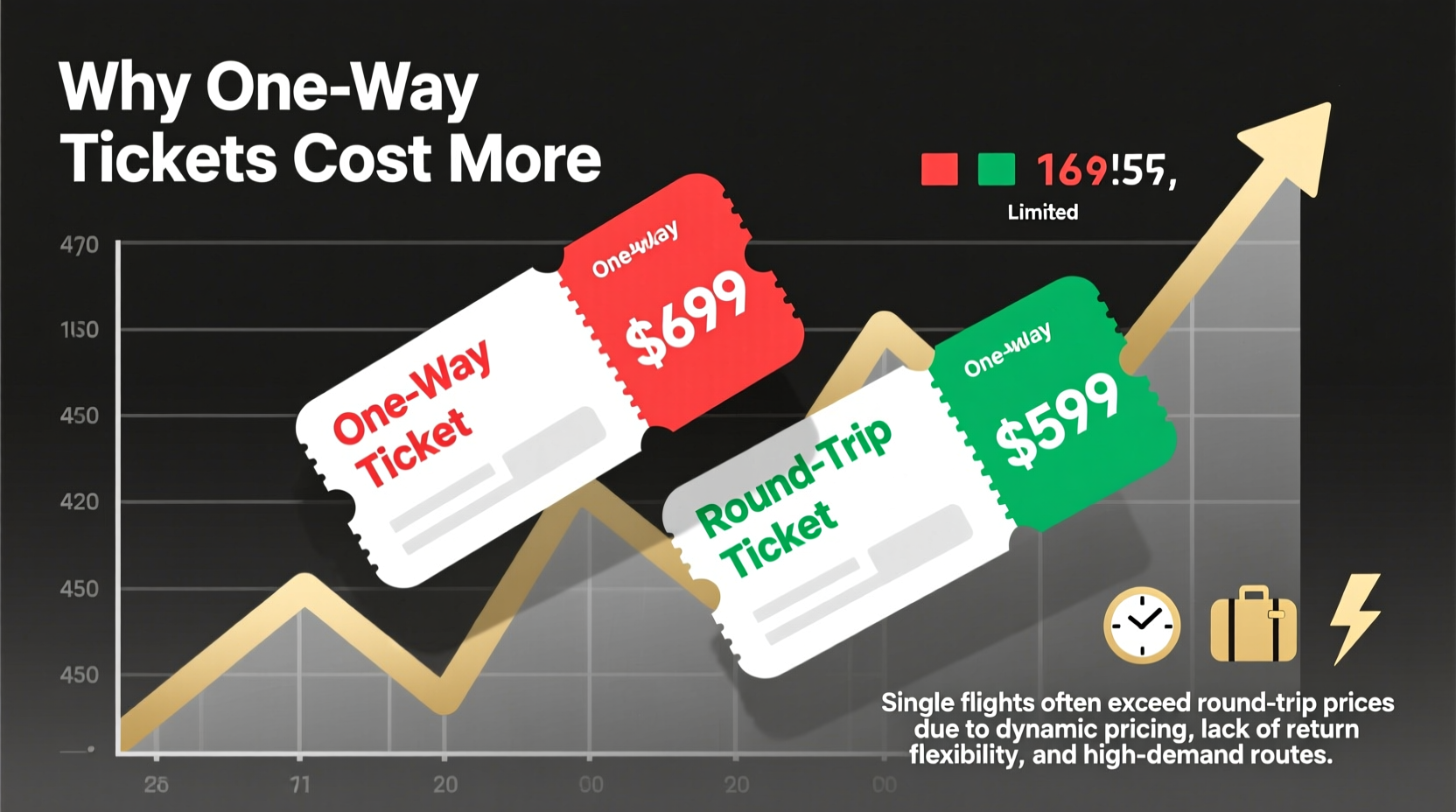
Airlines don’t set fixed prices for routes. Instead, they use dynamic pricing algorithms powered by revenue management systems. These systems analyze thousands of data points—historical demand, seasonality, competitor pricing, booking windows, and passenger profiles—to maximize profit per seat.
In this model, a flight isn't priced based on fuel or crew costs alone. It's about extracting the highest possible value from each traveler. Business travelers, who often book last-minute, non-refundable one-way tickets, are seen as less price-sensitive. Leisure travelers, who plan ahead and usually return home, are offered lower bundled round-trip rates to encourage early bookings.
As a result, one-way tickets are frequently targeted at high-yield passengers—those who need flexibility and are willing to pay more. This creates a pricing imbalance where the same seat in the same cabin can cost dramatically different amounts depending on how it's booked.
“Pricing isn’t about cost recovery; it’s about willingness to pay. One-way tickets act as a proxy for urgency and inflexibility.” — Dr. Alan Schilling, Aviation Economist, MIT Transport Lab
Why Round-Trip Tickets Are Cheaper (Even When Flying One Way)
Round-trip fares are generally cheaper per leg because airlines prefer predictable, balanced traffic flows. They aim to fill planes in both directions. A passenger flying round-trip contributes to load factors on two flights, making them more valuable than someone who only flies out.
Additionally, leisure markets—where most round-trips originate—are highly competitive. Budget carriers advertise low round-trip prices to attract volume. In contrast, one-way fares are rarely advertised and often hidden behind business-class fare classes or premium economy bundles.
This means that even if you have no intention of returning, booking a round-trip and simply not using the return leg can be significantly cheaper. While “throwaway ticketing” walks a gray ethical line, it's a well-known loophole exploited by savvy travelers.
Tip: Always compare the price of a one-way ticket with half the cost of a round-trip on the same route. You might save hundreds by booking a return and skipping the second leg.Key Factors That Make One-Way Tickets More Expensive
- Demand segmentation: Airlines separate travelers into categories. One-way buyers are assumed to be business travelers or urgent flyers, so they’re charged more.
- Limited competition: On routes dominated by a single carrier, there’s little incentive to offer competitive one-way pricing.
- Fare class availability: Discounted one-way fares are often withheld or sold out quickly, leaving only full-fare options.
- Route imbalances: If more people fly from City A to City B than vice versa, outbound one-way tickets may be inflated due to higher demand.
- International regulations: Some countries require proof of onward travel, pushing airlines to design one-way fares as premium products.
Real Example: Booking from Chicago to Las Vegas
Consider a traveler booking a flight from Chicago to Las Vegas for a weekend event. A round-trip ticket (Friday departure, Sunday return) is priced at $268. However, the one-way fare for the Friday flight alone is $245. That means the return flight would effectively cost just $23 if booked together—but isn’t available separately at that rate.
The airline knows most leisure travelers will return, so it bundles the return at a steep discount to lock in the sale. Meanwhile, the standalone one-way price targets last-minute business travelers or relocating individuals who won’t come back soon—if ever.
Smart Strategies to Save on One-Way Flights
You don’t have to accept inflated one-way prices. With the right approach, you can reduce costs significantly—even when you truly only need a single leg.
Step-by-Step Guide: How to Find Lower One-Way Fares
- Compare round-trip vs. one-way pricing: Search for both options side by side. Calculate half the round-trip cost and see if it’s lower than the one-way fare.
- Book a round-trip and skip the return: If allowed by the fare rules, purchase a return ticket and simply don’t use the second leg. Save substantially, but avoid frequent misuse to prevent account penalties.
- Check nearby airports: Sometimes flying into or out of a secondary airport offers better one-way deals due to lower demand.
- Use multi-city search tools: Platforms like Google Flights allow multi-city searches, which can reveal cheaper combinations (e.g., pairing your one-way with a dummy return to another city).
- Be flexible with dates: One-way fares fluctuate wildly. Shifting your trip by a day or two can yield savings of 30% or more.
Checklist: Reducing One-Way Flight Costs
- ✅ Compare one-way and round-trip prices before booking
- ✅ Consider throwaway ticketing (with caution)
- ✅ Use incognito mode to avoid price tracking
- ✅ Set up fare alerts for your route
- ✅ Book mid-week for lower demand periods
- ✅ Explore open-jaw or multi-city routing tricks
When One-Way Pricing Makes Sense (And When It Doesn’t)
Not all one-way fares are unjustifiably high. On highly competitive, short-haul routes with multiple daily flights—like Boston to Washington D.C.—one-way prices can be reasonable due to oversupply and price wars among carriers.
However, on long-haul international flights or routes with limited service, one-way tickets can reach absurd levels. For example, a one-way flight from Los Angeles to Sydney might cost $1,400, while a round-trip is only $1,600. In such cases, the math clearly favors booking a return, even if you plan to stay abroad indefinitely.
| Route | One-Way Fare | Round-Trip Fare | Savings by Booking Round-Trip |
|---|---|---|---|
| New York → Miami | $290 | $320 | $270 (by skipping return) |
| San Francisco → Denver | $180 | $240 | $60 |
| Seattle → Tokyo | $1,100 | $1,300 | $900 |
| Chicago → Las Vegas | $245 | $268 | $245 |
This table illustrates how round-trip fares can offer massive value—even when you only intend to fly one way. The key is recognizing when the system works against you and adapting your strategy accordingly.
FAQ: Common Questions About One-Way Ticket Pricing
Is it legal to book a round-trip and not use the return flight?
Yes, it’s legal. Airlines label it as a “no-show,” and you’ll forfeit the unused portion of the ticket. However, frequent abuse could lead to loyalty account reviews or future booking restrictions.
Why don’t airlines just lower one-way prices to attract more customers?
Because their revenue models rely on price discrimination. Lowering one-way fares would erode profits from business travelers who currently subsidize cheaper leisure fares.
Are budget airlines different when it comes to one-way pricing?
Sometimes. Low-cost carriers like Southwest or Ryanair often price one-way tickets more fairly since they focus on point-to-point travel. However, add-on fees (bags, seats) can still make them costly overall.
Conclusion: Take Control of Your Travel Spending
One-way tickets don’t have to break the bank. The disparity in pricing exists not because of operational costs, but because of how airlines segment and monetize different types of travelers. By understanding these dynamics, you gain the power to work around the system—not within it.
Always compare options, consider alternative booking methods, and never assume the obvious choice is the cheapest. Whether you're relocating, traveling for work, or embarking on a long-term journey, smart booking habits can save you hundreds, even thousands, over time.
🚀 Next time you book a one-way flight, run the round-trip comparison first. You might just find a better deal by doing less.








