Many people are unaware that variations in nipple appearance are entirely normal. Nipples that do not protrude — commonly referred to as flat or inverted nipples — affect a significant number of individuals across genders, though they are most frequently discussed in the context of breast development and breastfeeding. These conditions are not inherently harmful, but they can raise concerns about body image, intimacy, or nursing ability. This guide explores the biological causes, classifications, practical management strategies, and when intervention may be beneficial.
Understanding Nipple Anatomy and Variation
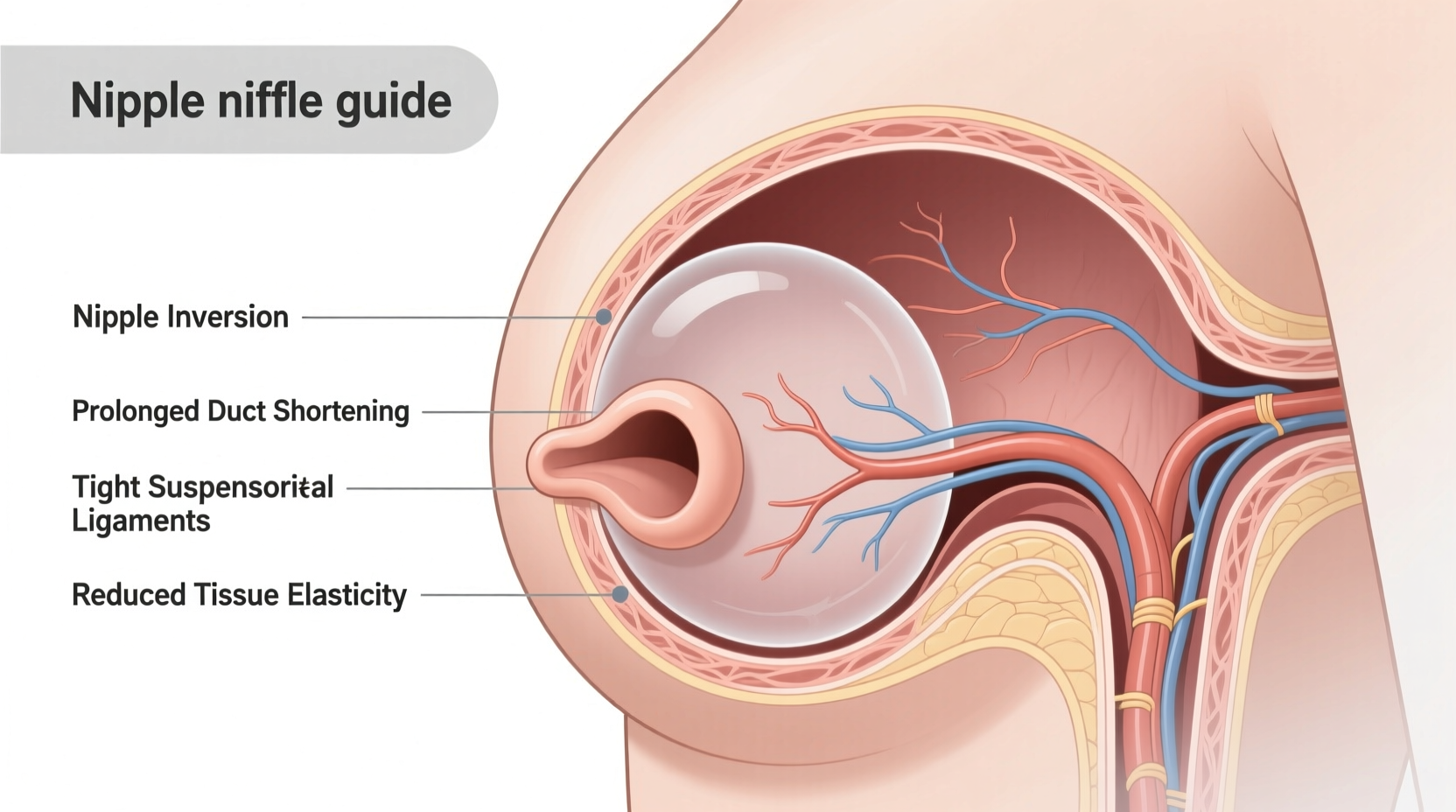
The human nipple is a complex structure composed of muscle fibers, milk ducts, nerves, and connective tissue. In typical anatomy, the nipple protrudes outward due to the contraction of smooth muscle fibers in response to stimuli like cold or touch. However, in cases where the nipple does not extend, the underlying cause often lies in the internal structure rather than external health.
Flat and inverted nipples exist on a spectrum:
- Flat nipples lie flush with the areola and may respond to stimulation by becoming erect.
- Inverted nipples retract inward and may not evert even with stimulation.
These differences are usually congenital — present from birth — but can also develop later due to injury, surgery, infection, or underlying medical conditions such as breast cancer.
Tip: Gently pinch the areola behind the nipple to test responsiveness. If the nipple protrudes temporarily, it may be flat rather than truly inverted.Classification of Inverted Nipples
Medical professionals classify inverted nipples into three grades based on severity and potential for correction:
| Grade | Description | Treatment Outlook |
|---|---|---|
| Grade 1 (Mild) | Nipple can be easily pulled out manually and stays everted for some time. Often called \"shy nipple.\" | Good — responds well to non-surgical methods. |
| Grade 2 (Moderate) | Nipple retracts after release; harder to pull out. May cause discomfort during breastfeeding. | Moderate — may require suction devices or minor procedures. |
| Grade 3 (Severe) | Permanently inverted due to tight fibrous bands. Difficult or impossible to pull out manually. | Poor — typically requires surgical correction if desired. |
This classification helps determine whether conservative treatments are viable or if more advanced options should be considered.
Common Causes of Non-Protruding Nipples
The reasons behind flat or inverted nipples vary widely. Some are developmental, others acquired. Understanding the root cause is essential for appropriate management.
Congenital Factors
In many cases, flat or inverted nipples are simply part of natural anatomical variation. During fetal development, if the milk ducts do not fully expand or create sufficient tension, the nipple may remain recessed. This is especially common in adolescents and young adults noticing their breast development.
Breastfeeding Challenges
While not a cause per se, breastfeeding can reveal previously unnoticed inversion. The baby’s suckling may fail to draw out the nipple, leading to pain, inefficient feeding, or mastitis. However, many women with mild inversion successfully nurse using proper techniques and supportive tools.
Acquired Inversion
Sudden changes in nipple position later in life warrant medical evaluation. Possible causes include:
- Breast infections (e.g., mastitis) causing scarring.
- Trauma or surgery affecting ductal structures.
- Fibrocystic changes or benign tumors pulling tissue inward.
- Breast cancer, particularly inflammatory or ductal carcinoma, which can lead to tethering of skin and nipple retraction.
“Any new onset of nipple inversion, especially unilateral and accompanied by skin dimpling or discharge, should prompt immediate clinical assessment.” — Dr. Lena Patel, Breast Health Specialist
Non-Surgical Management and Correction Techniques
For those seeking cosmetic improvement or preparing for breastfeeding, several non-invasive approaches can help improve nipple projection.
Manual Stimulation and Exercises
Regular stimulation can strengthen muscle response and stretch connective tissue over time. One effective method is the Hoffman technique:
- Place thumbs on either side of the base of the nipple.
- Gently press backward into the breast tissue.
- Slowly pull thumbs apart to stretch the underlying adhesions.
- Repeat 2–3 times daily for several weeks.
This technique works best for Grade 1 and some Grade 2 cases but requires consistency and patience.
Vacuum Devices and Nipple Shields
Suction-based tools mimic infant sucking and gradually encourage eversion. Options include:
- Manual breast pumps used gently before nursing.
- Commercial nipple correctors (e.g., Niplette) worn under clothing for short durations.
- Soft silicone nursing shields that aid latch during breastfeeding.
Mini Case Study: Successful Breastfeeding with Inverted Nipples
Amy, a first-time mother at age 29, discovered her nipples were Grade 2 inverted during pregnancy. Concerned about breastfeeding, she consulted a lactation specialist at 34 weeks. She began using a handheld breast pump for five minutes before each feeding session to draw out the nipple. Combined with a nipple shield and optimal latch positioning, Amy exclusively breastfed her daughter for six months without complications. Her experience highlights how early preparation and professional guidance can overcome anatomical challenges.
When Surgery Is Considered
Surgical correction is typically elective and pursued for aesthetic or functional reasons. Procedures involve releasing the shortened ducts or fibrous tissues tethering the nipple. While effective, surgery carries risks:
- Potential loss of sensation.
- Inability to breastfeed post-surgery due to severed milk ducts.
- Scarring or recurrence of inversion.
Most surgeons recommend waiting until after childbearing years unless medically necessary. Minimally invasive techniques are increasingly available, but patient selection is crucial.
Checklist: Managing Flat or Inverted Nipples
Use this actionable checklist to assess and address your situation appropriately:
- ✔ Determine the type: Test if the nipple can be pulled out and whether it stays everted.
- ✔ Monitor for changes: Note any sudden inversion, especially on one side.
- ✔ Consult a specialist: Speak with an OB-GYN, lactation consultant, or plastic surgeon if concerned.
- ✔ Try non-surgical methods: Begin with Hoffman exercises or gentle suction devices.
- ✔ Prepare for breastfeeding: Use nipple shields or pre-pump techniques if nursing is planned.
- ✔ Avoid self-diagnosis: Never assume inversion is benign without ruling out pathology.
Frequently Asked Questions
Can flat nipples become protruding naturally?
Yes, especially during puberty, pregnancy, or sexual arousal. Hormonal changes increase blood flow and sensitivity, often causing temporary eversion. With consistent stimulation or exercise, some individuals notice long-term improvement.
Is it possible to breastfeed with inverted nipples?
Absolutely. Many women successfully nurse using nipple shields, breast shells, or pre-feed pumping. Lactation consultants can provide personalized strategies to ensure effective milk transfer and prevent discomfort.
Should I be worried if my nipple suddenly inverts?
Yes. Sudden or one-sided nipple inversion, especially with skin puckering, discharge, or lumps, requires prompt medical evaluation. It could indicate an underlying condition such as a tumor or infection needing urgent attention.
Conclusion: Embracing Normalcy and Taking Informed Action
Flat and inverted nipples are far more common than most realize — and perfectly normal in the vast majority of cases. What matters most is understanding your body, recognizing when change warrants concern, and knowing what options exist. Whether you're preparing for motherhood, navigating intimacy, or simply seeking reassurance, informed choices make all the difference. Don’t hesitate to consult healthcare providers who specialize in breast health. Your anatomy does not define your worth — but knowledge empowers confidence.
💬 Have questions or personal experiences with flat or inverted nipples? Share your story in the comments to support others navigating similar journeys.