
If you’ve filled your home with feather wands, crinkle balls, and plush mice only to find your cat completely indifferent—except when a toy car rolls by—you’re not alone. Many cat owners notice their pets fixating on one seemingly random object while ignoring everything else. Toy cars, in particular, seem to have an uncanny ability to captivate certain cats. But why? The answer lies in feline psychology, sensory preferences, and instinctual hunting behaviors. Understanding this quirk isn’t just amusing—it can help you better meet your cat’s mental and physical needs.
The Science Behind Feline Play Preferences
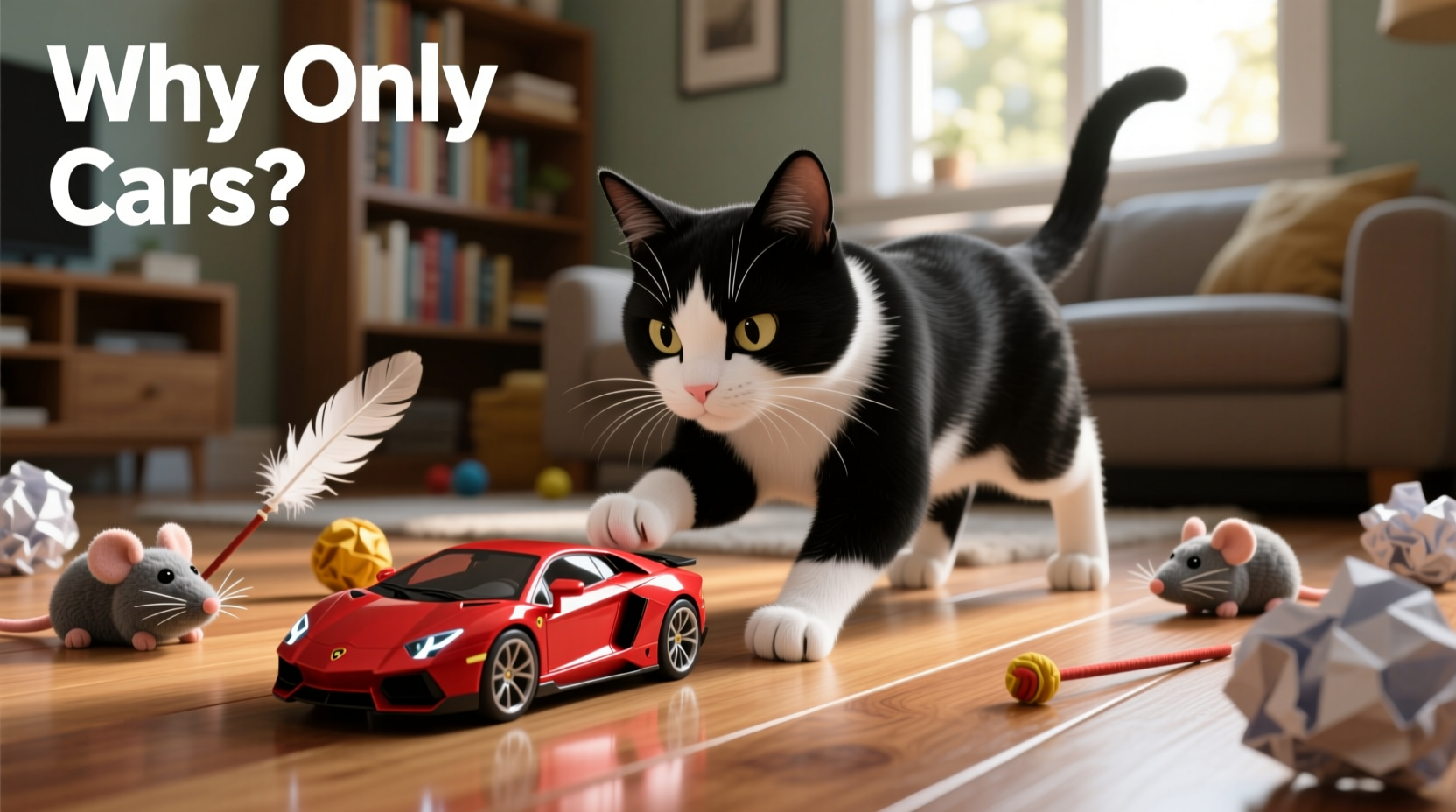
Cats don’t play for fun in the human sense. Their play is rooted in survival instincts. Kittens begin practicing hunting skills early, and adult cats continue to refine these behaviors through simulated prey interactions. When a cat bats at a toy, pounces, or chases it across the floor, they’re engaging in predatory sequences: stalk, chase, pounce, bite, and “kill.”
Toys that trigger this full sequence are far more satisfying than those that only activate one stage. Most commercial cat toys fail because they remain static or move predictably. Toy cars, however, often roll erratically—especially if pushed manually or activated via remote control. This unpredictable motion mimics the darting behavior of real prey like mice or insects, making them inherently more stimulating.
“Cats are hardwired to respond to movement that breaks patterns. A rolling toy car mimics the escape trajectory of small animals better than most ‘cat-specific’ toys.” — Dr. Lydia Chen, Feline Behavior Specialist
Why Toy Cars Stand Out from Other Toys
Not all toy cars are created equal, but certain features make them uniquely appealing:
- Unpredictable Movement: Unlike plush toys that sit still, cars roll in zigzags or sudden stops, triggering a cat’s chase instinct.
- Hard Texture: Cats enjoy biting and pawing at firm objects. Plastic or metal-bodied cars provide resistance, simulating the feel of catching live prey.
- Sound: Some toy cars produce soft mechanical whirs or clicking noises, which resemble rodent squeaks or insect movements.
- Size and Shape: Small toy cars are similar in size to rodents, fitting perfectly within a cat’s ideal prey profile.
Common Reasons Cats Ignore Traditional Toys
Despite your best efforts, many store-bought cat toys fall flat. Here’s why:
| Toy Type | Why It Often Fails | Better Alternative |
|---|---|---|
| Stuffed Mice | No movement; too soft; lacks realism | Add catnip and drag with string |
| Feather Wands | Motion too smooth and predictable | Use quick flicks and pauses to mimic bird flight |
| Ball with Bell | Rolls too smoothly; sound may annoy | Replace with irregularly shaped bouncy ball |
| Laser Pointers | No tangible reward; can cause frustration | Always end session with physical toy “catch” |
The key is variability. Cats quickly habituate to repetitive stimuli. If a toy always behaves the same way, curiosity fades. Toy cars, especially when manipulated by hand, offer variable speed, direction, and interaction—keeping the experience fresh.
How to Leverage the Toy Car Obsession for Enrichment
Rather than seeing this preference as odd, use it to enhance your cat’s environment. Play is critical for preventing boredom, obesity, and stress-related behaviors like over-grooming or aggression.
Step-by-Step Guide: Maximizing Engagement with Toy Cars
- Vary the movement pattern: Push the car forward, then reverse suddenly. Let it bump into furniture to change direction unpredictably.
- Incorporate obstacles: Set up tunnels or cardboard boxes so the car disappears and reappears, simulating prey evasion.
- Add scent: Rub a bit of catnip or silver vine on the car to increase attraction.
- Limit sessions: Keep playtime short (5–10 minutes) and intense to mirror real hunts.
- Rotate toys: Even beloved items lose appeal if available 24/7. Store the car between uses and reintroduce weekly.
“Cats thrive on novelty. Rotating toys—even favorite ones—keeps their brains engaged and prevents desensitization.” — Dr. Rajiv Mehta, Veterinary Ethologist
Mini Case Study: Oliver the Selective Hunter
Oliver, a 3-year-old tabby, lived in a two-story apartment with a shelf full of unused toys. His owner, Maya, tried everything: automated mice, treat puzzles, even a $60 robotic butterfly. Nothing held Oliver’s attention beyond a few seconds—except a tiny plastic police car she found in her nephew’s forgotten backpack.
Every evening, Oliver would wait by the coffee table, tail twitching, until Maya pulled out the car. She noticed he preferred it when she rolled it under the couch and let only the wheels peek out. After consulting a feline behaviorist, Maya learned that partial visibility triggered Oliver’s stalking instinct. She began using the car as part of a structured play routine: five minutes of chasing, ending with a “kill bite” on a soft toy placed nearby to simulate a catch.
Within weeks, Oliver was more relaxed, less prone to nighttime zoomies, and even started interacting briefly with other toys after the car warmed him up.
Checklist: Is Your Cat Getting Enough Mental Stimulation?
- ✅ Engages in active play at least once daily
- ✅ Shows interest in moving objects (even non-traditional ones)
- ✅ Completes the full hunt sequence: stalk → chase → pounce → bite
- ✅ Has access to rotating toys (new item every 3–5 days)
- ✅ Displays calm behavior post-play (licking, resting)
- ✅ No signs of frustration (excessive meowing, toy destruction)
If your cat checks most of these boxes—even if their favorite toy is a Matchbox car—you’re on the right track.
Frequently Asked Questions
Is it normal for a cat to prefer toy cars over cat-specific toys?
Absolutely. While unusual, it’s entirely normal. Cats respond to motion, texture, and sound—not branding. If a toy car triggers their hunting instincts more effectively than a catnip banana, they’ll choose the car every time.
Should I be concerned if my cat only plays with one type of toy?
Only if it leads to obsessive behavior or neglect of other activities. As long as your cat eats, grooms, and interacts normally, a strong toy preference is simply a personality trait. However, introducing variety gradually can enrich their experience.
Can I make other toys more like toy cars?
Yes. Attach small wheels to plush toys, use battery-operated toys with erratic motion, or place regular toys inside transparent plastic containers that roll unevenly. The goal is to replicate the visual and kinetic appeal of a moving car.
Conclusion: Embrace the Quirks, Enhance the Bond
Your cat’s obsession with toy cars isn’t a flaw in their taste—it’s a window into their primal mind. What seems random to us is deeply logical to them. By observing what truly captures your cat’s attention, you gain insight into their individuality and instincts. Instead of forcing engagement with “appropriate” toys, work with their natural inclinations. Use the toy car as a foundation for interactive play, environmental enrichment, and bonding.
Cats aren’t meant to conform to our expectations of play. They’re predators in miniature, navigating a world designed for humans. When you see your cat crouched low, eyes locked on a rolling sedan, remember: you’re witnessing evolution in action. Honor that instinct. Encourage it. And maybe keep a few spare toy cars on hand—you never know when the next high-speed chase will begin.
💬 Does your cat have an unexpected toy obsession? Share your story in the comments—your quirky tale might help another confused pet parent feel a little less alone.








