At first glance, a miniature horse and a pony might look nearly identical—both are small, sturdy, and undeniably charming. It’s easy to assume they’re just different names for the same animal. But beneath their similar appearances lie fundamental differences in breeding, conformation, purpose, and care. Understanding these distinctions isn’t just trivia for equine enthusiasts; it affects how you care for, train, and interact with these animals. Whether you're considering one as a companion, therapy partner, or family pet, knowing what sets them apart is essential.
Size Isn’t Everything—But It Matters
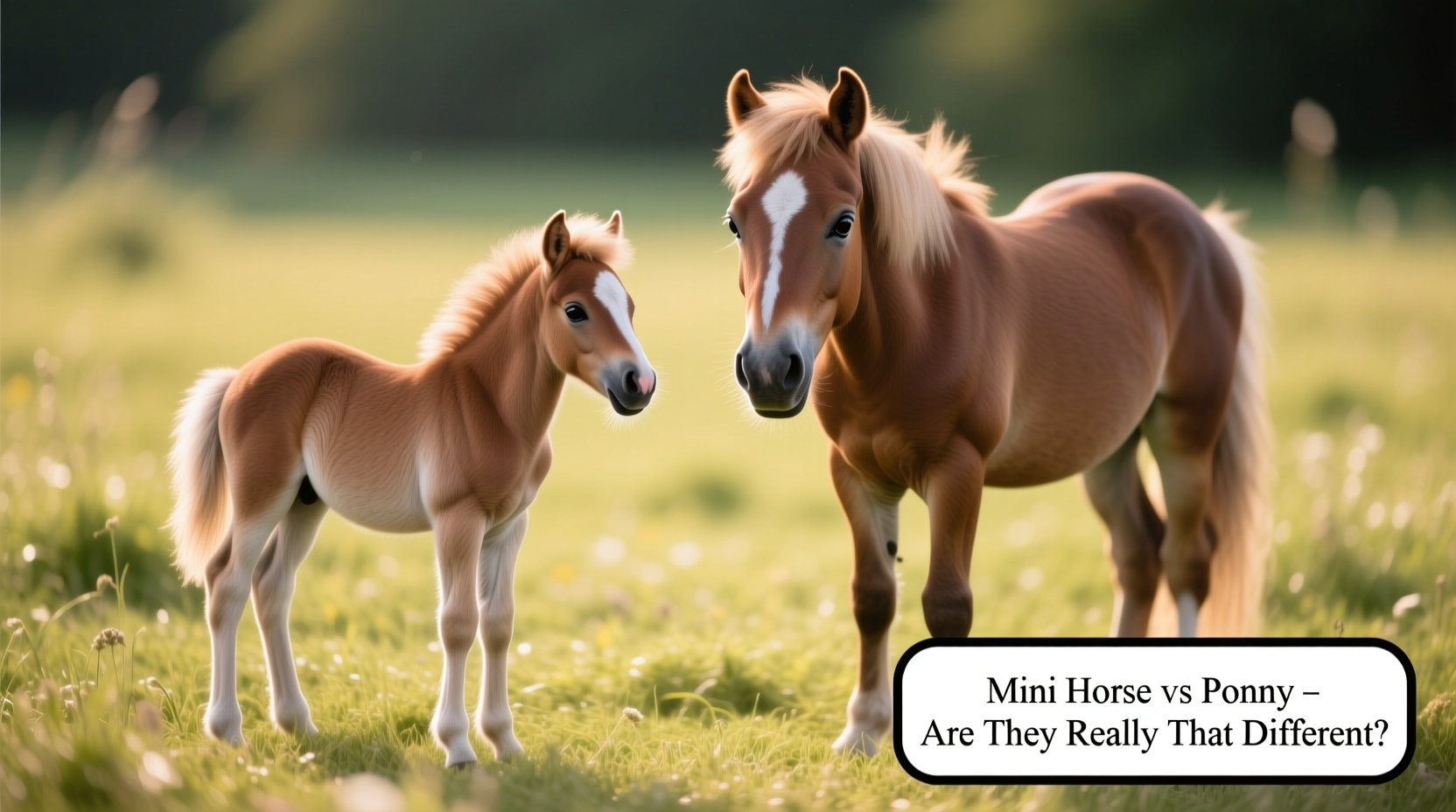
The most obvious difference lies in height, but even this comes with nuance. The general rule is that ponies are defined by breed and typically stand under 14.2 hands (58 inches or 147 cm) at the withers—the highest point of the shoulder. This measurement is standard across most equestrian organizations, including the American Horse Shows Association (AHSA).
Miniature horses, on the other hand, are measured in inches rather than hands. The American Miniature Horse Association (AMHA) recognizes two divisions:
- Division A: 34 inches (86 cm) or under
- Division B: 34–38 inches (86–96 cm)
This means the tallest miniature horse is still shorter than the shortest pony. However, size alone doesn’t tell the full story. While both are small, their body proportions and build diverge significantly.
Tip: Always measure your small equine from the ground to the withers—not the head or neck—to ensure accurate classification.Anatomy & Conformation: More Than Just Scale
One of the clearest ways to distinguish a mini horse from a pony is by examining their body structure. Miniature horses are bred to be scaled-down versions of full-sized horses. They maintain the refined features of larger breeds: long legs relative to body size, slender muzzles, arched necks, and an overall elegant silhouette.
Ponies, however, have evolved differently. Bred for hardiness in rugged environments like the Welsh mountains or Scottish highlands, they possess stockier builds. Their legs are shorter and thicker, their manes fuller, and their bone structure denser. Ponies often have broader chests, heavier coats, and a more compact appearance designed for endurance and strength over speed or elegance.
“Miniature horses are not just tiny horses—they’re genetically proportioned to mirror the conformation of their full-sized counterparts.” — Dr. Karen Hayes, DVM, Equine Genetics Specialist
Breeding & Genetics: Purpose-Built Differences
Miniature horses were selectively bred primarily for companionship, show, and novelty. Originating in Europe during the 1600s, they were often kept by nobility as pets or used in coal mines due to their small size. Today, they’re bred strictly for specific traits: refinement, balance, and gentle temperaments.
Ponies, in contrast, were developed out of necessity. Breeds like the Shetland, Connemara, and Welsh Pony evolved in harsh climates where survival depended on resilience. Their genetic makeup prioritizes energy efficiency, thick winter coats, and the ability to thrive on minimal forage.
These genetic paths mean that while all miniature horses belong to a single recognized category (despite varying bloodlines), ponies encompass dozens of distinct breeds—each with unique characteristics and standards.
Mini Horses vs. Ponies: Key Comparison Table
| Feature | Miniature Horse | Pony |
|---|---|---|
| Height | Under 38 inches (96 cm) | Under 14.2 hands (58 inches / 147 cm) |
| Body Proportions | Scaled-down horse: longer legs, refined muzzle | Stocky: short legs, thick neck, broad chest |
| Breed Diversity | Limited to miniature-specific lines | Many distinct breeds (Shetland, Welsh, etc.) |
| Primary Use | Companionship, shows, therapy | Riding (especially children), work, sport |
| Dietary Needs | Highly sensitive; prone to obesity and insulin resistance | Efficient metabolizers; can thrive on rough pasture |
| Lifespan | 25–35 years | 20–30 years |
Care Requirements: Not Interchangeable
Despite their size, neither mini horses nor ponies should be treated as “easy” animals to keep. In fact, their compact frames come with heightened risks if mismanaged.
Miniature horses are particularly prone to obesity, dental issues, and hyperlipidemia—a potentially fatal condition where fat accumulates in the liver due to stress or fasting. Their metabolism is delicate, and overfeeding—even with grass—is dangerous. Many vets recommend strict grazing limits and specialized low-calorie diets.
Ponies, while hardy, are also susceptible to laminitis, especially when exposed to rich spring pastures. However, their natural efficiency allows them to do well on lower-quality forage, making them better suited to certain rural environments.
Tip: Both mini horses and ponies need regular hoof trimming every 6–8 weeks—even if not shod. Neglect leads to deformities and pain.Real Example: Lily the Mini and Scout the Shetland
Take the case of Sarah, a small farm owner in Vermont. She adopted Lily, a 32-inch miniature mare, expecting her to live happily on pasture with her other animals. Within months, Lily gained excessive weight and showed early signs of insulin resistance. Her vet explained that unrestricted grazing was the culprit.
Meanwhile, Sarah’s neighbor kept Scout, a 10-hand Shetland pony, on the same acreage with no supplemental feed—and Scout thrived. The difference? Scout’s pony metabolism allowed him to extract maximum nutrition from sparse grass, while Lily’s miniature horse physiology required controlled intake and frequent monitoring.
This real-world scenario underscores that treating all small equines the same can lead to serious health consequences.
Temperament and Training: Matching Personality to Purpose
Miniature horses are often described as intelligent, affectionate, and eager to please. Their calm demeanor makes them ideal for therapeutic programs, especially those involving children or individuals with disabilities. Some are even trained as guide animals for the blind—a role no pony has been officially certified for.
Ponies, while also intelligent, tend to have stronger survival instincts. Often labeled “clever” or “independent,” they can be more challenging to train, especially for novice handlers. That said, many children learn to ride on ponies because of their sure-footedness and resilience.
“Ponies aren’t stubborn—they’re cautious. They assess risk before acting. Minis, bred for human interaction, are more likely to trust commands without question.” — Rebecca Lang, Equine Behavior Consultant
Checklist: Choosing Between a Mini Horse and a Pony
- ✅ Do you want a companion for therapy or emotional support? → Consider a mini horse.
- ✅ Will a child be riding regularly? → A sturdy pony may be safer and more practical.
- ✅ Do you have limited space and want a pet-like equine? → Mini horses adapt well to smaller yards.
- ✅ Are you managing pasture with rich grass? → Ponies may require less dietary restriction than minis.
- ✅ Do you plan to show or participate in driving events? → Mini horses excel in halter and cart classes.
Frequently Asked Questions
Can a miniature horse and a pony mate?
Yes, they can reproduce, but the offspring won’t meet breed standards for either category. The resulting foal may inherit unpredictable traits, including metabolic sensitivities from the mini and hardiness from the pony. Most responsible breeders avoid crossbreeding for registration and health consistency.
Are mini horses legal service animals?
In the U.S., yes—miniature horses are explicitly recognized under the Americans with Disabilities Act (ADA) as service animals, provided they are trained for specific tasks. No such provision exists for ponies, though individual cases may vary.
Which is easier to care for?
It depends on context. Ponies generally require less intensive feeding management but may need firmer handling. Mini horses demand vigilant diet control and veterinary oversight but are often gentler and more adaptable to suburban settings.
Final Thoughts: Small Doesn’t Mean Simple
The confusion between mini horses and ponies is understandable—but the distinction matters. One is a precisely bred miniature version of a horse, crafted for grace and companionship. The other is a diverse group of resilient, functional animals shaped by centuries of environmental adaptation. Treating them interchangeably risks mismanagement, health issues, and missed opportunities to appreciate their unique strengths.
If you're drawn to small equines, take time to understand not just their size, but their biology, behavior, and needs. Whether you choose a dainty miniature horse or a sturdy little pony, you’re committing to a long-lived, intelligent companion that deserves informed care.
💬 Have experience with mini horses or ponies? Share your insights below—your story could help someone make the right choice for their home and heart.








