Well-groomed eyebrows frame the face, enhance facial symmetry, and subtly influence first impressions. As demand for low-maintenance yet polished brows grows, two treatments have risen in popularity: microblading and brow lamination. Both promise fuller, more defined arches—but they achieve these results in fundamentally different ways. The central question many clients ask is not just about longevity or cost, but authenticity: which one actually looks more natural?
The answer isn't universal—it depends on your skin type, hair texture, lifestyle, and aesthetic goals. One mimics individual hairs with surgical precision; the other enhances what you already have through restructuring and tinting. Understanding how each technique works, who benefits most from it, and what “natural” really means in the context of beauty will help you make an informed decision.
Understanding Microblading: Art Meets Precision
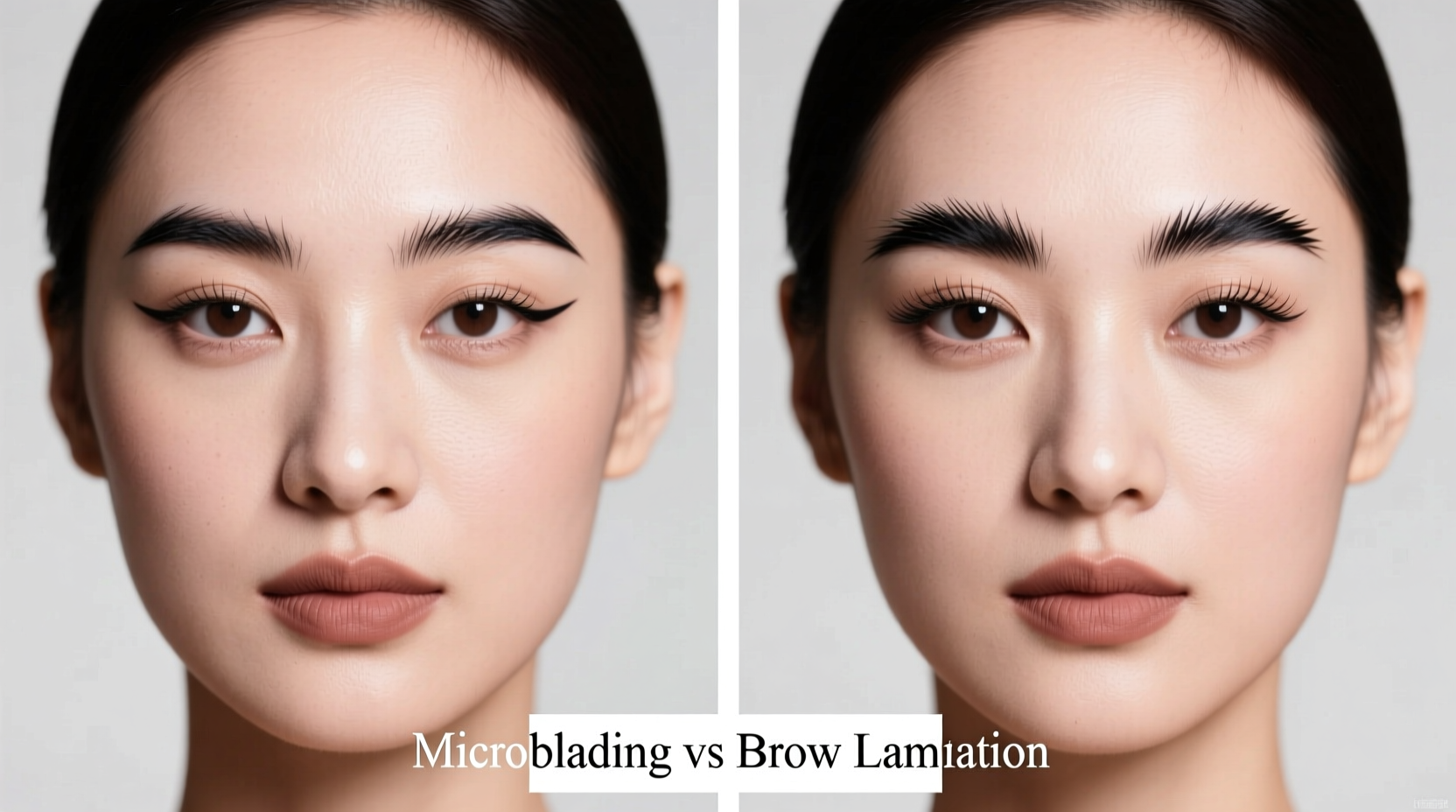
Microblading is a semi-permanent cosmetic tattooing technique that uses a handheld tool with fine needles to deposit pigment into the upper layers of the skin. The goal is to replicate the appearance of real eyebrow hairs, stroke by stroke. Unlike traditional tattooing, microblading doesn’t use a machine—instead, the artist manually draws thin, crisp lines that blend seamlessly with existing hairs.
This method excels for individuals with sparse or uneven brows. It’s particularly effective for those who’ve over-plucked in the past or suffer from medical conditions like alopecia. Because the strokes are hand-drawn, skilled artists can customize the thickness, angle, and direction of each mark to match the client’s natural growth pattern, resulting in a highly realistic finish.
Results typically last 12 to 18 months, depending on skin type and aftercare. Oily skin tends to break down pigment faster, leading to softer, blurred lines over time. Touch-ups are usually recommended every 10–14 months to maintain definition.
Tip: Avoid sun exposure and exfoliating products around the brows during the healing phase (first 7–10 days) to prevent premature fading.Brow Lamination: Enhancing What Nature Gave You
Brow lamination takes a completely different approach. Instead of adding pigment, it chemically straightens and repositions existing hairs to create a fuller, brushed-up look—similar to a perm for your brows. The process involves applying a softening solution to lift the hairs, then setting them in place with a neutralizing agent. A tint is often added to darken lighter hairs and increase visibility.
The result is a clean, fluffy brow with volume and structure. Hairs are trained to lie flat and uniform, giving the illusion of density without introducing foreign pigments. This makes lamination ideal for people with wiry, unruly, or downward-growing brows who want a groomed, laminated effect—often described as the “soap brow” look popularized by Korean beauty trends.
Lamination lasts 6 to 8 weeks. Since it only affects the surface of the skin and hair, it’s non-invasive and suitable for nearly all skin types. There’s no downtime, and the results grow out naturally as your hairs return to their original shape.
“Brow lamination is about enhancing, not replacing. It’s perfect for clients who want subtle refinement and don’t mind regular upkeep.” — Lena Torres, Licensed Esthetician & Brow Specialist
Which Looks More Natural? A Side-by-Side Comparison
“Natural” is subjective. For some, natural means undetectable enhancements—like waking up with perfect brows every day. For others, it means minimal intervention and preserving the original texture and flow of their brows. Let’s compare both treatments across key factors that influence perceived realism.
| Factor | Microblading | Brow Lamination |
|---|---|---|
| Realism of Hair Mimicry | High – individual strokes closely resemble real hairs when done well | Moderate – enhances real hairs but creates a uniform, styled look |
| Skin Interaction | Invasive – pigment deposited into dermis; may cause slight scabbing | Non-invasive – no penetration; affects only hair shafts |
| Longevity | 12–18 months | 6–8 weeks |
| Fade Pattern | Pigment softens and blurs; may require touch-ups to avoid unnatural patches | Hairs gradually return to original position; no patchiness |
| Ideal Candidate | Sparse brows, light hair, desire for permanent fullness | Thick but unruly brows, curly/twisted hairs, preference for temporary change |
| Risk of Artificial Look | Higher if over-pigmented or poorly executed; can appear “drawn-on” | Lower; even if over-tinted, still appears like styled natural hair |
From this comparison, brow lamination generally carries a lower risk of looking artificial. Because it works with your actual hairs, the final result integrates seamlessly into your daily routine. Even if the tint is slightly too dark, it fades evenly and grows out without residue. Microblading, while capable of stunning realism, demands exceptional artistry. Poorly placed strokes, incorrect pigment selection, or excessive density can result in brows that look painted or cartoonish—especially as they fade unevenly.
Choosing Based on Your Brow Type and Lifestyle
Your natural brow characteristics should guide your decision more than trends. Consider the following scenarios:
- If you have very little brow hair: Microblading is likely your best option. Lamination needs existing hairs to work with, so it won’t add volume where none exists.
- If your brows are thick but chaotic: Lamination will tame flyaways and create a bold, feathery shape without altering your natural color or texture.
- If you prefer a soft, everyday look: Lamination offers a lived-in, effortless finish. Microblading can be tailored to be subtle, but defaults to more definition.
- If you dislike frequent salon visits: Microblading wins for longevity. Lamination requires maintenance every 6–8 weeks to sustain results.
- If you have oily or acne-prone skin: Be cautious with microblading. Oil production can blur strokes over time. Lamination is safer and less reactive.
Mini Case Study: Sarah’s Decision Between Two Worlds
Sarah, 34, had lightly colored, sparse brows due to years of waxing. She wanted something low-effort but didn’t want her brows to look “done.” After researching both options, she consulted two specialists. The microblader showed her before-and-after photos with delicate, hair-like strokes that matched her skin tone perfectly. The laminator explained that while he could tint and set her existing hairs, there wouldn’t be enough coverage at the start of her brows.
Sarah chose microblading with a soft, cool taupe pigment and requested a diffused, powder-brow hybrid technique to reduce harshness. After healing, her brows looked fuller and symmetrical, with faint strokes blending into her natural hairs. Six months later, she noticed slight fading but liked the softer appearance. She plans to touch up once a year, finding the balance between permanence and flexibility ideal for her busy schedule.
Step-by-Step: How to Decide Which Treatment Suits You
Follow this practical timeline to determine the best option for your brows:
- Assess your current brow density. Can you see visible gaps? Are there areas with no hair at all? If yes, microblading may be necessary to fill voids.
- Evaluate hair texture and growth pattern. Do your hairs curl upward, zigzag, or grow in multiple directions? Lamination excels at organizing chaotic growth.
- Consider your skincare routine. Do you use retinoids, AHAs, or chemical exfoliants daily? These can accelerate microblading fade and affect pigment retention.
- Think about maintenance tolerance. Are you willing to return every 6–8 weeks for lamination, or do you prefer a longer-term solution?
- Consult a licensed professional. Bring reference photos and discuss expectations. A good technician will advise against a treatment if it’s unsuitable for your anatomy.
- Do a patch test if needed. Especially for lamination, ensure you’re not sensitive to the lifting or neutralizing solutions.
- Start conservatively. With microblading, opt for a lighter hand and revisit for darkness later. With lamination, try without tint first to gauge structural impact.
Expert Tips for Achieving the Most Natural Results
Tip: Always choose a pigment one shade cooler and lighter than your hair color for microblading—warm or dark pigments tend to look artificial under natural light. Tip: For lamination, avoid heavy gels post-treatment. Use a clear, nourishing serum to keep brows flexible and prevent dryness.- Shape matters: Natural-looking brows follow your bone structure, not Instagram trends. Arch height should align with the iris, and tail length should extend toward the outer corner of the eye.
- Asymmetry is normal: Don’t aim for perfect symmetry. Slight variations between brows are human and contribute to a natural appearance.
- Less is more: Over-tinting or over-stroking can lead to unnatural density. Trust your technician to build gradually.
Frequently Asked Questions
Can I switch from microblading to brow lamination?
Yes, but with caution. If you have healed microblading pigment, lamination won’t affect it since it doesn’t penetrate the skin. However, avoid aggressive chemical treatments near the area, and inform your technician about prior procedures to prevent irritation.
Does brow lamination damage natural hair?
When performed correctly, lamination does not damage hair. The chemicals temporarily break and reform disulfide bonds (similar to a keratin treatment), allowing reshaping without cutting or weakening the shaft. Overuse (more than every 5 weeks) can lead to dryness, so spacing appointments is crucial.
Is microblading worth it if I want a natural look?
Yes—if done by an experienced artist using a soft hand and appropriate pigment. Request a “feathered” or “hybrid” style rather than bold, solid fills. Review the artist’s portfolio specifically for clients with similar skin tones and brow types.
Final Thoughts: Natural Beauty Is Personal
There’s no definitive winner in the debate between microblading and brow lamination when it comes to natural appearance. Each has strengths grounded in different philosophies: microblading reconstructs, while lamination refines. The most natural result isn’t about which technique is used, but how well it aligns with your features, expectations, and lifestyle.
Brow lamination offers a forgiving, temporary enhancement that grows out gracefully and suits those who value minimal intervention. Microblading provides transformative, long-lasting definition ideal for filling gaps and restoring lost shape—but requires greater commitment and expertise to avoid an artificial outcome.
Ultimately, the most natural-looking brows are the ones that reflect *you*—not a filtered image or passing trend. Take time to understand your brows, consult qualified professionals, and prioritize health and harmony over perfection.
🚀 Ready to redefine your brows? Book a consultation with a certified brow specialist today and take the first step toward a look that feels effortlessly yours.








