When it comes to making a statement with eye makeup, few finishes deliver as much instant impact as metallics and glitters. Both promise high-shine glamour, but they differ significantly in texture, longevity, and—most notably—fallout. For those who want drama without the mess, understanding the nuances between metallic eyeshadow and glitter is essential. Whether you're preparing for a night out, a photoshoot, or just elevating your everyday look, choosing the right formula can mean the difference between flawless radiance and sparkly disaster.
The Core Difference: Formulation and Finish
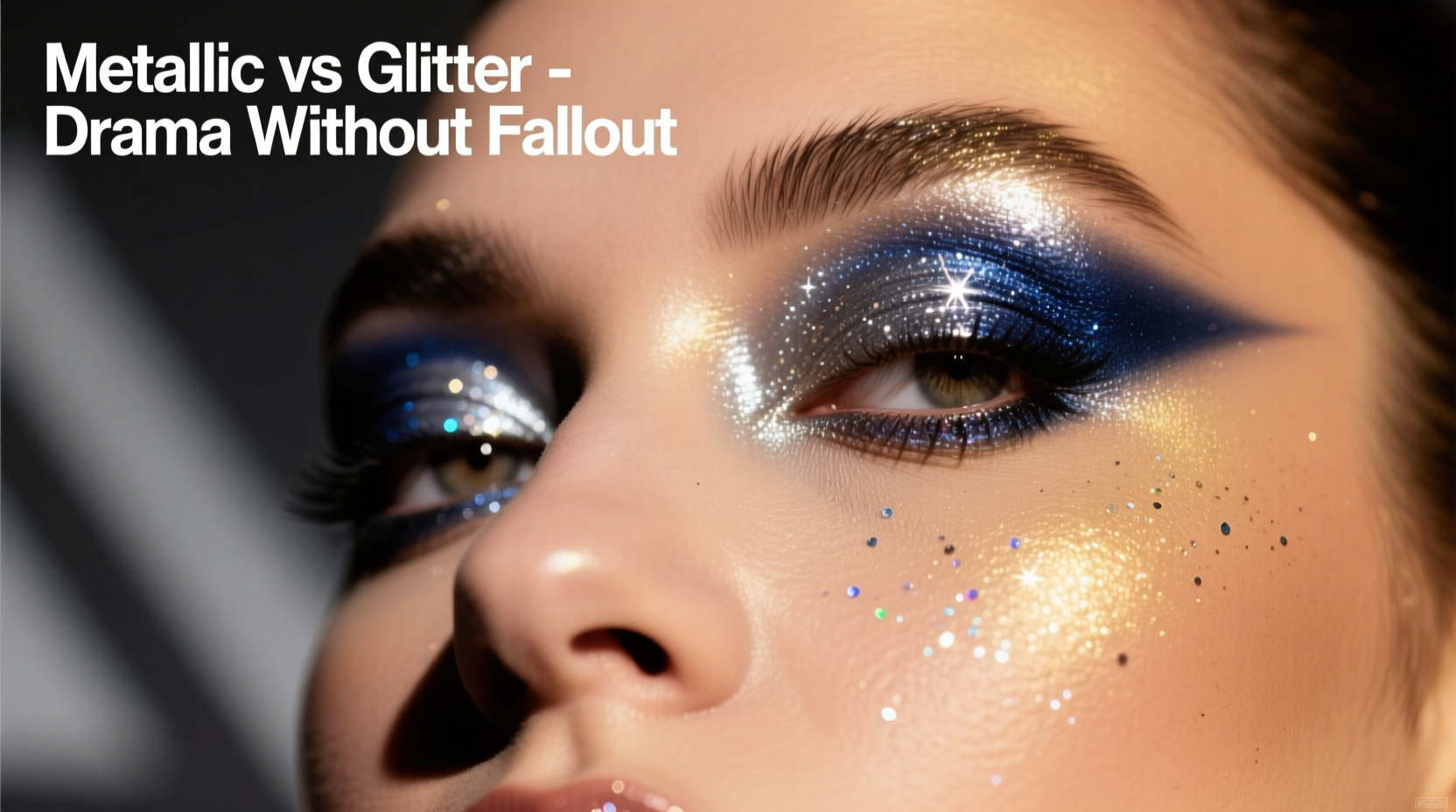
Metallic eyeshadows and glitter shadows both reflect light, but their composition sets them apart. Metallic shadows typically use finely milled pigments, often bound in a creamy or compact base, to create a smooth, reflective finish that mimics liquid metal. These are usually pressed powders or cream-to-powder formulas with spherical particles that scatter light evenly across the lid.
Glitter shadows, on the other hand, contain loose or suspended micro-glitter particles—often made from polyester, mica, or synthetic fluorphlogopite—that catch and reflect light in sharp, directional bursts. The result is a more textured, multidimensional sparkle. However, because these particles aren’t always fully embedded in the base, they tend to migrate and shed throughout the day.
Tip: If you're prone to under-eye fallout, apply glitter looks first before completing the rest of your face to minimize cleanup.Performance Comparison: Wear Time and Fallout
Fallout—the shedding of pigment or particles onto the skin below the eye—is one of the most common frustrations in eye makeup. Glitter shadows are notorious for this. Even when paired with a sticky base, loose glitter can escape during blinking or touch-ups, requiring frequent blotting or concealer correction.
Metallic shadows, especially modern long-wear formulas, are far less likely to produce fallout. Their pigments are fused into the product matrix, meaning they adhere better to the eyelid. Cream-based metallics, in particular, set quickly and resist migration. Some brands now use \"liquid metal\" technology that dries down to a flexible film, locking shimmer in place for up to 12 hours.
“Glitter gives unmatched sparkle, but metallics offer control. For editorial shoots where retakes matter, I reach for metallics 9 times out of 10.” — Lena Torres, Celebrity Makeup Artist
Application Techniques That Make a Difference
How you apply each product plays a major role in minimizing fallout and maximizing impact.
Metallic Eyeshadow Application
- Prime the lid: Use an eyeshadow primer to create a smooth, tacky surface that enhances adhesion.
- Use a damp brush or finger: Slightly moistening your brush (with setting spray) intensifies the metallic sheen and reduces powderiness.
- Pat, don’t swipe: Press the color onto the lid to prevent dragging and dispersion of pigment.
- Layer gradually: Build intensity slowly to maintain control over placement.
Glitter Shadow Application
- Choose a glitter glue: Never apply glitter shadow dry. Use a specialized adhesive base designed to trap particles.
- Apply with a flat synthetic brush or fingertip: This ensures maximum transfer and minimal waste.
- Work in sections: Apply glitter only where needed—center of lid or inner corner—for controlled drama.
- Seal with a clear topcoat: A spritz of setting spray or a thin layer of clear gel can help lock everything down.
Comparative Table: Metallic vs Glitter Eyeshadow
| Feature | Metallic Eyeshadow | Glitter Shadow |
|---|---|---|
| Fallout Level | Low to moderate (especially cream formulas) | High (without proper base) |
| Texture | Smooth, seamless, often creamy | Grainy, textured, tactile |
| Longevity | 8–12 hours with primer | 6–8 hours (may require touch-up) |
| Application Ease | Easy, blendable | Moderate to difficult (requires prep) |
| Boldness/Drama | High shine, elegant intensity | Maximum sparkle, attention-grabbing |
| Suitable for Sensitive Eyes | Generally yes | Risky—loose particles may irritate |
| Cleanup Difficulty | Minimal | High—requires tape or oil wipe |
Real-World Scenario: Bridal Makeup Decision
Sophia, a bride planning her wedding day look, wanted dramatic eyes that would photograph beautifully under bright lights and last through emotional moments. She initially leaned toward a glitter cut crease but was concerned about tears causing smudging and fallout.
Her makeup artist recommended a hybrid approach: using a high-metallic copper shade on the lid for intense reflection and depth, paired with a pinpoint of fine holographic glitter in the inner corner. The metallic base provided lasting shine and easy blending, while the strategic glitter accent delivered sparkle without overwhelming coverage. The result? A luminous, tear-resistant look that stayed intact from ceremony to reception.
This case illustrates how combining both finishes—using metallic as the foundation and glitter as an accent—can balance drama with practicality.
Dos and Don’ts for Drama Without Disaster
- Do use an eyeshadow base or primer for both types—but especially for glitter.
- Do apply glitter shades before foundation to catch fallout early.
- Do choose ultra-fine glitter over chunky flakes for easier control.
- Don’t rub your eyes after application—this breaks the bond and releases particles.
- Don’t skip the mirror check from below—tilt your chin up to spot potential fallout zones.
- Don’t use regular face lotion as a mixing medium—it can degrade glitter binders.
Expert Tips for Long-Lasting, Low-Fallout Shine
Advancements in cosmetic chemistry have led to innovative products that blur the line between metallic and glitter finishes—offering the best of both worlds. Here’s what professionals recommend:
Tip: Try “foil” eyeshadows—these are metallic creams that dry down with a reflective, almost liquid-metal effect and zero fallout.Brands like Pat McGrath Labs, Huda Beauty, and KVD Beauty have developed patent-pending emollient systems that suspend reflective particles in a polymer film. Once applied, the product sets to a flexible, non-tacky finish that resists flaking. These are ideal for all-day events or humid environments where traditional glitter might degrade.
Another pro technique: mix a pure pigment or micronized glitter with a clear, water-based liner gel. This allows customization of intensity while maintaining control over dispersion. Just be sure to use only cosmetic-grade glitter labeled safe for ocular use.
Step-by-Step Routine: Flawless Metallic Look in 5 Minutes
- Prep lids: Clean and moisturize, then apply a neutral-toned eyeshadow primer. Let it set for 30 seconds.
- Select tools: Use a flat, firm eyeshadow brush or fingertip for packing on color.
- Activate the product: If using a cream or liquid metallic, shake well. For pressed powder, lightly mist your brush with setting spray.
- Apply center to outer lid: Start at the center of the mobile lid and press outward in small patting motions.
- Blend edges subtly: Use a clean tapered brush to soften any harsh lines with a matte transition shade if needed.
- Set with powder (optional): Only if creasing occurs—use translucent powder sparingly with a small brush.
- Final seal: Close eyes and spritz once with setting spray to lock in shine.
Frequently Asked Questions
Can I use glitter eyeshadow every day?
Yes, but with caution. Opt for ultra-fine, pressed glitter formulas rather than loose glitter. Apply with a strong base and keep the coverage minimal—such as a wash on the lid or a pop in the tear duct. Avoid heavy glitter in professional settings or long workdays where maintenance isn’t possible.
Why does my metallic shadow lose its shine after a few hours?
This usually happens due to oil buildup on the eyelid breaking down the formula. Using a mattifying eyeshadow primer specifically designed to control sebum helps maintain the reflective finish. Also, avoid touching your eyes throughout the day, as friction dulls the surface.
Is there a way to remove glitter without tugging the delicate eye area?
Absolutely. Soak a cotton pad with a gentle oil-based remover (like jojoba or coconut oil), press it over the eye for 15 seconds to dissolve the adhesive, then gently wipe downward. Never pull or scrub. For stubborn glitter, use a silicone-tipped removal tool to lift particles safely.
Final Verdict: Which Delivers Drama Without Fallout?
If your priority is high-impact shine with minimal mess, metallic eyeshadow wins by a clear margin. Modern formulations offer incredible luster, long wear, and seamless application—making them ideal for daily glam, professional settings, and sensitive eyes. They deliver drama through depth and reflection rather than scattered sparkle.
Glitter remains unrivaled for full-on festival energy, stage performances, or editorial looks where maximum visual disruption is the goal. But it demands preparation, careful application, and acceptance of some fallout. Used strategically—as an accent rather than a base—it can elevate a metallic look without compromising wearability.
The smart choice? Keep both in your kit. Reach for metallics when you want effortless brilliance, and save glitter for moments when only full-on sparkle will do.
🚀 Ready to upgrade your eye game? Try a high-mirror metallic this week and see how much drama you can create without a single speck on your cheek. Share your results or favorite no-fallout product in the comments!








