As dogs age, their bodies undergo changes similar to humans—degenerative joint disease, reduced muscle mass, and decreased circulation can make rest uncomfortable. For senior pets, a supportive sleeping surface isn’t a luxury; it’s a necessity. Two popular solutions dominate the market: memory foam dog beds and orthopedic crate mats. While both claim to ease joint pain and improve sleep quality, pet owners often wonder: do they actually work? And if so, which one is better suited for an older dog’s needs?
The answer lies in understanding how each product functions, what materials are used, and how well they align with the physiological challenges faced by aging canines. This article dives deep into the science behind support surfaces for dogs, compares key features, and provides evidence-based guidance to help you make an informed decision.
Understanding Joint Degeneration in Senior Dogs
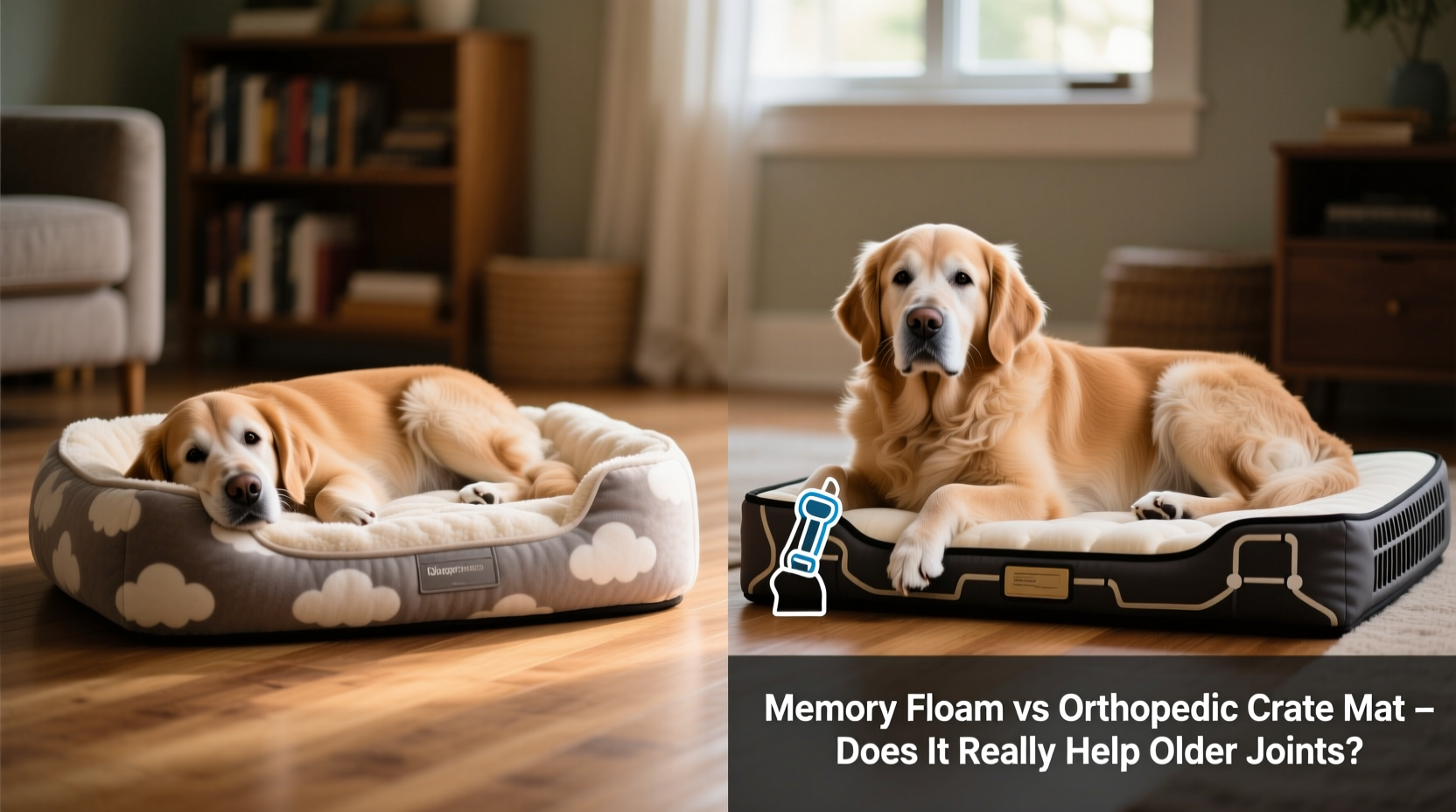
Dogs over the age of seven—especially larger breeds—are prone to osteoarthritis, hip dysplasia, and spinal issues. These conditions cause chronic inflammation, stiffness, and pain, particularly after periods of inactivity such as sleeping or resting. A poor-quality sleeping surface can exacerbate discomfort by creating pressure points on hips, elbows, and shoulders.
When a dog lies down, up to 60% of their body weight concentrates on bony prominences. Without proper cushioning and support, these areas experience prolonged compression, reducing blood flow and leading to soreness. Over time, this can discourage movement, accelerate joint deterioration, and diminish overall quality of life.
“Just like humans, older dogs benefit significantly from pressure-relieving sleep surfaces. The right bed can reduce nighttime stiffness and improve mobility the next day.” — Dr. Rebecca Langford, DVM, Canine Rehabilitation Specialist
This is where specialized bedding comes into play. But not all “supportive” beds are created equal. The difference between a standard plush bed and a truly therapeutic option can mean the difference between restless nights and restorative sleep.
What Is a Memory Foam Dog Bed?
Memory foam dog beds use viscoelastic foam originally developed by NASA to absorb shock and distribute weight evenly. This material responds to body heat and weight, molding precisely to the shape of the dog’s body. Once the dog stands up, the foam slowly returns to its original form.
High-density memory foam (typically 3–5 pounds per cubic foot) offers superior durability and support compared to low-density versions found in cheaper models. It resists sagging and maintains structural integrity over time, even under heavy use.
Benefits of memory foam include:
- Pressure point relief through contouring support
- Improved spinal alignment
- Reduced joint strain during rest
- Shock absorption that minimizes impact when lying down or rising
However, some drawbacks exist. Traditional memory foam retains heat, which may be uncomfortable for dogs that tend to overheat. Newer gel-infused or open-cell foams address this issue by enhancing airflow and dissipating warmth.
Tip: Look for memory foam beds labeled \"gel-infused\" or \"cooling technology\" if your dog sleeps hot or lives in a warm climate.What Is an Orthopedic Crate Mat?
An orthopedic crate mat is designed specifically to fit inside standard dog crates. Unlike traditional flat pads or blankets, these mats incorporate high-density foam layers engineered to provide joint support while maintaining a low profile. Most are made with medical-grade foam similar to that used in human orthopedic mattresses.
Key characteristics include:
- Low height (usually 2–3 inches) to fit within crate dimensions
- Water-resistant or removable covers for easy cleaning
- Non-slip bottoms to prevent shifting inside the crate
- Dense foam core that resists compaction over time
Because they’re built for confinement spaces, orthopedic crate mats prioritize function over fluff. They don’t offer the enveloping feel of memory foam but instead deliver consistent, firm support across the entire surface. This makes them ideal for dogs who spend long hours in crates due to anxiety, training routines, or household logistics.
One major advantage is space efficiency. Many senior dogs feel secure in enclosed environments, and a well-fitted orthopedic mat ensures comfort without compromising that sense of safety.
Direct Comparison: Memory Foam Bed vs Orthopedic Crate Mat
| Feature | Memory Foam Dog Bed | Orthopedic Crate Mat |
|---|---|---|
| Support Level | High – contours to body shape, relieves pressure points | Medium-High – firm, even support with less sink-in |
| Height/Profile | 4–7 inches – requires more floor space | 2–3 inches – fits snugly in crates |
| Mobility Aid | Better for dogs needing soft rise assistance | Firmer base may require more effort to stand from |
| Cooling Properties | Varies – gel-infused versions perform best | Generally better airflow due to thinner design |
| Durability | 5+ years with high-density foam | 3–5 years depending on usage and foam quality |
| Cleaning & Maintenance | Often machine-washable covers; bulkier to clean | Easier to remove and wash; designed for frequent laundering |
| Ideal For | Dogs with severe arthritis, large breeds, free-roaming setups | Crate-trained seniors, anxious dogs, multi-dog households |
The choice ultimately depends on lifestyle, physical condition, and environment. A memory foam bed excels in open areas where maximum comfort is the goal. An orthopedic crate mat shines in structured settings where space and containment matter just as much as support.
Real-World Example: Max, the 10-Year-Old Labrador
Max, a 90-pound yellow Labrador, began showing signs of stiffness at age nine. His owner, Sarah, noticed he hesitated before jumping into the car and often groaned when getting up from his favorite rug. X-rays confirmed mild hip dysplasia and early-stage arthritis.
Sarah first tried a plush bolster bed, but Max continued to shift positions throughout the night. She then invested in a 5-inch gel-infused memory foam bed. Within three days, Max slept longer and rose more easily in the morning. “It was like night and day,” she said. “He stopped whimpering when he lay down.”
However, when traveling, Max reverted to using a thin blanket in his travel crate. On a long road trip, Sarah observed increased restlessness and visible discomfort. She later replaced the blanket with a custom-fitted orthopedic crate mat. On the next journey, Max settled quickly and remained relaxed for hours.
This case illustrates a crucial point: different situations call for different solutions. At home, full-body contouring provided unmatched relief. In transit, a compact yet supportive mat maintained joint alignment without sacrificing security.
How to Choose the Right Option for Your Dog
Selecting the appropriate bed involves evaluating several factors beyond marketing claims. Follow this step-by-step guide to ensure optimal support:
- Assess Your Dog’s Daily Routine: Does your dog roam freely or spend significant time in a crate? If crated frequently, prioritize a low-profile orthopedic mat.
- Evaluate Mobility Level: Dogs with advanced arthritis or neurological issues benefit more from deeper memory foam that eases transitions from lying to standing.
- Measure Crate or Sleeping Area: Ensure any mat or bed fits properly without crowding. Overhang can lead to chewing or tripping hazards.
- Check Foam Density: Look for minimum 3 lb/ft³ density in memory foam or equivalent medical-grade foam in mats. Avoid products that only say “orthopedic” without specifying materials.
- Test Temperature Regulation: If your dog pants heavily at night or lives in a warm climate, opt for breathable fabrics and cooling foam technologies.
- Inspect Washability: Removable, machine-washable covers are essential for hygiene, especially for older dogs with incontinence issues.
Expert-Recommended Features to Look For
Not all orthopedic or memory foam products meet clinical standards. Veterinarians and rehabilitation specialists emphasize the following must-have features:
- Medical-Grade Foam: Should be certified non-toxic and resistant to compression over time.
- Warranty of 2+ Years: Reputable brands offer durability guarantees, indicating confidence in material longevity.
- Waterproof Liner: Protects foam from accidents and extends lifespan.
- Ergonomic Design: Raised edges (in beds) can provide head and neck support, mimicking natural denning behavior.
“The best bed won’t fix joint disease, but it absolutely slows functional decline. Think of it as part of a comprehensive care plan including weight management, exercise, and vet-prescribed supplements.” — Dr. Alan Torres, Veterinary Physical Therapist
Frequently Asked Questions
Do orthopedic beds really make a difference for arthritic dogs?
Yes. Clinical studies and veterinary observations confirm that pressure-relieving surfaces reduce nighttime pain, improve sleep continuity, and enhance morning mobility. One 2021 study published in the *Journal of Small Animal Practice* found that dogs using high-support foam beds showed 30% improvement in mobility scores over eight weeks compared to those on thin padding.
Can I use a memory foam bed in a crate?
Only if it fits securely without blocking airflow or door closure. Most standard memory foam beds are too tall and bulky for typical crates. Instead, choose a crate-specific orthopedic mat that matches the interior dimensions precisely.
How often should I replace my dog’s orthopedic bed or mat?
Every 3–5 years, or sooner if you notice sagging, lumps, or reduced resilience. Perform a simple test: press your hand into the center of the bed. If it leaves a lasting indentation or feels uneven, it’s time for replacement.
Action Checklist: Choosing the Best Support Surface
Before purchasing, go through this checklist to ensure you’re making the right choice:
- ☑ Measure your dog from nose to tail and add 6–12 inches for stretching room
- ☑ Confirm foam density is listed (minimum 3 lb/ft³)
- ☑ Verify cover is removable and machine washable
- ☑ Check for waterproof inner lining
- ☑ Read customer reviews focusing on long-term durability
- ☑ Ensure return policy allows trial period (ideally 30+ days)
Final Thoughts: Comfort Is Care
For older dogs, rest is not just downtime—it’s recovery time. Every hour spent on a supportive surface reduces joint strain, promotes circulation, and aids tissue repair. Whether you choose a plush memory foam bed for the living room or a streamlined orthopedic crate mat for safe confinement, the investment pays dividends in comfort, mobility, and emotional well-being.
There’s no universal “best” option—only the best solution for your dog’s unique needs. By understanding the differences in design, materials, and application, you can make a choice grounded in both compassion and practicality.
🚀 Take action today: Evaluate your senior dog’s current sleeping surface. If it sags, shifts, or shows wear, consider upgrading to a clinically supportive option. Your dog’s joints—and their golden years—will thank you.








