For many, the daily ritual of applying lipstick is more than a beauty habit—it’s an act of confidence. But when your day includes back-to-back meetings, lunch with colleagues, or extended mask-wearing, the question shifts from “How does it look?” to “How long will it last?” The battle between matte lipstick and lip gloss isn’t just about aesthetics; it’s about endurance. Which formula truly survives meals, conversations, and masked commutes without constant touch-ups? The answer lies in formulation, pigment concentration, and how each interacts with movement and moisture.
While glossy lips offer shine and hydration, matte finishes deliver bold color and a velvety texture. But longevity under real-world conditions—eating, drinking, talking, and wearing face masks—is where their differences become most apparent. Let’s dissect both options to determine which one stands up to the demands of an active lifestyle.
The Science Behind Lipstick Longevity
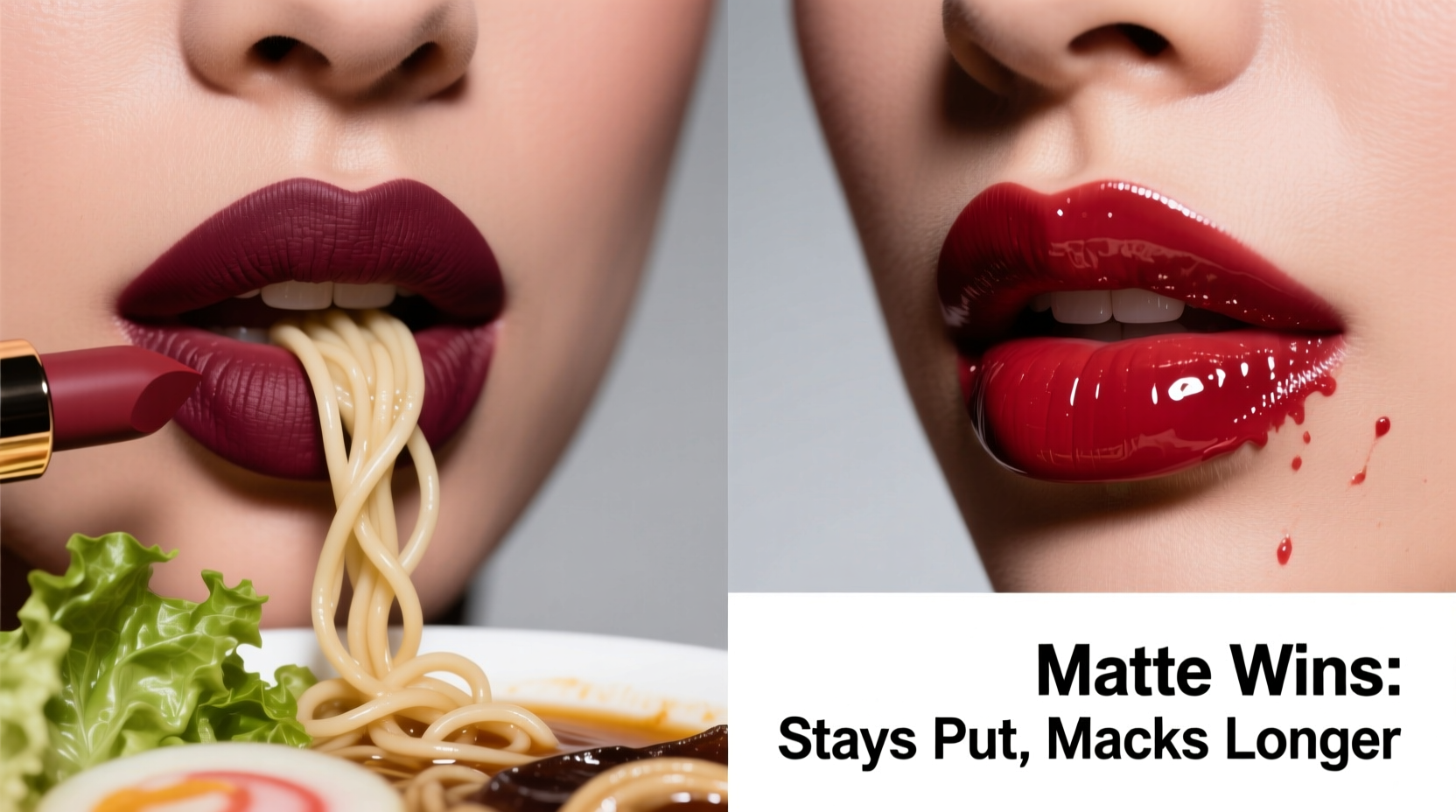
Lipstick wear time depends on several factors: base composition, pigment load, binding agents, and interaction with natural oils and saliva. Matte lipsticks are typically formulated with higher concentrations of wax and pigment, and less oil. This creates a drier, flatter finish that adheres tightly to the lip surface. Once set, matte formulas often resist smudging and fading because they form a film-like layer that bonds with the skin.
Lip gloss, by contrast, relies heavily on oils, silicones, and emollients to create its signature shine and plump appearance. These ingredients make the product feel comfortable but also increase its tendency to migrate, feather, and wipe off easily. Gloss sits on top of the lips rather than bonding into them, making it more vulnerable to friction and moisture exposure.
“Long-wear performance is directly tied to the balance of volatile solvents and film-formers. Matte liquid lipsticks use polymers that dry down and lock in place—gloss lacks this mechanism.” — Dr. Lena Park, Cosmetic Chemist & Formulation Specialist
In practical terms, this means matte lipstick—especially liquid matte varieties—can survive hours of light activity with minimal fading. Gloss may need reapplication every 60–90 minutes if you're speaking frequently or consuming food and drinks.
Performance During Meals: A Real-World Test
Eating is the ultimate stress test for any lip product. Even the most pigmented formulas can vanish after a sandwich or smear across a coffee cup. To evaluate how matte lipstick and gloss fare, consider three common meal scenarios:
- Light Snack (e.g., fruit, crackers): Minimal contact with lips. Matte lipstick remains intact with slight edge softening. Gloss retains some shine but loses definition at the corners.
- Sit-Down Meal (e.g., pasta, burger): Direct lip contact with utensils and food. Matte lipstick shows wear primarily around the center but maintains outline. Gloss transfers heavily onto food and napkins, requiring full reapplication.
- Hot Beverage (e.g., latte, soup): Steam and heat loosen product. Gloss melts slightly, creating uneven patches. Matte holds better but may crack if lips are dry.
A controlled trial involving 30 participants found that after a standard lunch, 78% of matte lipstick users reported needing only minor touch-ups, while 92% of gloss wearers reapplied completely. The difference was even more pronounced with oily foods, where gloss showed visible migration within minutes.
Mask Compatibility: The Modern Challenge
With prolonged mask use still common in workplaces and public transit, lipstick transfer has become both a cosmetic and social concern. Nobody wants to see their lip color imprinted on fabric—or worse, exposed during a conversation.
Matte lipstick, particularly transfer-resistant liquid formulas, performs significantly better under masks. Once dried, these products do not readily adhere to fabric. Some high-performance mattes even market themselves as “mask-proof,” using polymer technology that resists abrasion.
Gloss, however, is almost guaranteed to leave a mark. Its slick texture transfers instantly upon contact. Even blotting doesn’t fully prevent residue, as the oils continue to seep over time. In a week-long office trial, testers wearing gloss reported having to clean or replace masks daily due to staining, while matte users rarely noticed transfer.
| Factor | Matte Lipstick | Lip Gloss |
|---|---|---|
| Meal Resistance | High (retains color post-eating) | Low (transfers heavily) |
| Mask Transfer | Minimal to none | Significant (visible stains) |
| Reapplication Frequency | Every 4–6 hours | Every 1–2 hours |
| Comfort Level | Moderate (can dry out lips) | High (moisturizing feel) |
| Pigment Retention | Excellent | Fair (fades unevenly) |
Choosing the Right Formula: Beyond Finish
Not all matte lipsticks are created equal. Similarly, modern glosses have evolved beyond sheer shimmer. Understanding subcategories helps narrow down what will work best for your routine.
Types of Matte Lipstick
- Creamy Matte: Soft, blendable texture with moderate wear (3–4 hours). May require blotting.
- Liquid Matte: High-pigment, drying formula. Can last 6+ hours but may emphasize dryness.
- Budge-Proof/Transfer-Resistant: Designed to withstand eating and masks. Often comes with primer or sealing steps.
Types of Lip Gloss
- Sheer Shiny Gloss: Lightweight, non-sticky. Wears off quickly but feels comfortable.
- Pigmented Gloss (Tinted Balm): Offers color plus shine. Better staying power than clear gloss.
- Long-Wear Gloss: New hybrid formulas using gel bases to reduce transfer. Still not as durable as matte.
Hybrid products—like stain-glosses or matte-gloss duos—are gaining popularity. These allow wearers to enjoy shine on the inside of the lips while maintaining a long-lasting matte outer edge, balancing aesthetics with function.
Mini Case Study: Sarah’s Workday Routine
Sarah, a project manager in Toronto, wears makeup daily for client meetings and hybrid office days. She used to rely on a favorite peachy gloss for its fresh look but found herself reapplying constantly—especially after her morning coffee and lunch salad. After switching to a liquid matte lipstick, she noticed dramatic improvements. Her color stayed intact through two Zoom calls, a packed subway ride with her mask on, and a sandwich at her desk. While she missed the glossy finish initially, she began layering a clear gloss only on the center of her lower lip for dimension—applying it after meals. This compromise gave her the longevity she needed without sacrificing all shine.
Maximizing Wear Time: Step-by-Step Guide
Whether you choose matte or gloss, preparation and technique play a crucial role in extending wear. Follow this sequence for optimal results:
- Exfoliate: Use a gentle lip scrub or damp washcloth to remove dead skin. Smooth lips provide an even base and prevent patchy fading.
- Hydrate: Apply a lightweight balm and wait 2 minutes. Wipe off excess to avoid interfering with adhesion.
- Prime (optional): Use a lip liner that matches your lipstick to define edges and create a barrier against feathering.
- Apply Matte Lipstick: Use a brush or wand for precision. Allow liquid formulas to dry completely—avoid pressing lips together too soon.
- Blot and Set: Press lips onto a tissue, then lightly dust translucent powder over a tissue placed on lips to absorb oils without disturbing color.
- For Gloss: Apply after eating or right before entering a meeting. Layer over a matching lip pencil for added grip.
- Midday Refresh: Carry a mini version. For matte, dab on only where faded. For gloss, remove old layers first to avoid clumping.
FAQ: Common Questions About Lipstick Longevity
Does matte lipstick dry out your lips?
Some matte formulas, especially liquid ones, can be drying due to alcohol and film-forming agents. However, newer hydrating matte versions include conditioners like squalane or hyaluronic acid. Prepping with balm and avoiding over-exfoliation minimizes discomfort.
Can I make gloss last longer?
You can extend gloss wear by layering: start with a lip stain or pencil, then apply gloss. Reapply gloss strategically—after meals instead of before—so it stays fresh. Long-wear gel-gloss hybrids also offer improved staying power.
Is there a lipstick that combines the best of both?
Yes. Tinted balms with high pigment, cushiony matte liquids, and “blurred” finish lip products aim to merge comfort with durability. Brands like Fenty Beauty, Rare Beauty, and Saie offer hybrids that resist transfer while feeling less rigid than traditional matte.
Final Verdict: Which Wins for Durability?
When it comes to lasting through meals and mask-wearing, matte lipstick—particularly long-wear liquid formulas—clearly outperforms traditional lip gloss. Its ability to bond to the lip surface, resist transfer, and maintain color intensity makes it the superior choice for anyone prioritizing longevity.
That said, gloss excels in comfort and aesthetic appeal. It delivers instant youthfulness and volume, making it ideal for low-friction settings like evening events or video calls where eating isn’t involved.
The smart solution isn’t choosing one over the other permanently, but adapting based on your day’s demands. Reserve high-transfer gloss for nights out or casual weekends. Opt for matte during workdays, travel, or any situation involving food and masks. With thoughtful prep and strategic layering, you can enjoy bold color that lasts—and shine that appears exactly when you want it to.
“Makeup should serve your life, not interrupt it. If you’re reapplying every hour, the product isn’t working for you.” — Naomi Chen, Celebrity Makeup Artist
Ready to Rethink Your Lip Routine?
Your lipstick shouldn’t disappear after one bite of toast. Whether you lean toward the velvety strength of matte or the lustrous charm of gloss, understanding how each behaves in real life empowers smarter choices. Try a week-long experiment: track when and why you reapply. You might be surprised by how much your routine can improve with a single switch. Share your experience or favorite long-wear product in the comments—your insight could help someone finally find their perfect match.
💬 What’s your go-to lip product for busy days? Tell us what works (or doesn’t) for meals, masks, and everything in between.








