Walking two dogs at once can be a rewarding experience—more companionship, double the tail wags, and shared outdoor time. But when both are tethered to a single leash, challenges arise: tangling, pulling in opposite directions, and loss of control. With thoughtful preparation and consistent training, however, managing two dogs on one leash can become not only manageable but enjoyable. This guide offers actionable strategies, real-world insights, and expert-backed methods to transform chaotic walks into calm, coordinated outings.
Understanding the Challenges of Dual-Dog Leash Walking
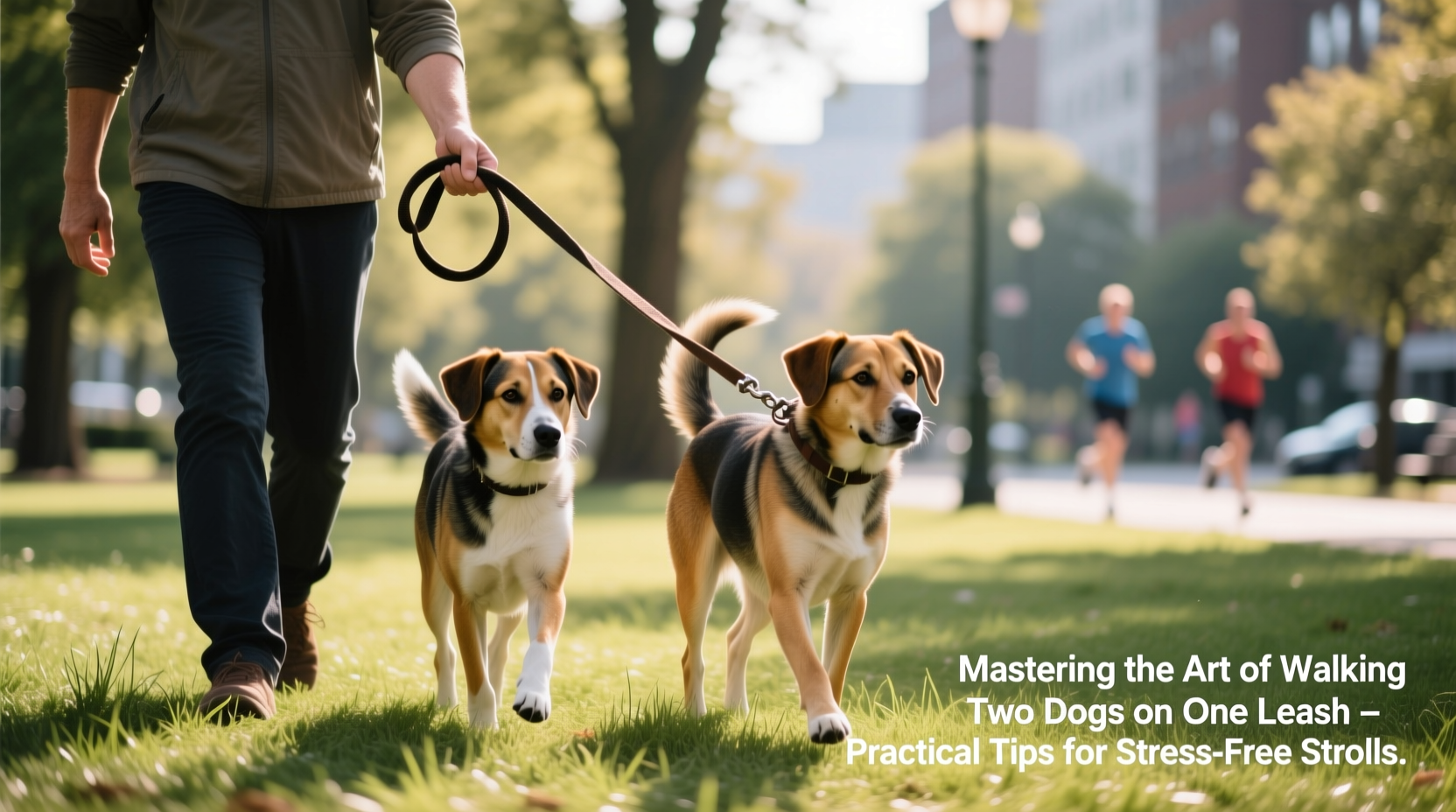
Walking two dogs together amplifies the demands of canine handling. Each dog has its own temperament, energy level, and attention span. When connected to the same leash, their behaviors interact—sometimes harmoniously, often unpredictably. Common issues include:
- Tangling: Leashes twist as dogs move independently.
- Pulling: One or both dogs may lunge toward distractions.
- Lack of focus: Dogs distract each other instead of paying attention to you.
- Uneven tension: Force distribution becomes uneven, risking injury or discomfort.
These challenges don’t mean dual-leash walking is impractical—they simply require strategy. The goal isn't just control, but cooperation.
Tip: Always walk your dogs separately first to assess individual behavior before attempting joint walks.Selecting the Right Equipment for Two Dogs
The right gear makes all the difference. A standard leash won’t suffice when managing two dogs simultaneously. Consider specialized tools designed for dual-dog handling.
| Equipment Type | Best For | Limitations |
|---|---|---|
| Double-handle leash | Dogs of similar size; moderate pullers | Limited reach; harder to manage wide turns |
| Y-shaped harness leash | Preventing tangling; even force distribution | Less flexibility in adjusting individual control |
| Multi-dog retractable leash | Calm, well-trained dogs needing space | Risk of entanglement; not ideal for strong pullers |
| Harnesses (front-clip preferred) | Reducing pulling; increasing steering control | Requires proper fit and adjustment |
Front-clip harnesses are particularly effective because they redirect a dog’s momentum when they pull, turning them back toward you. Pair these with a Y-style dual-dog leash for optimal alignment and reduced strain on your arms.
“Using a front-clip harness system significantly improves handler control, especially with reactive or excitable dogs.” — Dr. Karen Becker, Veterinary Behavior Specialist
Step-by-Step Guide to Walking Two Dogs on One Leash
Success comes from preparation, consistency, and gradual progression. Follow this timeline to build confidence and coordination.
- Train Separately First: Ensure each dog reliably responds to basic commands like “heel,” “sit,” and “wait” during solo walks.
- Introduce Side-by-Side Positioning: Practice having both dogs stand calmly beside you indoors or in a quiet yard using treats and praise.
- Use a Training Lead: Begin with a double-handled leash so you can gently correct each dog individually if needed.
- Start Short & Controlled: Walk for 5–10 minutes in low-distraction areas. Focus on maintaining parallel positioning.
- Incorporate Frequent Pauses: Stop and ask both dogs to sit before crossing streets or passing stimuli.
- Gradually Increase Duration: Add 5 minutes per week as coordination improves.
- Phase Out Corrections: Shift from physical guidance to verbal cues as dogs internalize expected behavior.
Consistency over weeks builds muscle memory—for both you and your dogs.
A Real Example: From Chaos to Calm
Sarah adopted Luna, a high-energy border collie, after already owning Milo, a laid-back basset hound. Initially, walks were disastrous: Luna pulled ahead while Milo lagged behind, twisting the leash around Sarah’s legs. She resorted to walking them separately, cutting her evening routine in half.
After consulting a local trainer, Sarah switched to a Y-harness leash and began training both dogs to walk in sync using positive reinforcement. She practiced heel work in her driveway, rewarding both dogs when they stayed within a foot of her sides. Within three weeks, she was able to complete full neighborhood loops without tangles or pulling.
“It wasn’t overnight,” Sarah said. “But now our walks feel peaceful. They even check in with me mid-walk, looking for direction.”
Tip: Reward calm behavior immediately—timing is crucial in reinforcing desired actions.Do’s and Don’ts When Managing Two Dogs
Avoid common pitfalls by following these guidelines:
| Do’s | Don’ts |
|---|---|
| Use harnesses instead of collars to reduce neck strain | Allow dogs to pull freely—even occasionally |
| Keep treats handy for on-the-spot rewards | Yank the leash harshly to correct behavior |
| Maintain an upright posture and steady pace | Let one dog consistently lead the walk |
| Practice regularly in safe environments | Attempt dual-leash walks without prior training |
Remember: your body language sets the tone. Confident, predictable movement encourages dogs to follow suit.
Frequently Asked Questions
Can I use a regular leash for two dogs?
While possible, it's not recommended. A standard leash lacks the structure to safely manage two dogs. You risk losing control, causing injury, or creating behavioral setbacks. Invest in purpose-built equipment for long-term success.
What if one dog is much stronger than the other?
Strength imbalance requires extra attention. Position the stronger dog on the inside (closest to you) during turns, where leverage helps maintain control. Use a no-pull harness and consider off-leash play or separate conditioning exercises to manage excess energy beforehand.
How do I prevent the leashes from tangling?
Tangling is minimized with proper gear and technique. Use a Y-style leash that connects both dogs to a central point. Keep your hands close together and encourage side-by-side walking. If tangling occurs, stop, untwist calmly, and resume with a treat-based reset.
Essential Checklist for Success
- ✅ Both dogs respond reliably to basic obedience commands
- ✅ Equipped with appropriate dual-dog leash and front-clip harnesses
- ✅ Trained individually on loose-leash walking
- ✅ Practiced side-by-side positioning in distraction-free zones
- ✅ Established a consistent cue for “walk together” (e.g., “let’s go”)
- ✅ Carried high-value treats for reinforcement during early group walks
- ✅ Scheduled short initial walks to build endurance and focus
Conclusion: Transform Your Walks with Confidence
Walking two dogs on one leash doesn’t have to be a battle of wills. With the right tools, training, and mindset, it can become a seamless extension of your daily routine—a time of connection, exercise, and mutual trust. The key lies not in dominance, but in leadership through clarity and consistency. Every successful walk reinforces the bond between you and your dogs, teaching them that calmness earns rewards and teamwork leads to freedom.
💬 Have you mastered the two-dog leash challenge? Share your story or tip in the comments—your experience could help another pet parent find peace on the pavement.








