When it comes to choosing a small, affectionate, and intelligent companion, few breeds capture hearts like the Maltipoo and the Maltese. Both are known for their soft, white coats, gentle dispositions, and suitability for apartment living. But behind their angelic appearances lies a crucial question for prospective owners: which one is actually easier to train? While both breeds respond well to positive reinforcement, subtle differences in temperament, energy levels, and genetic predisposition can significantly impact training success. Understanding these nuances helps ensure a smoother experience during puppyhood and beyond.
Temperament and Trainability: A Foundational Difference
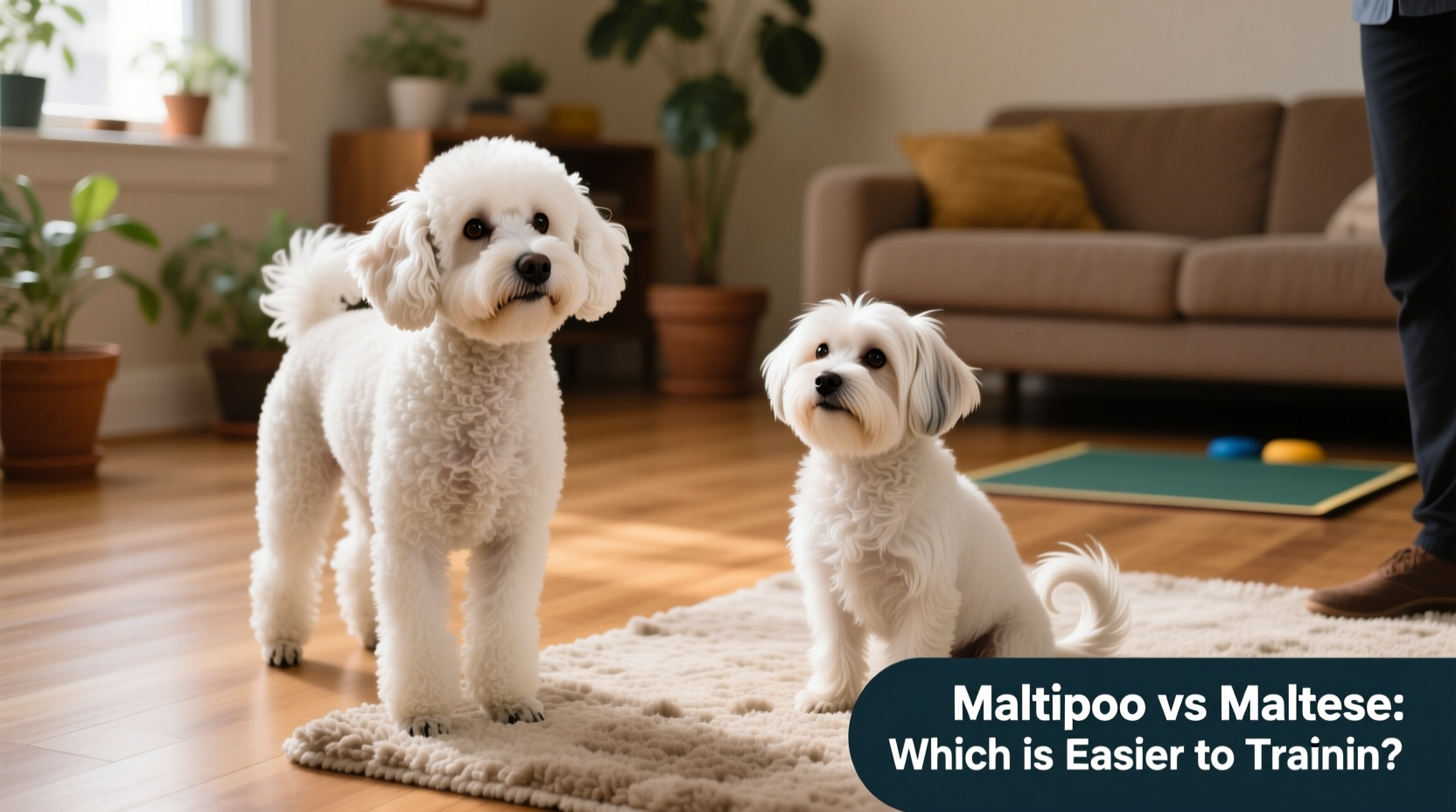
The Maltese is a purebred toy dog with centuries of history as a lapdog and companion. Bred primarily for companionship, they are naturally affectionate, sensitive, and eager to please—traits that support trainability. However, their sensitivity means harsh corrections or inconsistent methods can lead to anxiety or resistance. They thrive on routine and positive feedback.
In contrast, the Maltipoo—a cross between a Maltese and a Poodle—is a hybrid breed designed to combine the best traits of both parents. Poodles bring high intelligence and strong working-dog instincts, making Maltipoos often quicker to grasp commands and more adaptable to structured learning environments. Their mixed heritage introduces variability, but many exhibit a natural curiosity and problem-solving ability that accelerates training progress.
“Hybrid vigor in designer dogs like the Maltipoo often results in enhanced cognitive flexibility. When combined with the Maltese’s willingness to bond, you get a pup that learns fast—if guided with consistency.” — Dr. Lena Torres, Canine Behavior SpecialistTip: Use high-value treats like freeze-dried liver or cheese during early training sessions to boost motivation in both breeds.
Comparing Key Training Factors
Training ease isn’t just about intelligence—it's influenced by attention span, independence, reactivity, and socialization needs. Below is a detailed comparison of factors that affect how easily each breed learns new behaviors.
| Factor | Maltipoo | Maltese |
|---|---|---|
| Intelligence | High – inherits strong problem-solving skills from Poodle lineage | Moderate to High – quick learners when motivated |
| Focus & Attention Span | Good – generally attentive, especially with engaging tasks | Fair – can be distracted by sounds or separation anxiety |
| Sensitivity to Correction | Moderate – responds better to praise than punishment | High – may shut down or become fearful if scolded |
| Housebreaking Ease | Moderate – some take longer due to small bladder capacity | Moderate to Difficult – prone to indoor accidents if not consistently supervised |
| Command Retention | Excellent – tends to remember learned behaviors long-term | Good – requires repetition to reinforce learning |
While both breeds benefit from early socialization and consistent routines, the Maltipoo’s poodle genes often give it an edge in structured obedience settings. The Maltese, though loving and responsive, may require more patience during housebreaking and noise desensitization due to its skittish tendencies.
Real-Life Training Scenario: Two Owners, Two Outcomes
Sarah adopted a female Maltese named Luna at eight weeks old. Despite daily potty trips and crate training, Luna continued having indoor accidents past five months. Sarah consulted a trainer who noted that Luna became anxious when left alone—even briefly—and associated the crate with isolation. After switching to a tethering method during the day and using a playpen near her workspace, Sarah saw improvement within two weeks. Positive reinforcement with tiny treats helped Luna learn “sit” and “stay,” but recall training lagged due to distraction sensitivity.
Meanwhile, James brought home a male Maltipoo named Milo. From week one, he implemented a clicker-training system for basic commands. By 14 weeks, Milo was reliably responding to “come,” “down,” and even performing simple tricks like “spin.” Housebreaking took persistence, but because Milo showed interest in toys and games, James used fetch as a reward, reinforcing desired behavior effectively. Within four months, Milo was leash-walking calmly and attending beginner puppy classes with confidence.
This contrast highlights a key insight: while both dogs were trainable, the Maltipoo’s adaptability and resilience made structured learning more seamless. The Maltese required a gentler, more emotionally attuned approach to achieve similar results.
Step-by-Step Guide to Training Success
Regardless of breed, effective training follows a predictable path. Here’s a proven six-week timeline tailored to small, fluffy white dogs like the Maltipoo and Maltese:
- Week 1–2: Establish Routine & Bonding
Create a feeding, walking, and sleeping schedule. Begin handling exercises (touching paws, ears) to build trust. Introduce the puppy to its name using cheerful repetition. - Week 3: Start Basic Commands
Teach “sit” using a treat lure. Practice in short, 3–5 minute sessions, 3–4 times daily. Reward immediately upon compliance. - Week 4: Introduce Crate & Potty Training
Use verbal cues like “go potty” outside. Supervise constantly indoors. Confine to a small area or crate when unsupervised to prevent accidents. - Week 5: Add “Stay” and “Come”
Begin “stay” with brief durations, gradually increasing time. For “come,” use a happy tone and high-value rewards. Avoid calling the dog to end fun activities (e.g., playtime), which creates negative associations. - Week 6: Socialization & Distraction Training
Expose your dog to new people, sounds, and surfaces in controlled settings. Practice commands amid mild distractions (e.g., rustling paper, doorbell).
Checklist: Essential Training Tools for Maltipoos and Maltese
- ✅ Small, soft treats (pea-sized for toy breeds)
- ✅ Clicker or verbal marker (“yes!”)
- ✅ Lightweight harness and 4–6 foot leash
- ✅ Crate or exercise pen for confinement
- ✅ Chew-safe toys for mental stimulation
- ✅ Enzymatic cleaner for accident spots
- ✅ Training log (to track progress and setbacks)
Frequently Asked Questions
Are Maltipoos smarter than Maltese?
Maltipoos often demonstrate higher problem-solving abilities due to their Poodle ancestry, which ranks among the most intelligent dog breeds. However, individual variation exists, and a well-trained Maltese can perform just as reliably with patient instruction.
Which breed is easier to housebreak?
Neither breed is inherently easy to housebreak due to their small bladders. That said, Maltipoos tend to catch on faster with consistent scheduling and positive reinforcement. Maltese may need extra emotional support and supervision to overcome anxiety-related accidents.
Do Maltese dogs resist training more than Maltipoos?
Resistance is less about defiance and more about sensitivity. Maltese dogs may appear stubborn when stressed or confused, but this usually stems from fear or inconsistency in training. Maltipoos are typically more resilient and willing to experiment with solutions, giving them an edge in dynamic learning environments.
Conclusion: Which Fluffy White Dog Is Easier to Train?
When comparing the Maltipoo and Maltese, the evidence points toward the Maltipoo as the slightly easier breed to train. Its hybrid intelligence, responsiveness to cues, and adaptability make it well-suited for first-time dog owners seeking a cooperative learner. That said, the Maltese remains a deeply loyal and capable companion—especially in homes where calm, consistent guidance is provided.
Ultimately, training success depends less on breed and more on the owner’s commitment to patience, positivity, and routine. Whether you choose a Maltipoo or a Maltese, investing time in early education pays lifelong dividends in behavior, bonding, and shared joy.
🚀 Ready to start training your fluffy companion? Pick one command today and practice it in five-minute bursts. Small steps lead to big results!








