Choosing the right spot for your cat’s litter box is about more than convenience—it directly impacts hygiene, household odor, and your cat’s willingness to use it consistently. Poor placement can lead to accidents, stress, and persistent smells that linger for weeks. On the other hand, a well-placed litter box supports healthy elimination habits, minimizes odor spread, and blends seamlessly into your home environment. Understanding feline behavior, airflow dynamics, and household traffic patterns is essential to making the right decision.
The Science Behind Litter Box Placement
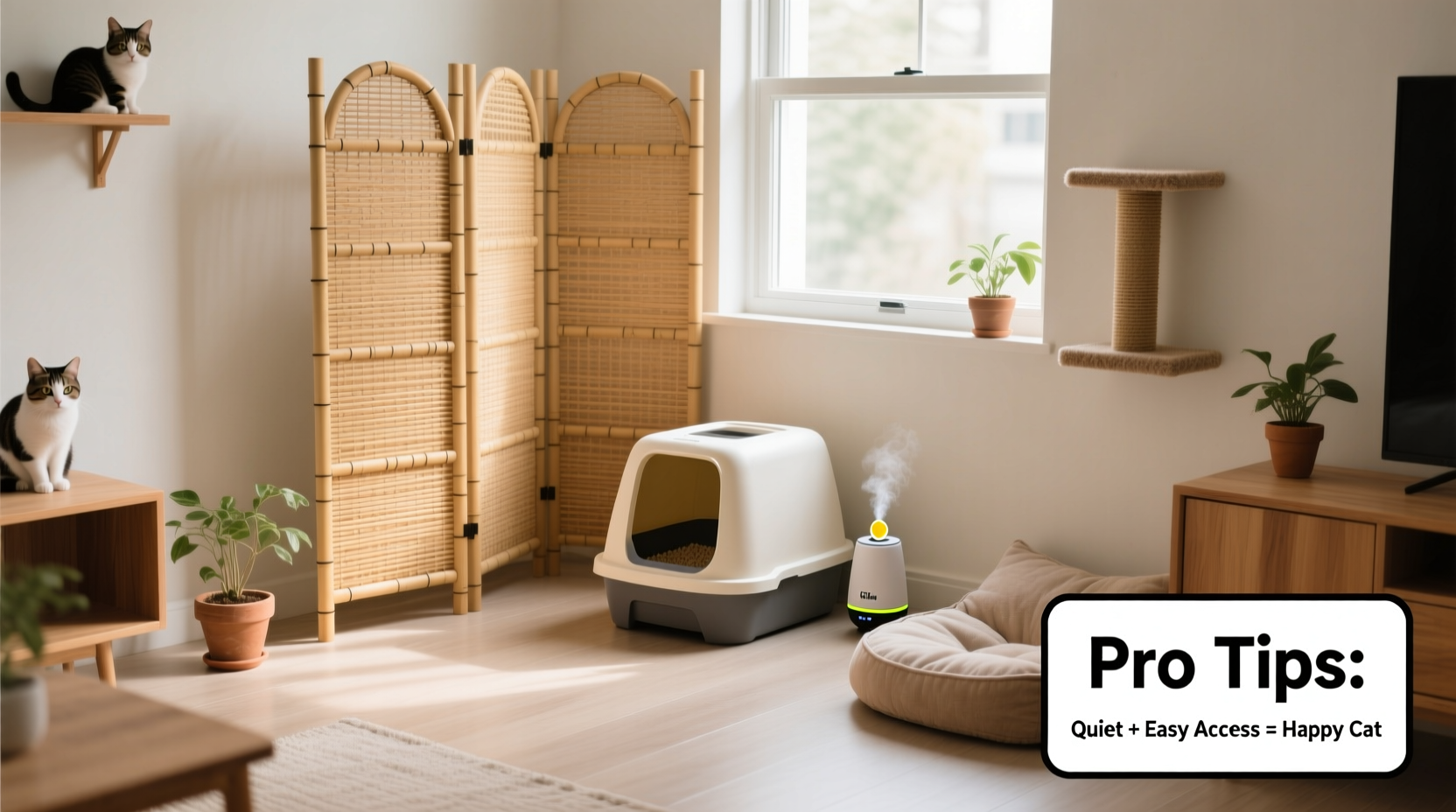
Cats are creatures of habit with strong preferences for privacy, cleanliness, and safety. In the wild, they bury their waste to avoid attracting predators. At home, this instinct remains intact. A litter box placed in a high-traffic or noisy area can make a cat feel exposed and vulnerable, leading to avoidance. Conversely, placing it too far from living areas might discourage use due to inconvenience.
Airflow plays a crucial role in odor control. Stagnant air traps ammonia and bacterial byproducts, which intensify over time. Proper ventilation helps disperse these odors before they settle into fabrics and walls. Additionally, surface materials matter—carpeted floors absorb odors more readily than tile or hardwood, making cleanup harder and smells more persistent.
According to Dr. Sarah Thompson, a board-certified feline veterinarian with over 15 years of clinical experience:
“Cats are highly sensitive to their environment. A litter box tucked behind a washing machine in a dark basement may seem logical to humans, but if it feels like a trap to the cat, they’ll find another place to go.” — Dr. Sarah Thompson, DVM, Feline Behavior Specialist
Key Factors Influencing Litter Box Success
Several environmental and behavioral factors determine whether a litter box will be used regularly and how much odor it produces.
- Privacy: Cats need a quiet, low-traffic area where they won’t be startled.
- Accessibility: Older or arthritic cats require easy access without stairs or tight turns.
- Ventilation: Rooms with windows or exhaust fans help dissipate odors quickly.
- Proximity to Food/Water: Never place a litter box next to eating areas—cats naturally avoid eliminating near food sources.
- Multiple Levels: In multi-level homes, at least one litter box per floor is recommended.
Best Locations for Odor Control and Usage
Not all rooms are created equal when it comes to litter box placement. The following locations balance feline comfort with practical odor management.
1. Utility Room or Laundry Room
These spaces often have hard flooring, nearby utilities (like sinks for cleaning), and existing ventilation from dryers or HVAC systems. If noise from appliances is minimal during peak cat activity times (early morning or evening), this can be an ideal location.
2. Guest Bathroom (Unused)
A spare bathroom offers privacy, tile flooring, and built-in ventilation via exhaust fans. Keep the door slightly ajar for access and ensure the space doesn’t feel confined.
3. Walk-In Closets (Modified)
With shelves removed from one corner, a walk-in closet provides seclusion and controlled airflow. Install a small fan or air purifier nearby to manage odor buildup.
4. Basement Rec Room (Quiet Corner)
If the basement is frequently used, choose a corner away from seating and play areas. Ensure lighting is adequate—cats dislike dark, cave-like spaces for elimination.
5. Home Office (With Partition)
In open-concept homes, a discreet corner of a home office shielded by a room divider or tall plant can work. Use an air purifier with a carbon filter to neutralize smells without disrupting workflow.
| Location | Odor Risk | Cat Comfort | Recommended? |
|---|---|---|---|
| Kitchen | High | Low | No |
| Bathroom (used daily) | Medium | Medium | Only if quiet and well-ventilated |
| Basement (unfinished) | High | Low | No |
| Laundry Room | Low-Medium | High | Yes |
| Bedroom (cat-friendly) | Medium | High | Yes, if owner tolerates minor odor |
Step-by-Step Guide to Optimal Litter Box Setup
Follow this sequence to identify and implement the best possible litter box location in your home.
- Assess Your Cat’s Habits: Observe when and where your cat currently eliminates. Note any accidents and their locations.
- Map High-Traffic vs. Quiet Zones: Identify areas where people gather frequently versus underused spaces.
- Test Ventilation: Use a simple smoke test (e.g., blown-out match) to see how air moves in potential spots.
- Select 2–3 Candidate Locations: Prioritize rooms with hard flooring, privacy, and proximity to common cat areas.
- Introduce the Box Gradually: Place the litter box in the chosen spot and monitor usage for 3–5 days.
- Evaluate and Adjust: If avoidance occurs, try a different candidate. Avoid moving the box abruptly.
- Add Odor Controls: Install a HEPA + carbon filter air purifier within 3 feet of the box.
Mini Case Study: From Accidents to Consistent Use
Sarah, a pet owner in Portland, struggled with her 3-year-old tabby, Milo, urinating beside the couch. The litter box was in the basement, accessible only by stairs. After consulting a behaviorist, she moved the box to a quiet corner of the main-floor laundry room, added a covered model to increase privacy, and installed a compact air purifier.
Within four days, Milo began using the box consistently. Sarah also introduced a second box on the same floor after learning the “n+1” rule (one box per cat, plus one extra). Over the next month, accidents ceased entirely, and household odor dropped noticeably. She credits the change not just to location, but to respecting Milo’s need for accessibility and peace.
Common Placement Mistakes and How to Avoid Them
Even well-intentioned owners make errors that compromise litter box success.
- Hiding It Too Well: Tucking the box behind a furnace or in a closed closet makes it hard to find and intimidating to enter.
- Near Noisy Appliances: Washing machines, dryers, or sump pumps can startle cats mid-use, creating negative associations.
- On Carpeted Floors: Spills soak in, causing lingering smells and increasing the chance of repeat marking.
- Too Close to Other Boxes: Placing multiple boxes side-by-side defeats the purpose of the n+1 rule—they should be in separate zones.
- Ignoring Multi-Cat Dynamics: Dominant cats may guard a single box, forcing others to eliminate elsewhere.
“The biggest mistake I see is treating the litter box like trash—something to hide. But for cats, it’s a vital part of their territory. Respect its importance.” — Dr. Lena Ruiz, Feline Environmental Consultant
Checklist: Ideal Litter Box Placement Evaluation
Use this checklist to evaluate any potential litter box location:
- ✅ Is the area quiet and low-traffic?
- ✅ Can the cat access it easily, day or night?
- ✅ Is it at least 5 feet from food and water bowls?
- ✅ Does the room have natural or mechanical ventilation?
- ✅ Is the floor surface non-porous (tile, vinyl, laminate)?
- ✅ Is there enough space around the box for turning and digging?
- ✅ Are there no loud or sudden noises nearby?
- ✅ Is the lighting sufficient (not dim or pitch-black)?
- ✅ Is there room for an air purifier or odor absorber?
- ✅ For multi-cat homes: Is this one of several dispersed locations?
FAQ
Can I put the litter box in the bathroom?
Yes, but only if it’s a guest or low-use bathroom. Avoid placing it directly next to the shower or toilet flush handle, as sudden noises can scare cats. Ensure the door is always open or partially cracked.
How far should the litter box be from living areas?
It should be close enough for convenience—ideally within your cat’s primary living zone—but separated enough to prevent odor migration. A hallway adjacent to a family room or kitchen nook often works well.
Will an air purifier really reduce litter box smell?
Yes, especially models with activated carbon filters. These absorb volatile organic compounds (VOCs) from urine and feces. Place the unit within 3 feet of the box and run it continuously for best results.
Final Recommendations for Long-Term Success
The ideal litter box location balances human practicality with feline psychology. Prioritize accessibility, privacy, and airflow. Avoid compromising on any of these three pillars, even if space is limited. Remember that cats thrive on consistency—once you find a working spot, maintain it unless absolutely necessary to move.
Supplement smart placement with routine maintenance: scoop daily, replace litter weekly, and clean the box monthly with mild, unscented soap. Combine these habits with proper location strategy, and you’ll create an environment where your cat feels safe, clean, and motivated to use the box every time.
💬 Have a litter box success story or challenge? Share your experience in the comments—your insight could help another cat owner solve a stubborn problem!








