Cuteness isn’t just a trait—it’s a cultural phenomenon. In the world of plush toys, \"kawaii\" (the Japanese term for \"cute\") sets the standard. From pastel Sanrio characters to wide-eyed anime mascots, kawaii plushies dominate shelves and hearts alike. But among them, one blue alien with oversized ears and chaotic charm stands apart: Lilo & Stitch’s Experiment 626. Is the Lilo Stitch plush truly the ultimate contender in the cuteness battle, or do other kawaii icons hold their ground? This isn't just about fluff and fabric—it's about emotional resonance, design philosophy, and what makes a plush more than just a toy.
The Anatomy of Cuteness: What Makes a Plushie Kawaii?
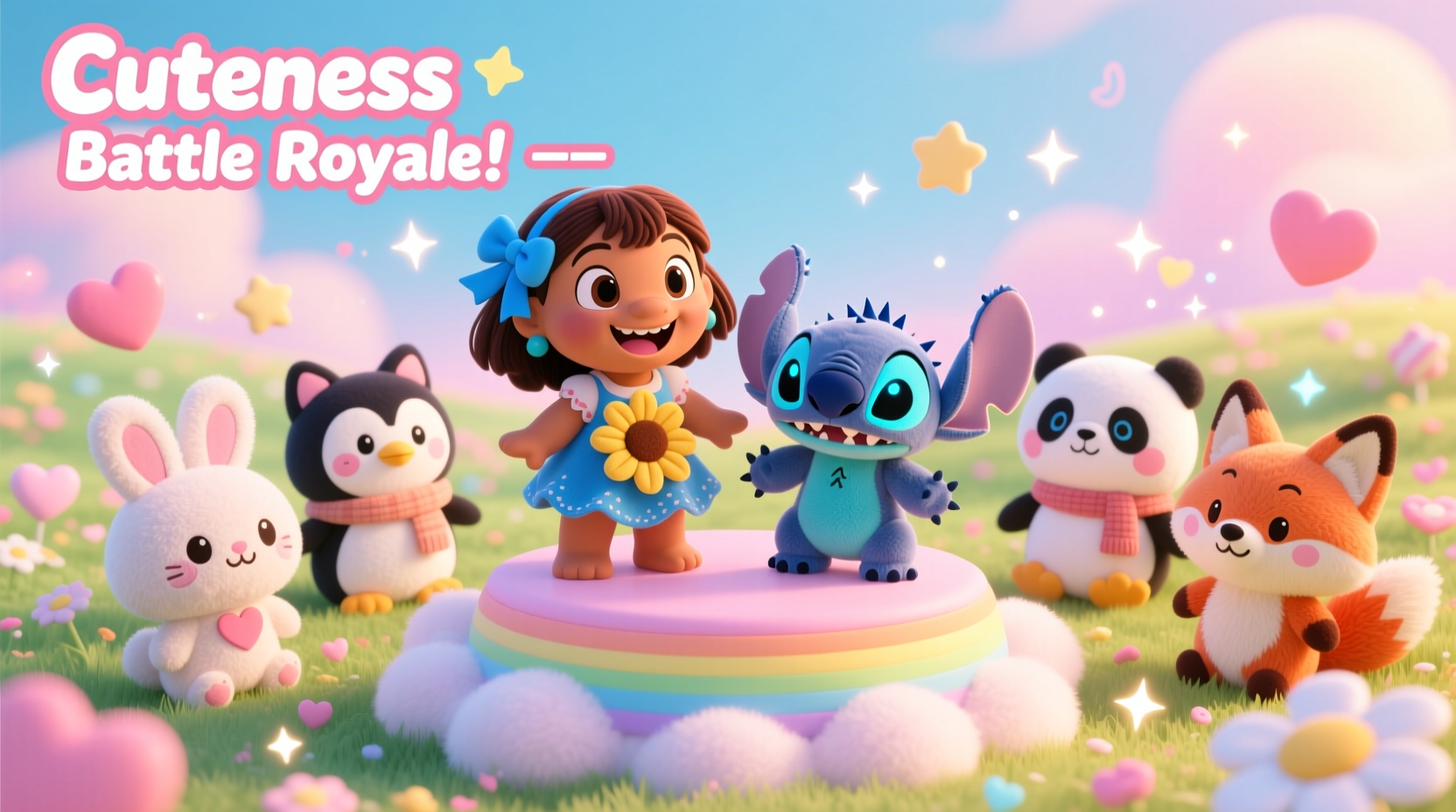
Kawaii aesthetics follow specific visual rules. Think large eyes, small mouths, rounded shapes, and exaggerated proportions—features that trigger nurturing instincts. Psychologists refer to this as \"baby schema,\" where certain traits subconsciously signal innocence and vulnerability. Most kawaii plushies leverage these cues: Hello Kitty’s faceless sweetness, Rilakkuma’s sleepy roundness, or Pusheen’s squishable girth.
But Stitch flips the script. He’s not traditionally cute. With wild antennae, sharp claws, and a mischievous grin, he was designed as a genetically engineered chaos agent. Yet, his plush form radiates undeniable charm. How? Through contrast. His destructive origins clash with his soft, huggable body and expressive eyes. That duality—fierce yet vulnerable, alien yet lovable—creates emotional depth most purely cute characters lack.
“Stitch embodies ‘kawaii by contradiction.’ He’s not cute because he’s perfect—he’s cute because he tries.” — Dr. Naomi Tanaka, Cultural Anthropologist specializing in Japanese pop aesthetics
Design Breakdown: Stitch vs. Classic Kawaii Icons
To assess the cuteness quotient, let’s compare Stitch to three major kawaii plush competitors: Hello Kitty, My Melody, and Sumikko Gurashi’s Tonkatsu.
| Plush Character | Design Style | Emotional Appeal | Unique Selling Point |
|---|---|---|---|
| Lilo & Stitch | Alien hybrid, exaggerated features, expressive face | Nurturing + protective instincts | Story-driven bond; “ugly-cute” paradox |
| Hello Kitty | Minimalist, symmetrical, no mouth | Neutral comfort, universal friendliness | Brand ubiquity; timeless simplicity |
| My Melody | Pastel pink bunny with red hood | Gentle, innocent, soothing | Feminine charm; nostalgic appeal |
| Tonkatsu (Sumikko Gurashi) | Lonely pork cutlet with crumbs | Empathy, melancholy cuteness | Relatable insecurity; quiet humor |
While Hello Kitty offers serene neutrality and My Melody delivers fairy-tale gentleness, Stitch brings narrative weight. You don’t just like him—you feel responsible for him. His backstory as an outcast adopted by Lilo adds layers of emotional investment rare in plush form.
Tip: When choosing a kawaii plush, consider not just appearance but emotional connection. The ones tied to personal memories or stories often feel \"cuter\" over time.The Emotional Edge: Why Stitch Connects Differently
Kawaii plushies often serve as comfort objects, but Stitch transcends decoration. His journey from destructive experiment to beloved family member mirrors real themes of acceptance and healing. Fans don’t just collect Stitch plushes—they adopt them. It’s common to hear phrases like “I rescued my Stitch” or “He reminds me of myself as a kid.”
This psychological depth gives Stitch staying power. While other kawaii characters are static symbols of joy, Stitch evolves. Limited-edition plushes reflect different moods—sleeping Stitch, hugging Lilo, wearing a Hawaiian shirt—each reinforcing his role as a companion, not just a mascot.
In contrast, many kawaii plush lines prioritize aesthetic variety over character development. You’ll find countless pastel versions of Miffy or Gudetama, but they rarely tell a story. Stitch does.
A Mini Case Study: Sarah’s Stitch Journey
Sarah, 28, began collecting Stitch plushes after moving abroad alone. “I felt like an outsider,” she says. “Then I saw a clip of Lilo saying, ‘This is my family. I found it all on my own.’ That hit me. I bought a small Stitch that night.”
Over two years, her collection grew to 30 pieces. “Each one marks a milestone—a new job, surviving a panic attack, learning to cook. They’re not toys. They’re proof I’m not alone.”
Sarah’s experience isn’t unique. Online communities like r/Stitch and dedicated Instagram accounts showcase plush arrangements styled like dioramas—Stitch at the beach, in a tiny bed, holding a “Get Well” card. These aren’t displays; they’re narratives.
Market Trends and Collectibility
From a commercial standpoint, Stitch plushes have seen sustained demand. Disney consistently releases new variants—from jumbo 24-inch editions to mini keychain versions. Collaborations with brands like Uniqlo and Loungefly boost visibility. Meanwhile, secondhand markets show strong resale value, especially for retired designs.
Compare that to seasonal kawaii trends. Characters like Kuromi may spike in popularity due to social media, but their longevity lags. Sumikko Gurashi has cult status, but limited global distribution. Hello Kitty remains iconic, yet its omnipresence can dilute emotional impact.
Stitch benefits from being both niche and mainstream. He’s recognizable enough for broad appeal but distinctive enough to inspire devotion.
- Disney’s official plush line includes over 50 variations since 2002
- eBay listings for rare Stitch x Jibbitz shoes exceed $200
- Tokyo Disneyland’s exclusive “Ohana” set sells out within hours
Checklist: Choosing Your Ultimate Kawaii Plush
Not sure which plush aligns with your personality and needs? Use this checklist to decide:
- Do you want emotional storytelling? → Choose Stitch
- Prefer minimalist, calming design? → Choose Hello Kitty or My Melody
- Love quirky, underdog characters? → Consider Sumikko Gurashi or Gudetama
- Need a travel-sized companion? → Look for keychain or mini plush versions
- Value collectibility and resale? → Prioritize licensed, limited editions
- Want maximum customization? → Stitch offers the widest range of outfits and poses
Frequently Asked Questions
Is Stitch considered kawaii despite his alien design?
Absolutely. While not traditionally kawaii, Stitch fits the broader definition through exaggerated features, expressive eyes, and childlike behavior. His transformation from monster to sweetheart embodies the genre’s theme of hidden softness.
Are Stitch plushes suitable for young children?
Yes. Most official Stitch plushes are made with child-safe materials and meet international toy standards. However, smaller accessories (like button eyes on older models) may pose choking hazards for toddlers. Always check age labels.
Why are some Stitch plushes more expensive than others?
Rarity, size, collaboration branding, and condition affect pricing. Exclusive releases (e.g., Japan-only variants) or those tied to anniversaries (like the 20th-anniversary blue diamond edition) command higher prices due to scarcity and collector demand.
The Verdict: Who Wins the Cuteness Battle?
If cuteness were only about symmetry and sweetness, Hello Kitty might claim the crown. But true cuteness isn’t passive—it’s dynamic. It sparks emotion, invites imagination, and grows with you. By that measure, the Lilo Stitch plush doesn’t just compete with other kawaii plushies; it redefines what they can be.
It wins not because it’s the softest or the pinkest, but because it feels alive. It carries a story. It represents resilience. And in a market flooded with sugary perfection, sometimes the most lovable thing is a little blue mess who just wants to belong.
Other kawaii plushies offer charm. Stitch offers connection. And in the end, that’s the deepest kind of cute there is.
🚀 Ready to pick your plush champion? Whether you’re team Stitch or loyal to another kawaii icon, share your favorite in the comments. What makes your plush more than just fabric? Let’s celebrate the stories behind the softness.








