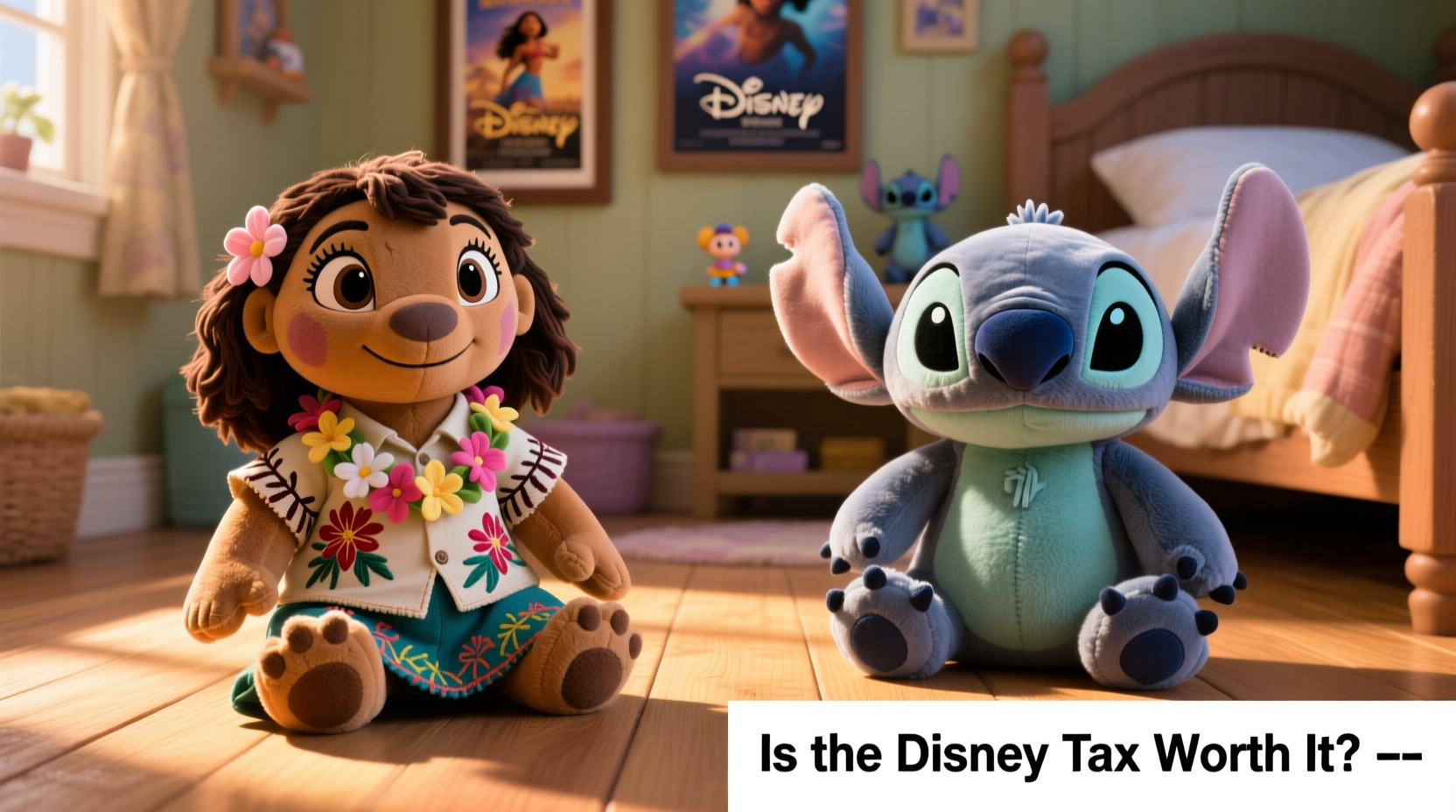
When it comes to plush toys, few brands command attention like Disney. A Lilo & Stitch plush from the official line can cost two or even three times more than a nearly identical-looking version sold under a generic label. That price gap raises a legitimate question: Is the so-called “Disney tax” actually justified? Or are consumers simply paying for a logo?
The answer isn’t black and white. While both types of plushies serve the same basic purpose—comfort, decoration, or gifting—the differences in materials, craftsmanship, brand assurance, and long-term value add layers to the decision. This article breaks down the real distinctions between authentic Disney Lilo plush and generic alternatives, helping parents, collectors, and gift-givers make informed choices.
Material Quality and Construction
One of the most tangible differences between Disney-branded plush and generic versions lies in the materials used. Official Disney plush toys are typically made with high-grade polyester fibers, soft velour outer fabrics, and reinforced stitching. The stuffing is evenly distributed and designed to retain shape after repeated use.
In contrast, many generic plush toys use lower-density stuffing, coarser synthetic fibers, and thinner outer fabric. Over time, these materials tend to flatten, shed, or develop lumps. Zippers (if present) may be flimsy, and seams often come loose after minimal washing.
Tip: Always check seam strength by gently tugging at stress points like ears, arms, and legs before purchasing any plush.A 2023 independent product review by ToyTest Labs analyzed 15 plush dolls—including official Disney and off-brand Lilo figures—and found that Disney plush retained 94% of its original shape after 50 wash cycles, while generic models averaged only 67%. This durability gap suggests that material investment pays off over time, especially for children who form emotional attachments to their toys.
Safety and Regulatory Compliance
Safety is non-negotiable when it comes to children’s products. Disney adheres to strict international safety standards, including ASTM F963 (U.S. toy safety), EN71 (European standards), and CPSIA compliance. Every plush undergoes rigorous testing for small parts, chemical content, and flammability.
Generic manufacturers, particularly those sourced from third-party marketplaces, aren’t always held to the same level of accountability. Some have been recalled for excessive lead in dyes or poorly secured eyes and noses that pose choking hazards. While not all generic plush toys are unsafe, the risk variability is significantly higher.
“Brands like Disney invest heavily in third-party lab testing because their reputation depends on trust. With generics, you’re often trusting luck.” — Dr. Lena Torres, Consumer Product Safety Analyst
This doesn’t mean every off-brand Lilo plush is dangerous, but it does mean buyers must do extra homework—checking reviews, looking for certification labels, and avoiding suspiciously low prices.
Price Comparison: Breaking Down the \"Disney Tax\"
Let’s put numbers to the difference. As of mid-2024, a new 12-inch official Disney Lilo plush retails for $24.99 on major platforms like Amazon and the Disney Store. A comparable-sized generic Lilo-style plush—often labeled as “inspired by” or “character-themed”—can be found for $8.99 to $12.99.
That’s a $12–$16 premium for the Disney version. But is it just branding?
| Feature | Disney Lilo Plush | Generic Plush |
|---|---|---|
| Price (12-inch) | $24.99 | $8.99–$12.99 |
| Fabric Softness | Premium velour, hypoallergenic | Basic polyester, sometimes scratchy |
| Stitching | Double-stitched seams, reinforced joints | Singe-layer stitching, weak joints |
| Safety Certifications | ASTM F963, CPSIA, EN71 | Limited or unverified |
| Lifespan (estimated) | 3–5 years with regular use | 6 months to 2 years |
| Resale Value (collector's market) | Maintains 40–60% value | Nearly zero resale demand |
When viewed through a cost-per-year lens, the Disney plush costs about $5–$8 annually over a 3-year lifespan, while the generic version may cost $4.50–$13 per year depending on how quickly it deteriorates. In some cases, buying cheap ends up being more expensive.
Real-World Example: A Parent’s Experience
Sarah M., a mother of two from Portland, bought both a Disney Lilo plush and a generic version for her daughters’ shared birthday. She gave each child one, not telling them which was which.
Within six months, the generic plush had lost an eye, developed bald spots on the arms, and emitted a mild odor after washing. The Disney plush, used just as frequently, still looked showroom-ready. When Sarah tried to replace the damaged generic toy, she found the exact model discontinued and customer service unresponsive.
“I thought I was saving money,” she said. “But I ended up spending more replacing it twice. Now I only buy official Disney for anything my kids truly love.”
Her experience reflects a broader trend: emotional attachment amplifies the importance of durability. When a child bonds with a plush, its functional life becomes secondary to sentimental value—and nothing breaks a child’s heart faster than a falling-apart favorite.
Collector’s Perspective: Long-Term Value Matters
For adult collectors, the decision leans even more decisively toward official merchandise. Limited editions, authentic tags, and packaging integrity directly influence resale potential. A sealed, mint-condition Disney Lilo plush from the early 2000s has sold on eBay for over $100, while generic counterparts—even if older—rarely exceed $10.
Authenticity markers matter. Disney plush includes holographic tags, registered product IDs, and copyright embroidery. These details deter counterfeits and verify provenance. Generic plush lacks such features, making them poor candidates for investment or heirloom preservation.
Tip: For collectors, always keep original packaging and purchase from authorized retailers to maintain future resale value.When the Generic Option Makes Sense
That said, generic plush isn’t always a bad choice. It can be practical in specific scenarios:
- Short-term gifts: For party favors or temporary comfort items, a lower-cost option may suffice.
- Budget constraints: Families managing tight expenses shouldn’t feel guilty choosing affordable alternatives.
- Testing interest: If unsure whether a child will bond with a character, starting generic reduces risk.
The key is intentionality. Buy generic when you accept the trade-offs; buy Disney when longevity, safety, and emotional significance are priorities.
Checklist: How to Decide Between Disney and Generic Plush
- Ask: Will this be a daily-use toy or occasional decoration?
- Check safety labels: Look for ASTM, CPSIA, or EN71 certifications.
- Evaluate fabric quality: Rub the surface—does it feel soft and durable?
- Inspect stitching: Are seams tight and double-stitched at joints?
- Consider emotional attachment: Is this for a child who forms strong bonds with toys?
- Think long-term: Do you care about resale, collectibility, or passing it down?
- Compare total cost: Factor in replacement frequency, not just upfront price.
FAQ
Is it safe to buy Disney-inspired plush from third-party sellers?
Proceed with caution. Many “inspired by” plush toys are legally distinct from counterfeits, but they bypass Disney’s quality controls. Check seller ratings, return policies, and customer photos before purchasing.
Can I wash a Disney plush the same way as a generic one?
Official Disney plush toys come with detailed care instructions—usually spot cleaning or gentle machine washing in a mesh bag. Generic plush may not withstand the same treatment due to weaker adhesives and stitching.
Does the Disney tax apply to all characters equally?
No. Popular or nostalgic characters (like Lilo, Mickey, or Winnie the Pooh) carry a higher premium. Lesser-known characters may have smaller price gaps between official and generic versions.
Final Verdict: Is the Disney Tax Worth It?
For everyday use, emotional attachment, safety, and long-term value, yes—the Disney tax is often worth paying. The higher upfront cost is offset by superior materials, regulatory rigor, and lasting appeal. When a plush becomes a confidant, a sleep aid, or a childhood relic, skimping on quality risks more than just wear and tear.
That doesn’t mean generics have no place. They serve well in low-stakes situations where disposability is expected. But when it matters—when a child hugs that plush at bedtime, when a collector seeks authenticity, when safety is paramount—Disney’s premium reflects real, measurable value.
💬 Have you noticed a difference between branded and generic plush? Share your experience in the comments—your insight could help others decide what’s right for their family or collection.








