
Walking your dog should be a pleasant experience for both you and your pet. Yet the choice of walking gear—specifically whether to use a traditional dog collar or a newer leashable dog skirt—can significantly impact comfort, safety, and control. While collars have been the standard for decades, leashable skirts are gaining popularity among fashion-forward pet owners and those concerned about neck strain. But which option truly makes walks easier? This article breaks down the functional, behavioral, and ergonomic aspects of both to help you make an informed decision.
Understanding the Basics: What Is a Leashable Dog Skirt?
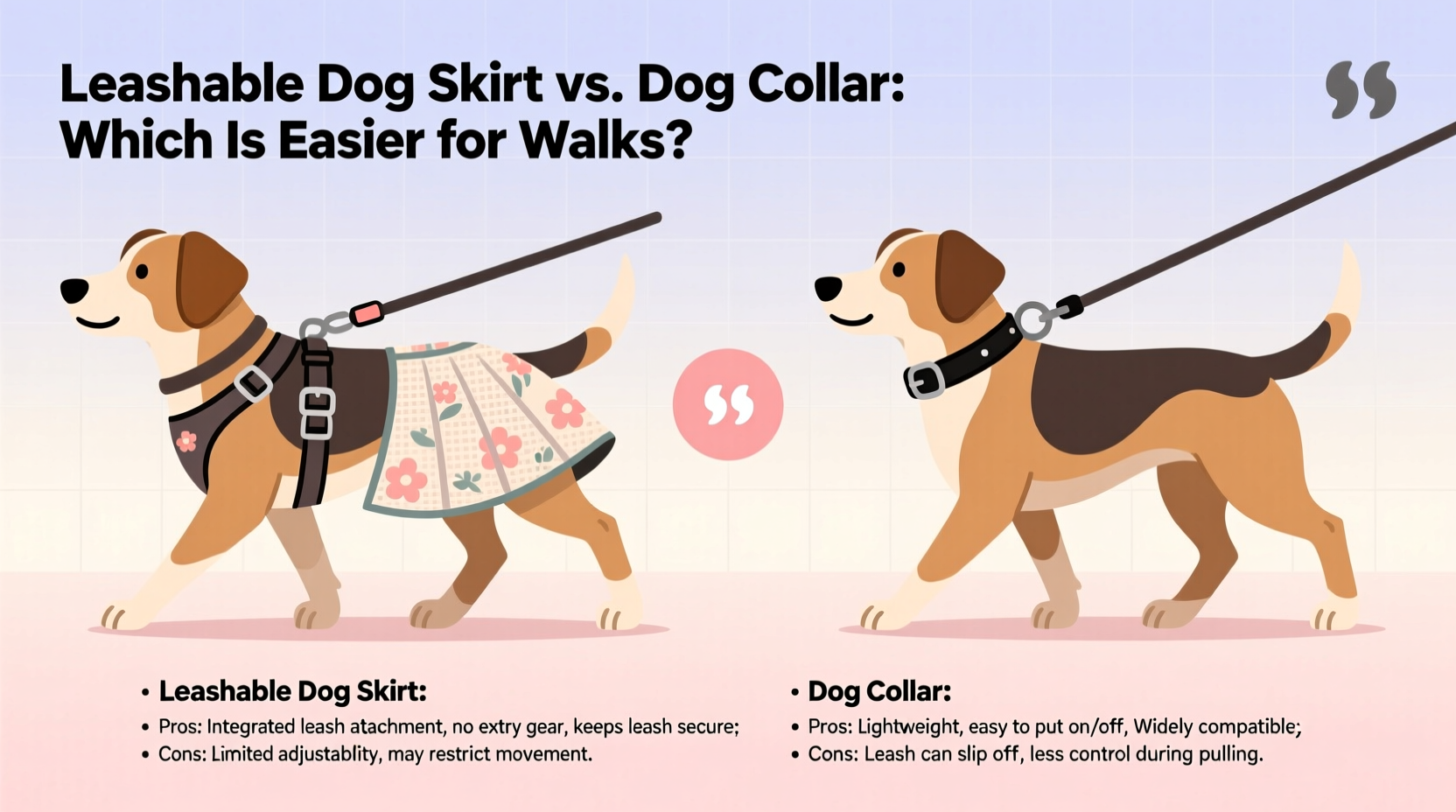
A leashable dog skirt is a hybrid garment that combines the aesthetic appeal of a pet fashion accessory with the functionality of a harness. It typically features a fabric skirt attached to a structured base with adjustable straps around the chest and belly, and includes a metal D-ring on the back for leash attachment. Unlike decorative clothing, these skirts are designed with walking in mind—distributing pressure across the torso rather than concentrating it on the neck.
Most models are made from breathable, stretchable materials like spandex, nylon, or cotton blends, and often include reflective stitching for nighttime visibility. They’re especially popular among small breed owners and in urban environments where style and function intersect.
Dog Collars: Tradition Meets Simplicity
Dog collars remain the most common form of identification and leash attachment. Typically made from nylon, leather, or biothane, they fit snugly around the neck and serve multiple purposes: holding ID tags, attaching leashes, and sometimes supporting training tools like martingale loops or prong attachments.
Their primary advantage lies in simplicity. Collars are lightweight, easy to put on, and require minimal adjustment. However, their design inherently places all pulling force directly on the dog’s trachea, cervical spine, and thyroid gland—areas particularly vulnerable in small breeds or dogs with pre-existing respiratory conditions.
Tip: If using a collar, ensure you can fit two fingers comfortably between the collar and your dog’s neck to prevent chafing or restricted blood flow.Comparative Analysis: Control, Comfort, and Safety
The real test of walking ease comes down to three factors: how well you can guide your dog, how comfortable your dog feels, and how safe the equipment is during sudden movements.
| Feature | Dog Collar | Leashable Dog Skirt |
|---|---|---|
| Pressure Distribution | Concentrated on neck | Spread across chest and torso |
| Pulling Management | Poor – encourages pulling | Good – discourages forward strain |
| Escape Risk | Moderate – dogs can slip out | Low – secure multi-point fit |
| Comfort (Long Walks) | Fair – may cause coughing | High – no throat pressure |
| Setup Time | Fast – seconds to clip on | Moderate – requires proper strap adjustment |
| Fashion Integration | Limited | High – doubles as outfit |
While collars win in speed and simplicity, leashable skirts offer superior ergonomics. Dogs prone to tracheal collapse—like Pomeranians, Chihuahuas, or Yorkshire Terriers—benefit greatly from not having pressure on their windpipes. Additionally, because skirts attach at the back, they naturally redirect a dog’s momentum when they lunge, making them easier to manage in crowded or stimulating environments.
“Dogs are not built to pull from the neck. Any sustained pressure there can lead to long-term damage, including nerve injury and thyroid dysfunction.” — Dr. Lena Peterson, Veterinary Behaviorist
Real-World Example: Managing a Reactive Small Dog
Sophia, a dog owner in Seattle, adopted a rescue Papillon named Milo who was reactive to other dogs and prone to darting. She initially used a standard nylon collar but noticed Milo would frequently cough after walks and seemed anxious. After switching to a leashable dog skirt with padded chest support, she observed immediate changes.
Milo pulled less, recovered faster after encounters, and showed no signs of throat irritation. The skirt’s wider surface area allowed her to gently guide him without jerking his neck. Though it took slightly longer to put on, the peace of mind—and Milo’s improved demeanor—made the extra 30 seconds worthwhile.
This case illustrates a broader trend: pets with high energy or anxiety often respond better to distributed-leash systems. The psychological comfort of not feeling choked translates into calmer behavior over time.
Step-by-Step: Choosing the Right Option for Your Dog
- Evaluate your dog’s breed and health. Brachycephalic breeds (e.g., Pugs, Shih Tzus) and toy breeds are more susceptible to neck injuries. Avoid collars if your dog has a history of respiratory issues.
- Assess walking environment. In busy cities or parks with distractions, a leashable skirt offers better control. For quiet neighborhood strolls, a collar may suffice.
- Test fit and adjustability. Ensure any skirt fits snugly without restricting movement. Straps should be adjustable and non-abrasive.
- Observe behavior during trial walks. Note signs of discomfort: coughing, pawing at the neck, reluctance to move forward.
- Combine for versatility. Many owners use a collar for ID tags and a leashable skirt for walking—getting the best of both worlds.
Common Misconceptions About Leashable Skirts
Some pet owners dismiss leashable dog skirts as purely fashionable, assuming they lack durability or functionality. However, many modern designs incorporate reinforced stitching, rust-resistant hardware, and ergonomic engineering comparable to high-end harnesses. The key is selecting a model built for walking—not just photo shoots.
Another myth is that skirts are only suitable for female dogs. In reality, the term “skirt” refers to the aesthetic flap, which can be worn by any dog regardless of gender. Functionally, it’s identical to a harness with added visual flair.
Checklist: What to Look for in Walking Gear
- ✅ Adjustable straps for chest and belly
- ✅ Strong, centered D-ring for leash attachment
- ✅ Breathable, non-irritating fabric
- ✅ Reflective details for low-light safety
- ✅ Easy-to-clean material
- ✅ Proper sizing chart (measure girth, not guess)
- ✅ Secure fasteners (no flimsy snaps)
Frequently Asked Questions
Can I use a leashable dog skirt every day?
Yes, provided it fits well and is cleaned regularly. Daily use is practical for small dogs or those sensitive to neck pressure. Just rotate with other gear occasionally to prevent fabric wear and skin irritation.
Are dog collars dangerous?
They aren’t inherently dangerous, but they carry risks for certain dogs. Persistent pulling on a collar can lead to tracheal damage, eye pressure issues, and spinal misalignment. For dogs that pull or lunge, a collar alone is not the safest option.
Do leashable skirts work for large dogs?
Most are designed for small to medium breeds (under 25 lbs). Larger dogs require more robust harness systems due to greater strength and momentum. Always check manufacturer weight limits before purchasing.
Final Verdict: Which Is Easier for Walks?
When it comes to actual ease during walks—especially in terms of control, comfort, and long-term safety—the leashable dog skirt outperforms the traditional collar for most small and reactive dogs. It reduces physical strain, improves handling, and integrates seamlessly into a lifestyle that values both aesthetics and animal welfare.
That said, collars still have a place. They’re ideal for quick outings, identification, and dogs that don’t pull or have no health concerns. The smartest approach is often a combination: a collar for ID and a leashable skirt for walking.
The goal isn’t to eliminate collars entirely, but to match the tool to the task. Walking should be enjoyable, not a battle of wills or a source of physical stress. By understanding the mechanics of each option, you empower yourself to make choices that enhance your dog’s well-being—one step at a time.
💬 Have you tried a leashable dog skirt? How did it change your walking routine? Share your experience below and help other pet owners make smarter, more compassionate choices.








