Saddle bags have surged in popularity across fashion and functional wear, especially among urban commuters, cyclists, and minimalist travelers. Originally designed to hang over a bicycle or motorcycle saddle, the term now broadly refers to compact, curved crossbody bags inspired by that shape. Two dominant design philosophies have emerged: the sleek, structured Korean saddle bag and the broader, often roomier Western interpretation. While aesthetics vary widely, one question consistently arises—especially among practical users—“Which actually holds more?” The answer isn’t as straightforward as it seems.
Design Origins and Cultural Influences
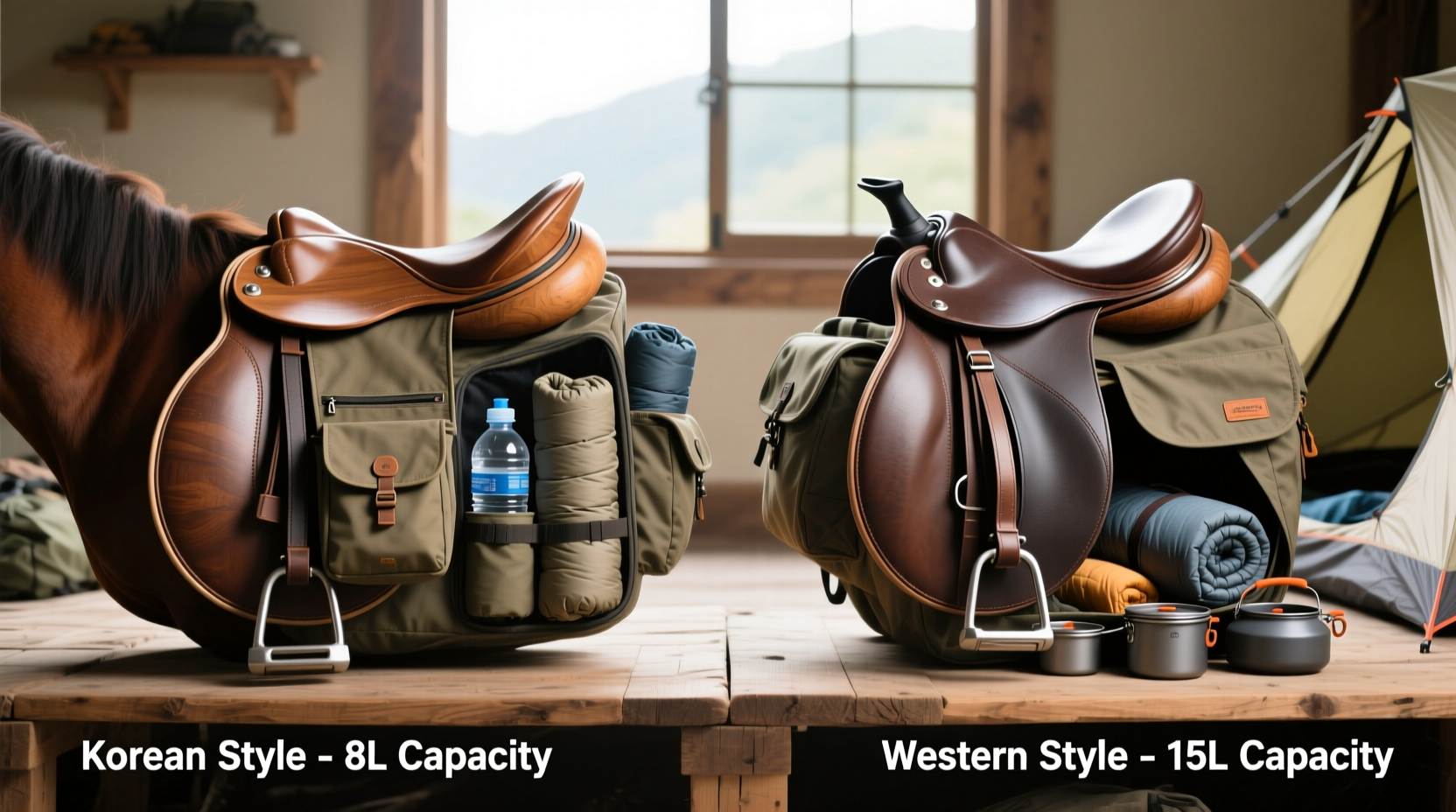
The saddle bag’s roots trace back to equestrian use, but its modern evolution diverges sharply between Eastern and Western markets. In Korea, where minimalism, proportion, and subtlety define fashion trends, saddle bags are crafted with clean lines, soft curves, and an emphasis on silhouette harmony. These designs prioritize how the bag looks when worn—often resting just below the hip or diagonally across the chest—rather than maximizing internal volume.
In contrast, Western saddle bags, particularly those from American and European brands, lean into utility. They tend to be wider, deeper, and built with multiple compartments. Functionality is front and center: think padded laptop sleeves, external zip pockets, and adjustable straps for load distribution. This divergence reflects broader cultural preferences—Korean fashion favors understated elegance; Western styles often embrace boldness and practicality.
“Design philosophy shapes function. Korean saddle bags are made to complement the body; Western ones are made to serve the user.” — Ji-hoon Park, Seoul-based accessory designer
Capacity Comparison: Dimensions and Real-World Use
To assess which style holds more, we must look beyond marketing claims and examine measurable factors: internal volume, pocket layout, and usable space. While some Korean models appear larger due to their elongated shape, they often sacrifice depth for visual slimness. Conversely, Western bags may seem bulkier but offer greater cubic capacity.
| Feature | Korean Saddle Bags | Western Saddle Bags |
|---|---|---|
| Average Width | 20–25 cm | 25–35 cm |
| Average Depth | 4–6 cm | 8–12 cm |
| Typical Volume | 3–5 liters | 6–10 liters |
| Main Compartment Design | Single open cavity | Divided with zippers, padding, inserts |
| External Pockets | 0–1 (minimalist) | 2–4 (utility-focused) |
| Max Device Fit | 7–8” tablet | 11–13” laptop |
The data shows a clear trend: Western saddle bags generally provide nearly double the storage capacity. However, this doesn’t mean they’re universally better. For users who carry only essentials—a phone, wallet, keys, and earbuds—the extra space may go unused, making the Korean version not only sufficient but more comfortable.
Tip: Measure your daily carry items before choosing a saddle bag. A ruler and checklist can prevent overbuying based on perceived need.Real-World Case Study: Commuter Bag Test
Consider Min-ji, a graphic designer in Busan who commutes 45 minutes daily via bike and subway. She initially chose a popular Korean saddle bag praised for its “modern retro” look. It held her phone, AirPods, lip balm, and folded umbrella—but barely. When she started bringing a sketchbook and portable charger, she had to fold the book diagonally, straining the zipper. After two months, the clasp loosened.
She switched to a Western-style saddle bag from a German commuter brand. Though slightly heavier and less stylish in her opinion, it featured a padded main compartment, magnetic front flap, and side water bottle loop. Now, she carries her 10” tablet, notebook, rain jacket, and lunch box without overstuffing. The weight distribution is better, and access is faster thanks to exterior organization.
Min-ji’s experience illustrates a key insight: capacity isn’t just about volume—it’s about compatibility with lifestyle. Her Korean bag looked better in photos but failed under real usage demands.
Functional Layout and Accessibility
Even when total volume is similar, how space is organized affects usability. Korean saddle bags typically feature a single main compartment with minimal internal structure. This allows for flexible packing but makes locating small items difficult. No pen slots, no card dividers, no key leashes.
Western versions, influenced by tactical and outdoor gear design, incorporate layered organization. Common features include:
- Zippered inner pockets for passports or receipts
- Magnetic or snap closures for quick access
- RFID-blocking sections
- Pen holders and headphone routing
- Hidden anti-theft pockets near the back panel
This structural advantage means Western bags not only hold more but also help users manage what they carry. For professionals, parents, or frequent travelers, this level of detail reduces stress and saves time.
Step-by-Step: Choosing the Right Saddle Bag for Your Needs
Selecting between Korean and Western styles shouldn’t be based on trendiness alone. Follow this decision framework:
- Inventory your daily carry. List every item you bring regularly—phone, wallet, glasses, snacks, tools, etc.
- Measure each item. Note dimensions, especially thickness and rigidity (e.g., hardcover book vs. folded sweater).
- Determine priority: style or function? If appearance is paramount and your load is light, a Korean design may suffice.
- Test for ergonomics. Try wearing a similarly sized bag. Does it swing? Dig into your hip? Block movement?
- Evaluate closure type. Snap flaps look sleek but are less secure than zippers, especially when full.
- Check material durability. Thin nylon may stretch when overstuffed; ballistic polyester maintains shape.
Expert Insight: Beyond Capacity Metrics
According to Maria Thompson, a product strategist at a global luggage company, “People confuse capacity with utility. A bag that ‘holds more’ isn’t useful if you can’t find anything inside it or if it compromises posture.” She emphasizes that true performance includes weight balance, access speed, and long-term wear resistance—factors often overlooked in social media reviews.
“Just because a bag fits 10 liters doesn’t mean it should. Overloading distorts shape and strains hardware.” — Maria Thompson, Product Innovation Lead, Voyageur Gear
Frequently Asked Questions
Can a Korean saddle bag fit a laptop?
Most cannot accommodate laptops larger than 8 inches. Some premium hybrid models now offer slim 10” sleeves, but these are exceptions. For regular laptop use, a Western-style bag is strongly recommended.
Are Western saddle bags too bulky for city wear?
Not necessarily. Many modern Western designs use contoured shaping and slimmer profiles to reduce visual bulk while maintaining interior space. Look for terms like “ergonomic curve” or “low-profile carry” when shopping.
Do Korean brands make high-capacity saddle bags?
A few do—particularly those targeting outdoor or travel markets—but they remain niche. Mainstream Korean fashion labels continue to prioritize aesthetic minimalism over storage expansion.
Final Checklist Before Buying
- ✅ Measured all essential carry items
- ✅ Determined primary use: fashion, commuting, travel, cycling
- ✅ Compared actual dimensions (not just photos)
- ✅ Checked for secure closure mechanisms
- ✅ Verified strap adjustability and comfort padding
- ✅ Read user reviews focusing on long-term durability
Conclusion: Function Meets Form—Choose Wisely
The debate between Korean and Western saddle bags ultimately comes down to intent. If your goal is to elevate an outfit with a subtle, flowing accent piece, the Korean style excels. But if you need reliable, organized storage for everyday essentials—or more—the Western design is objectively superior in capacity and usability.
Don’t let Instagram aesthetics override real-world needs. A beautiful bag that forces you to carry items in your hands defeats the purpose. Assess your lifestyle honestly, measure what you carry, and choose a saddle bag that supports—not complicates—your day.
💬 What’s in your saddle bag? Share your daily essentials and preferred style in the comments—we’ll compile the most common setups and feature them in our next guide.








