Walk into any boutique or scroll through a fashion retailer’s latest collection, and you’ll likely see a resurgence of one particular silhouette: the kitten heel. Once dismissed as a relic of 1960s office wear, this modest 1.5- to 2-inch heel has reemerged on runways and sidewalks alike. But while fashion may be embracing its return, many women are left wondering—do kitten heels truly offer a stylish yet practical alternative to flats, or are flats still the undisputed champion of all-day comfort?
The debate isn’t just about aesthetics. It’s about function, ergonomics, lifestyle demands, and how footwear choices impact daily well-being. With rising interest in “quiet luxury” and wearable elegance, the conversation around low-heeled shoes is more relevant than ever.
The Comeback of Kitten Heels: More Than Just a Trend?
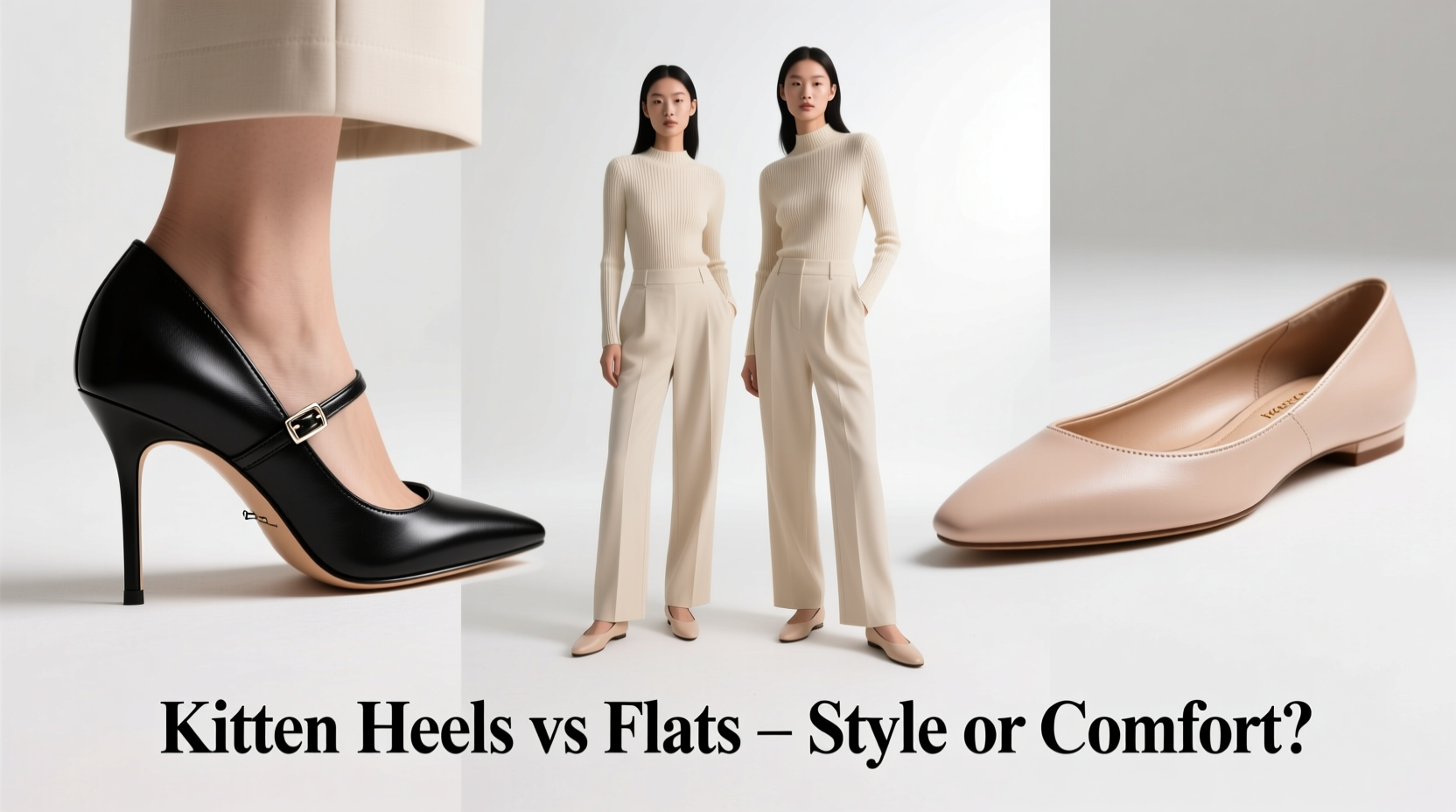
Kitten heels first gained popularity in the mid-20th century as a training heel for young women transitioning from flats to higher styles. Their subtle lift offered sophistication without sacrificing stability. Fast forward to today, and designers like The Row, Totême, and even Gucci have reintroduced refined versions of the kitten heel—often in sleek pointed-toe silhouettes, retro block heels, or with modern cutouts.
Fashion editors and influencers now praise them for striking a balance between polished and practical. Unlike stilettos, which can dig into floors and fatigue feet within hours, kitten heels distribute weight more evenly, offering a slight elevation that elongates the leg without compromising posture.
“Kitten heels represent a return to intentionality in dressing—they’re elevated but not extreme. They suit a woman who values both form and function.” — Lydia Chen, Senior Editor at *Style Edit Journal*
Yet, despite their aesthetic appeal, questions remain: Can they genuinely compete with the unrivaled comfort of flats? And who are they really designed for?
Flats: The Original All-Day Workhorse
No shoe category matches the versatility and accessibility of flats. From ballet slippers to loafers, driving mocs to minimalist sandals, flats dominate wardrobes because they deliver consistent comfort across environments—office floors, city streets, travel hubs.
Podiatrists often recommend flat shoes with proper arch support for people who spend long hours standing or walking. Brands like Dansko, Allbirds, and Rothy’s have capitalized on this demand by merging orthopedic principles with contemporary design.
Unlike heels—even low ones—flats keep the foot in a neutral position, minimizing strain on the Achilles tendon and forefoot. For those with plantar fasciitis, flat feet, or joint sensitivities, this alignment is critical.
Tip: Not all flats are created equal. Look for models with cushioned insoles, structured midsoles, and flexible outsoles to avoid foot fatigue.Comparing Comfort: Anatomy of a Step
To understand why one might feel better than the other, it helps to consider biomechanics. When wearing heels—even low ones—the body's center of gravity shifts forward. This forces the calf muscles to contract, increases pressure on the ball of the foot, and alters spinal alignment over time.
Kitten heels reduce these effects compared to higher heels, but they don’t eliminate them. In contrast, flats allow the foot to remain flat on the ground, preserving natural gait mechanics.
A 2023 study published in the *Journal of Foot and Ankle Research* found that participants reported significantly less lower back discomfort and metatarsal pain when wearing supportive flats versus even 1.75-inch heels after six hours of continuous use.
Key Differences at a Glance
| Feature | Kitten Heels | Flats |
|---|---|---|
| Heel Height | 1.5–2 inches | 0–0.5 inches |
| Posture Impact | Moderate (slight forward lean) | Minimal (neutral spine alignment) |
| Foot Pressure | Increased on forefoot | Evenly distributed |
| Style Versatility | Office, events, smart-casual | Casual, professional, travel |
| All-Day Wear Suitability | Good (with cushioning) | Excellent (especially with arch support) |
Real-Life Scenario: Office Worker’s Dilemma
Sophie, a 34-year-old project manager in Chicago, spends her days moving between meetings, commuting via subway, and logging 8,000+ steps weekly. Last spring, she invested in a pair of cream-colored kitten heels believing they’d elevate her work wardrobe. While she received compliments, she noticed increasing foot soreness by mid-afternoon.
She switched back to a pair of black leather loafers with memory foam insoles. Though less “fashion-forward,” they allowed her to walk confidently from morning stand-ups to evening networking events without discomfort. “I love how the kitten heels look,” she said, “but if I’m choosing between looking put-together and feeling functional, I’ll pick function every time.”
Sophie’s experience reflects a broader reality: personal comfort thresholds vary, and lifestyle demands often dictate footwear success more than trend cycles.
When Kitten Heels Shine—and When They Don’t
Kitten heels excel in settings where appearance matters but extreme height isn’t required. Think client presentations, gallery openings, or dinner dates. Their slight elevation adds polish without requiring a change of shoes by sunset.
However, they fall short in high-mobility situations. Walking long distances, navigating uneven pavement, or standing for extended periods makes them less ideal. Without adequate cushioning or a wide toe box, even a small heel can cause blisters or neuroma irritation over time.
Tip: If opting for kitten heels, choose rounded or square toes over pointed styles to reduce pressure on the metatarsals.How to Choose What Works for You: A Checklist
- ✅ Assess your daily step count and movement needs
- ✅ Prioritize shoes with padded insoles and shock-absorbing soles
- ✅ Try both styles side-by-side during similar activities
- ✅ Consider hybrid options (e.g., flat mules with heel grips or ultra-low block heels)
- ✅ Rotate footwear to prevent repetitive strain
Expert Insight: The Podiatrist’s Perspective
Dr. Anita Patel, a board-certified podiatrist based in Los Angeles, sees an uptick in heel-related complaints whenever retro heel styles resurge. “Kitten heels are better than stilettos, no doubt,” she explains, “but they still place the foot in a non-neutral position. Over months or years, that subtle imbalance can contribute to shortened calf muscles, hammertoes, or even knee issues.”
“The most comfortable shoe is the one that mimics barefoot motion as closely as possible. That usually means a flat sole with good arch support.” — Dr. Anita Patel, DPM
She advises patients to limit time in any heeled shoe to under three hours unless specially engineered for prolonged wear. Even then, stretching the calves post-wear is essential to maintain flexibility.
FAQ: Your Top Questions Answered
Are kitten heels better than high heels for foot health?
Yes. Kitten heels exert far less pressure on the forefoot and reduce ankle instability compared to heels over 3 inches. They’re a safer option if you must wear heels regularly, but they aren’t risk-free.
Can flats cause foot problems too?
Absolutely. Flats without arch support—like traditional ballet pumps—can lead to plantar fasciitis or fallen arches over time. Always opt for structured flats with cushioning and avoid completely flat, flexible soles if you’re on your feet often.
Is there a “best” shoe for both style and comfort?
The ideal shoe balances aesthetics with biomechanical support. Look for flats or kitten heels with built-in arch support, a roomy toe box, and a heel counter that stabilizes the ankle. Brands like M.Gemi, Cole Haan (with Grand.OS technology), and Naot blend design with orthopedic integrity.
Final Verdict: Trends Fade, Comfort Endures
Kitten heels are undeniably back in fashion—but being trendy doesn’t equate to being universally practical. They offer a graceful middle ground for those seeking a touch of elevation without teetering on towering stilettos. Yet, when measured against the gold standard of comfort, flats—especially well-engineered ones—still reign supreme for everyday wear.
The truth is, footwear should serve the wearer, not the other way around. Whether you gravitate toward the quiet elegance of a kitten heel or the liberating ease of a supportive flat, prioritize fit, function, and how your body responds over what’s trending online.
💬 What’s your go-to shoe for balancing style and comfort? Share your favorite pair and why it works for your lifestyle—we’d love to hear from you!








