
When Apple released the third-generation iPhone SE in 2022, it promised a powerful upgrade in a familiar body. For fans of compact, affordable iPhones, the device was instantly appealing. But how much has actually changed since the previous model? After analyzing dozens of real-world user experiences, performance benchmarks, and long-term usage reports, the answer isn't as straightforward as marketing suggests.
The original iPhone SE (2020) already offered flagship-level performance in a budget-friendly package. So when Apple introduced the newer version with only subtle design tweaks and internal upgrades, many wondered: is this really worth upgrading for? Or is the difference so marginal that holding onto the older model makes more sense?
Design and Build: Almost Identical, But Not Quite
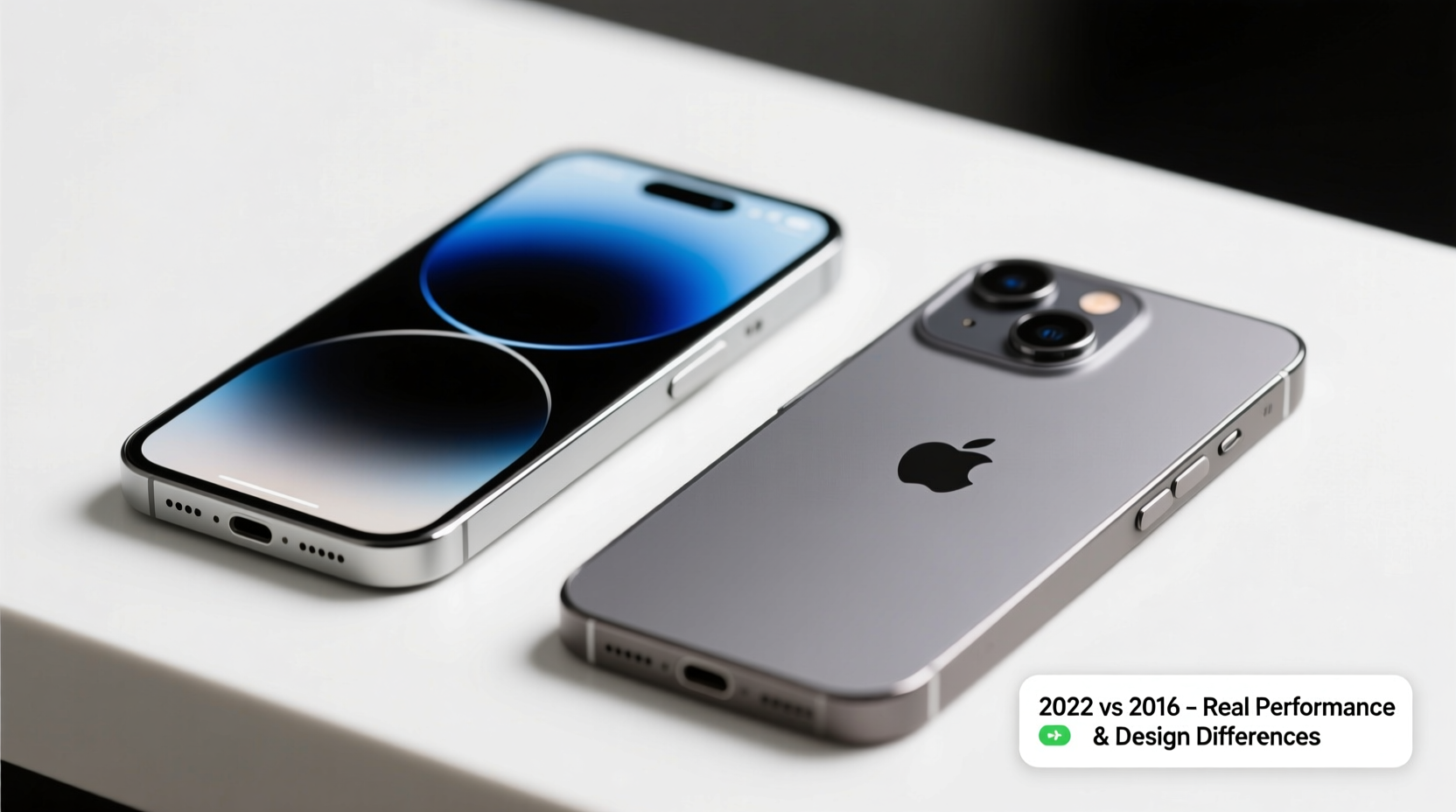
At first glance, the new iPhone SE looks nearly identical to its predecessor. Both models retain the classic iPhone 8-inspired design with a 4.7-inch LCD display, thick bezels, and a Touch ID home button. The dimensions and weight are almost the same—138.4 x 67.3 x 7.3 mm and 144 grams for the 2022 model versus 138.4 x 67.3 x 7.3 mm and 148 grams for the 2020 version.
The most noticeable change is under the hood. While the chassis feels just as solid—glass front and back with an aluminum frame—the 2022 model now supports IP67 water and dust resistance, up from IP68 on the 2020 model. That’s a minor downgrade in rating, though both can survive brief submersion in up to 1 meter of water.
Tip: If you frequently use your phone outdoors or in wet environments, consider a waterproof case regardless of IP rating.Performance: A Generational Leap Under the Hood
The biggest upgrade lies in the processor. The 2020 iPhone SE used the A13 Bionic chip, while the 2022 model steps up to the A15 Bionic—the same chip found in the iPhone 13 series. This brings tangible improvements in CPU and GPU performance, machine learning capabilities, and energy efficiency.
Real-world users report smoother multitasking, faster app launches, and better gaming performance. One Reddit user noted: “I upgraded from the 2020 SE and immediately noticed how much faster apps like Instagram and Chrome open. Games like Genshin Impact run noticeably better, even if not at max settings.”
Benchmarks confirm this: the A15 delivers around 40% higher single-core and 50% higher multi-core performance than the A13. It also features a newer GPU architecture, which improves graphics rendering and reduces heat buildup during extended use.
“Apple’s strategy with the SE line is clear: deliver flagship-tier performance in an older form factor. The A15 in the new SE is overkill for most tasks, but that’s exactly why it will last longer.” — David Kim, Mobile Hardware Analyst at TechPulse
Camera Comparison: Same Sensor, Smarter Software
Both models feature a 12MP rear camera with f/1.8 aperture and a 7MP front-facing camera. There’s no night mode flash or ultra-wide lens, keeping costs down. However, the 2022 model benefits from computational photography enhancements powered by the A15 chip.
Users consistently report improved photo quality in low light, better HDR handling, and more accurate color reproduction. Smart HDR 4 and Deep Fusion make a visible difference, especially in backlit scenes or indoor environments. Portrait mode has also become more reliable, with better edge detection and background blur.
One long-term user shared: “I take most of my photos indoors. The new SE doesn’t magically turn into a Pro camera, but my pictures look less grainy and more natural now. The software does heavy lifting here.”
| Feature | iPhone SE (2020) | iPhone SE (2022) |
|---|---|---|
| Chipset | A13 Bionic | A15 Bionic |
| Rear Camera | 12MP, f/1.8 | 12MP, f/1.8 + Smart HDR 4 |
| Front Camera | 7MP | 7MP + Portrait Mode |
| Water Resistance | IP67 | IP67 |
| 5G Support | No | Yes (sub-6GHz) |
| Battery Life (Video Playback) | Up to 13 hours | Up to 15 hours |
| Starting Price (Launch) | $399 | $429 |
Connectivity and Battery: Small but Meaningful Upgrades
The addition of 5G support is a major selling point for the 2022 model. While it only supports sub-6GHz bands (not mmWave), it still offers faster download speeds and lower latency compared to LTE-only devices. Users in urban areas with strong 5G coverage report quicker streaming and downloads, though battery drain increases when actively using 5G.
Battery life has also improved slightly. Apple lists video playback at 15 hours for the new SE, up from 13 hours. In practice, most users see about 1–1.5 extra hours of screen-on time per charge. Charging remains slow—still limited to 20W fast charging (adapter sold separately)—but wireless charging works the same on both models.
Mini Case Study: Sarah’s Upgrade Experience
Sarah, a teacher from Portland, used her 2020 iPhone SE for two years before upgrading to the 2022 model. Her main pain points were slow app loading in Google Classroom and poor photo quality during school events.
After switching, she noticed immediate improvements: “My lesson planning apps load in half the time. I also record student presentations, and the new SE handles 4K video without stuttering. The battery lasts through my entire workday now, even with 5G enabled.”
However, she added one caveat: “It still feels like a small phone. If you’re used to big screens, typing emails takes getting used to.”
Should You Upgrade? A Practical Checklist
Deciding whether to move from the 2020 to the 2022 model depends on your priorities. Use this checklist to evaluate your needs:
- ✅ Need faster performance for multitasking or gaming?
- ✅ Want better low-light photos without spending $1,000?
- ✅ Looking for future-proofing with 5G and longer iOS support?
- ✅ Still satisfied with the small screen and Touch ID?
- ✅ Can stretch your budget to $429 (or find a deal)?
If you answered yes to three or more, the upgrade is likely worthwhile. But if you're happy with your current device and don’t need 5G or cutting-edge processing, sticking with the 2020 model—or waiting for a potential 2024 refresh—may be smarter.
Frequently Asked Questions
Can the new iPhone SE run the latest iOS updates smoothly?
Yes. Thanks to the A15 chip, the 2022 iPhone SE runs iOS 17 with no lag. It’s expected to receive software updates until at least 2027, possibly longer.
Is the screen the same on both models?
Virtually identical. Both use a 4.7-inch Retina HD LCD with 1334x750 resolution and 326 ppi. Neither has True Tone or high refresh rate support.
Does the new iPhone SE have Face ID?
No. Like its predecessor, it uses Touch ID embedded in the home button. Apple kept the design unchanged to maintain affordability.
Final Verdict: Incremental, But Impactful
The new iPhone SE isn’t a revolutionary leap—it’s an evolution. For users coming from older iPhones (like the 7 or 8), the 2022 model feels blazing fast and modern. But for those already on the 2020 SE, the gains are modest: slightly better camera processing, 5G connectivity, and longer battery life.
Still, these upgrades add up over time. The A15 chip ensures smoother performance for years to come, and 5G readiness means fewer obsolescence concerns. Combined with iOS optimization, the 2022 iPhone SE remains the best budget iPhone Apple has ever made.
🚀 Ready to decide? If you value speed, longevity, and modern connectivity in a compact design, the new iPhone SE is worth the upgrade. Share your experience or questions below—real talk from real users helps everyone make smarter choices.








