For many, the allure of beachy waves is irresistible—effortless texture, natural volume, and that sun-kissed look are often achieved with one product: sea salt spray. But for those with color-treated hair, a pressing question arises: can this styling staple compromise the health and vibrancy of dyed strands? With insights from experienced hairstylists and a deeper understanding of hair chemistry, it's possible to enjoy textured styles without sacrificing color integrity.
Color-treated hair requires special attention. The dyeing process alters the hair’s internal structure, making it more porous and vulnerable to environmental stressors. Salt, drying agents, and UV exposure—all common in sea salt sprays—can accelerate fading, dryness, and breakage. Understanding how these factors interact is essential for maintaining both style and hair health.
The Science Behind Sea Salt Spray and Hair Structure
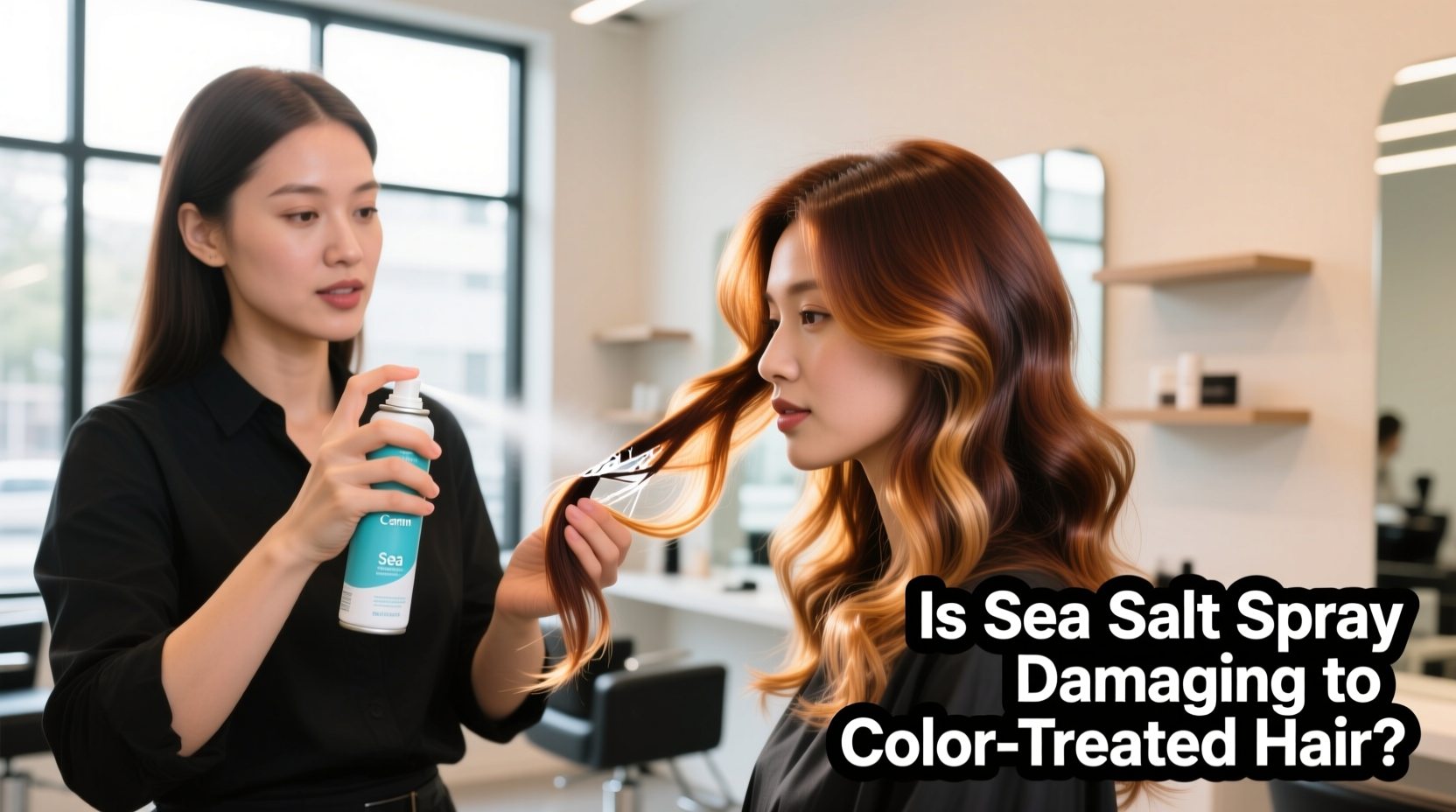
Sea salt spray typically contains magnesium sulfate or sodium chloride dissolved in water, sometimes with added alcohol, fragrances, and texturizing polymers. When applied, the salt crystals absorb moisture from the hair shaft, creating friction between strands. This separation produces volume and a tousled wave pattern as the hair dries. While effective for texture, this mechanism poses risks for chemically processed hair.
Color-treated hair has a compromised cuticle layer due to lifting agents used during coloring. Whether you’ve had highlights, balayage, or full-color application, the cuticle becomes more permeable. This allows dye molecules to enter but also makes it easier for moisture to escape—and for external irritants to penetrate. Salt is hygroscopic, meaning it attracts and holds water. In humid conditions, this might seem beneficial, but in most cases, salt draws out hydration from the hair, leading to dryness and brittleness.
Moreover, repeated use of salt-based products can cause cumulative damage. A 2021 study published in the *International Journal of Trichology* found that prolonged exposure to saline solutions led to increased tensile stress and reduced elasticity in bleached hair samples. While not all sea salt sprays are created equal, their core ingredient remains a known desiccant.
Tip: Look for sea salt sprays labeled \"color-safe\" or those containing moisturizing ingredients like aloe vera, glycerin, or coconut oil to counteract drying effects.Stylist Perspectives: Real-World Observations
Professional stylists see the aftermath of improper product use regularly. According to Lila Chen, a master colorist at a high-end salon in Los Angeles, “We’re seeing more clients come in with dull, frizzy ends and uneven color fade—especially around the mid-lengths where they apply sea salt spray daily.” She notes that while clients love the aesthetic, few realize the toll it takes on dyed hair over time.
“Salt doesn’t just dry out hair—it opens the cuticle further, which speeds up pigment loss. If you're investing hundreds in color, using a harsh texturizer daily is like undoing your own work.” — Lila Chen, Master Colorist
Chen recommends reserving sea salt spray for special occasions rather than daily wear. For clients who insist on regular use, she suggests applying a heat protectant or leave-in conditioner beforehand to create a barrier between the salt and the hair shaft.
Another stylist, Marcus Rivera based in Miami, points out that coastal clients face a double challenge: ocean swimming and frequent sea salt spray use. “The combination of real seawater, UV rays, and product buildup creates a perfect storm for color degradation,” he explains. His advice? Rinse hair immediately after salt exposure and follow with a hydrating mask twice a week.
Do’s and Don’ts of Using Sea Salt Spray on Dyed Hair
Navigating the use of sea salt spray doesn’t mean eliminating it entirely. With mindful habits, it’s possible to maintain both texture and tone. Below is a clear guide to help color-treated hair users make informed choices.
| Do’s | Don’ts |
|---|---|
| Use sea salt spray sparingly—once or twice a week max | Apply daily without protective prepping |
| Choose formulas with added oils or humectants | Use alcohol-heavy sprays that increase dryness |
| Apply only to mid-lengths and ends, avoiding roots | Spray directly onto scalp or freshly washed hair |
| Rinse out thoroughly after 8–12 hours | Leave in overnight without conditioning |
| Follow up with a nourishing serum or oil | Comb through dry, tangled hair after application |
One overlooked factor is application method. Many users shake the bottle and mist liberally, saturating their hair. Instead, stylist recommendations lean toward targeted application: spraying into palms first, then scrunching into damp hair. This reduces concentration and prevents overloading any single section.
Case Study: Managing Texture Without Compromising Color
Jessica, a 32-year-old marketing executive in Austin, TX, loves bohemian styles and frequently uses sea salt spray to enhance her waves. After getting a costly rose-gold balayage, she noticed her color fading within three weeks—much faster than her previous treatments. Concerned, she consulted her stylist, who reviewed her routine.
It turned out Jessica was using a popular drugstore sea salt spray every other day, often skipping conditioner to avoid \"weighing hair down.\" Her stylist analyzed the product label: the first ingredients were water, magnesium sulfate, and denatured alcohol—a drying combination. She advised Jessica to switch to a sulfate-free, color-protectant formula with argan oil and limit use to weekends only.
The new regimen included:
- Applying a leave-in conditioner before any styling
- Using sea salt spray only on second-day hair
- Washing with a sulfate-free shampoo every 3–4 days
- Deep conditioning weekly
After six weeks, Jessica reported improved softness, sustained color vibrancy, and still achieved her desired texture. Her stylist noted less frizz and no split ends during her next trim. This case illustrates that small adjustments can yield significant results when balancing aesthetics with hair health.
How to Use Sea Salt Spray Safely: A Step-by-Step Guide
If you're committed to using sea salt spray, follow this stylist-approved protocol to minimize damage:
- Start with protection: Apply a lightweight leave-in conditioner or detangling spray to damp hair. Focus on mid-lengths to ends—the areas most exposed to salt.
- Choose the right product: Opt for a sea salt spray enriched with moisturizing ingredients. Avoid those listing alcohol as one of the first three components.
- Shake and emulsify: Spray a small amount into your hands, then rub them together to distribute evenly. This prevents concentrated droplets.
- Scrunch, don’t spray: Gently scrunch the product upward from the ends to encourage wave formation without oversaturating.
- Air-dry or diffuse: Let hair dry naturally or use a diffuser on low heat. High heat increases porosity and accelerates color fade.
- Refresh gently: On subsequent days, revive texture with a water + conditioner mix in a spray bottle instead of reapplying salt.
- Cleanse and condition: Wash hair within 24 hours of use. Follow with a deep conditioning treatment at least once a week.
This approach preserves the desired texture while reducing long-term harm. The key is moderation and preparation—treating each application as a temporary style, not a daily necessity.
Frequently Asked Questions
Can I use sea salt spray immediately after coloring my hair?
No. It’s best to wait at least 72 hours after coloring before introducing any styling products, especially those with salt or alcohol. This allows the cuticle to close and the color to fully set. Early exposure can lift the cuticle prematurely, causing rapid fading and uneven tones.
Are there alternatives to sea salt spray for textured waves?
Yes. Many brands now offer \"salt-free texturizers\" that use natural clays, plant-based polymers, or rice starch to create volume and grit without drying salts. These are ideal for color-treated or fine hair. Examples include Living Proof Full Dry Volume Blast and Bumble and bumble Surf Spray (which uses a lower salt concentration and includes conditioners).
Does sea salt spray cause permanent damage?
Not necessarily permanent, but repeated misuse can lead to chronic dryness, split ends, and weakened strands that require trimming. Over time, this can result in noticeable thinning or breakage, especially near the ends. However, with proper care, most damage can be reversed by discontinuing harsh products and incorporating restorative treatments.
Expert-Recommended Product Swaps
For those unwilling to give up textured styles, experts suggest transitioning to gentler alternatives. Here are three top-recommended swaps:
- Ouai Wave Spray: Contains sea salt but balanced with rice protein and coconut oil. Designed for all hair types, including colored hair.
- Verb Sea Spray: Lightweight, non-sticky, and formulated without parabens or sulfates. Offers texture with less residue.
- Amika Un.Done Paste: A salt-free option providing undone texture with shea butter and algae extract for hydration.
These products aim to deliver the lived-in look without the harsh side effects. Reading labels carefully and patch-testing new products can prevent unwanted reactions.
Tip: Always apply sea salt spray on damp, not soaking wet, hair. Too much water dilutes effectiveness; too little increases friction and potential damage.Conclusion: Style Smart, Protect Your Investment
Color-treated hair is an investment—not just financially, but in time and self-expression. While sea salt spray offers instant gratification in the form of effortless waves, its long-term impact on dyed hair can't be ignored. The consensus among stylists is clear: moderation, formulation awareness, and protective measures are non-negotiable.
You don’t have to sacrifice style for health. By choosing smarter products, adjusting your routine, and listening to your hair’s needs, you can enjoy beachy texture without compromising your color. Think of your hair as a canvas—every product you apply either enhances or erodes the masterpiece.
💬 Have a favorite sea salt spray that works for your color-treated hair? Share your go-to product and routine in the comments—your insight could help others find the perfect balance!








