Sea salt spray has become a staple in many people’s styling routines, prized for its ability to create effortless beachy waves and add texture with minimal effort. But if you’ve invested time and money into coloring your hair—whether it’s highlights, balayage, or a bold fashion shade—you may have heard whispers that sea salt spray could be doing more harm than good. So, is it truly damaging, or is the concern mostly overblown? The truth lies somewhere in between, and understanding the nuances can help you enjoy the benefits without sacrificing your color integrity.
The Science Behind Sea Salt Spray
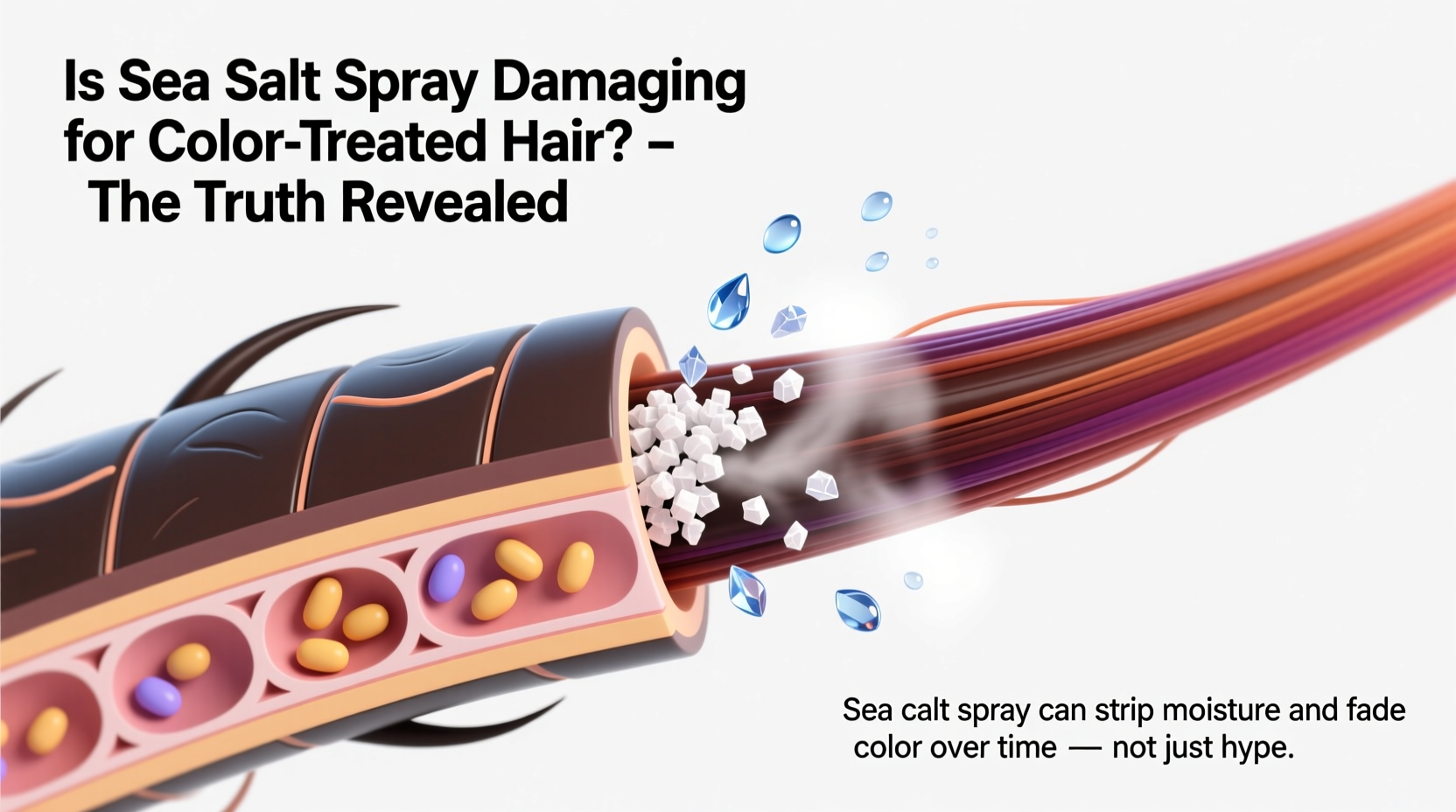
At its core, sea salt spray is a mixture of water, sea salt (usually sodium chloride), and often includes additional ingredients like magnesium, algae extracts, or fragrances. When applied to damp hair and air-dried or diffused, the salt crystallizes as it dries, creating separation, volume, and that coveted tousled look. However, salt is hygroscopic—it attracts moisture from the environment and, more critically, from your hair shaft.
For healthy, untreated hair, occasional use of sea salt spray typically causes minimal damage. But color-treated hair is fundamentally different. The chemical processes involved in lightening, depositing pigment, or correcting tones compromise the cuticle layer—the outer protective barrier of each strand. Once this layer is weakened, hair becomes more porous, meaning it absorbs substances more readily and loses moisture faster.
When salt penetrates porous strands, it draws out internal moisture, leading to dryness, brittleness, and increased frizz. Over time, repeated exposure without proper care can accelerate fading, increase breakage, and dull the vibrancy of your color.
“Salt doesn’t strip color directly like bleach, but it creates an environment where color fades faster and hair becomes more fragile.” — Dr. Lisa Chen, Trichologist & Hair Research Scientist
How Sea Salt Spray Affects Color-Treated Hair
The primary concerns with using sea salt spray on color-treated hair fall into three categories: dehydration, cuticle disruption, and accelerated fading.
1. Dehydration and Porosity
Color-treated hair already struggles with moisture retention. Bleaching opens the cuticle permanently, while even demi-permanent dyes slightly lift the scales to allow pigment entry. Salt compounds exacerbate this by pulling moisture out of the cortex. The result? Hair feels rough, looks dull, and is more prone to tangles and split ends.
2. Cuticle Damage and Rough Texture
As salt dries, it forms tiny crystals within the hair shaft. These micro-crystals can further lift and fray the cuticle, especially when hair is brushed or manipulated after drying. For someone with fine or chemically processed hair, this can lead to noticeable surface damage and reduced shine.
3. Accelerated Color Fading
Fading occurs when pigment molecules escape from the cortex. While UV exposure and shampoo frequency are major culprits, dehydration plays a key role too. Dry, porous hair releases artificial pigments more easily. Salt-induced dryness speeds up this process, particularly with reds, coppers, and pastel shades that are inherently less stable.
Tip: If you must use sea salt spray, apply it only to mid-lengths and ends—never saturate the roots or scalp, where absorption is highest.Debunking the Hype: Is It All Bad?
Despite valid concerns, sea salt spray isn’t inherently evil for color-treated hair. The issue isn’t the product itself but how it’s used—and what’s in it. Many modern formulas have evolved to include hydrating agents like glycerin, aloe vera, or panthenol to counteract salt’s drying effects. Some brands even market “color-safe” versions specifically formulated for chemically treated hair.
The real problem arises when users treat sea salt spray like a daily essential without considering frequency, formulation, or follow-up care. Occasional use—once or twice a week—with proper hydration and protection won’t ruin your color. But daily application, especially with high-salt, alcohol-heavy sprays, will take a toll over time.
Moreover, lifestyle factors matter. If you’re regularly exposed to sun, chlorine, or hard water, adding salt spray to the mix compounds stressors. On the flip side, someone who uses it sparingly, deep conditions weekly, and wears protective styles when possible may experience no noticeable damage at all.
Safe Usage Guide: How to Use Sea Salt Spray Without Ruining Your Color
You don’t need to give up your favorite texturizing spray entirely. With smarter habits and strategic choices, you can maintain both texture and tone.
Step 1: Choose the Right Formula
Look for sea salt sprays labeled “for color-treated hair” or those containing moisturizing ingredients. Avoid products with high alcohol content (especially denatured alcohol), sulfates, or synthetic fragrances, which can further dry or irritate the scalp.
Step 2: Limit Frequency
Reserve sea salt spray for special occasions or weekends—not everyday wear. Two to three times per week max allows your hair time to recover and retain moisture.
Step 3: Apply Strategically
Use on towel-dried hair, focusing on mid-lengths to ends. Avoid the scalp and roots to prevent buildup and excessive dryness. Use a wide-tooth comb to distribute evenly and minimize friction.
Step 4: Seal with Protection
After styling, apply a lightweight leave-in conditioner or hair oil to lock in moisture and smooth the cuticle. Argan, jojoba, or marula oils work well without weighing hair down.
Step 5: Rinse and Replenish
If you’ve used sea salt spray heavily, consider rinsing your hair with cool water the next day before shampooing. Follow with a hydrating mask or deep conditioner to restore lost moisture.
📋 **Checklist: Using Sea Salt Spray Safely on Color-Treated Hair**- ✅ Choose a formula with added moisturizers (e.g., aloe, glycerin)
- ✅ Avoid daily use—limit to 2–3 times per week
- ✅ Apply only to mid-lengths and ends
- ✅ Always follow with a leave-in conditioner or oil
- ✅ Deep condition at least once a week
- ✅ Wash hair with sulfate-free, color-safe shampoo
- ✅ Use a heat protectant if blow-drying or diffusing
Comparison Table: Regular vs. Color-Safe Sea Salt Sprays
| Feature | Regular Sea Salt Spray | Color-Safe Sea Salt Spray |
|---|---|---|
| Salt Concentration | High (up to 5%) | Moderate to low (~1–2%) |
| Alcohol Content | Often high (denatured alcohol) | Low or alcohol-free |
| Added Moisturizers | Rare | Common (aloe, panthenol, glycerin) |
| UV Filters | Uncommon | Frequent (protects color) |
| pH Level | May be alkaline (opens cuticle) | Acidic (~4.5–5.5, seals cuticle) |
| Best For | Healthy, non-colored hair | Color-treated, bleached, or damaged hair |
Real Example: Sarah’s Summer Struggles
Sarah, a 32-year-old with platinum blonde balayage, loved her sea salt spray for achieving voluminous, lived-in waves. She used it almost every day during summer, often reapplying throughout the day. By late August, she noticed her hair felt like straw, her roots were brassy, and her ends were splitting. Her stylist pointed to cumulative damage: UV exposure, chlorine from pool visits, and daily salt spray had stripped moisture and faded her toner.
She switched to a color-safe alternative, limited use to twice a week, started wearing a silk scarf at the beach, and incorporated a weekly bond-repair treatment. Within six weeks, her hair regained softness, and her color stayed fresher longer. The change wasn’t about eliminating sea salt spray—but using it mindfully.
Frequently Asked Questions
Can I use sea salt spray if I have semi-permanent color?
Yes, but with caution. Semi-permanent dyes fade faster because they sit on the cuticle rather than penetrating deeply. Salt spray increases porosity and accelerates wash-out. Use sparingly and pair with cold-water rinses to prolong color.
Does sea salt spray cause hair loss?
No, sea salt spray does not cause hair loss. However, chronic dryness and breakage from overuse can make hair appear thinner due to split ends and snapping. This is mechanical damage, not follicle-related shedding.
Are there natural alternatives to sea salt spray?
Yes. You can make a DIY version using 1 cup distilled water, 1 tsp sea salt, 1 tsp aloe vera gel, and a few drops of argan oil. The aloe and oil help offset dryness. Store in a spray bottle and shake before use. Even better, some texturizing sprays use sugar or mineral salts instead of sodium chloride for gentler hold.
Expert Insight: What Professionals Recommend
Many stylists advise clients to treat sea salt spray like a cosmetic tool—effective in moderation but risky when overused. Salons increasingly offer “texture without trauma” alternatives, such as mousse-based volumizers or sea mineral sprays with lower sodium content.
“We see so many clients come in with fried ends after a summer of beach sprays. The fix isn’t banning them—it’s educating on balance. Pair any salt-based product with intense hydration, and you can keep both texture and color.” — Marcus Reed, Celebrity Colorist, NYC
Final Thoughts: Balancing Beauty and Hair Health
The idea that sea salt spray is universally damaging to color-treated hair is partly hype—but it’s rooted in real chemistry. Salt dehydrates, and dehydrated hair fades faster and breaks easier. However, dismissing the product entirely ignores advancements in formulation and the importance of user behavior.
The key is intentionality. Read labels. Monitor your hair’s response. Adjust frequency based on season and condition. And never underestimate the power of post-styling care. With the right approach, you can enjoy beachy texture without sacrificing your salon-fresh color.
🚀If you’ve struggled with sea salt spray and color fading, try implementing one change this week—switching formulas, reducing frequency, or adding a weekly mask. Small adjustments often yield the most lasting results. Share your experience in the comments; your insight might help others find their perfect balance.









