As cats age, their health needs evolve. Senior cats—typically those aged 7 and up—are more prone to chronic conditions such as kidney disease, hyperthyroidism, diabetes, and arthritis. These conditions often require ongoing treatment, diagnostic testing, and medication, which can quickly become expensive. Many cat owners turn to pet insurance to help manage these costs. But is pet insurance truly worth it for older cats, especially when policies come with strict coverage limits and exclusions?
The answer isn't straightforward. While pet insurance can offer financial protection and peace of mind, the value depends heavily on the specific policy, the cat’s medical history, and the owner’s risk tolerance. Understanding how coverage limits and exclusions impact older cats is essential before making a decision.
How Pet Insurance Works for Senior Cats
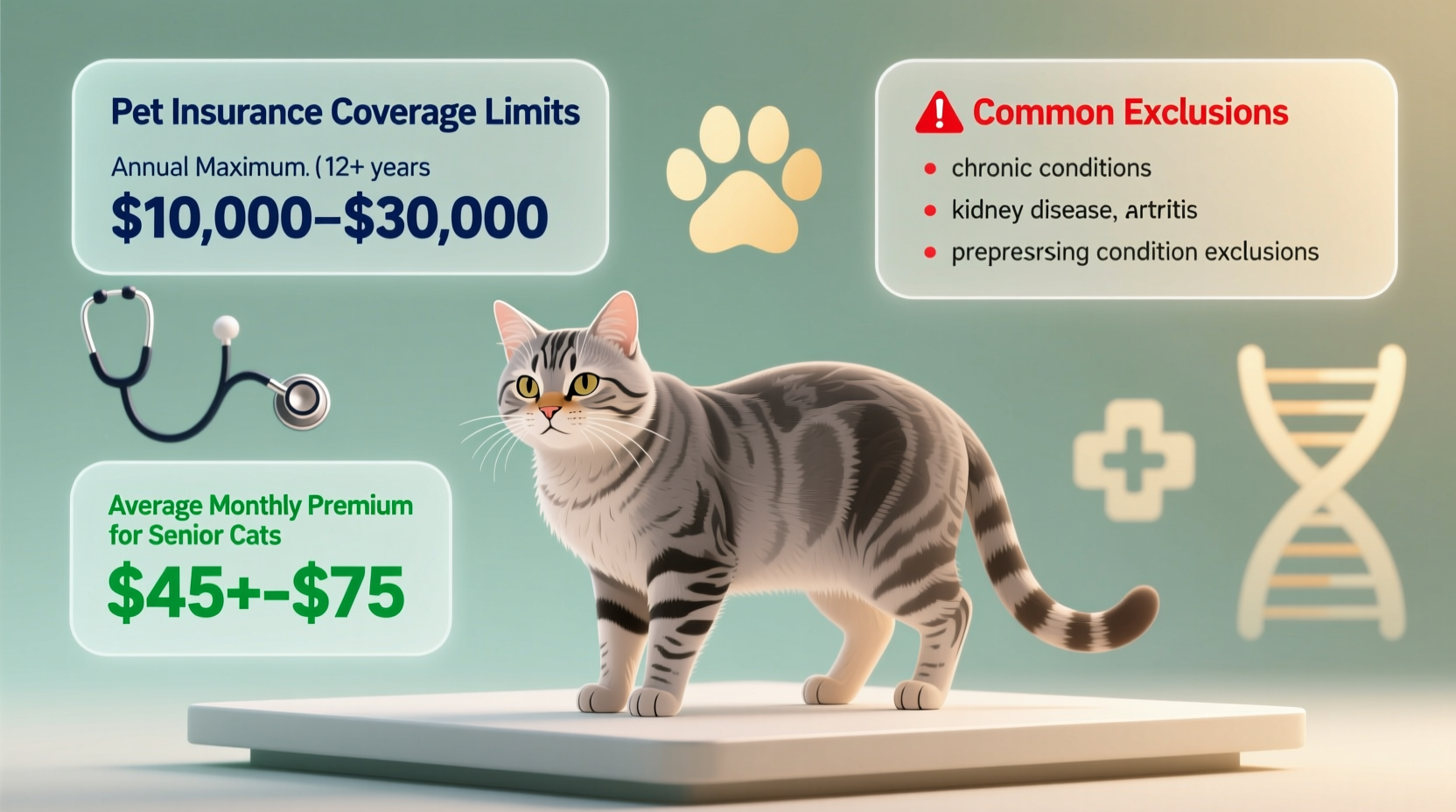
Pet insurance operates differently from human health insurance. Most plans are reimbursement-based: you pay the veterinarian upfront and then submit a claim to the insurer for partial reimbursement. Coverage typically includes accidents, illnesses, surgeries, diagnostics, and sometimes wellness care if added as an optional rider.
For older cats, insurers apply stricter underwriting rules. Premiums rise significantly with age due to higher statistical risk of illness. Moreover, pre-existing conditions are almost universally excluded, meaning any symptom or diagnosis that occurred before the policy start date—or during a waiting period—is not covered.
Some insurers may refuse to enroll cats over a certain age (often 9–10 years), while others accept them but at much higher premiums and with more restrictive terms. This makes timing crucial: insuring a cat early in life offers broader coverage and lower lifetime costs.
Tip: Enroll your cat in pet insurance before they show signs of common age-related illnesses—even subtle changes like weight loss or increased thirst could be flagged as pre-existing.Coverage Limits That Impact Older Cats
Insurers use several types of limits to control payouts, all of which disproportionately affect older pets who are more likely to need frequent or high-cost care.
Annual and Per-Incident Caps
Many policies set annual maximums (e.g., $5,000 or $10,000 per year) or per-incident caps (e.g., $1,000 per condition). For a senior cat diagnosed with diabetes and kidney disease, combined treatment costs can easily exceed these limits within months. Once the cap is reached, the owner pays all further expenses out of pocket.
Lifetime Maximums
Some premium plans offer lifetime coverage per condition, which is ideal for chronic diseases. However, budget-friendly policies often impose lifetime maximums (e.g., $15,000 total across all claims). Given that long-term management of conditions like hyperthyroidism can cost $1,000–$2,000 annually, this limit may be exhausted in just a few years.
Reimbursement Percentages and Deductibles
Reimbursement rates (commonly 70%, 80%, or 90%) and deductibles ($100–$500 annually) also influence net savings. A 70% reimbursement on a $3,000 treatment leaves the owner paying $900 plus deductible—still a significant burden. Higher reimbursement rates reduce out-of-pocket costs but increase monthly premiums, which may be prohibitive for older cats.
| Policy Feature | Impact on Older Cats | What to Look For |
|---|---|---|
| Pre-existing Condition Exclusion | Most age-related issues are excluded if diagnosed prior | Enroll early; check grace periods for minor symptoms |
| Annual Maximum | Easily exceeded with chronic illness | Choose $10,000+ or unlimited annual coverage |
| Lifetime Per-Condition Limit | Better for long-term care than total lifetime caps | Opt for per-condition coverage where available |
| Deductible | Higher deductibles reduce short-term value | Select lower deductibles for older cats |
| Age Enrollment Cutoff | Some insurers reject cats over 9–10 years | Research senior-friendly providers |
Common Exclusions That Affect Senior Felines
Exclusions are clauses that specify what is not covered. For older cats, these can severely limit the usefulness of a policy.
- Pre-existing conditions: Any illness present before enrollment or during a waiting period (usually 14 days for accidents, 30 days for illnesses) is excluded. Insurers review medical records, so even mild arthritis noted in a routine exam can disqualify future joint treatments.
- Breed-specific conditions: Though less relevant for non-pedigree cats, some insurers exclude known hereditary issues after enrollment.
- Chronic and degenerative diseases: Conditions like osteoarthritis, dental disease, and thyroid disorders are often flagged as pre-existing if there's any prior indication, even if undiagnosed.
- Routine aging-related care: Most policies do not cover geriatric blood panels, mobility supplements, or senior wellness exams unless part of an add-on wellness plan.
“With older cats, the fine print matters more than ever. A policy that seems comprehensive can end up covering very little due to how pre-existing conditions are defined.” — Dr. Laura Chen, DVM, Veterinary Insurance Consultant
Real-World Example: Bella, a 12-Year-Old Domestic Shorthair
Bella was adopted at age 5 and remained healthy until she was 11, when she began losing weight and drinking excessively. Her owner, Maria, had enrolled her in a mid-tier pet insurance plan at age 6. When Bella was diagnosed with hyperthyroidism, the insurer covered the initial bloodwork and prescription of methimazole. Over the next two years, regular monitoring and dose adjustments were reimbursed under the illness coverage.
At age 13, Bella developed stage 2 kidney disease. Because there were no prior indicators in her medical records, this was considered a new condition and covered. However, when Maria sought reimbursement for a therapeutic renal diet and subcutaneous fluids administered at home, she discovered these were classified as “non-covered supportive care.”
The policy had a $10,000 annual maximum. In year one of kidney treatment, claims totaled $8,200. The following year, after an emergency hospitalization for dehydration, claims hit $9,500—exceeding the remaining balance. Maria was forced to pay the final $2,300 out of pocket.
Despite the limitations, Maria says the insurance saved her over $15,000 in vet bills. “It wasn’t perfect,” she notes, “but without it, I might have had to consider euthanasia due to cost.”
Tip: Keep detailed veterinary records. If a symptom was briefly mentioned but never diagnosed, you may dispute its classification as pre-existing.Step-by-Step Guide to Evaluating Insurance for an Older Cat
Deciding whether pet insurance is worthwhile requires careful assessment. Follow this timeline to make an informed choice:
- Review your cat’s medical history (Week 1): Gather all vet records. Identify any past symptoms—no matter how minor—that could be deemed pre-existing (e.g., occasional vomiting, intermittent limping).
- Research insurers that accept senior cats (Week 2): Compare companies like Trupanion, Embrace, Nationwide, and ASPCA. Note age limits, waiting periods, and reputation for senior pet claims.
- Compare policy structures (Week 3): Focus on lifetime per-condition coverage, reimbursement rates (aim for 80–90%), and low deductibles. Avoid policies with total lifetime caps under $15,000.
- Estimate potential costs (Week 4): Project annual expenses based on current and likely future conditions. For example, managing diabetes averages $600–$1,200/year. Multiply by 2–3 years to assess long-term value.
- Run a cost-benefit analysis (Week 5): Calculate total projected premiums over the next 3 years versus estimated uncovered vs. covered expenses. If premiums exceed projected reimbursements by more than 40%, insurance may not be cost-effective.
- Apply and disclose fully (Week 6): Apply with full medical transparency. Withholding information can lead to claim denials or policy cancellation.
When Pet Insurance Makes Sense for Older Cats
Insurance can be worthwhile under specific circumstances:
- You want access to advanced care (e.g., specialists, imaging) without financial constraints.
- Your cat is currently healthy with no pre-existing conditions, making coverage more inclusive.
- You prefer predictable monthly costs over unpredictable large vet bills.
- You’re emotionally prepared to pursue aggressive treatment and need financial support to do so.
Conversely, insurance may not be worth it if:
- Your cat already has multiple diagnosed conditions that will be excluded.
- You have sufficient savings to cover emergencies.
- You’re uncomfortable with claim denials or complex paperwork.
- The premium exceeds $70/month for a cat over 10 years old.
Frequently Asked Questions
Can I get pet insurance for a 14-year-old cat?
Yes, but options are limited. Companies like Trupanion and SomePett offer coverage for older cats regardless of age, though premiums are high and pre-existing conditions are excluded. Always verify age limits and coverage scope before applying.
Does pet insurance cover routine bloodwork for senior cats?
Not usually. Routine blood panels are considered preventive care and are only covered if you’ve added a wellness or preventive care rider. Even then, reimbursement is often capped at a fixed amount per year.
What happens if my older cat reaches the coverage limit?
Once your policy’s annual or lifetime maximum is reached, no further claims are paid. You’ll need to pay all subsequent veterinary costs out of pocket. Some insurers allow policy renewal with a fresh annual maximum, but pre-existing conditions remain excluded.
Checklist: Evaluating Pet Insurance for Your Senior Cat- Obtain complete veterinary records
- Identify any potential pre-existing conditions
- Compare at least three insurers that cover older cats
- Prioritize per-condition lifetime coverage over total caps
- Choose 80–90% reimbursement rate and low deductible
- Calculate 3-year premium total vs. expected vet costs
- Read customer reviews on claim processing speed
- Apply with full disclosure of medical history
Conclusion: Making the Right Choice for Your Senior Cat
Pet insurance for older cats isn’t a one-size-fits-all solution. Its value hinges on timing, transparency, and realistic expectations. For cats insured early, the benefits are clear: decades of coverage for unexpected illnesses, including those that emerge in senior years. For cats enrolled later in life, the return on investment is less certain, particularly when exclusions and caps restrict usable benefits.
Ultimately, the decision should align with your values, financial situation, and commitment to your cat’s long-term care. If you choose insurance, select a plan with strong illness coverage, minimal restrictions, and reliable customer service. If you opt out, consider setting up a dedicated savings fund to cover future medical needs.
No responsible pet owner wants to make health decisions based solely on cost. Whether through insurance, savings, or a combination, planning ahead ensures your older cat receives the compassionate care they deserve in their golden years.
💬 Have experience with pet insurance for an older cat? Share your story in the comments to help other pet owners navigate this important decision.








