Released in 1998, Marvel vs. Capcom: Clash of Super Heroes was a landmark title that helped define the crossover fighting game genre. It brought together fan-favorite characters from the Marvel Universe and Capcom’s arcade legacy into one chaotic, combo-driven experience. Fast forward to today, where modern fighters like MvC: Infinite and Ultimate Marvel vs. Capcom 3 dominate digital storefronts and online leaderboards. So, is the original still worth your time—or has it aged into obscurity?
The answer isn’t a simple yes or no. Whether Super Heroes remains relevant depends on what you value in a fighting game: raw nostalgia, mechanical depth, accessibility, or competitive longevity.
The Legacy of Marvel vs. Capcom: Super Heroes
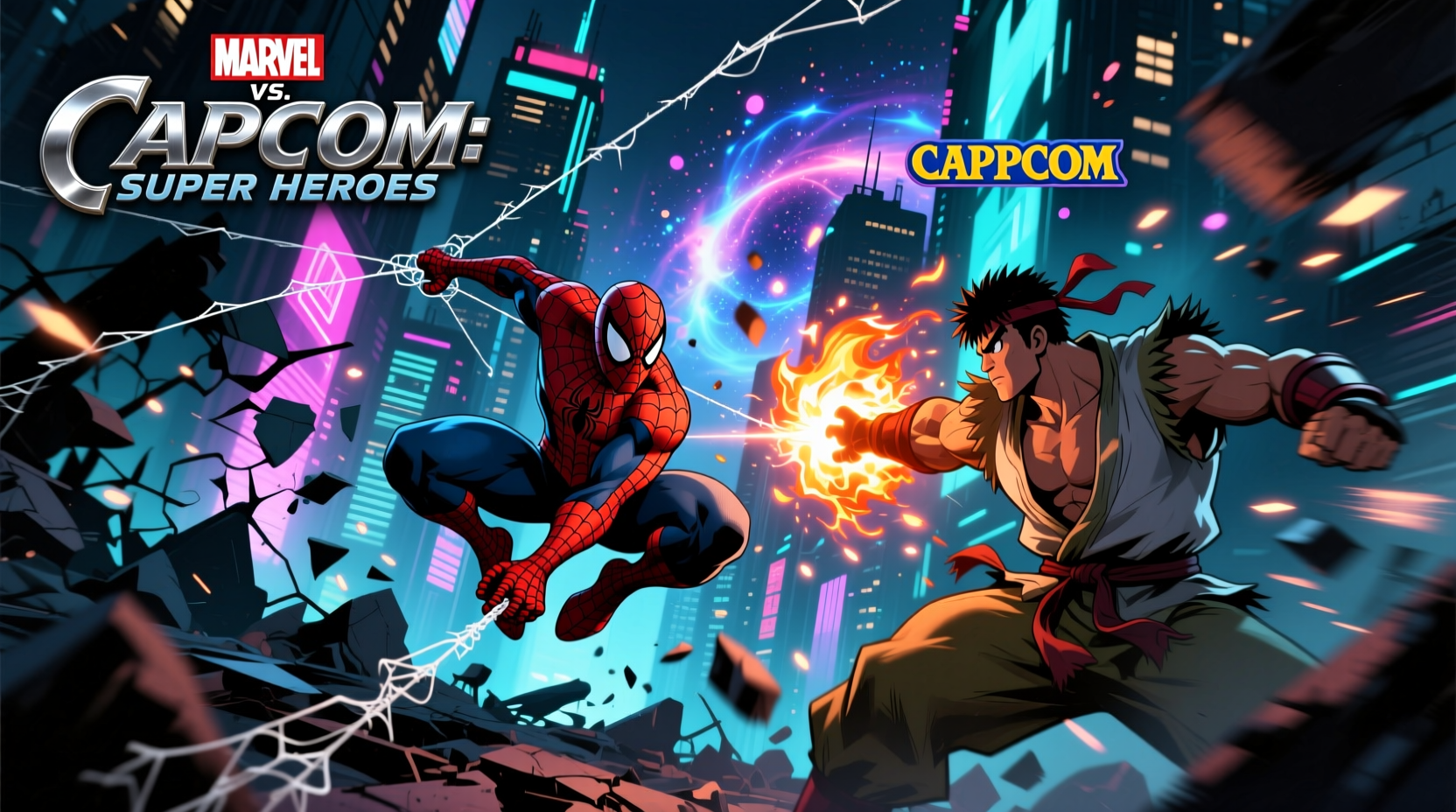
As the first true team-based fighter in the series, Super Heroes introduced the two-on-two tag mechanics that would become a staple in later entries. Players could switch between characters mid-combo, perform assist attacks, and unleash flashy Hyper Combos that lit up the screen. For its time, the game was revolutionary—bringing anime-style visuals, fast-paced gameplay, and an unprecedented roster including Ryu, Captain America, Spider-Man, and Megaman.
Its arcade roots shine through in its design: short matches, aggressive offense, and a steep skill curve. There’s no hand-holding. The controls are tight but unforgiving, and the learning curve can be brutal for newcomers. Yet, this difficulty is part of its charm for veterans who appreciate precision over accessibility.
“ Super Heroes wasn’t just a crossover—it was a statement. It proved that licensed games could have real depth.” — Jason Lee, Retro Fighting Game Historian
How It Compares to Newer Entries
The evolution from Super Heroes to UMvC3 represents a generational leap in both technology and design philosophy. Modern titles benefit from HD graphics, online multiplayer, refined balancing, and quality-of-life improvements like training modes and rollback netcode. But technical upgrades don’t always translate to better gameplay experiences.
| Feature | Marvel vs. Capcom: Super Heroes (1998) | Ultimate Marvel vs. Capcom 3 (2011) | MvC: Infinite (2017) |
|---|---|---|---|
| Graphics | 2D sprites, pixel art | HD 2D/3D hybrid | Fully 3D, stylized models |
| Game Speed | Very fast, arcade-tight | Extremely fast, chaotic | Slower, more grounded |
| Online Play | No native support | Yes (with updates) | Yes (now limited) |
| Roster Size | 15 characters | 56 characters | 30 characters |
| Team Mechanics | Tag + assists | DHCs, TACs, assists | Simplified tags, no assists |
| Community Activity | Niche, retro-focused | Active (via Steam & Fightcade) | Largely inactive |
While UMvC3 offers far more content and polish, many fans argue that the soul of the series peaked earlier. The original’s deliberate pacing and tighter hitboxes give it a mechanical clarity that later entries sometimes lack amid their visual spectacle.
Tip: If you're exploring Super Heroes, use emulator save states to practice difficult combos without restarting entire matches.When the Original Still Shines
There are specific reasons why dedicated players still return to Super Heroes despite its age:
- Pure arcade feel: The game was built for quarter-munching arcades, meaning every match feels high-stakes and intense.
- Simpler systems: Without the complexity of DHCs (Delayed Hyper Combos) or TACs (Team Aerial Combos), the original is easier to grasp mechanically—even if execution remains tough.
- Nostalgic roster: Characters like Megaman, Strider Hiryu, and Jin Saotome offer unique playstyles rarely seen in modern entries.
- Low input lag: On CRT monitors or via accurate emulation, the game responds instantly—something even some modern ports struggle with.
For purists, Super Heroes represents the unfiltered essence of the franchise: fast, flashy, and ferocious, without concessions to casual audiences.
A Real Example: The Comeback at Evo Japan 2023
In a surprising move, a small tournament at Evo Japan 2023 featured Marvel vs. Capcom: Super Heroes as a side event. Using KAWAKS emulators and fight sticks, eight competitors faced off in a single-elimination bracket. What organizers expected to be a nostalgic curiosity turned into one of the weekend’s most-watched retro streams.
One player, known as “NeoRyu,” used a Captain America/Megaman team to win the event using precise tag timing and meter management—strategies often overlooked in favor of flashier combos. His victory sparked discussions across fighting game communities about the title’s hidden depth.
“People assume old games are shallow,” NeoRyu said in a post-match interview. “But Super Heroes rewards patience and spacing just as much as any modern fighter.”
Why You Might Want to Stick with Newer Versions
Despite its strengths, Super Heroes comes with significant drawbacks in 2024:
- No official online multiplayer.
- Limited character roster compared to UMvC3’s 56 fighters.
- No tutorials or training mode beyond basic trial runs.
- Balancing issues—some characters, like Storm and Silver Samurai, are considered broken.
If you’re looking for a fighting game with long-term replayability, active matchmaking, and structured progression, Ultimate Marvel vs. Capcom 3 remains the gold standard. Available on PC and consoles, it supports rollback netcode via community patches, hosts regular online tournaments, and features deep customization options.
Meanwhile, MvC: Infinite, while commercially underwhelming, introduced a streamlined three-button attack system and a more accessible entry point for beginners. Its story mode also provides narrative context rare in the series—though its removal of popular characters like Deadpool and Wolverine alienated many fans.
Checklist: Should You Play Super Heroes in 2024?
- ✅ Do you enjoy retro arcade aesthetics and pixel art?
- ✅ Are you interested in the historical roots of the MvC series?
- ✅ Can you access it via emulator or original hardware?
- ✅ Are you okay with no online ranked play?
- ✅ Do you want a mechanically pure, fast-paced challenge?
If you answered yes to most of these, Super Heroes is absolutely worth experiencing—even if only as a supplement to modern entries.
Frequently Asked Questions
Can I play Marvel vs. Capcom: Super Heroes online?
Not natively. However, you can use emulators like KAWAKS or FinalBurn Neo with services such as Parsec or RetroArch’s netplay to play with friends. These setups require technical know-how and stable connections.
Is UMvC3 better than the original?
In terms of content, balance, and online functionality—yes. But “better” depends on your goals. If you want competitive depth and community engagement, UMvC3 wins. If you value simplicity and arcade authenticity, the original holds its own.
What’s the best way to learn Super Heroes today?
Start with single-player mode to understand basic combos and assists. Use save states to isolate difficult sections. Watch VODs from retro tournaments to study advanced techniques like push-blocking and tag cancels.
Final Verdict: Worth Playing, But With Caveats
Marvel vs. Capcom: Super Heroes isn’t obsolete—but it’s not a replacement for modern entries either. Think of it as a classic car: it won’t have GPS or Bluetooth, but the raw engine response and analog feel offer a unique thrill you can’t get from newer models.
It’s ideal for collectors, retro enthusiasts, and fighting game historians. For casual players or those seeking ranked ladders and daily updates, sticking with Ultimate Marvel vs. Capcom 3 makes more practical sense.
Ultimately, you don’t have to choose. Many top-tier players today train on multiple versions, drawing mechanical discipline from the old and strategic variety from the new. The series’ strength has always been its diversity—across eras, styles, and generations.
🚀 Ready to dive in? Try Super Heroes for one week using an emulator, then compare it side-by-side with UMvC3. See which one resonates with your playstyle—and share your findings with the community!








