
Talking to your dog while cooking dinner. Explaining your day to your cat curled up on the windowsill. Whispering encouragement to your parrot as it learns a new word. If you’ve ever done any of these things, you might have paused and wondered: Is this normal? Am I being strange? The truth is, millions of pet owners engage in daily conversations with their animals—and science increasingly shows that not only is it not weird, it’s actually a powerful tool for deepening the human-animal bond.
Far from being a quirky habit, talking to pets is a form of emotional expression and social engagement that mirrors healthy attachment behaviors seen in human relationships. Experts in animal behavior, psychology, and neuroscience agree: verbal interaction with pets isn’t just harmless—it can be beneficial for both the owner and the animal.
The Science Behind Talking to Pets
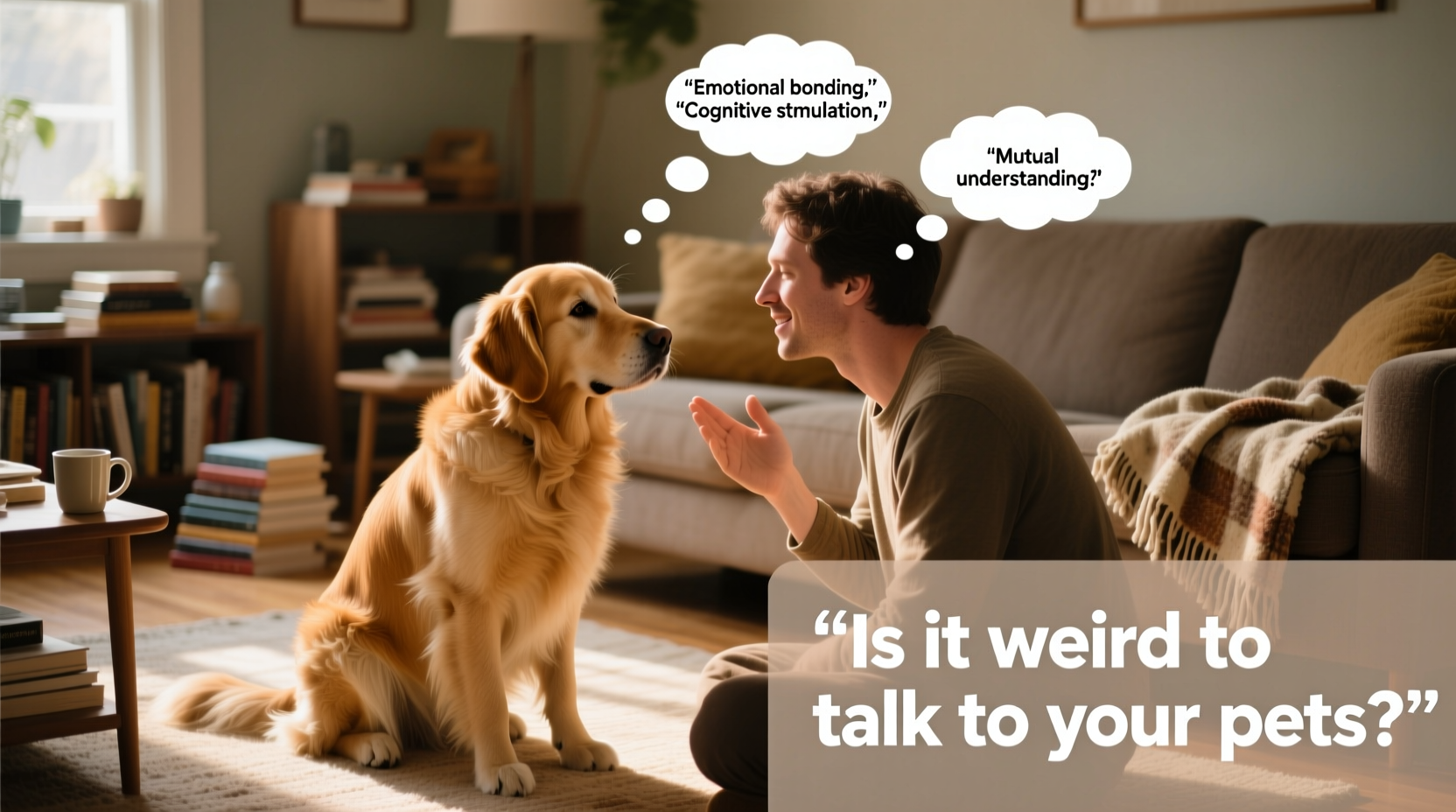
When we talk to our pets, we’re not expecting them to respond in full sentences. But that doesn’t mean they aren’t listening. Studies in animal cognition show that dogs, for example, can understand between 150 and 200 words—similar to a two-year-old child. They also pick up on tone, rhythm, and emotional cues far more than previously believed.
Research conducted at Eötvös Loránd University in Hungary used MRI scans to study canine brain activity when exposed to human speech. The findings revealed that dogs process both the meaning of words and the emotional tone of voice in much the same way humans do. Positive phrases spoken in a warm tone activated reward centers in their brains, even if the words themselves were unfamiliar.
This dual-processing ability suggests that your dog isn’t just reacting to your mood—they’re actively interpreting your communication. For cats, birds, and even rabbits, studies indicate heightened responsiveness to familiar voices, especially those associated with care and affection.
“Animals may not understand grammar, but they are highly attuned to vocal patterns, emotional inflection, and routine. When you talk to your pet, you're reinforcing trust and predictability.” — Dr. Patricia McConnell, Certified Applied Animal Behaviorist
Why We Talk to Our Pets: Emotional and Psychological Drivers
The impulse to talk to pets stems from deep-seated psychological needs. Humans are inherently social creatures, wired to seek connection and express emotions verbally. When we form strong attachments to animals, it’s natural to include them in our communicative routines.
For many people, pets serve as confidants. Unlike human interactions, conversations with animals come without judgment, interruption, or social pressure. This makes them ideal listeners during moments of stress, loneliness, or joy. A 2020 survey by the Human-Animal Bond Research Institute (HABRI) found that 74% of pet owners reported improved mental health due to their relationship with their pets, with verbal interaction cited as a key factor.
Moreover, talking to pets often reflects empathy and emotional intelligence. Assigning intentionality or emotion to an animal—such as saying, “You look sad today”—isn’t anthropomorphism gone wild; it’s a sign of attunement. As long as owners remain aware of actual animal behavior and needs, this kind of narrative thinking fosters deeper understanding.
Tip: Use a consistent, soothing tone when speaking to your pet during stressful situations like vet visits or thunderstorms—it can help reduce anxiety.How Verbal Interaction Strengthens the Human-Pet Bond
Bonding with a pet isn’t just about feeding and grooming—it’s built through shared experiences, predictable routines, and emotional reciprocity. Talking plays a crucial role in all three.
Verbal cues become part of a pet’s learned environment. Dogs associate certain phrases with specific outcomes: “Want to go for a walk?” often triggers tail wagging and excitement because it’s been paired with action over time. Even if they don’t grasp every word, the phrase becomes a conditioned signal.
But beyond training, casual conversation builds intimacy. Repeating your pet’s name, narrating your actions (“I’m making breakfast, want some chicken?”), or simply expressing affection (“You’re such a good boy”) reinforces attachment. These micro-interactions create a sense of inclusion, making pets feel like valued members of the household.
In multi-pet homes, owners who talk frequently to each animal often report stronger individual bonds and fewer behavioral issues. The attention and vocal recognition help reduce competition and anxiety among pets.
Real Example: Sarah and Luna, the Rescue Dog
Sarah adopted Luna, a shy border collie mix, from a shelter where the dog had lived for nearly a year. Initially, Luna avoided eye contact and flinched at sudden movements. Determined to build trust, Sarah began narrating her daily routine aloud—telling Luna what she was doing, praising small steps forward, and gently reassuring her during loud noises.
Within six weeks, Luna started approaching Sarah voluntarily, responding to her name, and even “talking back” with soft whines and expressive barks. A follow-up evaluation from a veterinary behaviorist noted significant improvement in Luna’s confidence. “The consistent verbal engagement gave Luna a sense of safety and predictability,” the specialist said. “It wasn’t just the words—it was the emotional consistency behind them.”
Common Misconceptions About Talking to Pets
Despite growing evidence, some still view talking to pets as silly or a sign of loneliness. Let’s address a few myths:
- Myth: Only lonely people talk to their pets.
Reality: People from all walks of life—married, single, young, old—engage in pet-directed speech. It’s a reflection of attachment, not isolation. - Myth: Animals don’t care what you say.
Reality: While they may not understand syntax, pets recognize tone, frequency, and context. Familiar voices calm them; harsh tones trigger stress responses. - Myth: Talking too much spoils pets.
Reality: Verbal affection doesn’t cause behavioral problems—lack of boundaries does. You can talk lovingly while still enforcing rules.
| Belief | Fact |
|---|---|
| It’s weird to talk to pets. | Over 85% of pet owners regularly speak to their animals, according to HABRI. |
| Pets don’t understand language. | Dogs comprehend hundreds of words; parrots can mimic and contextualize speech. |
| Only women do this. | Studies show minimal gender difference in pet-directed speech frequency. |
| It replaces human interaction. | Most pet owners use animal conversations as supplements, not substitutes. |
Best Practices for Meaningful Pet Communication
Talking to your pet is beneficial—but doing so intentionally amplifies the impact. Here’s how to make your conversations more effective:
- Use a consistent tone for commands. High-pitched, cheerful voices work well for praise; calm, firm tones are better for redirection.
- Incorporate your pet’s name positively. Avoid only saying their name when scolding. Pair it with treats or affection to build positive associations.
- Narrate your day. Even mundane commentary (“I’m opening the fridge now”) helps pets tune into your rhythms.
- Listen to their responses. Barks, meows, purrs, and body language are forms of dialogue. Respond appropriately to encourage two-way interaction.
- Avoid excessive baby talk. While \"pet-directed speech\" (slower, higher pitch) captures attention, overuse can reduce clarity. Mix in normal tones for balance.
Checklist: Healthy Pet Communication Habits
- ✅ Speak calmly during stressful events
- ✅ Use positive phrases more often than corrective ones
- ✅ Observe your pet’s reactions to different tones
- ✅ Maintain eye contact and gentle gestures while talking
- ✅ Avoid yelling or using aggressive language, even in frustration
- ✅ Incorporate training words consistently (sit, stay, come)
FAQ: What People Often Ask About Talking to Pets
Does my pet really understand what I’m saying?
Your pet likely understands more than you think—not in terms of vocabulary alone, but through tone, body language, and context. Dogs can learn the meaning of specific words through repetition and association. Cats may not obey commands, but they recognize their names and common phrases like “dinner time.” The emotional content of your voice is often more important than the words themselves.
Is it bad to treat my pet like a person?
Treating your pet with love and respect is not harmful. However, projecting complex human emotions or expectations onto them can lead to misunderstandings. For example, assuming your dog feels “guilty” when they misbehave may prevent you from addressing the real cause (like lack of training). Balance affection with awareness of species-specific needs.
Can talking too much spoil my pet?
No—affectionate communication doesn’t cause behavioral issues. What matters is consistency in rules and boundaries. You can talk lovingly while still enforcing structure. Spoiling typically comes from inconsistent discipline, not verbal affection.
Conclusion: Embrace the Conversation
Talking to your pet isn’t weird—it’s a natural, scientifically supported way to nurture your relationship. Whether you’re sharing your thoughts with a loyal dog, comforting a nervous cat, or teaching a parrot to say “I love you,” your voice carries emotional weight. It signals safety, familiarity, and connection.
Experts agree: the act of speaking to animals reflects emotional health, not eccentricity. In fact, the ability to form meaningful bonds across species is a testament to human empathy and adaptability. So the next time you catch yourself saying, “Did you miss me?” to your guinea pig, remember—you’re not alone, and you’re not strange. You’re strengthening a bond that transcends language.
💬 Have a favorite moment when your pet seemed to “respond” to your words? Share your story in the comments—your experience might encourage someone else to embrace their own pet conversations!








