No, it is not safe for dogs to eat cooked onions. In fact, cooked onions are just as dangerous—if not more so—than raw onions when it comes to canine health. While many human foods can be shared with pets in moderation, onions (whether sautéed, roasted, boiled, or caramelized) pose a serious, potentially life-threatening risk to dogs. This article provides a comprehensive, evidence-based explanation of why onions are toxic to dogs, how cooking does not reduce their harmful effects, and what pet owners must know to prevent accidental poisoning.
Onions are a common ingredient in home-cooked meals, soups, stews, gravies, and sauces. Because they enhance flavor so effectively, they often appear in dishes that humans might instinctively want to share with their dogs. However, even small amounts can trigger hemolytic anemia—a condition in which a dog’s red blood cells rupture—leading to organ damage or death if untreated. Understanding this risk is essential for responsible pet ownership and kitchen safety.
Definition & Overview: What Are Onions and Why Are They Harmful to Dogs?
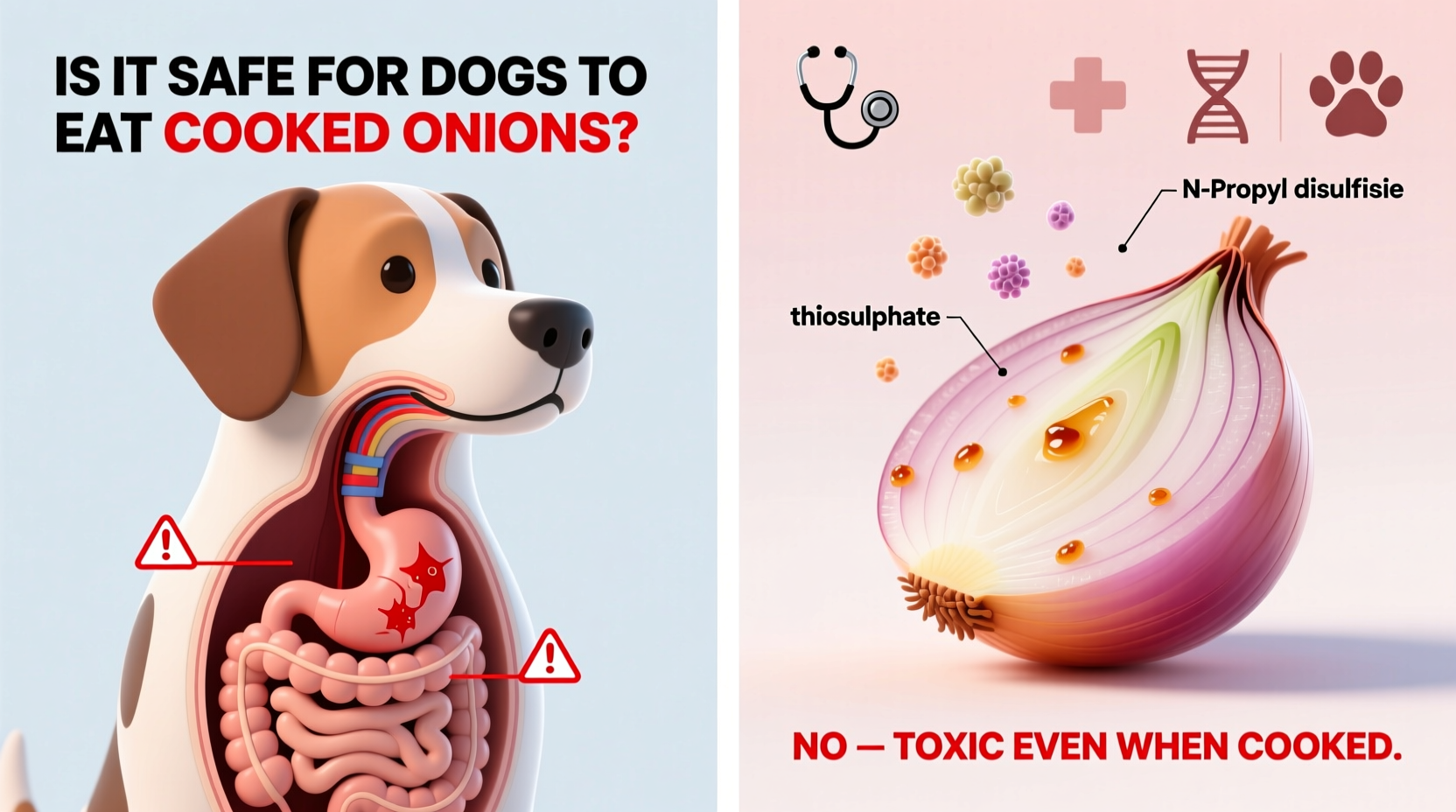
Onions (*Allium cepa*) are bulbous vegetables belonging to the *Allium* family, which also includes garlic, leeks, chives, and shallots. These plants contain sulfur-containing compounds that give them their pungent aroma and sharp taste. In humans, these compounds offer antioxidant and antimicrobial benefits. In dogs, however, they trigger oxidative damage to red blood cells.
The primary toxin in onions is **n-propyl disulfide**, a volatile compound released when the onion cell walls are broken during cutting, chewing, or cooking. This substance binds to hemoglobin in red blood cells, causing structural changes that mark the cells for destruction by the immune system. The resulting condition—known as Heinz body anemia—impairs oxygen delivery throughout the body and can lead to systemic failure.
Cooking does not neutralize n-propyl disulfide or other thiosulphates in onions. Unlike certain toxins that degrade under heat, these sulfur compounds remain stable through boiling, frying, baking, and stewing. In fact, cooking may concentrate their potency by reducing moisture content, making even small portions of onion-infused broth or gravy hazardous.
Key Characteristics of Onion Toxicity in Dogs
| Characteristic | Description |
|---|---|
| Toxic Compound | n-propyl disulfide, thiosulphate, and other sulfur derivatives |
| Form That Is Toxic | All forms: raw, cooked, powdered, dehydrated, fried, or in juice |
| Minimum Toxic Dose | As little as 15–20 grams per kilogram of body weight (e.g., one medium onion can poison a 30-pound dog) |
| Onset of Symptoms | 1–5 days after ingestion (delayed due to gradual red blood cell destruction) |
| Species Affected | Dogs, cats, and certain livestock (dogs are especially sensitive) |
| Reversibility | Possible with early treatment; severe cases may result in permanent organ damage or death |
Practical Usage: Why Onions Appear in Human Food—and Why They Must Be Kept from Dogs
In culinary applications, onions are foundational. They form the base of mirepoix (with carrots and celery), sofrito, and countless global spice blends. Their ability to caramelize into sweet, umami-rich layers makes them indispensable in sauces, stir-fries, casseroles, and meat dishes. Unfortunately, this widespread use increases the risk of accidental exposure for dogs.
Common household foods containing cooked onions include:
- Beef stew or pot roast (often simmered with onions)
- Gravy made from meat drippings and onion stock
- Meatloaf or meatballs (onions used as filler and flavor enhancer)
- French onion soup
- Chili, curry, and rice dishes like pilaf
- Baby food (some varieties contain onion powder—dangerous if used in homemade pet meals)
Even trace amounts matter. A dog fed table scraps regularly may ingest cumulative doses below the threshold for immediate symptoms but still develop chronic anemia over time. This insidious progression often goes unnoticed until lethargy, pale gums, or rapid breathing signal advanced illness.
TIP: Never assume \"just a bite\" is harmless. If your dog consumes any food containing onions—even in cooked form—contact your veterinarian immediately. Do not wait for symptoms to appear.
Variants & Types: All Forms of Onions Are Dangerous
It is critical to recognize that toxicity extends beyond the fresh yellow or white onion found in grocery stores. Every member of the *Allium* genus poses a threat, regardless of preparation method.
Fresh Onions
Raw onions, whether chopped into salads or used whole in roasting, retain full concentrations of thiosulphates. Dogs rarely eat them voluntarily due to their sharp taste, but pieces dropped on the floor during meal prep can be ingested quickly.
Cooked Onions
Sautéed, caramelized, baked, or boiled onions are no safer. Heat breaks down cell walls but does not destroy n-propyl disulfide. In fact, cooking releases more volatile compounds into surrounding liquids, contaminating broths and gravies that may seem benign.
Dried or Powdered Onion
Onion powder is highly concentrated and commonly found in seasonings, commercial soups, snack foods, and processed meats. A mere teaspoon of onion powder can contain the equivalent of an entire onion. Foods labeled “seasoned” or “savory flavor” should be treated with suspicion around pets.
Other Allium Species
- Garlic: Even more potent than onions—five times as toxic per gram.
- Chives: Frequently used as garnish; extremely dangerous in small quantities.
- Leeks and Shallots: Less common but equally harmful.
A single serving of garlic butter pasta, leek and potato soup, or a pizza topped with chives can deliver a lethal dose depending on the dog's size.
Comparison with Similar Ingredients
Many ingredients resemble onions in appearance or culinary function but differ significantly in safety for dogs. Understanding these distinctions helps avoid confusion.
| Ingredient | Safe for Dogs? | Key Difference |
|---|---|---|
| Onions (all forms) | No | Contain n-propyl disulfide; cause oxidative hemolysis |
| Green Beans | Yes | Non-toxic, high-fiber vegetable often used as healthy treat |
| Carrots | Yes | Sweet, crunchy root vegetable; supports dental health |
| Celery | Yes (in moderation) | Low-calorie crunch; contains antioxidants |
| Asparagus | Yes (cooked only) | Tough raw fibers hard to digest; non-toxic once softened |
| Shallots | No | Part of the *Allium* family; same toxic mechanism as onions |
“There is no safe level of onion consumption in dogs. The margin between mild gastrointestinal upset and life-threatening anemia is narrow, and individual sensitivity varies widely.” — Dr. Lena Torres, DVM, Board-Certified Veterinary Toxicologist
Practical Tips & FAQs
Q: Can a small amount of cooked onion hurt my dog?
A: Yes. While larger dogs may tolerate tiny fragments without immediate effects, there is no established safe threshold. Smaller breeds like Chihuahuas, Yorkshire Terriers, or Cavalier King Charles Spaniels are at higher risk due to lower body mass. Even a spoonful of onion soup or a lick of onion dip can initiate cellular damage.
Q: What are the signs of onion poisoning in dogs?
A: Symptoms typically emerge 1–5 days after ingestion and include:
- Lethargy or weakness
- Pale or bluish gums
- Rapid breathing or increased heart rate
- Vomiting or diarrhea
- Loss of appetite
- Exercise intolerance
- Dark-colored urine (resembling coffee or tea)
If you observe any combination of these signs—especially following access to human food—seek veterinary care immediately.
Q: My dog ate a small piece of cooked onion. What should I do?
A: Contact your veterinarian or an animal poison control center right away. Provide details including the estimated amount consumed, your dog’s weight, and the time elapsed since ingestion. Inducing vomiting may be recommended within two hours, but only under professional guidance. Blood tests will likely be needed to monitor red blood cell counts.
Q: Are some dogs more sensitive than others?
A: Yes. Japanese breeds such as Shiba Inus and Akita Inus have been observed to be particularly susceptible to oxidative damage due to genetic factors affecting red blood cell resilience. Puppies, elderly dogs, and those with pre-existing conditions are also at greater risk.
Q: Can onion toxicity be treated?
A: Yes, if caught early. Treatment may involve induced vomiting, activated charcoal to absorb toxins, intravenous fluids, oxygen therapy, and in severe cases, blood transfusions. Recovery depends on the extent of red blood cell destruction and how quickly intervention occurs.
Q: How can I prevent onion poisoning?
A: Follow these preventive steps:
- Never feed your dog food containing onions, garlic, or related alliums.
- Store cooked meals securely out of reach.
- Educate family members and guests about the dangers of sharing table scraps.
- Read labels carefully—avoid baby food, canned soups, or prepared meals with onion powder.
- Use dog-safe alternatives when preparing homemade treats (e.g., carrots, green beans, pumpkin).
- Train your dog to respond to “leave it” commands to prevent scavenging.
Q: Are onion-free substitutes available for dog treats?
A: Absolutely. Many chefs and pet nutritionists recommend using naturally sweet vegetables to mimic the depth onions provide. For example:
- Carrots: Sautéed until soft, they add sweetness and color to stews.
- Pumpkin puree: Enhances texture and digestion while adding mild earthiness.
- Celery and parsnips: Offer aromatic complexity without toxicity.
For seasoning, consider herbs like parsley (non-toxic in moderation), basil, or oregano—always avoiding garlic-based blends.
Summary & Key Takeaways
Despite their ubiquity in human cuisine, onions in any form—especially cooked—are unequivocally unsafe for dogs. The sulfur compounds responsible for their flavor are the same agents that destroy canine red blood cells, leading to hemolytic anemia. Cooking does not deactivate these toxins; instead, it may increase their bioavailability in liquid-based dishes.
Every part of the onion—including flesh, juice, powder, and fat-soluble extracts—is hazardous. This danger extends to all members of the *Allium* family, with garlic being even more potent. There is no safe dosage, and symptoms may take days to manifest, delaying diagnosis and treatment.
Pet owners must remain vigilant about food storage, label reading, and feeding practices. When in doubt, adopt a zero-tolerance policy toward sharing human meals unless ingredients are fully verified as dog-safe. Prevention is far more effective—and less traumatic—than emergency treatment.
Take action today: Review your pantry and refrigerator for products containing onion or garlic powder. Safely dispose of opened containers near pet-accessible areas. Share this information with fellow pet owners—awareness saves lives.









