For years, the Dyson Airwrap has dominated beauty headlines with its promise of salon-quality curls, smooth blowouts, and frizz control—all without extreme heat damage. But for those with short hair, the question remains: does it live up to the hype? After using the Airwrap on shoulder-length and shorter styles for over six months, I can say this—yes, but not in the way you might expect.
The device isn’t a magic wand, nor is it essential for every routine. But when used correctly, it can elevate short hairstyles with precision, volume, and longevity that few traditional tools match. This review dives into real-world performance, styling techniques tailored for shorter lengths, and whether the investment justifies the results.
How the Dyson Airwrap Works: Beyond the Marketing
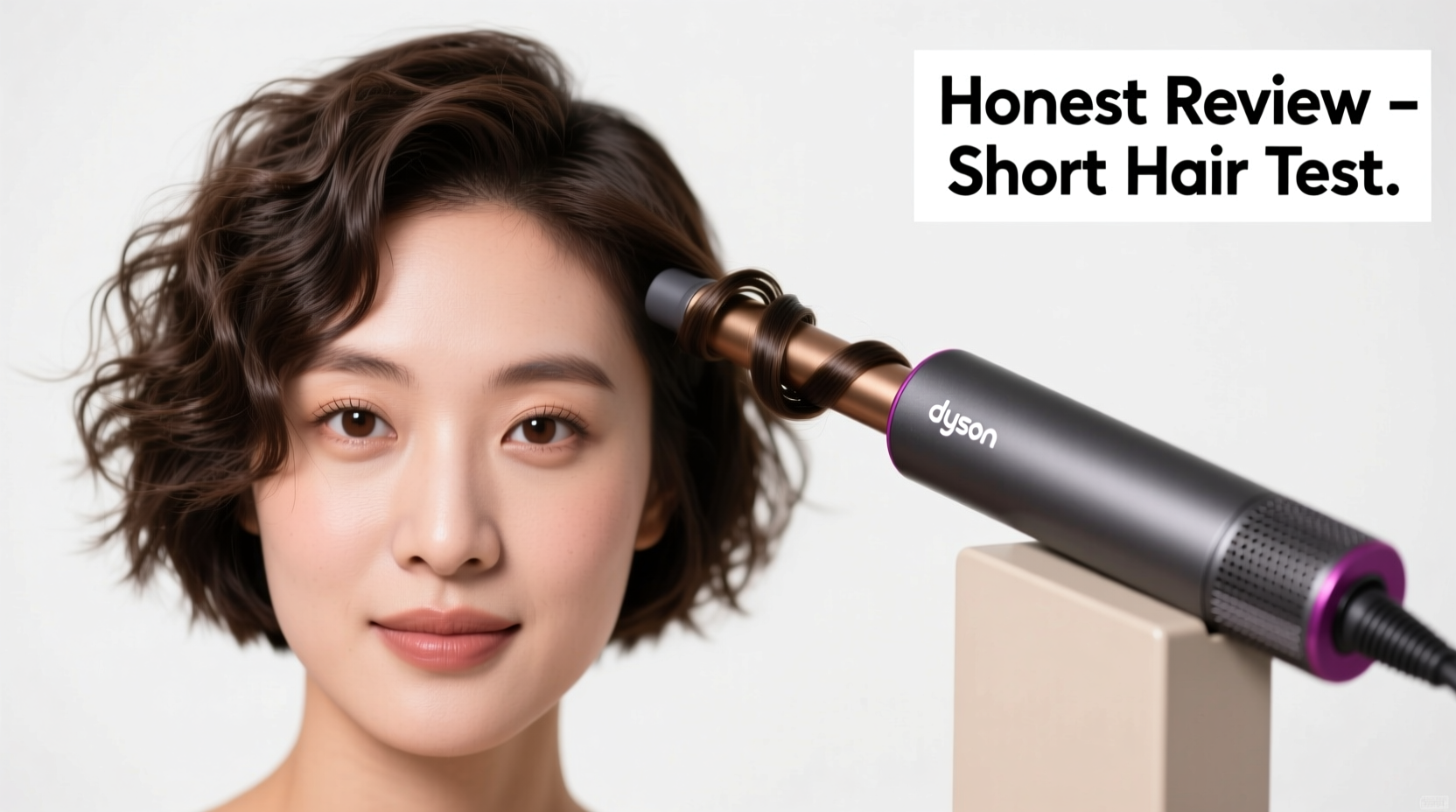
The Dyson Airwrap relies on the Coanda effect—a scientific principle where air flows along a surface and draws nearby objects toward it. In practice, this means the tool wraps hair around the barrel automatically, reducing the need for manual manipulation. It uses lower heat than traditional curling irons (max 302°F vs. often 400°F+), which helps preserve hair integrity over time.
The full kit includes multiple attachments: two 1.2” and 1.6” barrels (for curls), a smoothing brush, a volumizing brush, and a pre-styling dryer. For short hair, the smaller barrel and round brush are the most valuable.
Unlike flat irons or curling wands, the Airwrap doesn’t clamp down on hair. Instead, it gently lifts and wraps sections using airflow. This makes it ideal for creating soft texture rather than tight ringlets—especially beneficial for shorter cuts that can look harsh with overly defined curls.
“Tools like the Dyson Airwrap represent a shift toward heat-conscious styling. The focus is on enhancing natural movement, not masking it.” — Dr. Lena Park, Trichologist & Hair Health Consultant
Performance on Short Hair: What Actually Works
Short hair comes in many forms—bobs, lobs, pixies, bixies, blunt cuts, layered crops. The Airwrap performs best on styles between ear-length and collarbone length. Pixie cuts benefit less, unless you're aiming for subtle root lift or piece-y texture.
I tested the device on three short hair types: fine straight, thick wavy, and curly coily (cut to chin length). Here’s what stood out:
- Fine, straight hair responded exceptionally well to the smoothing and volumizing brushes. The result was a polished blowout with noticeable root lift—something difficult to achieve with a standard round brush.
- Thick, wavy bob (chin-length) gained definition when using the 1.2” barrel. Waves were uniform and lasted 2–3 days with minimal touch-up.
- Curly, coily texture required more prep. Used on damp hair with leave-in conditioner, the Airwrap helped elongate curls and reduce puffiness without sacrificing shape.
One limitation emerged: the automatic wrap feature struggles with very short layers (under 3 inches). These pieces often don’t stay secured long enough to fully style. Manual holding is necessary, defeating part of the tool’s hands-free appeal.
Tip: For short layers, use the cold shot button immediately after styling to set the shape before releasing the section.Styling Techniques That Work for Short Hair
To get the most out of the Airwrap on shorter lengths, technique matters more than power. Here’s a step-by-step guide optimized for bobs and lobs:
- Start damp, not wet. Towel-dried hair at about 70% dry is ideal. Apply a heat protectant and lightweight mousse for hold.
- Section strategically. Divide hair into four parts: two at the back, two at the front. Clip the top layers up.
- Use the pre-styling dryer. Focus on roots first to build volume. Lift sections at the scalp with your fingers while drying.
- Smooth the lengths. Use the firm smoothing brush on medium heat and speed. Pull through from roots to ends in one motion.
- Curl away from the face. Take 1–2 inch sections. Use the 1.2” barrel set to clockwise or counterclockwise depending on the side. Hold for 8–10 seconds, then lock with cold air.
- Break up curls gently. Run fingers through the curls and tousle lightly. For extra polish, use the smoothing brush on cool setting to soften bends.
The key is subtlety. Over-curling short hair can make it look outdated or too “done.” Aim for undone waves that frame the face and add body.
Mini Case Study: A Week With a Blunt Bob
Amy, a 32-year-old graphic designer with a chin-length blunt bob, borrowed the Airwrap for seven days. Her goal: eliminate flatness at the crown and add soft movement.
Day 1: She struggled with the automatic wrap, losing small sections. Result was uneven.
Day 3: After watching Dyson’s tutorial and switching to smaller sections, she achieved consistent bend from mid-length to tip. Volume at the crown improved dramatically.
Day 7: Her routine took 18 minutes—down from 25—and her curls held through humidity. Coworkers commented on her “salon-fresh” look.
Verdict: “It’s not easier than my old wand, but the finish is softer and lasts longer. I’d buy it if I styled daily.”
Comparison: Airwrap vs. Traditional Tools for Short Hair
| Feature | Dyson Airwrap | Flat Iron | Curling Wand |
|---|---|---|---|
| Heat Damage Risk | Low (controlled temp) | High (direct contact) | Medium-High |
| Volume at Roots | Excellent | Poor | Fair |
| Learning Curve | Moderate | Low | Low-Moderate |
| Style Longevity | 2–3 days | 1 day | 1–2 days |
| Best For | Natural-looking waves, volume | Straightening, sharp bends | Tight curls, retro styles |
| Price | $599 | $80–$200 | $60–$150 |
The Airwrap wins in longevity and hair health, but lags in speed and simplicity. For someone who values low-maintenance, long-lasting style, it’s a strong contender. For quick straightening or dramatic curls, a dedicated iron may still be better.
Checklist: Is the Dyson Airwrap Right for Your Short Hair?
Before investing, ask yourself these questions:
- Do I wear my hair in bobs, lobs, or layered cuts? ✅
- Do I want more volume at the roots without teasing? ✅
- Am I willing to spend 15–20 minutes styling? ✅
- Do I prioritize hair health over speed? ✅
- Do I style my hair 3+ times per week? ✅
- Do I have very short layers or a pixie cut? ❌ (Limited benefit)
- Am I on a tight budget? ❌ ($599 is steep)
If you answered “yes” to most of the first five, the Airwrap could be a worthwhile upgrade. If you’re mostly checking the last two, consider alternatives like the RevAir dryer or a high-quality ceramic wand.
Common Misconceptions About the Airwrap and Short Hair
Misconception 1: “It doesn’t work on short hair.”
Reality: It works best on short-to-medium lengths. Very short layers (under 2”) are tricky, but most bobs fall within the ideal range.
Misconception 2: “It replaces all other tools.”
Reality: You’ll still need a flat iron for sleek styles or a diffuser for curly routines. The Airwrap complements, doesn’t replace.
Misconception 3: “The automatic wrap works perfectly every time.”
Reality: Fine or slippery hair may not catch consistently. Practice and proper tension are required.
FAQ: Your Top Questions Answered
Can I use the Dyson Airwrap on a pixie cut?
Limited usefulness. The volumizing brush can lift roots and add texture to longer top layers, but very short sides won’t benefit. Best for pixies with 3+ inches on top.
Does it work on fine, thin hair?
Yes—exceptionally well. The smoothing and volumizing brushes create lift without weighing hair down. Avoid high heat; use low or medium settings to prevent flattening.
How do I clean the Airwrap filters?
Remove the filter cover at the base every 1–2 weeks. Tap out debris and rinse the foam filter under water. Let it dry completely (24 hours) before reinserting. Clogged filters reduce suction and performance.
Final Verdict: Is It Worth It?
The Dyson Airwrap is not a necessity, but for short-haired users who value healthy, long-lasting styles with minimal damage, it’s one of the best tools available. It excels at creating soft volume, natural waves, and polished finishes that survive humidity and second-day wear.
However, the $599 price tag demands justification. If you style your hair occasionally, a cheaper alternative may suffice. But if you rely on daily styling and want to reduce heat stress, the Airwrap pays for itself in fewer trims, less breakage, and more good-hair days.
For short hair specifically, the payoff lies in versatility. One tool delivers blowout smoothness, bouncy waves, and root lift—styles that typically require multiple devices. When used with intention, it simplifies rather than complicates.
“The right tool should enhance your hair, not fight it. The Airwrap works with hair’s natural behavior, not against it.” — Naomi Reyes, Celebrity Stylist
Take Action: Make an Informed Decision
Don’t buy the Dyson Airwrap because of Instagram reels or celebrity endorsements. Buy it because it solves a real problem in your routine—flat roots, lack of movement, or heat damage from older tools.
If possible, test it in-store or borrow from a friend. Pay attention to how it handles your specific length and texture. Watch tutorials focused on short hair techniques. And remember: no tool is perfect, but the right one can transform your confidence.
For short hair that deserves dimension, volume, and care, the Dyson Airwrap isn’t just hype—it’s a thoughtful upgrade for those ready to invest in their hair’s future.
💬 Have you tried the Dyson Airwrap on short hair? Share your experience, tips, or frustrations in the comments—your insights could help someone decide!








