Glitter has long been a symbol of celebration—adorning faces, crafts, festival outfits, and even cosmetics. But as awareness grows about plastic pollution, traditional glitter, made from microplastics like PET or PVC, has come under scrutiny. In response, the market has introduced \"biodegradable glitter\" as a greener alternative. But is it truly eco-friendly? And more importantly, where—and how—does it actually break down?
The answer isn’t as straightforward as marketing slogans suggest. While biodegradable glitter represents progress over conventional glitter, its environmental footprint depends on materials, disposal methods, and specific breakdown conditions. Understanding these nuances is essential for making informed, genuinely sustainable choices.
What Is Biodegradable Glitter Made Of?
Traditional glitter consists of tiny shards of aluminum-coated plastic film, typically polyethylene terephthalate (PET) or polyvinyl chloride (PVC). These materials resist degradation in natural environments, persisting for decades and contributing to microplastic pollution in oceans and soils.
In contrast, biodegradable glitter is designed to decompose under certain conditions. It's usually made from a cellulose-based film derived from sustainably sourced eucalyptus or other plant materials. The reflective layer often uses synthetic mica or mineral-based pigments instead of aluminum, and the coating is designed to be water-soluble and non-toxic.
One of the most common materials used is cellulose from eucalyptus trees, certified by organizations like FSC (Forest Stewardship Council). This base material is processed into thin, flexible films that can be cut into fine particles and coated with colorants to produce shimmering effects without relying on plastic.
Tip: Look for glitter labeled as “compostable” or “marine degradable” rather than just “biodegradable,” which can be misleading without context.Where and How Does Biodegradable Glitter Break Down?
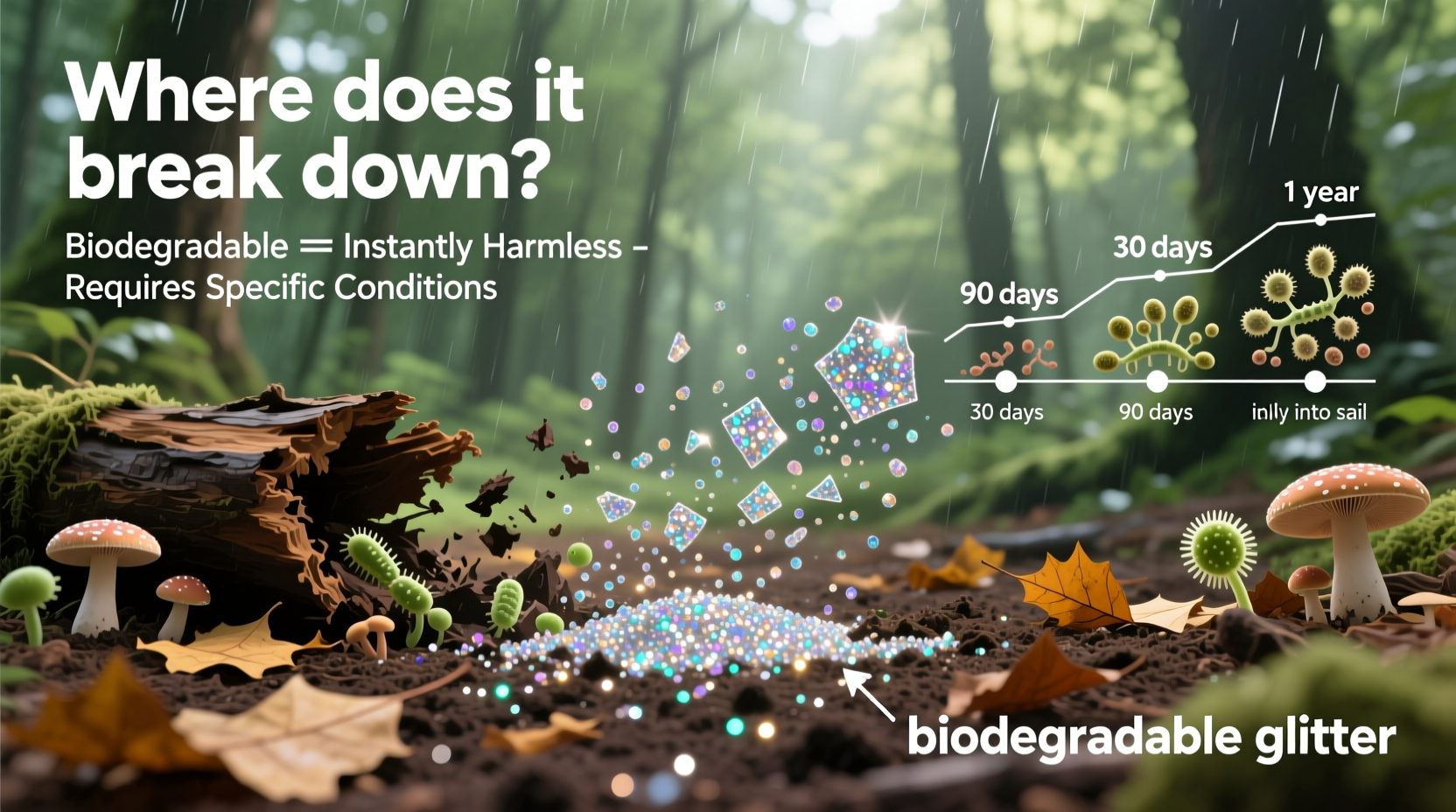
The term “biodegradable” implies that a substance can be broken down by microorganisms into water, carbon dioxide, and biomass. However, this process requires specific environmental conditions—not all biodegradable glitter degrades equally or in every setting.
Most biodegradable glitters are engineered to decompose in industrial composting facilities, where high temperatures (typically 50–60°C), controlled humidity, and active microbial communities accelerate breakdown. Under these optimal conditions, reputable brands claim their glitter can fully degrade within 4–6 weeks.
But here’s the catch: biodegradable glitter does not reliably break down in home compost bins, soil, freshwater, or marine environments—at least not at a meaningful rate.
A 2021 study published in *Environmental Science & Technology* found that many so-called biodegradable glitter particles showed minimal decomposition after six months in seawater and lake sediments. The research concluded that while such products may degrade under industrial composting standards (like EN 13432), they behave similarly to conventional microplastics in natural ecosystems.
“Biodegradability claims must be qualified by environment. A product that breaks down in a compost heap may persist indefinitely in the ocean.” — Dr. Sarah Nelms, Marine Ecologist, University of Exeter
Conditions Required for Degradation
For biodegradable glitter to fulfill its promise, it needs the right combination of biological and physical factors. Below is a breakdown of different environments and their effectiveness in decomposing plant-based glitter.
| Environment | Breakdown Likelihood | Timeframe (if applicable) | Notes |
|---|---|---|---|
| Industrial Composting | High | 4–8 weeks | Requires high heat and microbial activity; best-case scenario. |
| Home Compost | Low to Moderate | 6+ months | Lower temperatures slow microbial action; inconsistent results. |
| Soil (terrestrial) | Very Low | Years or indefinite | Lacks sufficient microbes and moisture for rapid degradation. |
| Freshwater | Negligible | No significant breakdown | Behaves like microplastic; potential harm to aquatic life. |
| Seawater | Negligible | No meaningful degradation | Persists and may enter food chains; not marine-safe by default. |
| Sewage/Wastewater Treatment | Moderate (in sludge) | Variable | May degrade if sludge is composted; otherwise trapped as micro-debris. |
This table underscores a critical point: biodegradable glitter is not a “throw it anywhere” solution. Its eco-friendliness hinges entirely on proper disposal pathways that most consumers don’t have access to.
Greenwashing vs. Genuine Sustainability
The rise of biodegradable glitter has coincided with increased greenwashing—marketing products as environmentally friendly without full transparency. Some brands label their glitter as “eco-glitter” or “plant-based” without certifying its biodegradability or specifying required conditions.
To avoid being misled, look for third-party certifications such as:
- OK Biodegradable WATER – Indicates degradation in natural aquatic environments (rare but gold standard).
- OK Compost INDUSTRIAL – Confirms breakdown in industrial composting (common).
- EN 13432 or ASTM D6400 – International standards for compostability.
- FSC-certified cellulose – Ensures responsible forestry practices.
Brands like Glitter Evolution and EcoStardust openly publish lab test results showing degradation timelines under various conditions. Others offer “marine degradable” lines specifically formulated to break down in saltwater—a crucial distinction for beach festivals or ocean-themed events.
Mini Case Study: Glastonbury Festival’s Glitter Policy
In 2019, the UK’s Glastonbury Festival banned all glitter due to concerns over microplastic contamination in soil and waterways. After public backlash from performers and attendees, organizers partnered with a certified biodegradable glitter supplier to pilot a new policy: only glitter meeting OK Compost INDUSTRIAL standards would be permitted.
However, post-event waste audits revealed that despite using “eco-glitter,” large quantities ended up in drainage systems and were not properly collected for composting. The trial highlighted a key gap: even sustainable materials fail when infrastructure doesn’t support responsible disposal.
As a result, Glastonbury now promotes glitter-free zones and offers body paint alternatives, emphasizing prevention over substitution.
How to Use Biodegradable Glitter Responsibly
Just because a product is labeled biodegradable doesn’t mean it can be discarded carelessly. To ensure your glitter use aligns with environmental responsibility, follow this step-by-step guide:
- Choose certified products: Only purchase glitter with clear, verifiable certifications (e.g., OK Compost INDUSTRIAL).
- Check disposal options: Confirm whether your local waste facility accepts compostable materials. If not, consider collecting used glitter for drop-off at specialized centers.
- Minimize application: Use sparingly. Apply with precision tools instead of loose pouring to reduce waste.
- Avoid water exposure: Don’t use biodegradable glitter in swimming pools, lakes, or oceans unless it’s explicitly certified for marine degradation.
- Clean up carefully: Wipe off glitter with a damp cloth before washing your face or showering to prevent it from entering drains.
- Store properly: Keep unused glitter sealed to prevent accidental spills or wind dispersal.
Checklist: Choosing Truly Eco-Friendly Glitter
- ✅ Made from plant-based cellulose (e.g., eucalyptus)
- ✅ Certified compostable (OK Compost INDUSTRIAL or equivalent)
- ✅ Transparent about breakdown conditions
- ✅ Free from aluminum, PET, PVC, and harmful dyes
- ✅ Packaging is recyclable or compostable
- ❌ Not labeled vaguely as “eco” or “natural” without proof
- ❌ Not marketed as safe for oceans unless certified for marine degradation
Are There Better Alternatives?
While biodegradable glitter is a step forward, some experts argue that the most sustainable option is to reduce glitter use altogether. Several viable alternatives exist:
- Mica-free mineral powders: Offer subtle shimmer without micro-particle risks.
- Recycled glass glitter: Reusable and inert, though not biodegradable, it can be collected and repurposed.
- Natural adornments: Dried flower petals, crushed pearls (ethically sourced), or henna designs provide festive flair without micro-debris.
- Water-based glitter gels: Contain encapsulated glitter that can be wiped off and reused.
In professional makeup and event design, there’s growing interest in “glitter traps”—small adhesive patches placed under the eyes to catch falling particles. These allow for dramatic looks while minimizing environmental fallout.
“The ideal eco-glitter is one you can pick up and reuse. Until we have circular systems, reduction beats replacement.” — Laura Bennett, Sustainable Beauty Advocate
FAQ
Can I flush biodegradable glitter down the toilet?
No. Even biodegradable glitter should never be flushed. Wastewater systems are not designed to handle fine particulates, and most will end up in sludge or bypass treatment entirely, polluting waterways.
Is biodegradable glitter safe for septic tanks?
Generally not recommended. While small amounts may not immediately harm septic systems, the accumulation of non-soluble particles can interfere with bacterial balance and filtration. Avoid introducing any glitter directly into drains or toilets.
Does biodegradable glitter harm wildlife?
If ingested, any glitter—biodegradable or not—can cause physical blockages in small organisms. Although plant-based glitter may eventually break down inside an organism, the process is too slow to prevent harm. Avoid using glitter in outdoor settings where animals may encounter it.
Conclusion
Biodegradable glitter is not a magic fix for the environmental damage caused by traditional glitter. It represents a thoughtful evolution—one that demands equal attention to disposal as to purchase. True sustainability lies not just in the material, but in the entire lifecycle: sourcing, use, and end-of-life management.
Until municipal composting infrastructure catches up and marine-safe formulations become standard, the most eco-conscious choice remains reducing glitter use and opting for reusable or naturally derived alternatives. When you do choose biodegradable glitter, treat it with care: collect it, dispose of it properly, and demand transparency from brands.
🚀 Ready to make a difference? Start by auditing your glitter use this season. Switch to certified products, share proper disposal tips with friends, and advocate for cleaner beauty standards in your community.








