Glitter has long been a symbol of celebration—adorning faces, crafts, and festival outfits with shimmering brilliance. But as awareness of plastic pollution grows, so does scrutiny over this tiny, sparkling pollutant. Traditional glitter is made from microplastics, derived from PET film and aluminum, which persist in ecosystems for centuries. In response, “biodegradable” glitter emerged as a sustainable alternative. Marketed as eco-friendly and earth-safe, it promises the same sparkle without the lasting damage. But is this claim backed by science, or is biodegradable glitter merely greenwashing in disguise?
The truth is more nuanced than marketing suggests. While some biodegradable glitters are genuinely compostable under specific conditions, others degrade slowly, incompletely, or only in industrial facilities—not in oceans or home compost bins. Worse, misleading labeling and lack of regulation allow products to be sold as “eco” when they may still pose risks to marine life. Understanding the difference between truly compostable glitter and its imposters is essential for environmentally conscious consumers.
What Makes Glitter “Biodegradable”?
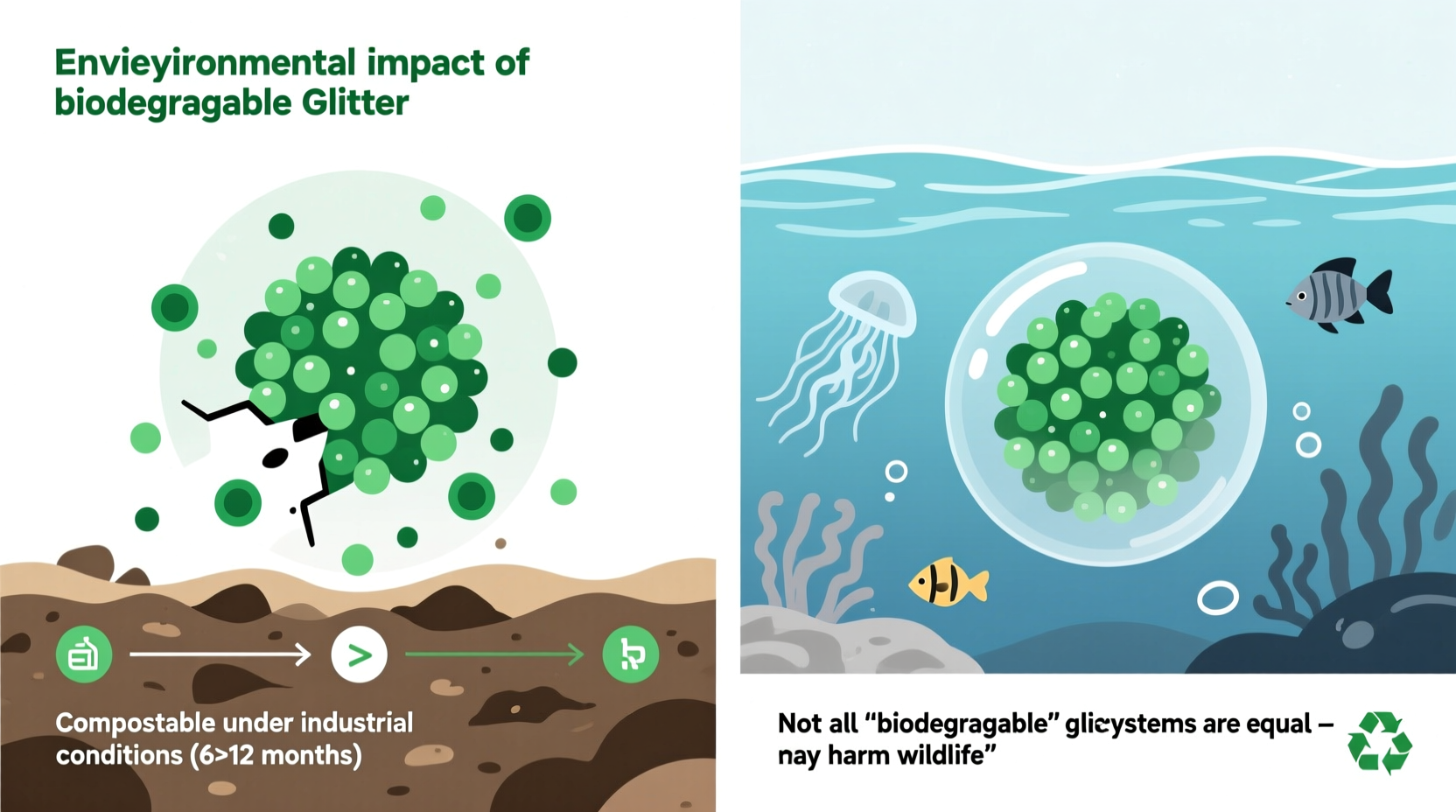
Traditional glitter consists of thin layers of plastic—typically polyethylene terephthalate (PET)—coated with aluminum and colorants. These synthetic materials resist natural breakdown, fragmenting into microplastics that infiltrate waterways and food chains. Biodegradable glitter replaces these plastics with plant-based films, most commonly cellulose derived from eucalyptus or other sustainably managed forests.
The key innovation lies in using non-toxic, bio-sourced substrates that can be broken down by microorganisms into water, carbon dioxide, and biomass. However, not all biodegradable glitters are created equal. The term itself lacks strict legal definition in many regions, allowing manufacturers to use it loosely. True biodegradability depends on several factors: material composition, thickness, chemical coatings, and environmental conditions such as temperature, moisture, and microbial presence.
“Just because something is labeled ‘biodegradable’ doesn’t mean it will break down in your backyard compost or the ocean. Degradation timelines vary drastically based on environment.” — Dr. Lena Torres, Marine Microplastics Researcher, University of Plymouth
The Science Behind Compostability vs. Biodegradability
It’s critical to distinguish between “biodegradable” and “compostable,” two terms often used interchangeably but with important differences:
- Biodegradable: A material that can be broken down naturally by microbes over time, but with no defined timeframe or conditions.
- Compostable: A subset of biodegradable materials that decompose within a specific timeframe (usually 90 days) under controlled composting conditions, leaving no toxic residue.
For glitter to be truly compostable, it must meet rigorous standards such as OK Compost INDUSTRIAL (TÜV Austria) or ASTM D6400. These certifications require complete degradation in industrial composting facilities—at temperatures around 58°C (136°F)—within six months. Home compost systems rarely reach these conditions, meaning even certified compostable glitter may linger for months or years in a backyard bin.
Tip: Look for third-party compostability certifications like OK Compost or Seedling logo. Avoid products that only say \"eco\" or \"plant-based\" without proof.Do Biodegradable Glitters Break Down in Nature?
A 2020 study published in *Environmental Science & Technology* tested various biodegradable glitters in simulated marine environments. Researchers found that while some cellulose-based glitters degraded within four weeks under optimal lab conditions, their breakdown slowed significantly in cooler seawater. In real-world settings—such as rivers, beaches, or deep ocean zones—degradation could take months or fail entirely due to low microbial activity and temperature.
Moreover, many biodegradable glitters still contain synthetic coatings or pigments that resist decomposition. Even if the base film breaks down, residual dyes and binders can leach into water, potentially harming aquatic organisms. Some brands use mica or mineral-based colors, which are more stable but not necessarily benign in large quantities.
Marine Life Exposure: What Happens When Glitter Enters Water?
When glitter washes off during festivals, showers, or craft sessions, it enters wastewater systems. Most treatment plants cannot filter out microscopic particles, allowing them to flow into rivers and oceans. Once in aquatic environments, glitter—biodegradable or not—can be mistaken for food by plankton, fish, and filter feeders.
A laboratory trial at the University of Exeter exposed brine shrimp (*Artemia salina*) to both conventional and biodegradable glitter particles. After 48 hours, survival rates dropped by 30% in groups exposed to traditional glitter. Surprisingly, those exposed to biodegradable glitter showed a 15% decline—suggesting that even “eco” variants can cause stress or toxicity, possibly due to surface chemicals or physical irritation.
| Glitter Type | Base Material | Degradation Time (Industrial Compost) | Degradation in Seawater | Toxicity Risk |
|---|---|---|---|---|
| Conventional | PET + Aluminum | Centuries | Negligible | High (microplastic accumulation) |
| Standard Biodegradable | Cellulose + Synthetic Coatings | 60–90 days | Months to years | Moderate (chemical leaching) |
| Certified Compostable | Plant Cellulose + Natural Pigments | 45–90 days | Variable; weeks to months | Low (if fully certified) |
The data underscores a crucial point: certification matters. Only glitters verified by recognized bodies should be trusted as genuinely compostable. Without certification, claims of biodegradability remain speculative.
Greenwashing in the Glitter Industry
As demand for sustainable products rises, so does the risk of greenwashing—the practice of exaggerating or fabricating environmental benefits. Many brands market glitter as “eco,” “natural,” or “earth-friendly” without providing evidence of compostability or independent testing.
One popular online retailer sells “biodegradable” glitter made from “plant-derived film” but fails to disclose whether it meets any compostability standard. Upon inquiry, the manufacturer admitted the product degrades only under industrial conditions and is not suitable for marine environments. Yet, the packaging features leaf motifs and slogans like “safe for the planet,” creating a false impression of harmlessness.
Regulatory gaps enable such practices. In the U.S. and much of Europe, there are no mandatory requirements for substantiating biodegradability claims for small decorative items. This lack of oversight leaves consumers vulnerable to misleading information.
“We’ve seen a surge in companies using sustainability buzzwords without accountability. Certification is the only way to separate fact from fiction.” — Sarah Lin, Environmental Policy Analyst, Zero Waste Alliance
How to Choose Truly Sustainable Glitter
Not all hope is lost. Several reputable brands produce genuinely compostable glitter that performs well and aligns with ecological values. The challenge lies in identifying them amid the noise of unsubstantiated claims. Here’s how to make informed choices:
- Check for Certifications: Look for labels like OK Compost INDUSTRIAL, OK Compost HOME, or the European Seedling logo. These indicate compliance with international standards.
- Verify the Material Source: Prefer glitter made from sustainably harvested cellulose, ideally FSC-certified eucalyptus or wood pulp.
- Avoid Shimmer Coatings with Aluminum: Some “biodegradable” glitters still use aluminum layers for reflectivity. Opt for versions using mineral-based alternatives.
- Research the Brand: Transparent companies publish test results, sourcing details, and environmental policies. Support those committed to full lifecycle responsibility.
- Consider Alternatives: For zero-waste events, explore reusable metallic confetti, crushed mica (ethically sourced), or body paints with natural shimmer.
Mini Case Study: Glastonbury Festival’s Glitter Ban
In 2017, the Glastonbury Festival in the UK banned all glitter due to concerns about microplastic pollution. Organizers cited research showing that glitter from face art and costumes was washing into nearby rivers, contributing to microplastic loads. While the ban faced backlash from attendees, it sparked a global conversation about the environmental cost of celebration.
In response, several UK-based cosmetic brands developed certified compostable glitter options compliant with the festival’s new guidelines. One company, EcoStardust, supplied thousands of packets of OK Compost-certified glitter for use in designated “eco-glitter zones” where waste could be collected and composted properly. Post-event analysis showed a measurable drop in microplastic levels compared to previous years.
This case illustrates that change is possible—but only when combined with education, infrastructure, and responsible product design. Simply switching to biodegradable glitter isn’t enough; proper disposal systems must accompany it.
Step-by-Step Guide: How to Use Biodegradable Glitter Responsibly
To minimize environmental harm, follow this practical guide when using biodegradable glitter:
- Choose Certified Products: Select glitter with OK Compost or equivalent certification.
- Use Sparingly: Apply only what’s necessary. Less glitter means less potential pollution.
- Contain Application Areas: Use trays or cloths to catch excess glitter during makeup or crafting.
- Capture Waste: Wipe down surfaces with damp cloths and dispose of collected glitter in compost bins—if local facilities accept it.
- Never Rinse Down Drains: Even compostable glitter shouldn’t enter waterways. Remove with wipes or gentle scrubbing.
- Dispose Properly: If industrial composting isn’t available, treat biodegradable glitter as general waste to prevent ecosystem contamination.
Frequently Asked Questions
Can I compost biodegradable glitter at home?
Only if it’s certified for home composting (e.g., OK Compost HOME). Most biodegradable glitters require high-temperature industrial composting and will not break down efficiently in backyard bins.
Is biodegradable glitter safe for marine life?
It’s safer than conventional glitter, but not risk-free. While the base material may degrade, additives and slow breakdown times mean it can still pose short-term threats to aquatic organisms. Avoid releasing it into natural water sources.
Are there glitter-free alternatives for sparkle?
Yes. Consider using ethically sourced mica powder, holographic paper cutouts, LED accessories, or natural-toned body paints with mineral shimmer. These options offer visual appeal without micro-particle pollution.
Conclusion: Sparkle Responsibly
Biodegradable glitter represents progress—but not perfection. While certified compostable versions offer a far better alternative to persistent microplastics, they are not a license to pollute. Their environmental benefit hinges on proper disposal, truthful labeling, and consumer awareness. In marine environments, even biodegradable glitter can cause harm before it breaks down.
The ultimate goal should be reducing reliance on disposable sparkles altogether. Until then, choose wisely, use mindfully, and dispose responsibly. Sustainability isn’t just about swapping one product for another—it’s about rethinking our relationship with consumption, celebration, and the planet.
🚀 Ready to make a difference? Share this article to spread awareness, switch to certified compostable glitter, or start a conversation about eco-friendly celebrations in your community.








