If you're a fan of cult horror films and happen to own a dog — or are considering accessorizing one with an Evil Dead-themed collar — it's natural to wonder how your more sensitive feline housemate might react. While the idea might seem funny at first (\"lol\" included), there’s real behavioral science behind how pets perceive visual stimuli, sound, and even scent. This isn’t just about aesthetics; it’s about household harmony, stress levels, and animal well-being.
Cats are highly perceptive creatures. Their vision, hearing, and sense of smell far surpass ours, and they rely on environmental cues to feel safe. Introducing something visually intense — like a blood-splattered, chainsaw-wielding Ash-inspired dog collar — could unintentionally disrupt your cat’s sense of security. Let’s explore what really matters when choosing pet accessories in multi-pet homes.
Understanding Feline Sensitivity to Visual Stimuli
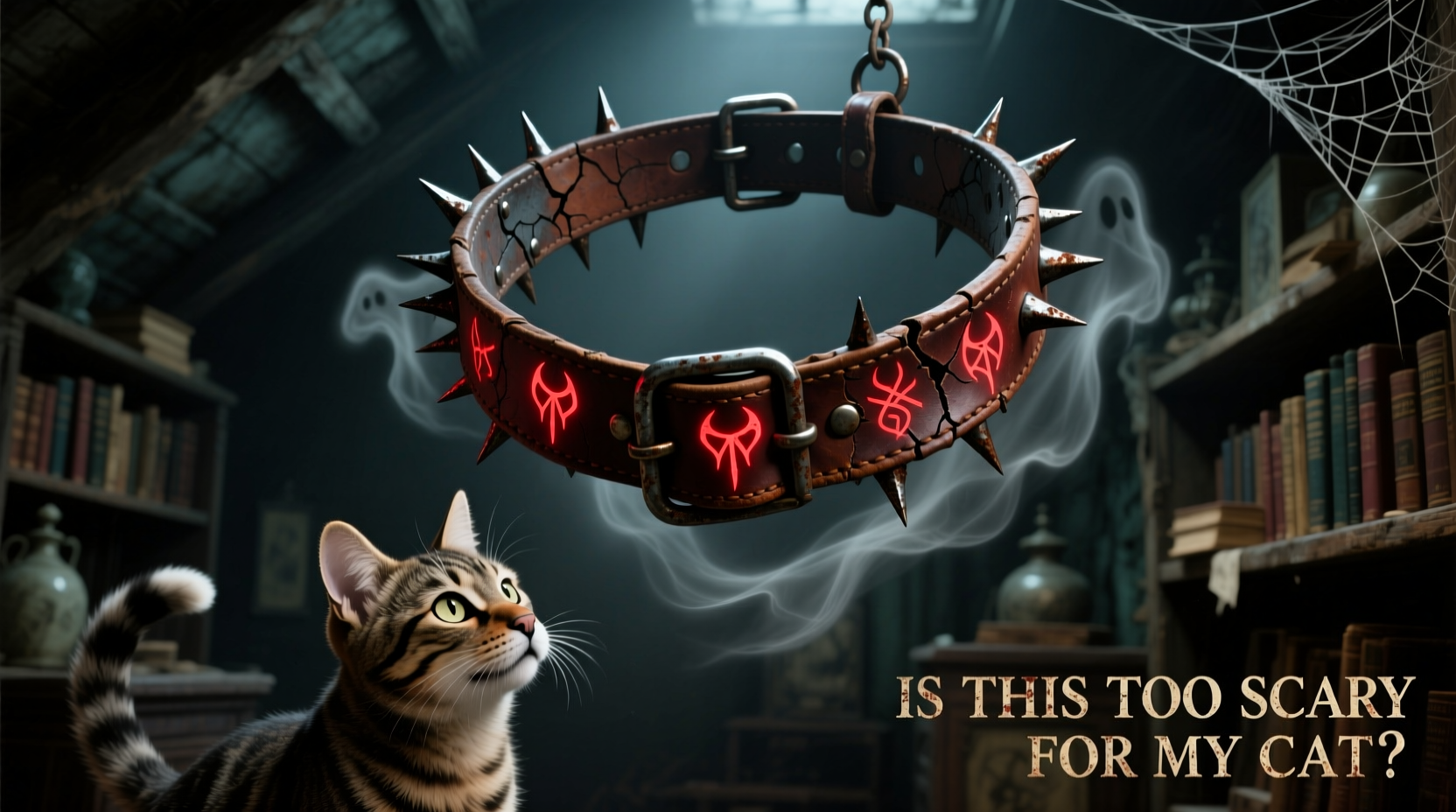
Cats process visual information differently than humans. While their color perception is limited (they see blues and greens best), they’re extremely sensitive to movement, contrast, and sudden changes in their environment. A dog walking around with a jagged, red-streaked collar featuring demonic symbols may not register as \"movie merch\" to your cat — it may instead look like a threat.
Studies in animal behavior suggest that high-contrast patterns, especially those resembling blood or injury, can trigger instinctive fear responses in prey animals and even domesticated predators like cats. These aren't rational fears; they're evolutionary reflexes. Your cat doesn’t need to “understand” the Evil Dead franchise to feel uneasy around something that looks chaotic or aggressive.
Tip: Observe your cat’s body language when introducing new items. Flattened ears, tail flicking, hiding, or dilated pupils are signs of stress.How Cats React to Novelty and Threat Cues
Cats categorize new objects based on familiarity and perceived danger. A bright green collar with stars? Probably fine. A tattered leather strap with faux blood and metal spikes? That might fall into the “potential predator” category. Even if your dog is gentle and familiar, the accessory itself becomes a focal point of attention.
In multi-pet households, maintaining a stable emotional environment is key. Sudden additions that evoke strong sensory reactions can lead to long-term anxiety, territorial marking, or avoidance behaviors. One study from the Journal of Feline Medicine and Surgery found that 68% of cats exhibited increased vigilance after the introduction of visually disruptive household items — including costumes, loud toys, and dark-patterned accessories.
Assessing the Dog Collar: Design vs. Impact
The Evil Dead dog collar, often modeled after Ash Williams’ iconic post-possession look, typically features:
- Dark leather or synthetic material
- Blood-red detailing or splatter effects
- Metal studs or spike-like embellishments
- Branding with occult or horror-themed graphics
While these elements are clearly meant for fans and humor, they tap into primal visual triggers. For dogs, who are generally less visually reactive than cats, this may not be an issue. But for cats, whose survival instincts still influence behavior, such designs can signal danger.
“Cats don’t distinguish between ‘fake’ and ‘real’ threats the way humans do. A spiked, red-streaked object moving toward them can trigger a flight response regardless of context.” — Dr. Lena Reyes, Veterinary Ethologist
Do’s and Don’ts When Choosing Pet Accessories in Shared Homes
| Do | Avoid |
|---|---|
| Choose collars with neutral colors and smooth textures | High-contrast horror or battle-worn designs |
| Introduce new accessories gradually, off the animal at first | Suddenly strapping a dramatic collar onto your dog |
| Monitor all pets during initial exposure | Ignoring signs of stress like hiding or hissing |
| Opt for removable themed accessories (e.g., bandanas) | Permanent or hard-to-remove intimidating designs |
A Real-Life Scenario: The Case of Benny and Luna
Take the example of Mark, a horror enthusiast in Portland, who bought an Evil Dead replica collar for his terrier, Benny. Excited to show it off, he put it on during a weekend hangout. His cat, Luna — normally social and playful — immediately retreated under the bed and didn’t emerge for hours.
Over the next few days, Luna avoided Benny entirely, even his food bowl near her usual napping spot. Mark noticed she started over-grooming her paws — a known sign of chronic stress in cats. After consulting a vet behaviorist, he removed the collar and replaced it with a plain blue one. Within 48 hours, Luna resumed normal behavior.
This wasn’t about hating dogs or disliking horror. It was about sensory overload. The collar’s design created a persistent visual disturbance that disrupted Luna’s sense of safety. Once the trigger was gone, so was the anxiety.
Step-by-Step Guide: Safely Introducing Themed Accessories
If you’re set on using a bold or horror-themed collar but share your home with a cat, follow this sequence to minimize stress:
- Start off-body: Place the collar on a table or floor area where both pets can see it without direct interaction.
- Observe reactions: Watch your cat for signs of discomfort — freezing, staring, retreating.
- Pair with positive stimuli: Offer treats, playtime, or mealtime near the collar to build neutral or positive associations.
- Wear briefly: Put the collar on your dog for short intervals (5–10 minutes) while supervising both pets.
- Gradually extend duration: Only increase time if no stress behaviors appear.
- Have a backup collar ready: Switch to a calmer design if needed, without debate.
This method uses principles of desensitization and counter-conditioning — techniques commonly used by animal trainers to help pets adapt to novel stimuli.
When Humor Crosses Into Harm
It’s okay to laugh at the idea of a zombie-apocalypse-ready dog. Pop culture fandom is part of modern life. But pets don’t experience humor. They experience safety — or the lack of it. What’s funny to us might be frightening to them. As pet owners, our responsibility is to balance self-expression with stewardship.
That doesn’t mean giving up your Evil Dead gear. It means being thoughtful about context. Save the most intense designs for photoshoots, conventions, or outdoor walks — not daily wear in shared indoor spaces.
Tip: Use themed accessories situationally. A spooky collar for Halloween? Great. Worn every day in a two-pet home? Risky.Frequently Asked Questions
Can cats tell the difference between fake blood and real blood?
No, cats don’t interpret visuals the way humans do. They respond to patterns, motion, and context. Red streaks on a moving object may resemble injury or aggression, triggering instinctive caution regardless of authenticity.
Will my cat get used to the collar over time?
Possibly, but not guaranteed. Some cats habituate quickly; others develop lasting sensitivities. If your cat shows prolonged avoidance, appetite loss, or excessive grooming, the collar should be retired for their well-being.
Are there horror-themed collars that are cat-safe?
Yes — consider subtle designs: a small pentagram charm, a black collar with glow-in-the-dark stitching, or a reversible bandana with a mild theme. Avoid large splatters, spikes, or animated features.
Final Thoughts: Fun Shouldn’t Come at the Cost of Peace
Your love for Evil Dead doesn’t have to clash with your cat’s comfort. With awareness and small adjustments, you can express your fandom responsibly. Pets thrive in predictable, low-stress environments — and keeping your cat calm isn’t just kind, it’s essential to their health.
So yes, that gnarly Necronomicon-engraved collar might be *too* scary for your cat. But that doesn’t mean you can’t enjoy it. Rotate accessories, respect boundaries, and prioritize peace at home. After all, the real horror isn’t demons from another dimension — it’s a stressed-out cat avoiding eye contact with your pup.
💬 Have a quirky pet accessory story? Share your experience below — we’d love to hear how you balance fandom and feline sanity!








