
For pet owners juggling fur-covered furniture, daily sweeping, and constant lint rolling, the question isn’t just about convenience—it’s about survival. Homes with multiple pets, especially heavy shedders like Huskies, Maine Coons, or Golden Retrievers, accumulate hair at an almost industrial rate. Traditional cleaning methods often fall short, leaving floors sticky with tracked-in debris and air thick with allergens. Enter the robot vacuum: a sleek, autonomous device promising to reduce household labor. But is it truly worth the investment when your home doubles as a grooming salon?
The answer depends on several factors—your pets’ habits, flooring types, budget, and expectations. While no robot vacuum can fully replace deep cleaning, modern models are more than novelty gadgets. When chosen wisely and used consistently, they can significantly improve cleanliness, reduce allergens, and reclaim hours otherwise spent on maintenance.
Why Pet Hair Is a Unique Cleaning Challenge
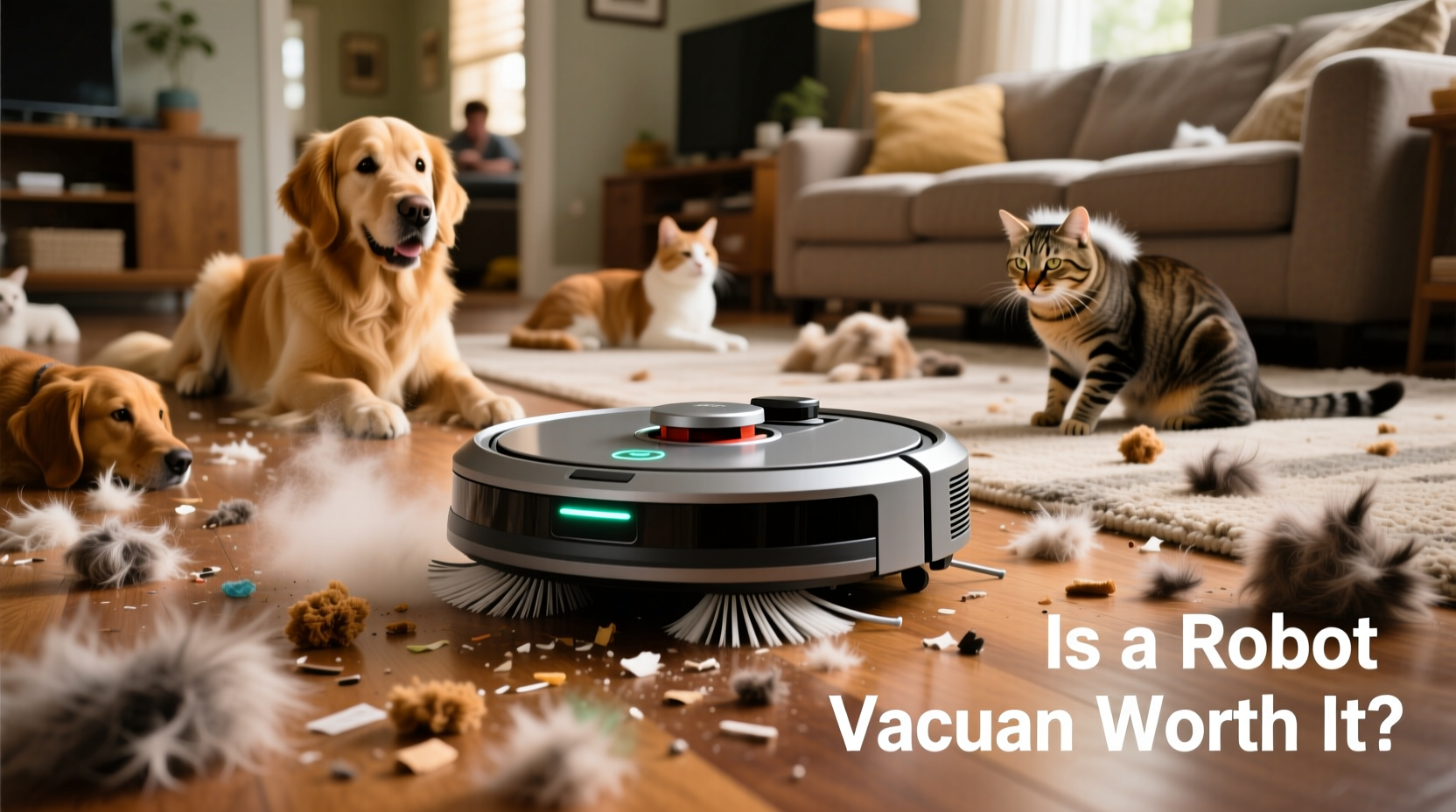
Pet hair behaves differently from dust or crumbs. It clings to fibers, tangles in brush rolls, and resists suction due to static charge. Multi-pet households compound this issue—more animals mean more shedding, more tracking, and more frequent accidents. A standard upright vacuum might manage weekly cleanups, but daily upkeep becomes impractical.
Additionally, pet dander—a common allergen—is microscopic and remains airborne longer than visible hair. Without consistent filtration and surface agitation, dander accumulates in carpets, baseboards, and under furniture. This makes homes with high shedding levels not only messier but potentially less healthy for allergy sufferers.
Tip: Look for robot vacuums with anti-tangle brush rolls and strong suction (at least 2000 Pa) to handle dense pet hair without frequent jams.How Robot Vacuums Address Pet-Specific Needs
Modern robot vacuums are engineered with pet owners in mind. High-end models feature specialized components that tackle the realities of living with furry companions:
- High-torque motors generate powerful suction to lift embedded hair from carpets and crevices.
- Tangle-free brush designs, such as rubber extractors or dual counter-rotating brushes, minimize hair wrap.
- HEPA filters capture 99.97% of particles as small as 0.3 microns, including dander and dust mites.
- Scheduling capabilities allow automated cleanings between meals, playtimes, or naps—when pets are resting.
- Smart mapping and room targeting let you focus on high-traffic zones like living rooms or pet beds.
Some models even integrate with smart home systems, enabling voice commands via Alexa or Google Assistant. Imagine saying, “Vacuum the kitchen,” after your dog knocks over a treat bag—without lifting a finger.
Real-World Performance: What Owners Report
A 2023 survey by HomeTech Insights found that 78% of multi-pet households using robot vacuums reported noticeable reductions in visible hair within two weeks. Over 60% said they cleaned their homes less frequently with traditional vacuums, relying instead on daily robotic runs.
“With three cats and a long-haired dog, we were vacuuming twice a day. The robot cut that down to once a week for deep cleans. It doesn’t catch everything, but it handles the baseline so well.” — Sarah Lin, Portland, OR
However, performance varies by model and environment. Carpeted homes pose greater challenges than hardwood or tile. Low-pile rugs may be manageable; shaggy or textured flooring often requires manual follow-up. Obstacle navigation—like avoiding chew toys, water bowls, or sleeping pets—also affects efficiency.
Mini Case Study: The Ramirez Household
The Ramirezes live in a 1,800-square-foot suburban home with two German Shepherds and a Persian cat. All three shed heavily, particularly during seasonal changes. Before investing in a robot vacuum, they spent nearly two hours each weekend vacuuming every room.
They purchased a mid-tier model with a self-emptying base, HEPA filtration, and rubberized brush rolls. After setup, they scheduled cleanings for 10 a.m. and 7 p.m.—times when the pets were typically outside or napping.
Within a month, visible hair accumulation dropped by roughly 60%. The robot struggled initially with corners near the dining table, where kibble and fur mixed, but firmware updates improved edge detection. They still perform a full manual vacuum every 10–14 days, but daily tidiness improved dramatically. According to Maria Ramirez, “It’s not perfect, but it’s the closest thing to magic we’ve found.”
Key Features to Prioritize for Pet Homes
Not all robot vacuums are built equally. For high-shedding, multi-pet environments, prioritize these features:
| Feature | Why It Matters | Recommended Specs |
|---|---|---|
| Suction Power | Lifts deeply embedded hair from carpets and crevices | 2000 Pa or higher |
| Brush Roll Type | Reduces hair tangling and maintenance | Rubber extractors or anti-tangle bristles |
| Filtration | Captures dander and allergens | True HEPA filter |
| Dustbin Capacity | Less frequent emptying in high-debris homes | 500 ml or larger (or self-emptying) |
| Navigational System | Ensures full coverage and obstacle avoidance | Lidar or vSLAM with app-based zone control |
| Battery Life | Completes full-home cleanings without recharging | 90+ minutes runtime |
Limitations and Realistic Expectations
No robot vacuum eliminates the need for manual cleaning entirely. They struggle with:
- Large spills or wet messes (most are not mops unless hybrid models)
- Stairs, upholstery, or elevated surfaces
- Extremely cluttered floors (toys, cords, loose papers)
- Deep carpet pile or fringe rugs
Additionally, some pets react negatively to the noise or movement of the device. Initial acclimation may take days or weeks. Experts recommend starting with short, supervised runs and gradually increasing duration.
“Robot vacuums excel at maintenance, not restoration. Think of them as janitors who come every day, not deep cleaners who visit once a month.” — Dr. Alan Prescott, Home Automation Researcher, MIT Media Lab
Step-by-Step Guide to Maximizing Value
To get the most out of your robot vacuum in a high-shedding, multi-pet home, follow this routine:
- Assess your space: Note flooring types, high-traffic areas, and common obstacles (litter boxes, food bowls).
- Choose the right model: Use the table above as a checklist. Prioritize suction, brush type, and filtration.
- Clear major obstacles: Secure loose cords, store small toys, and anchor rugs if possible.
- Set up smart zones: Use the companion app to define no-go zones (around pet beds) and target high-shed areas.
- Schedule daily runs: Run 1–2 times per day, ideally when pets are calm or outdoors.
- Maintain the device: Empty the bin, clean brushes, and replace filters monthly.
- Supplement manually: Perform a thorough vacuum and mop every 1–2 weeks.
This approach ensures consistent cleanliness while minimizing wear on both the machine and your patience.
Cost vs. Long-Term Benefits
Entry-level robot vacuums start around $200, while premium models with self-emptying bases and advanced navigation exceed $800. At first glance, this seems steep. But consider the long-term value:
- Time saved: An average user gains back 1–2 hours per week, totaling over 50 hours annually.
- Reduced wear on traditional vacuums: Less frequent use extends the life of your main vacuum.
- Allergen reduction: Consistent HEPA filtration improves indoor air quality, potentially reducing allergy medication costs.
- Resale value: Well-maintained models retain 40–60% of value after two years.
When framed as a long-term investment in health, time, and home maintenance, the cost becomes more justifiable—especially for households already spending heavily on lint rollers, air purifiers, and professional cleaning services.
Checklist: Is a Robot Vacuum Right for Your Pet Home?
Answer these questions to determine if a robot vacuum aligns with your needs:
- Do you vacuum more than twice a week due to pet hair?
- Are you frustrated by how quickly floors get dirty after cleaning?
- Do family members suffer from pet-related allergies?
- Is your home mostly hard flooring or low-to-medium pile carpet?
- Can you dedicate $300–$700 for a long-term solution?
- Are you comfortable with tech setup and occasional troubleshooting?
If you answered “yes” to three or more, a robot vacuum is likely worth the investment.
FAQ
Can robot vacuums handle litter box debris?
Most can pick up scattered litter, but clay or clumping litter can damage sensors or clog filters. Avoid running the robot directly over litter boxes. Use virtual barriers in the app to create exclusion zones.
Will my pets be scared of the robot vacuum?
Reactions vary. Some pets ignore it; others bark, chase, or avoid it. Introduce it slowly—at low speed, during calm times—and reward calm behavior. Most adapt within a week.
Do I still need to vacuum manually?
Yes. Robot vacuums maintain daily cleanliness but lack the power for deep carpet cleaning or spot treatment. Plan manual sessions every 1–2 weeks for optimal results.
Conclusion: Reclaiming Time and Cleanliness
In homes overrun by pet hair, the decision to adopt a robot vacuum isn’t about luxury—it’s about sustainability. The daily battle against fur, dander, and tracked debris drains energy and time. A well-chosen robot vacuum shifts the balance, offering consistent upkeep that complements, rather than replaces, human effort.
It won’t stop your dog from shedding or your cat from knocking over its water bowl. But it will ensure that between messes, your floors stay cleaner, your air stays fresher, and your weekends remain yours. For pet owners drowning in lint, that peace of mind may be worth every penny.
🚀 Ready to simplify pet cleanup? Evaluate your top robot vacuum options today—start with models featuring HEPA filters, rubber brush rolls, and smart scheduling. Share your experience or ask questions in the comments below.








