Color-treated hair demands more than just occasional salon visits to stay vibrant and healthy. Between appointments—typically every 6 to 8 weeks—fading, dullness, and brassiness can creep in, undermining the investment you made in your initial color service. Enter the hair gloss treatment: a semi-permanent conditioning glaze that refreshes tone, boosts shine, and smooths the cuticle. But with added cost and time, is it truly worth incorporating into your routine? The answer depends on your hair goals, maintenance habits, and the condition of your strands. Let’s explore what a gloss does, how it compares to other treatments, and who benefits most from this subtle yet powerful service.
What Exactly Is a Hair Gloss Treatment?
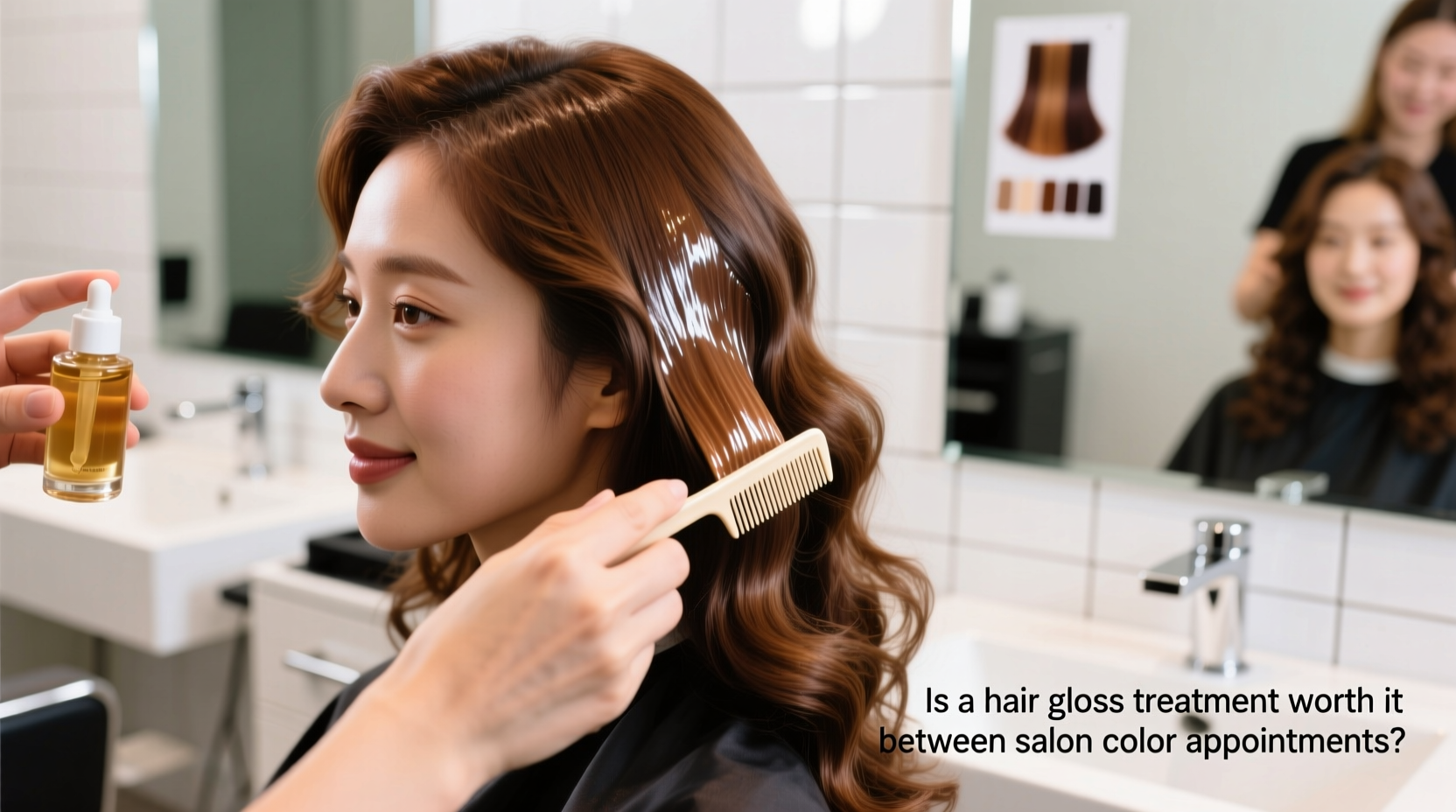
A hair gloss is a translucent, demi-permanent treatment applied to the surface of the hair shaft. Unlike permanent dyes or even full-color retouches, it doesn’t penetrate deeply or alter natural pigment. Instead, it deposits a thin layer of color and conditioning agents that enhance existing tones, neutralize unwanted undertones (like brassy yellow in blonde or ashy tones in brunettes), and seal the cuticle for maximum reflectivity.
Glosses are typically ammonia-free and low in peroxide, making them gentle enough for frequent use. They last 4 to 6 weeks—aligning perfectly with the fading timeline of most salon colors—and gradually wash out without harsh regrowth lines. Most salons offer custom-blended glosses tailored to your current shade, ensuring seamless integration with your base color.
“Think of a gloss like a filter for your hair—it doesn’t change the foundation, but it refines the finish, adding richness and dimension.” — Lila Monroe, Master Colorist at Chroma Collective, Los Angeles
Benefits of Using a Gloss Between Appointments
The appeal of a gloss lies not just in its aesthetic enhancement but in its functional advantages for maintaining long-term hair health and color integrity. Here are the top reasons clients return for this mid-cycle touch-up:
- Revives faded color: After three weeks, even high-quality dyes begin to lose vibrancy. A gloss re-deposits pigments to restore depth and tone.
- Neutralizes brassiness: Especially critical for blondes, balayage, or gray coverage, where warmth can emerge as underlying pigments oxidize.
- Adds high-gloss shine: By smoothing the cuticle, light reflects evenly, giving hair a “just-colored” luster.
- Improves texture: Conditioning ingredients like keratin, panthenol, and amino acids temporarily repair damage and reduce frizz.
- No commitment: Since it fades gradually, there’s no pressure if you decide to switch shades later.
- Safe for sensitive scalps: Ammonia-free formulas minimize irritation during application.
Gloss vs. Other Treatments: How It Stands Out
It’s easy to confuse a gloss with similar services like toners, glazes, or deep conditioning masks. While they share some qualities, key differences affect longevity, purpose, and outcome. This table clarifies how they compare:
| Treatment Type | Purpose | Duration | Chemical Load | Best For |
|---|---|---|---|---|
| Hair Gloss | Tone correction + shine boost | 4–6 weeks | Low (demi-permanent) | Maintaining salon color between visits |
| Glaze | Temporary shine only | 1–2 shampoos | None (clear or pigmented conditioner) | Pre-event brightness |
| Toner | Brass correction (usually on bleached hair) | 1–3 weeks | Moderate (often contains developer) | Post-bleach refinement |
| Deep Conditioner | Hydration and strength | Immediate effect, no lasting pigment | None | Dry, damaged, or porous hair |
| Permanent Dye | Full color change or root coverage | 6+ weeks | High (ammonia/peroxide) | Covering grays or dramatic shifts |
As shown, a gloss uniquely combines cosmetic enhancement with mild conditioning and tonal precision—filling a niche that neither temporary glazes nor heavy dyes can match.
Who Should Consider a Mid-Cycle Gloss?
Not every client needs a gloss, but certain profiles benefit significantly. If any of the following describe your situation, a gloss may be a smart addition to your regimen:
- You have fashion colors (platinum, rose gold, ash brown): These rely heavily on tonal accuracy, which fades quickly due to environmental exposure and washing.
- Your hair is prone to brassiness: Whether from hard water, sun exposure, or underlying warm pigments, brassiness undermines cool-toned colors within weeks.
- You’re growing out your color: A gloss can unify the contrast between roots and lengths, creating a smoother transition without a full retouch.
- You want healthier-looking hair without commitment: Clients avoiding frequent chemical processing still crave shine and softness—gloss delivers both without damage.
- You’re preparing for a special event: Weddings, photoshoots, or vacations call for peak hair performance. A gloss scheduled a few days prior ensures radiant results.
“I’ve had clients fly in just for a gloss before their destination wedding. It’s not vanity—it’s confidence. That extra sheen makes hair look professionally cared for.” — Diego Ramos, Celebrity Colorist
Mini Case Study: Reviving Faded Balayage
Sarah, a 34-year-old marketing executive, had her honey-blonde balayage done in early March. By late April, the mid-lengths were noticeably brassy, especially in sunlight, and her ends lacked the silky finish she remembered post-salon. She avoided a full touch-up because her roots weren’t visible yet, but hated how dull her reflection looked.
At her stylist’s suggestion, Sarah booked a custom gloss using a violet-pearl formula to counteract yellow tones and add luminosity. The 30-minute treatment was applied after a clarifying shampoo and left on for 20 minutes. Results were immediate: her hair reflected light like glass, the brassiness vanished, and the dimensional blend looked freshly hand-painted.
Sarah reported that compliments increased over the next month. More importantly, when she returned for her full color service six weeks later, her stylist noted less porosity and better color retention—likely due to the cuticle-sealing effects of the gloss. She now schedules a gloss every 5 weeks between full appointments.
Step-by-Step: How to Incorporate a Gloss Into Your Routine
Maximizing the value of a gloss means timing it right and pairing it with supportive at-home care. Follow this sequence for best results:
- Assess your fade timeline: Track when your color starts losing vibrancy or developing brassiness—usually around week 3–4.
- Consult your colorist: Share photos or visit for an evaluation. They’ll recommend a formula based on your current tone and goals.
- Schedule the gloss 3–4 weeks post-color: This prevents buildup and allows fading to guide tonal adjustments.
- Use a clarifying shampoo beforehand: Removes mineral and product buildup so the gloss adheres evenly (salon usually handles this).
- Apply and process: The gloss is painted through mid-lengths and ends, sometimes including roots if toning is needed. Processing takes 15–30 minutes.
- Rinse thoroughly and condition: Stylists often follow with a lightweight mask to lock in moisture without weighing hair down.
- Maintain with sulfate-free products: Extend the gloss by using color-safe shampoo and limiting heat styling.
Cost vs. Value: Is It Worth the Investment?
A professional gloss typically costs between $30 and $75, depending on salon location, brand used, and hair length. While not insignificant, consider the alternatives:
- Skipping the gloss might mean needing a full toner or corrective session later—costing $100+.
- Buying multiple at-home toning products (shampoos, masks) adds up and often yields uneven results.
- Extended color life reduces the frequency of full color services, saving money long-term.
In Sarah’s case, spending $50 on a gloss delayed a $180 full touch-up by four weeks while improving hair health. Viewed as preventive maintenance rather than an extra expense, the gloss delivered measurable ROI.
FAQ: Common Questions About Hair Gloss Treatments
Can I do a gloss at home?
Yes, several brands like Olaplex No.8, Redken Shine Flash, and Joico K-Pak Color Therapy offer at-home gloss kits. However, results depend on accurate shade matching and even application. Salon glosses are customized and professionally applied, reducing risk of patchiness or incorrect tone.
Will a gloss cover gray roots?
Not effectively. Glosses are sheer and designed to enhance, not conceal. They may slightly tone visible grays but won’t provide full coverage. For root blending, discuss a root smudge or demi-permanent color with your stylist.
Does a gloss work on curly or textured hair?
Excellent on curls! Curly and coily textures often suffer from dryness and dullness due to raised cuticles. A gloss smooths the surface, enhances definition, and boosts natural shine without altering curl pattern. Many texturists recommend glosses to revive color-treated curls between washes.
Checklist: Is a Gloss Right for You?
Answer yes to two or more of these to determine if a gloss fits your needs:
- ☑️ My color starts fading or turning brassy within 3–4 weeks
- ☑️ I want shinier, healthier-looking hair without chemical stress
- ☑️ I’m growing out my color and want a more blended appearance
- ☑️ I have a big event coming up and want salon-fresh hair
- ☑️ My stylist has recommended a gloss to maintain tone
Conclusion: Elevate Your Color Maintenance Strategy
A hair gloss treatment isn’t a mandatory step for everyone, but for those invested in maintaining vibrant, healthy-looking color between salon visits, it’s one of the most effective tools available. It bridges the gap between full color services, offering a low-commitment, high-reward solution to common post-salon concerns like fading, dullness, and brassiness. With minimal processing and noticeable results, it supports both aesthetics and hair integrity.
If you’ve been relying solely on at-home products or waiting until your hair looks “bad enough” to justify another salon trip, reconsider. Strategic use of a gloss can extend the life of your color, reduce future correction costs, and keep your confidence high all cycle long.
💬 Have you tried a gloss between color appointments? Share your experience, results, or questions below—your insights could help others decide if it’s worth it for their hair journey.








