In 2024, discussing the iPhone 5 and iPhone 5s might sound like a trip down memory lane. Both devices are over a decade old, yet some users still rely on them—especially in regions where access to newer smartphones is limited or cost-prohibitive. For those clinging to an iPhone 5, the question remains: is upgrading to the 5s actually worthwhile? The answer isn’t as straightforward as specs alone suggest. It depends on your usage, expectations, and how much you value security, speed, and basic functionality in a smartphone.
The iPhone 5 launched in 2012, bringing a taller 4-inch display and LTE support. The iPhone 5s followed a year later with subtle but meaningful upgrades—most notably the A7 chip and Touch ID. On paper, the differences may seem minor. But in practice, especially today, they define two very different user experiences when running modern apps, even in their most stripped-down forms.
Performance & Hardware: The Core Differences
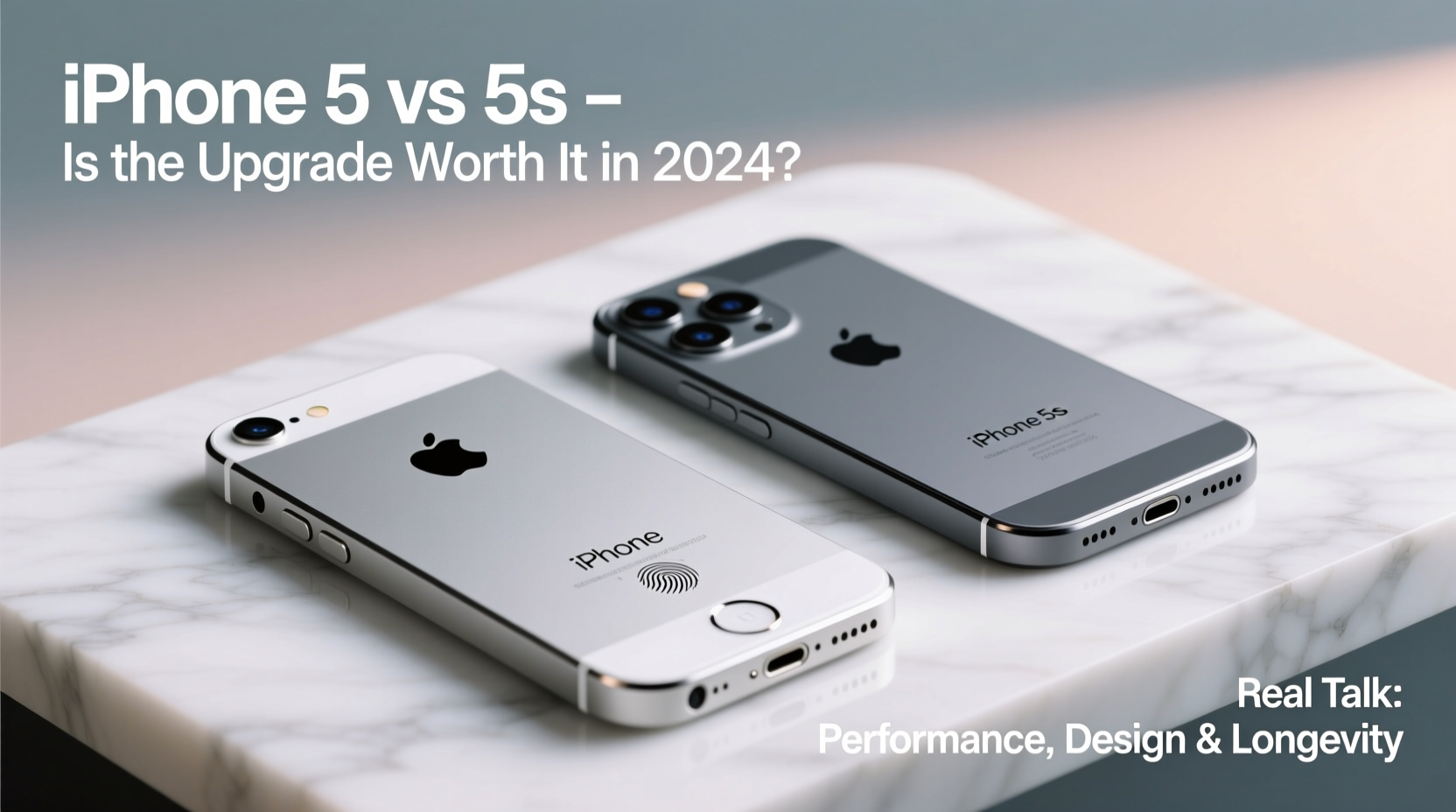
The iPhone 5 runs on Apple’s A6 chip with 1GB of RAM. By 2013 standards, it was competitive. Today, it struggles to handle even lightweight tasks like loading web pages or switching between apps. Safari freezes frequently, multitasking is sluggish, and background processes often crash. iOS updates stopped at iOS 10.3.4 in 2019, meaning no security patches since then.
The iPhone 5s, meanwhile, introduced the 64-bit A7 chip—the first of its kind in a smartphone. Paired with the same 1GB of RAM, it offered noticeably better app launch times, smoother animations, and improved efficiency. It supports up to iOS 12.5.7 (last updated January 2023), which means critical security fixes were delivered nearly a decade after release—a rare longevity feat for any device.
“Even incremental hardware improvements can extend a phone’s usable life by years, especially when paired with continued software support.” — David Lin, Mobile Systems AnalystTip: If you're still using an iPhone 5, avoid connecting to public Wi-Fi networks. Without recent security updates, your device is highly vulnerable to exploits.
Detailed Comparison: iPhone 5 vs iPhone 5s in 2024
| Feature | iPhone 5 | iPhone 5s |
|---|---|---|
| Processor | A6 chip | A7 chip (64-bit) |
| RAM | 1GB | 1GB |
| Max iOS Version | iOS 10.3.4 (2019) | iOS 12.5.7 (2023) |
| Fingerprint Sensor | No | Touch ID (first-gen) |
| Camera | 8MP rear, 1.2MP front | 8MP rear with True Tone flash, 1.2MP front |
| Battery Life (Original) | Up to 8 hrs talk time | Up to 10 hrs talk time |
| Current Usability (2024) | Limited (basic calls/texts only) | Marginal (light browsing, messaging) |
The inclusion of Touch ID on the 5s wasn’t just a convenience—it laid the foundation for secure app logins and Apple Pay (though the 5s only supports Apple Pay via NFC in select regions). More importantly, the A7 chip allowed developers to optimize apps more efficiently, extending compatibility with services like WhatsApp, Gmail, and Maps well into the late 2010s.
Real-World Experience: Can Either Phone Function in 2024?
Let’s consider Maria, a retiree in rural Arizona who inherited her grandson’s old iPhone 5. She uses it solely for calls, texts, and checking weather updates. Her carrier still supports 3G (though phasing out), so voice works. However, she recently tried downloading the local pharmacy’s app to manage prescriptions. The app requires iOS 13 or later. She couldn’t install it. Even the mobile website fails to load properly due to outdated JavaScript support in iOS 10.
When she borrowed a friend’s iPhone 5s, the same website loaded—slowly, but completely. She could navigate menus, view hours, and even click “call now” without crashing. That extra processing power and updated OS made the difference between digital exclusion and minimal participation.
This scenario illustrates a broader truth: the iPhone 5s, while severely limited, maintains marginal utility in 2024. The iPhone 5 does not. Even basic web-based services assume features absent in pre-iOS 11 systems—modern encryption, responsive design frameworks, and touch event handling.
Security & Longevity: Why Software Support Matters
Apple’s decision to support the iPhone 5s with security updates until 2023 underscores its engineering durability. The final patch (iOS 12.5.7) addressed critical WebKit vulnerabilities that could allow remote code execution—essentially letting hackers take over a device through a malicious website.
The iPhone 5, frozen on iOS 10, has no such protection. Any visit to a compromised site—even through a seemingly harmless Google search—could expose personal data. This makes the device unsafe for email, banking, or social media, even if it technically “works.”
Tip: Never enter passwords or credit card details on a device stuck on iOS 10 or earlier. The risk of data theft is unacceptably high.Step-by-Step: Should You Upgrade from iPhone 5 to 5s in 2024?
- Assess Your Needs: Are you using the phone for emergencies only? Or do you need email, maps, or health apps?
- Check Carrier Compatibility: Most U.S. carriers have shut down 3G. Confirm if your iPhone 5 can still connect (it likely can’t).
- Test App Requirements: Try installing essential apps (e.g., WhatsApp, Uber, pharmacy apps). If they don’t support iOS 10, the 5s won’t help either—but at least it goes further.
- Consider Replacement Cost: Used iPhone 5s units sell for $20–$40. For $60–$100 more, you can get an iPhone 6s (supports iOS 15) or Android alternative with far better performance.
- Decide: If you must stay on legacy Apple hardware, the 5s is objectively better. But it’s not a long-term solution.
Is the Upgrade Worth It? The Honest Verdict
Yes—but only as a stopgap. Moving from iPhone 5 to 5s in 2024 offers tangible benefits: slightly faster performance, marginally better camera quality, Touch ID, and crucially, three additional years of security updates. These aren’t flashy perks, but they translate into real usability.
However, calling the 5s “worth it” doesn’t mean it’s recommended. It means it’s the lesser of two obsolete options. Neither device should be used as a primary phone today. They lack app compatibility, modern encryption, and hardware reliability (batteries degrade significantly after 10+ years).
If your goal is to extend the life of an old Apple device temporarily, the 5s is the clear upgrade. But if you plan to use a smartphone beyond basic calling, look beyond both models. Refurbished iPhone SE (1st gen), iPhone 6s, or budget Android phones offer vastly superior experiences at similar price points.
FAQ
Can I still use WhatsApp on iPhone 5 or 5s?
No. WhatsApp dropped support for iOS 12 and earlier in 2023. Since the iPhone 5s maxes out at iOS 12.5.7, it no longer supports WhatsApp. The iPhone 5 (iOS 10) lost support years earlier.
Is the iPhone 5s camera good by today’s standards?
Not really. While the 8MP sensor was solid in 2013, it lacks HDR, night mode, and computational photography. Photos appear flat, grainy in low light, and autofocus is slow. It’s functional for quick snapshots but inferior to even entry-level smartphones today.
Can I update the iPhone 5s beyond iOS 12?
No. iOS 12.5.7 is the final supported version. Apple ended major updates after iOS 12 due to hardware limitations. No jailbreak or workaround can safely install newer iOS versions.
Conclusion
The iPhone 5 to 5s upgrade represents one of Apple’s last meaningful generational leaps within the 4-inch form factor. In 2024, that leap translates to a few extra years of marginal usability and critical security coverage. But nostalgia shouldn’t override practicality. While the 5s is technically better, both phones are relics in a world that demands speed, security, and connectivity.
If you’re holding onto an iPhone 5, upgrading to a 5s might buy you a few months of slightly smoother browsing. But for lasting value, consider stepping into the modern era—even a modest investment opens doors to safer, faster, and more functional mobile experiences.
🚀 Ready to move forward? Explore certified refurbished iPhones or budget Android options that deliver real performance without breaking the bank. Your digital safety and daily convenience depend on it.








