
The annual iPhone launch cycle has become a ritual as predictable as the changing seasons. Every September, Apple fans brace themselves for new models, incremental upgrades, and the inevitable question: “Is this year’s phone actually better?�� With rumors swirling about the iPhone 17 already, many are wondering whether waiting for it makes sense—or if the iPhone 16, now more affordable and proven in real-world use, is still the smarter buy.
This isn’t just about specs on paper. It’s about value, longevity, and whether the changes between generations translate into meaningful improvements in daily life. Let’s cut through the marketing noise and examine what we know—and what we can reasonably expect—about the iPhone 17 versus the iPhone 16.
What We Know About the iPhone 16 (And Why It Still Matters)
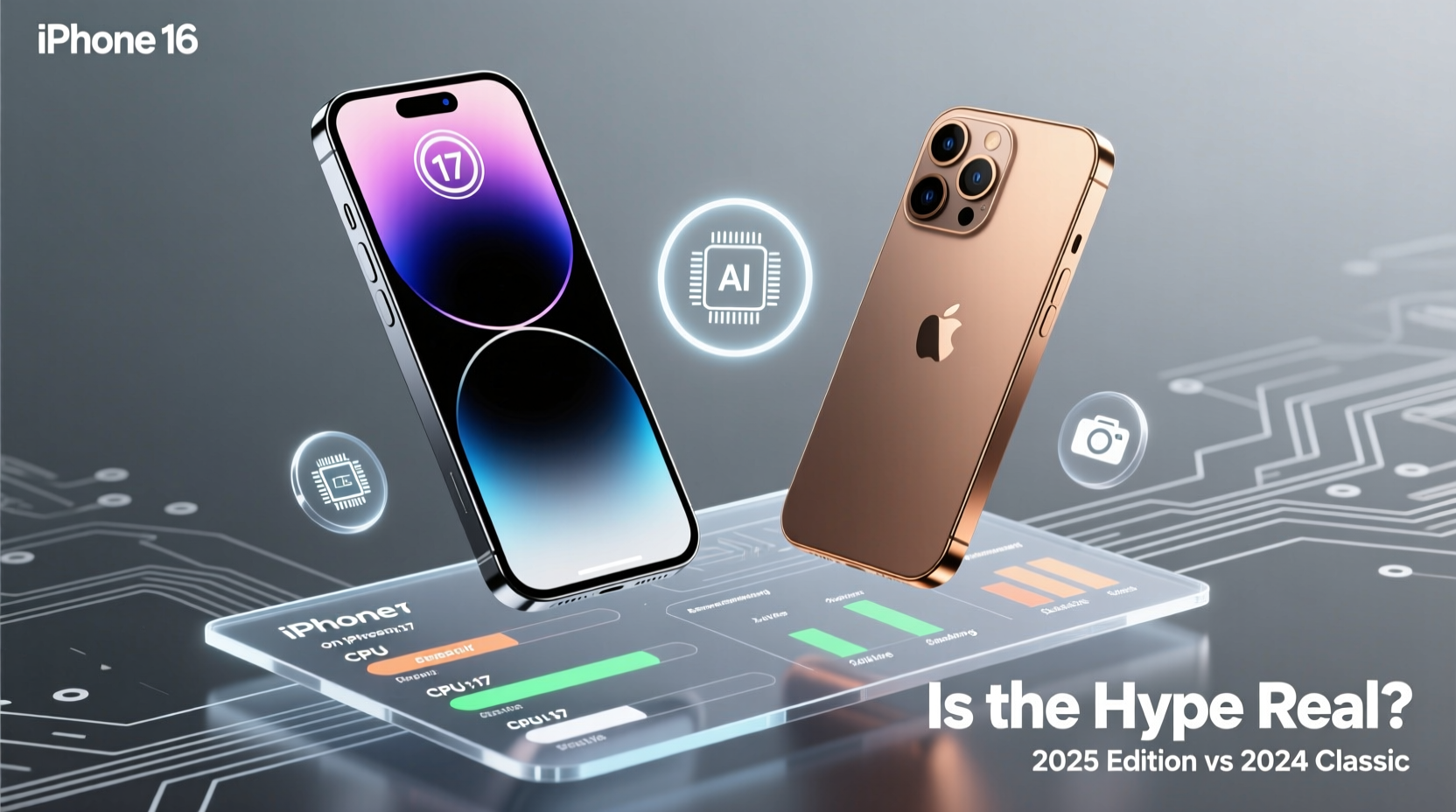
The iPhone 16 series, released in late 2024, introduced several notable upgrades over its predecessor. The base models feature the A18 chip, improved camera processing, and slightly refined ergonomics. But perhaps the most significant change was the introduction of Apple Intelligence—a suite of AI-powered features integrated directly into iOS 18.
For users upgrading from an iPhone 13 or earlier, the jump to the iPhone 16 is substantial. The performance gains are tangible, especially in multitasking and photography. Night mode captures more detail, video stabilization is smoother, and battery life has improved across the board. The Pro models also feature a thinner bezel design and a dedicated Capture Button for instant photo and video access.
However, for those already using an iPhone 15 Pro or even a well-maintained iPhone 15, the improvements may feel less revolutionary. This raises a critical point: the law of diminishing returns applies strongly in the smartphone market today.
Tip: If your current iPhone handles your daily tasks without lag and holds a charge through the day, upgrading to the iPhone 16 likely won’t transform your experience.Rumored Upgrades: What Could the iPhone 17 Bring?
While Apple remains tight-lipped, supply chain reports and analyst insights suggest several potential upgrades for the iPhone 17 lineup in 2025. These include:
- A19 chip built on a more efficient 3nm+ process, promising better performance and lower power consumption.
- Larger batteries across all models, potentially extending screen-on time by 10–15%.
- Periscope zoom lens coming to the non-Pro Max models, leveling the playing field in telephoto photography.
- Thinner titanium frame on Pro models, continuing the trend toward lighter, stronger builds.
- Advanced thermal management to support sustained AI processing and gaming performance.
- Fully optical under-display Face ID — a long-rumored technology that could eliminate the Dynamic Island entirely.
Perhaps the most anticipated change is deeper integration of Apple Intelligence, with on-device generative AI capable of summarizing emails, rewriting messages, and even creating custom emojis based on context—all without sending data to the cloud.
“By 2025, the difference between smartphone models won’t be megapixels or RAM—it’ll be how intelligently the device anticipates your needs.” — Dr. Lena Torres, Senior Analyst at TechForward Research
iPhone 17 vs iPhone 16: Feature Comparison
| Feature | iPhone 16 (Confirmed) | iPhone 17 (Rumored) |
|---|---|---|
| Chipset | A18 (3nm) | A19 (3nm+) |
| AI Capabilities | Apple Intelligence (basic on-device + cloud) | Fully on-device AI processing, real-time actions |
| Camera Zoom | Pro Max only: 5x periscope | Potential 5x zoom on Pro and possibly base models |
| Battery Life | Up to 22 hours video playback | Potential 25+ hours with efficiency gains |
| Display | Dynamic Island, 2000 nits peak brightness | Possible under-display Face ID, slimmer bezels |
| Storage | 128GB base, up to 1TB | Possible 256GB base on Pro models |
| Price (Starting) | $799 (base), $999 (Pro) | Expected similar, slight increase possible |
When Waiting Makes Sense (And When It Doesn’t)
Deciding whether to wait for the iPhone 17 depends largely on your current device, usage patterns, and priorities.
If you’re still using an iPhone 12 or earlier, the iPhone 16 is a massive leap forward in speed, camera quality, and software support. In this case, upgrading now gives you five years of iOS updates, excellent resale value, and access to current-gen features like Action Mode video and USB-C fast charging.
But if you own an iPhone 15 Pro or iPhone 15 Pro Max, the gains from moving to the iPhone 17 may not justify the cost. Yes, the A19 chip will be faster, and yes, the cameras might capture slightly better low-light shots—but these aren’t transformative changes. You’d be paying top dollar for marginal improvements.
On the other hand, if you’ve been waiting for specific features—like under-display Face ID or periscope zoom on non-Max models—the iPhone 17 could finally deliver what you’ve wanted.
Mini Case Study: Sarah’s Upgrade Dilemma
Sarah has an iPhone 15 Pro. Her phone works perfectly—battery health is at 92%, she loves the camera for her travel blog, and iOS 18 runs smoothly. She’s heard the iPhone 17 might remove the Dynamic Island and offer better AI tools for content creation.
She considered pre-ordering, but after researching, she realized the rumored AI features wouldn’t launch until mid-2026 via software update—even iPhone 16 users would get them eventually. The hardware upgrades were minimal. Instead of spending $1,099, she decided to invest in a new microphone and tripod, which improved her content quality more than any new phone could.
Sometimes, the best tech decision isn’t buying new gear—it’s optimizing what you already have.
Your Upgrade Decision Checklist
Before committing to any new iPhone, ask yourself the following:
- Is my current phone slowing down or failing to hold a charge?
- Do I need better camera performance for work or creative projects?
- Am I missing out on essential features (e.g., USB-C, newer security chips)?
- Will the next model likely include a feature I truly want (e.g., no notch, satellite connectivity)?
- Can I afford the upgrade without financial strain?
- Have I considered refurbished or previous-gen models for better value?
- Will I keep this phone for at least 3–4 years?
If you answered “no” to most of these, holding onto your current device—or opting for the now-discounted iPhone 16—is the rational move.
Frequently Asked Questions
Should I buy the iPhone 16 now or wait for the iPhone 17?
If you need a new phone immediately and don’t want to risk delays or supply shortages, the iPhone 16 is an excellent choice. It’s powerful, future-proofed with iOS support through 2029, and already available. Wait for the iPhone 17 only if you’re specifically excited about rumored features like under-display Face ID or broader periscope zoom availability.
Will the iPhone 17 be significantly faster than the iPhone 16?
Performance gains will exist, but they’ll be incremental. The A19 chip may offer 10–15% better CPU performance and improved neural engine efficiency, but everyday tasks like browsing, messaging, and streaming won’t feel noticeably faster. Heavy computational photography or AI workloads may benefit more.
Can I expect longer software support from the iPhone 17?
Yes. Like all recent iPhones, the iPhone 17 will likely receive 5–6 years of major iOS updates, meaning support into 2030 or beyond. However, the iPhone 16 will also be supported that long, so unless you plan to keep your phone past 2030, this shouldn’t be a deciding factor.
Final Thoughts: Hype vs. Real-World Value
The smartphone industry thrives on anticipation. Each year, manufacturers push minor refinements as breakthroughs, encouraging consumers to upgrade on a cycle that often exceeds practical need. The iPhone 17 will undoubtedly be a technically superior device to the iPhone 16—but superiority doesn’t always mean necessity.
For early adopters and tech enthusiasts, waiting for the latest model is part of the fun. But for most users, the iPhone 16 offers everything required for a seamless, high-performance mobile experience. Its combination of speed, camera quality, and AI integration makes it one of the most complete iPhones Apple has ever released.
Unless you’re chasing a specific innovation that only the iPhone 17 will bring, there’s no shame in skipping a generation. In fact, it might be the most financially and environmentally responsible choice you can make.
🚀 Ready to make a smart upgrade decision? Assess your actual needs, compare real-world benefits, and choose value over hype. Your wallet—and your next four years of phone use—will thank you.








