The smartphone market in 2024 is more competitive than ever. Apple’s iPhone 16 Pro Max arrives with immense fanfare, promising AI-powered features, a next-gen camera system, and deeper integration with Apple Intelligence. Meanwhile, the OnePlus 12 continues its legacy as a performance-first Android flagship—offering top-tier specs at a lower price point. But beneath the marketing buzz, which phone actually delivers a better daily experience? For users torn between ecosystem loyalty and raw value, this isn’t just about specs—it’s about real usability.
Performance and Hardware: Power vs Efficiency
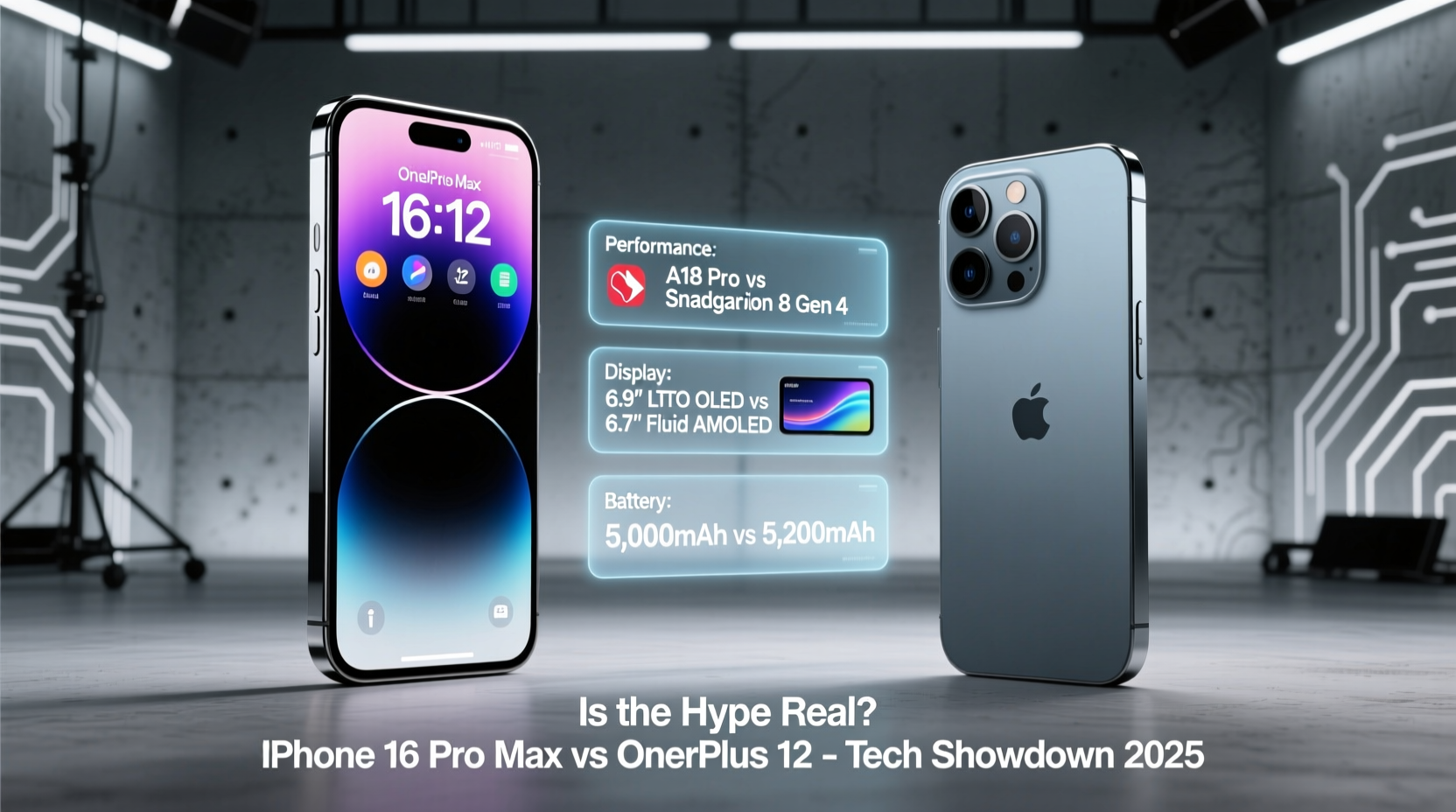
The iPhone 16 Pro Max is powered by Apple’s new A18 Pro chip, built on a 3nm+ process. It offers faster neural engine performance, optimized machine learning tasks, and improved power efficiency. In benchmarks, it leads in single-core performance, which translates to snappier app launches and smoother UI interactions within iOS. The device also includes 8GB of RAM—a modest upgrade from previous models—but iOS manages memory so efficiently that most users won’t notice limitations.
In contrast, the OnePlus 12 runs on the Qualcomm Snapdragon 8 Gen 3, paired with up to 16GB of LPDDR5X RAM. This gives it a clear edge in multitasking and sustained performance during heavy gaming or video editing. OnePlus has long prioritized speed, and their OxygenOS (now merged with ColorOS) remains one of the cleanest Android skins available. While not as tightly integrated as iOS, it allows greater customization and faster access to developer features.
Tip: If you frequently switch between apps or use resource-heavy tools like video editors, the OnePlus 12’s extra RAM may provide a more fluid experience over time.Display and Design: Premium Craftsmanship vs Practical Innovation
Apple continues its tradition of premium build quality. The iPhone 16 Pro Max features a titanium frame, Ceramic Shield front, and an always-on ProMotion OLED display at 120Hz. The screen now supports higher peak brightness (up to 3000 nits), making it excellent for outdoor visibility. However, the notch remains, though slightly smaller, and bezels are still thicker than many Android competitors.
The OnePlus 12 counters with a 6.82-inch LTPO AMOLED panel, 120Hz refresh rate, and HDR10+ support. Its flat design improves usability with screen protectors and reduces accidental touches. With slimmer bezels and a centered punch-hole camera, the visual appeal leans modern and minimalist. OnePlus also uses Gorilla Glass Victus 2 but opts for an aluminum chassis instead of titanium—still durable, but less luxurious.
“Design isn’t just how it looks—it’s how it feels in your hand after hours of use.” — David Lin, Mobile UX Designer at Bay Area Tech Studio
For users who prioritize ergonomics, the OnePlus 12’s flatter edges and lighter weight (despite similar dimensions) make it easier to handle one-handed. The iPhone 16 Pro Max, while sleek, can feel bulky over extended periods.
Camera Showdown: Computational Mastery vs Versatility
Apple has refined its camera system with the iPhone 16 Pro Max. The standout feature is the new tetraprism 5x optical zoom lens (120mm equivalent), replacing the previous 3x. Combined with a larger main sensor and improved low-light algorithms, it captures stunning detail in daylight and remarkable clarity in dim environments. Video recording remains unmatched, especially for filmmakers using Log encoding and ProRes externally.
OnePlus 12 takes a different approach. It retains the successful Hasselblad-tuned triple setup: a 50MP main (Sony IMX890), a 48MP ultra-wide, and a 64MP periscope telephoto with 3x optical and up to 120x digital zoom. While the zoom range doesn’t match Apple’s new 5x, the color science—thanks to Hasselblad collaboration—is natural and pleasing straight out of the camera. Night mode is aggressive but effective, often brightening scenes more than reality, which some users prefer.
| Feature | iPhone 16 Pro Max | OnePlus 12 |
|---|---|---|
| Main Sensor | 48MP (larger sensor) | 50MP Sony IMX890 |
| Telephoto Zoom | 5x optical, 25x ultra HD digital | 3x optical, 10x hybrid, 120x digital |
| Ultra-Wide | 12MP, improved macro focus | 48MP, high resolution |
| Video Recording | 4K 120fps, Log, ProRes, Spatial Video | 4K 60fps, no ProRes |
| Front Camera | 12MP, autofocus | 32MP, fixed focus |
If professional-grade video or consistent photo quality across lighting conditions matters most, the iPhone wins. But for still photography enthusiasts who enjoy flexibility and vibrant results without post-processing, the OnePlus holds strong.
Battery Life and Charging: Endurance vs Speed
The iPhone 16 Pro Max boasts up to 33 hours of video playback—Apple’s longest battery life yet. Real-world usage sees around 7–8 hours of screen-on time, depending on connectivity and background activity. It supports 29W wired charging (0–50% in ~30 mins), 15W MagSafe, and 10W Qi wireless. While efficient, the charging speeds lag behind Android flagships.
The OnePlus 12 packs a 5400mAh battery and supports 80W SuperVOOC fast charging. You can go from 0 to 100% in under 35 minutes. Wireless charging is absent, but the sheer speed of wired charging makes it a non-issue for most. In mixed use, it delivers comparable endurance to the iPhone, sometimes exceeding it due to adaptive refresh rate optimization.
Tip: If you travel frequently or hate being tethered to outlets, OnePlus’s ultra-fast charging could be a game-changer.Ecosystem and Longevity: Lock-In vs Freedom
This is where the decision becomes personal. If you own AirPods, a Mac, Apple Watch, or iPad, the iPhone 16 Pro Max integrates seamlessly. Features like Universal Clipboard, Handoff, iCloud Keychain, and Continuity Camera work flawlessly. Apple promises five years of iOS updates, ensuring long-term security and feature parity.
OnePlus runs on Android 14 with OxygenOS enhancements. It promises four major OS updates and five years of security patches—nearly matching Apple. However, integration with non-OnePlus devices (like Galaxy Buds or Pixel watches) is limited. That said, Android offers freedom: sideloading apps, default app selection, and deeper customization. For privacy-focused users, OnePlus also includes granular permission controls and app locking.
Mini Case Study: Sarah’s Upgrade Dilemma
Sarah, a freelance photographer and longtime OnePlus user, considered switching to the iPhone 16 Pro Max for its superior video capabilities. She relied on her phone for client vlogs and needed reliable stabilization and audio capture. After testing both devices side-by-side, she found the iPhone’s cinematic mode and spatial audio impressive—but missed the quick settings toggle and file manager on her OnePlus. Ultimately, she kept the OnePlus 12, pairing it with an external microphone for better audio. Her takeaway: “The hardware is great, but my workflow matters more than specs.”
Checklist: Which Phone Should You Choose?
- Choose iPhone 16 Pro Max if:
- You’re invested in the Apple ecosystem (Mac, iPad, Watch).
- Video recording quality is critical for your work or content creation.
- You prefer a polished, consistent software experience with long-term update support.
- You value brand prestige and resale value (iPhones depreciate slower).
- Stick with OnePlus 12 if:
- You want faster charging and more RAM for multitasking.
- You prefer stock-like Android with customization options.
- You’re budget-conscious—OnePlus typically costs $300–$400 less.
- You prioritize screen real estate and a flatter, more usable display.
Frequently Asked Questions
Is the iPhone 16 Pro Max worth the extra cost over the OnePlus 12?
It depends on your needs. If you rely heavily on ecosystem integration, video production, or plan to keep the phone for five+ years, yes. Otherwise, the OnePlus 12 offers 90% of the performance at a significantly lower price.
Does the OnePlus 12 support satellite messaging like the iPhone?
No, the OnePlus 12 lacks satellite SOS functionality. This feature remains exclusive to newer iPhones and select Android phones like the Huawei Mate 60 series in certain regions.
Can I expect the same longevity from OnePlus as from Apple?
Almost. OnePlus now guarantees five years of security updates and four OS upgrades—very close to Apple’s commitment. However, iOS tends to run older hardware more efficiently, so iPhones may feel snappy longer.
Final Verdict: Hype or Substance?
The hype around the iPhone 16 Pro Max is real—but it’s targeted. Apple excels at refining what already works: seamless ecosystem synergy, class-leading video, and elite build quality. For professionals and loyalists, it’s a worthy upgrade.
Yet, the OnePlus 12 proves that Android flagships don’t need to chase Apple to succeed. It delivers exceptional speed, faster charging, and a user-centric interface—all at a compelling price. For tech-savvy users who value control and value, it remains a smart, rational choice.
Ultimately, the question isn’t whether the hype is real—it’s whether it applies to you. Evaluate your habits, ecosystem, and priorities. Don’t buy a phone because of rumors or launch-day buzz. Buy it because it fits your life.
🚀 Ready to make your move? Share your thoughts below—team iPhone or team OnePlus? Let’s settle this debate with real user experiences.








